

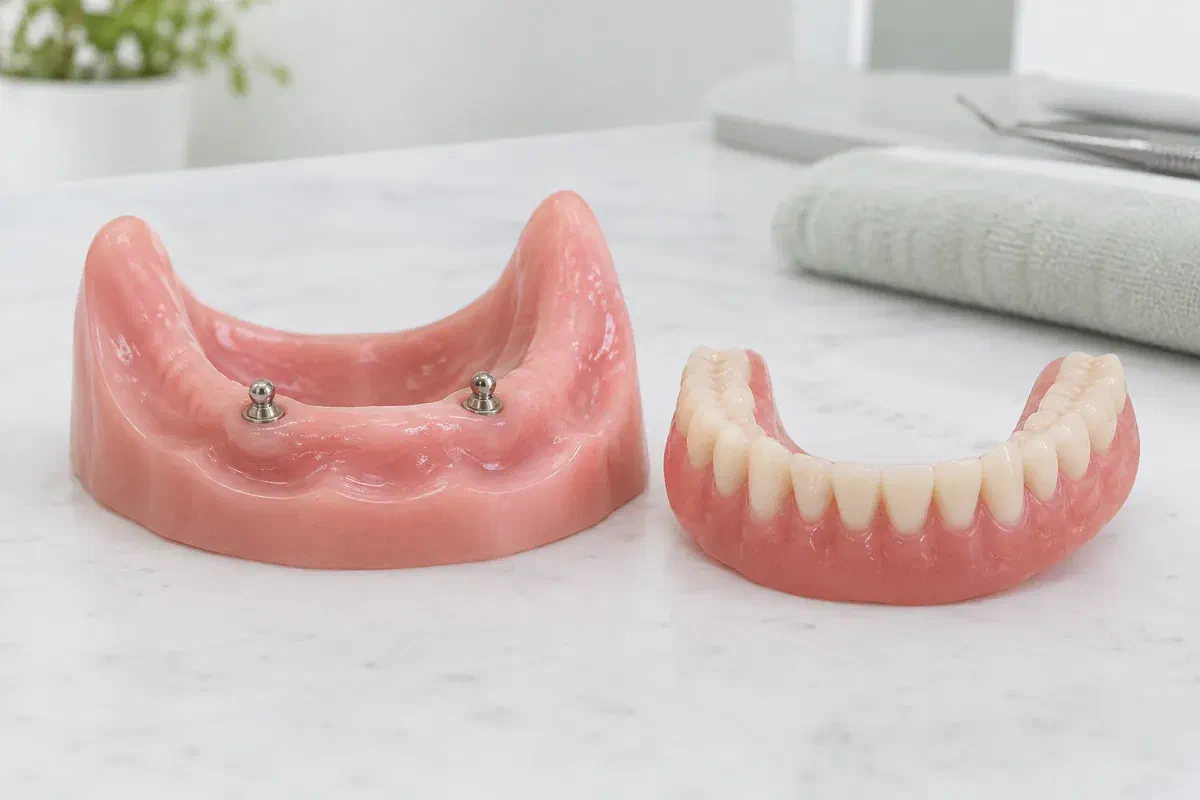
Illustrative discussion of a removable implant-retained denture
Restorative Dentistry

Snap-In Dentures in Etobicoke

Snap-in dentures take several stages, so planning matters when you come from Etobicoke. We map out each visit, explain how a removable implant-retained denture works, and cover handling, cleaning and the upkeep that follows.

Treatment with a timeline

Know the whole journey before the first step.

Getting a snap-in denture is rarely a single appointment. It is a removable denture that seats onto implant attachments, and reaching the finished result can involve assessment, implant placement, healing time and a fitting. Understanding that path early makes it far easier to plan around longer trips.

Along the way, it helps to keep two related treatments in view. A conventional denture involves no implants and relies on the gums for support. A fixed implant bridge stays in and is not removed at home. Treatment stages, cleaning access, comfort and cost differ for each, and so does the number of visits.

Because coming from Etobicoke usually means a longer trip, our first conversation covers logistics as well as teeth. We ask what frustrates you about your current denture, check your mouth, and let you know if assessing you for implants is a sensible next move. Bring your appliance so we can assess it on the same day.

Plan an implant denture consultation
Illustrative lower-jaw model with attachment heads beside a removable overdenture
Reasons people make the trip

A loose denture, a long list of workarounds.

Denture instability has many possible sources. Give us the details so the assessment can cover the appliance, the gum ridges and whether attachments are relevant.

Movement that has become routine

Perhaps you plan meals around what will stay put, or keep adhesive in every coat pocket. Describe what you do now and whether adjustments have ever helped. Implant attachments are one possibility, though improving the existing fit may be explored first.

Hold without permanence

Some people want firmer teeth but like knowing they can lift them out to clean. Others would prefer a fixed solution. Tell us your leaning at the outset, since removability sets the direction for the entire design.

A routine that works far from the clinic

When appointments take planning, it matters even more that you can manage daily care yourself. Mention grip, eyesight or any assistance you rely on. Seating, releasing and cleaning the denture should be confident and independent.

Attachments will not resolve every denture problem. If implants already sit beneath an appliance that has begun to loosen, both the denture components and the implants need a proper check.

The potential gain

Firmer hold, paired with planned care.

In suitable cases, implant attachments may help a removable denture stay steadier than one sitting on the gums alone. Think about where that would matter most to you, from restaurant meals to a long day out. Ask how much movement remains normal with the proposed design.

Steadiness does not mean an end to maintenance. Inserts wear, the base and teeth need periodic review, and the gums around each implant need daily cleaning and professional monitoring. Ask how often reviews are likely, so you can factor travel into the long-term plan.

Patient information: Leeds Teaching Hospitals — removable implant overdentures

A number chosen for your jaw

Implant count and position are decided after assessment. Upper and lower arches may follow quite different plans. Ask why the proposed arrangement suits your anatomy instead of assuming every snap-in denture uses the same layout.

Cleaning you can do confidently

Because the denture comes out, both its underside and the attachment points are easy to reach. Ask for a careful demonstration of tools and technique. A routine you can manage independently means fewer reasons to come in unexpectedly.

A connection you have tried yourself

Ask to seat and release a denture on a model before deciding. Find out which parts wear and how often they tend to be replaced. Hands-on familiarity helps you weigh the routine against other replacement options.

Planning your visits

Fewer trips, each one well organised.

Treatment may span multiple stages and clinicians. Ask for the full sequence, likely intervals and interim denture plans, and whether any steps can reasonably share an appointment.

  1. A thorough first appointment

    We review your mouth, current denture, health history and goals in one sitting where possible. Radiographs or other imaging may be taken or arranged. Tell us about smoking, earlier implant work and any difficulty with your present appliance.

  2. A clear written plan

    You discuss implant suitability, the attachment arrangement, tooth appearance and maintenance. The dentist explains whether your current denture can be reworked or should be replaced, and sets out the costs for surgery, restoration and follow-up.

  3. Implant placement and healing

    Where implants are needed, they are placed and given time to integrate before the attachments are relied upon. Existing implants are checked. You will be told when the denture can be connected and what to wear until then.

  4. Fitting, practice and first adjustments

    We check fit, retention, bite and appearance, then guide you through inserting and removing the denture until you are comfortable. Cleaning, overnight care and early adjustment visits are scheduled with your travel in mind.

Looking after it between visits

Independence starts with a good routine.

Your attachment system and denture materials define the details. Ask for written steps and practise them before you head home.

Seat and release with technique, not force

Use the hand movements you rehearsed. Never bite down to force a connection that will not engage. If the denture becomes stubborn to remove or feels different, phone us before making the trip so we can advise.

A two-part clean each evening

With the denture out, brush its teeth, underside and the attachment sockets using suitable products. Then clean the implant connections in your mouth with the brushes shown. Check before using any soak or cleanser that could affect metal.

Report changes rather than waiting

A worn insert is one cause of looser hold, but tissue or denture changes can also contribute. Describe movement, soreness, bleeding or damage when you call, and avoid swapping parts yourself. Keep scheduled reviews of the implant sites.

Comparing your choices

Each option, a different set of visits.

Ask how each suitable option is cleaned, maintained and repaired, and how many appointments it usually needs. The look of the teeth is only one part.

No surgery, fewer stages

A conventional denture

A new or refitted denture may be suitable without implants. Ask what fit and limitations are realistic for you. It still needs regular care, but its treatment path and parts differ from an implant-retained appliance.

Attachments, still removable

A snap-in implant overdenture

Implant retention is added while the denture can still come out. Attachment systems vary in their needs. Compare the specific system’s stability, handling, cleaning and maintenance, not just the appealing name.

Teeth that stay in

A fixed implant bridge

A fixed bridge is not removed in daily life and needs cleaning access underneath. Implant, space and upkeep requirements differ. Ask whether it suits you and how its full commitment compares with a removable design.

Patient information: ITI — fixed and removable implant replacement considerations

Planning questions

What to ask before booking from Etobicoke.

A quick look at a model can save a lot of uncertainty. Ask to see how the denture goes in, comes out and is cleaned.

(905) 876-4488
Can some snap-in denture appointments be combined?
Sometimes steps can share a visit, but healing and clinical needs set the pace. Ask for the expected sequence early, and mention your travel so the team can group appointments where it is clinically sensible.
What should I do if a problem comes up between visits?
Call the clinic first and describe what is happening. Some issues can be advised on by phone, while others need to be seen. For severe pain, swelling or an urgent concern you cannot get to us for, seek closer urgent care.
How many implants might I need for a snap-in denture?
There is no single answer. Implant number and position depend on your jaw, anatomy and the attachment design. Ask the clinician why a particular arrangement is being recommended for your upper or lower arch.
Can replacement inserts be fitted at a routine review?
Often worn inserts can be changed during a scheduled appointment, but the reason for reduced hold should be assessed first. Mention any change in retention when booking so the team can prepare.
Is there anything I should avoid right after implant surgery?
Your clinician will give specific instructions, which may cover eating, wearing the denture and cleaning. Follow them closely and ask about anything unclear before you leave, especially if the drive home is long.
How do I keep track of all the stages?
Ask for a written outline of the plan, including each stage, approximate timing and what happens at each visit. Keeping it with your calendar makes planning travel and time off much more straightforward.
Consultations for Etobicoke

Plan it once, plan it well.

Arrange an assessment at our Bronte Street practice to discuss a removable implant denture. Bring your current appliance and questions about retention, cleaning, handling and the stages needed to reach the finished teeth.

If an existing implant denture suddenly loosens or starts to hurt, call and describe the change before travelling, so we can advise on the right next step.

Visit Milton Dental Clinic
Unit 1, 342 Bronte St. S, Milton, ON L9T 5B7
Get directions Clinic hours
Monday–Thursday
11am–7pm
Friday–Sunday
By appointment only

Areas we serve

  • Milton
  • Oakville
  • Mississauga
  • Georgetown
  • Halton Hills
  • Acton
  • Campbellville
  • Brampton
  • Burlington
  • Puslinch
  • Rockwood
  • Erin
  • Caledon
  • Etobicoke
  • Old Milton
  • Bronte Meadows
  • Timberlea
  • Dorset Park
  • Dempsey
  • Clarke
  • Beaty
  • Coates
  • Harrison
  • Scott
  • Willmott
  • Ford
  • Bowes
  • Cobden
  • Walker
  • Mountain View
  • Milton Heights
  • Hawthorne Village
  • Valley View
  • Fallingbrook
  • Nassagaweya
  • Trafalgar
  • Esquesing
  • Nelson
  • Brookville
  • Moffat
  • Glen Williams
  • Norval
  • Limehouse
  • Stewarttown
  • Ashgrove
  • Hornby
  • Silver Creek
  • Speyside
  • Scotch Block
  • North Oakville
  • River Oaks
  • Glen Abbey
  • West Oak Trails
  • Palermo
  • Bronte Creek
  • College Park
  • Joshua Creek
  • Uptown Core
  • Preserve
  • Iroquois Ridge
  • Lisgar
  • Meadowvale
  • Meadowvale Village
  • Churchill Meadows
  • Erin Mills
  • Central Erin Mills
  • Streetsville
  • East Credit
  • Creditview
  • Heartland
  • Sheridan
  • Mount Pleasant
  • Credit Valley
  • Huttonville
  • Churchville
  • Springbrook
  • Northwest Brampton
  • Bram West
  • Fletcher's Meadow
  • Fletcher's Creek South
  • Alton Village
  • Orchard
  • Millcroft
  • Headon Forest
  • Tansley
  • Brant Hills
  • Tyandaga
  • Kilbride
  • Lowville
  • Aberfoyle
  • Morriston
  • Arkell
  • Hillsburgh
  • Freelton
  • Carlisle
  • Waterdown
  • Flamborough
  • Mountsberg

How can we help?

Milton Dental Clinic

Have a question about your smile? Choose the option that works best for you.

For urgent dental concerns, please call.
Messages are reviewed during clinic hours.