

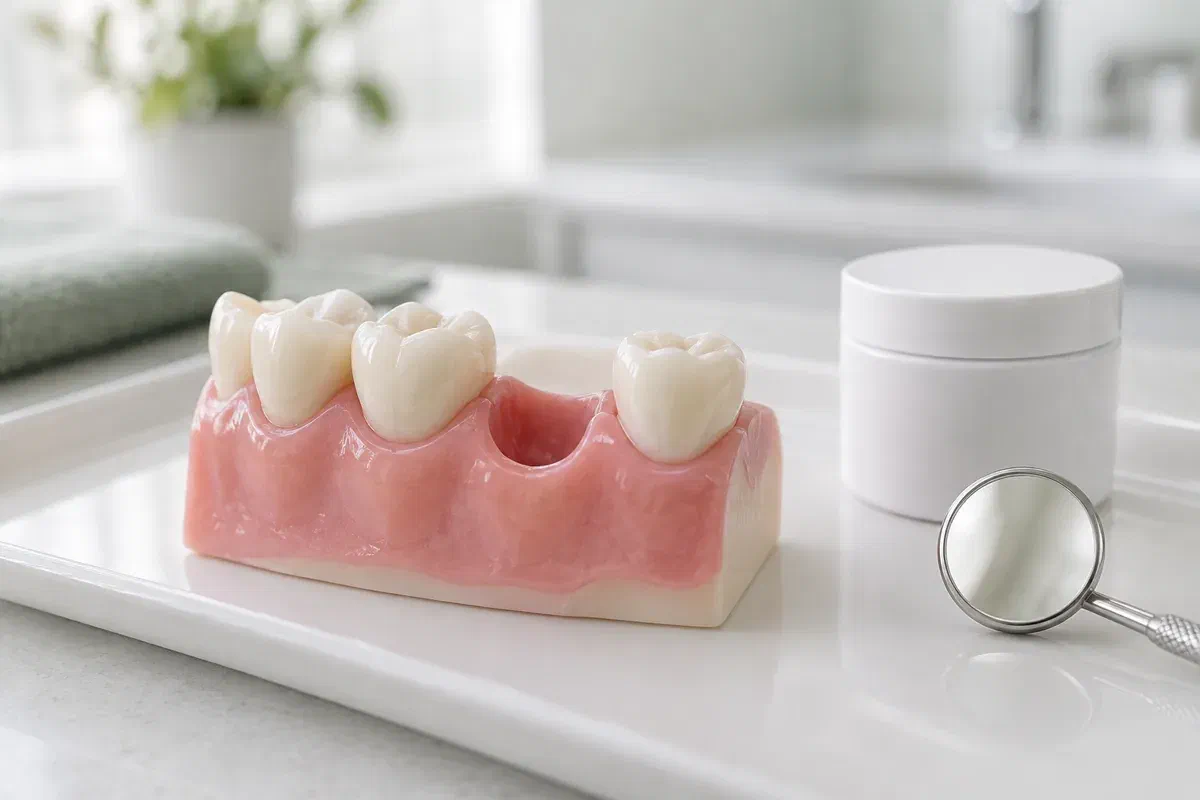
Illustrative consultation about an extraction site and future replacement planning
Restorative Dentistry

Socket Preservation in Acton

An infected or badly broken tooth can make the extraction less predictable, and the socket plan along with it. For adults coming from Acton, we talk through what is known, what can only be judged on the day, and how socket care might adapt.

When the site is less predictable

Some answers only come once the tooth is out.

X-rays and an examination reveal a great deal, but not everything. A tooth with a long-standing infection, a root that has fractured, or bone that has thinned around it can look different once it is lifted out. That uncertainty is worth discussing openly, because it affects what can be promised about the socket afterwards.

Socket preservation is a method the clinician may use at removal: graft material is placed into the empty socket, sometimes with a membrane over it, to help limit some of the change in ridge shape during healing. Whether it suits a damaged site is a judgment that can shift during the procedure. It never saves the tooth, stops all natural remodelling, or guarantees later implant suitability.

Travelling from Acton, it helps to settle the ‘what ifs’ before the appointment. We can review why the tooth needs removal, what the imaging suggests about the site, and the replacement ideas you have, then agree how any change of plan would be explained and decided.

Talk through the uncertainties first
Illustrative dental teaching model showing an empty socket between neighbouring teeth
Situations that complicate planning

Infection, bone loss, and broken roots.

You don’t need to understand the technical details. Tell the clinician what you have noticed and what you hope for, and they can explain how the site’s condition affects preservation.

You hope for an implant despite the damage

Implant planning depends on bone volume and the intended tooth position, both of which damage may affect. Ask whether preservation could help this site and which further assessments would still be needed. A compromised socket may need a different sequence.

You want to understand every possible replacement

A bridge, partial denture, or later implant assessment may all remain possible. Ask how the healed shape of a damaged site might affect each. The clinician can explain the options without treating socket care as a commitment to one.

Infection or a fractured socket wall is suspected

Active infection, lost supporting bone, or a cracked wall can change whether grafting is appropriate at extraction. Ask what is visible now and what cannot be known yet. Make sure the consent discussion covers what happens if findings differ.

Socket care is a separate question from whether the tooth should come out. Where the situation permits, ask about reasonable options for keeping it before agreeing to a removal you can’t reverse.

Realistic goals for a difficult site

Aim high, plan for change.

Even in a damaged site, preservation may be considered to reduce some of the ridge change after extraction and support the replacement in your plan. Ask the clinician how much difference they expect given what they know. The recommendation should reflect the site’s condition, your tooth’s position, and your goals rather than being routine.

Grafting brings materials, costs, aftercare, and review visits, and a compromised site may heal less predictably. Further augmentation could be needed later in any case. Weigh what preservation might help with, what it can’t achieve here, and what healing without a graft would mean for your options.

Patient information: British Dental Journal — socket preservation

A plan anchored to the replacement

Ask how the site, once healed, would relate to the bridge, partial, or implant you might want. Images or a model can make the damaged area easier to understand.

Materials chosen with the site in mind

Grafts and membranes differ in source and in how they are used. Mention preferences early. Ask what is proposed, why it suits a site in this condition, and whether an alternative would change the plan.

Follow-up that checks the bone, not just the gum

Ask how and when healing will be reviewed, and what will indicate readiness for the next step. Comfort at the surface doesn’t confirm healing below. A booked review gives you a set time to reassess.

Planning with a contingency

Expect a plan A and a plan B.

The technique depends on the tooth and what the socket looks like after removal. Ask which steps are fixed and which depend on the findings.

  1. Assess the tooth and the risk factors

    The clinician reviews the tooth, surrounding gum and bone, imaging, and your medical history. You discuss why removal is necessary and whether preservation could suit. Mention smoking, medicines, previous healing problems, and any replacement preferences.

  2. Agree the plan and the alternative

    Cover graft sources, the intended technique, costs, and what would happen if the socket is too damaged for the first approach. Ask about stitches or coverings and any later removal. Confirm how you will manage appearance and eating.

  3. Remove the tooth and decide

    If the plan proceeds and the site allows, the tooth is extracted and the socket treated as agreed. If findings differ, the approach may change within the limits you agreed. Instructions match the treatment actually performed.

  4. Review and reassess the options

    Attend follow-up and call with concerns between visits. A damaged site may need more examination or imaging before replacement is confirmed. Ask whether extra site preparation is needed and when to revisit your choices.

Healing after a complicated extraction

Watch for change, and don’t go it alone.

Keep your written aftercare and our number close. Instructions after an infected or difficult extraction may differ from a simple one, and from whatever a friend was told.

Protect the area

Follow the advice on rinsing, brushing near the socket, food, and activity. Avoid touching the site or stretching your lip to look. Ask before using any new product on the area.

Temporary appliances

A removable tooth or existing denture may need adjustment or limited wear to keep pressure off the healing site. Bring it to appointments and confirm when to wear it. Comfort on insertion isn’t proof the pressure is right.

Report signs early

Contact the team about worsening pain, unexpected bleeding, discharge, a bad taste that persists, or concerns about stitches or covering. Say when it began and follow their advice. Don’t attempt to adjust the site yourself.

Patient information: Cambridge University Hospitals — graft materials and healing considerations

Routes for a compromised socket

The findings may decide the path.

A damaged site sometimes calls for a different approach than an intact one. Ask how this socket’s condition and your preferred replacement guide the advice.

When grafting isn’t appropriate or chosen

Healing without grafting

The socket heals naturally, and the ridge is assessed afterwards. Ask what changes are likely and whether later site work may be needed. With full information, this is a valid route and doesn’t make future replacement impossible.

When the fresh socket is suitable for it

Grafting during removal

If the site allows, the agreed graft and any indicated covering are placed. Ask what improvement is realistic, what it can’t do, and what aftercare follows. Further grafting may still be needed when the replacement is planned.

If a staged plan suits the socket better

Treat the infection first, rebuild later

Some sites are better managed with ridge augmentation at a later stage or another carefully assessed approach. Immediate implant placement is a separate suitability question. Ask what the stages involve and how the gap is managed in between.

Questions about difficult extractions

What if the plan has to change?

Ask about the extraction, the socket, and how decisions are made on the day. They are linked but distinct.

(905) 876-4488
Can a socket be grafted if the tooth is infected?
It depends on the type and extent of infection and the condition of the site. Sometimes grafting at extraction is still considered; sometimes a staged approach is preferred. Ask the clinician how they would decide for your tooth.
Will I be asked before the plan changes during the procedure?
Discuss this beforehand. Many decisions can be agreed in advance as a range of options, so you know what may happen. Ask how changes would be explained, during or after treatment, and what you are consenting to.
Could I need antibiotics around the extraction?
Some situations call for them and many don’t. The clinician decides based on your health and the site. Tell them about allergies and other medicines, and take any prescription exactly as directed.
Is socket preservation the same as getting an implant at extraction?
No. Grafting the socket is different from placing an implant. Some plans combine stages in selected cases after careful assessment. Ask exactly which steps your appointment and estimate include.
Does grafting a damaged socket mean the ridge won’t change?
No. Preservation aims to limit some change, not stop natural remodelling, and damaged sites can be less predictable. Ask what benefit to expect and whether more treatment might be needed later.
Should I call before driving in from Acton if something feels wrong?
Yes. Phoning first lets the team advise whether you need to be seen and how soon. If you have trouble breathing or swallowing, seek emergency medical care rather than travelling to the clinic.
Planning from Acton

Agree the what-ifs before the extraction.

Book a discussion at our Bronte Street practice before removal where possible. We will review the tooth and imaging, explain the socket care options, and set out how changes would be handled and what may follow.

If the tooth is painful or swelling is spreading, call for advice about prompt assessment rather than delaying care while you plan a replacement.

Visit Milton Dental Clinic
Unit 1, 342 Bronte St. S, Milton, ON L9T 5B7
Get directions Clinic hours
Monday–Thursday
11am–7pm
Friday–Sunday
By appointment only

Areas we serve

  • Milton
  • Oakville
  • Mississauga
  • Georgetown
  • Halton Hills
  • Acton
  • Campbellville
  • Brampton
  • Burlington
  • Puslinch
  • Rockwood
  • Erin
  • Caledon
  • Etobicoke
  • Old Milton
  • Bronte Meadows
  • Timberlea
  • Dorset Park
  • Dempsey
  • Clarke
  • Beaty
  • Coates
  • Harrison
  • Scott
  • Willmott
  • Ford
  • Bowes
  • Cobden
  • Walker
  • Mountain View
  • Milton Heights
  • Hawthorne Village
  • Valley View
  • Fallingbrook
  • Nassagaweya
  • Trafalgar
  • Esquesing
  • Nelson
  • Brookville
  • Moffat
  • Glen Williams
  • Norval
  • Limehouse
  • Stewarttown
  • Ashgrove
  • Hornby
  • Silver Creek
  • Speyside
  • Scotch Block
  • North Oakville
  • River Oaks
  • Glen Abbey
  • West Oak Trails
  • Palermo
  • Bronte Creek
  • College Park
  • Joshua Creek
  • Uptown Core
  • Preserve
  • Iroquois Ridge
  • Lisgar
  • Meadowvale
  • Meadowvale Village
  • Churchill Meadows
  • Erin Mills
  • Central Erin Mills
  • Streetsville
  • East Credit
  • Creditview
  • Heartland
  • Sheridan
  • Mount Pleasant
  • Credit Valley
  • Huttonville
  • Churchville
  • Springbrook
  • Northwest Brampton
  • Bram West
  • Fletcher's Meadow
  • Fletcher's Creek South
  • Alton Village
  • Orchard
  • Millcroft
  • Headon Forest
  • Tansley
  • Brant Hills
  • Tyandaga
  • Kilbride
  • Lowville
  • Aberfoyle
  • Morriston
  • Arkell
  • Hillsburgh
  • Freelton
  • Carlisle
  • Waterdown
  • Flamborough
  • Mountsberg

How can we help?

Milton Dental Clinic

Have a question about your smile? Choose the option that works best for you.

For urgent dental concerns, please call.
Messages are reviewed during clinic hours.