

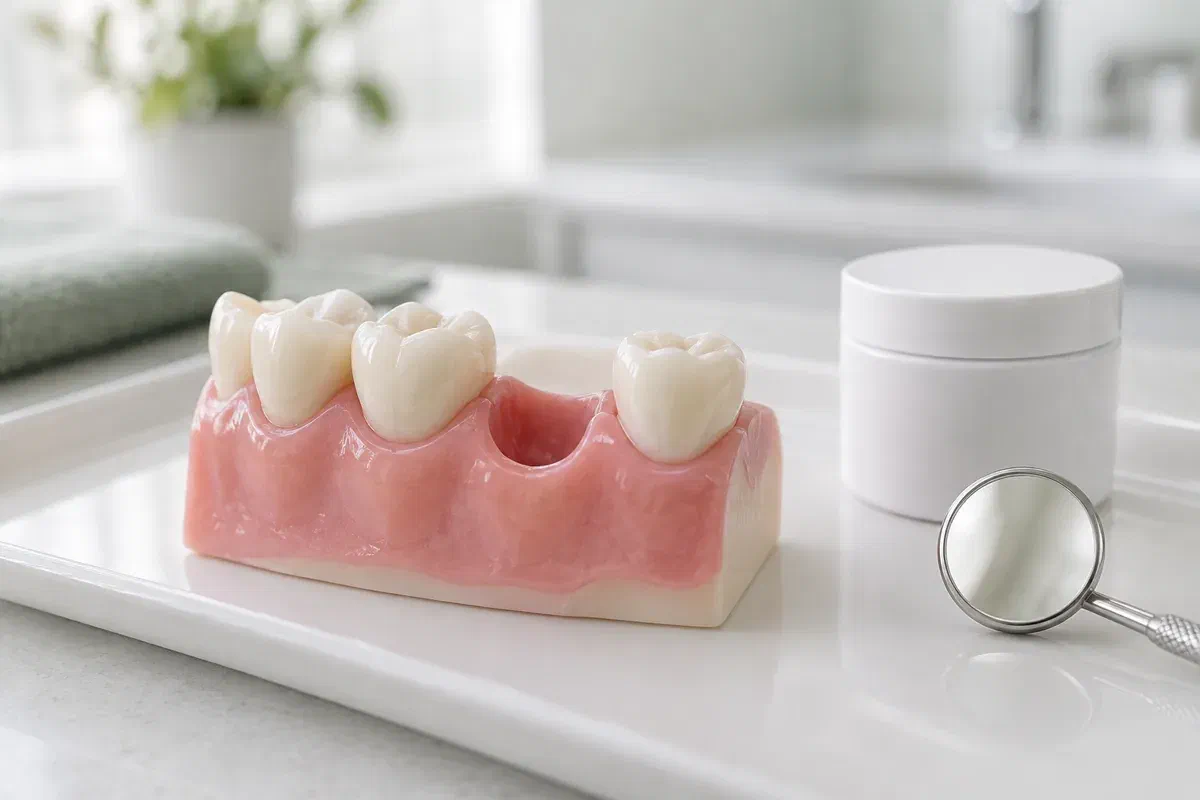
Illustrative consultation about an extraction site and future replacement planning
Restorative Dentistry

Socket Preservation in Etobicoke

Coming from Etobicoke, you probably want fewer trips and no wasted ones. Talk with us before an extraction about socket preservation, how the visits can be organised, and what to do if a problem crops up closer to home while the site heals.

Making each trip count

Plan the socket care so the journey is worth it.

A longer journey changes how you think about dental treatment. You want to arrive knowing what will happen, leave knowing what comes next, and avoid a return visit that could have been folded into an earlier one. Socket preservation is a good example of care that benefits from that kind of forethought.

Here is what it involves. A tooth’s roots are anchored in a socket of bone, and once the tooth comes out, the site heals and the ridge usually narrows over time. During removal, the clinician may pack graft material into the socket, sometimes beneath a membrane, to limit part of that narrowing when it suits your plan. It does not save the tooth, halt natural remodelling completely, or promise a future implant.

Before the extraction is booked, a planning conversation lets us cover the reason for removal, the state of the site, and whether a bridge, partial denture, or implant assessment is likely later. For travellers from Etobicoke, it is also the moment to agree how many visits the plan needs and how concerns between them will be handled.

Organise your visits before the extraction
Illustrative dental teaching model showing an empty socket between neighbouring teeth
Raise these at the first visit

Tell us your plans, and we can plan the trips.

You don’t need a final replacement in mind. Sharing the options you are considering helps the clinician decide whether preservation is relevant and how to sequence appointments.

You may want an implant one day

Bone volume and tooth position shape implant planning. Say if it is a possibility. Ask whether caring for the socket could help here and which separate assessments would be needed before implant treatment, so those can be grouped sensibly.

A bridge or denture is on the list

Both rely on the healed ridge in different ways. Mention them before removal so the clinician can explain how the site’s shape relates to each. Agreeing to socket care today doesn’t sign you up for any particular replacement.

The extraction might not be simple

Infection, bone loss, or a fractured socket wall can change the plan on the day. Ask what the imaging shows and what can only be judged during removal. Discuss beforehand how a change would be explained and consented to.

Grafting the socket and extracting the tooth are separate choices. Where time permits, ask about any reasonable way to keep the tooth before committing to a removal that cannot be reversed.

Is the extra step worth it?

A realistic look at what grafting offers.

Grafting the fresh socket is meant to reduce some of the ridge change after extraction so the area better suits the replacement you choose. Ask the clinician what difference they would expect for your tooth, given its position. A sound recommendation is tied to your plan, rather than offered as routine after any removal.

Consider the extras too: materials, fees, home care, and review appointments, each of which may mean another trip. Healing varies, and further augmentation can still be required. Balance what preservation may achieve against its limits and against what natural healing would mean for the work you have in mind.

Patient information: British Dental Journal — socket preservation

A clear reason tied to replacement

Ask how the site relates to the tooth or appliance you might choose. Seeing a model or X-ray can clarify the contours. Knowing the purpose makes the extra appointment easier to justify.

Material choices made early

Graft and membrane products differ in their source. Share any preference before the extraction visit, not on the day. Ask what will be placed, why it suits the site, and how another product would change the plan.

Reviews scheduled with intent

Ask when healing will be checked and what will confirm readiness for the next stage. A settled gum doesn’t reveal everything about the bone. Booking the review in advance saves a separate phone call later.

Visits, in order

Fewer appointments, each with a defined job.

The details depend on the tooth and socket. Ask which visits are certain and which may be added if the site turns out differently.

  1. Assessment and discussion

    Your tooth, gums, bone, imaging, and health history are reviewed. You hear why removal is advised and whether a graft suits the site. Mention smoking, medicines, previous slow healing, and your thoughts on replacement.

  2. Confirming the plan, ideally in the same visit

    Cover material sources, technique, fees, and alternatives. Ask whether stitches or a cover will be used and whether removal of either needs another appointment. Settle what you will use for appearance and eating meanwhile.

  3. The extraction

    If you proceed and the site is suitable, the tooth is taken out and the socket is grafted as agreed. Findings during removal may change the approach. Instructions and comfort measures match the procedure that was done.

  4. Review, combined where sensible

    Attend the planned follow-up and call with questions between visits. Imaging or examination may be needed before replacement is confirmed. Ask whether this review can also cover planning for the next stage.

Healing away from the clinic

Know what’s normal, and who to call nearby.

Keep the written aftercare and the clinic’s number on hand. Technique, materials, and any temporary tooth all affect the instructions you follow at home.

Give the socket peace

Stick to the advice on rinsing, brushing near the site, diet, and activity. Avoid touching the graft area or checking it repeatedly in the mirror. Ask the team before trying any new rinse or product there.

Temporary teeth need clear rules

A removable tooth or an existing denture may need adjustment or less wear so it doesn’t press on the healing area. Bring it to the planning visit and confirm when to wear it. Being able to insert it doesn’t make the pressure safe.

Phone before you drive in

Report worsening pain, unexpected bleeding, discharge, or a loose cover or stitch. Describe when it started; the team can advise whether you need to be seen and how soon. Don’t attempt to fix the wound or material yourself.

Patient information: Cambridge University Hospitals — graft materials and healing considerations

How the socket could be handled

Three paths, each with its own visit pattern.

Not every socket suits the same approach. Ask how this site and your replacement goals shape the advice, and how many appointments each path involves.

When the site heals on its own

No graft

The socket closes naturally, and the ridge is assessed when you’re ready for a replacement. Ask what changes are expected and whether site work might be needed later. Choosing this with full information is reasonable and doesn’t rule out future care.

When treating the fresh socket suits the plan

Graft at extraction

The agreed graft and any indicated cover are placed during removal. Ask about the expected benefit, the limits, and what aftercare involves. Additional grafting may still be required once a replacement is planned.

When findings suggest another order

A staged route

Some sites need ridge augmentation later or a different carefully assessed method. Placing an implant immediately is a separate suitability question. Ask how many extra visits a staged plan would add and how the site is cared for in between.

Questions from longer journeys

Practical answers for planning ahead.

Ask about the extraction, the socket, and the logistics. They are linked, but each needs a clear answer of its own.

(905) 876-4488
Can the consultation and extraction happen on the same day?
Sometimes, depending on the tooth, the information needed, and the time required for a full consent discussion. Ask when booking. Often a separate planning visit gives you time to consider the options properly.
What should I do if swelling starts on a weekend and I’m far from the clinic?
Call for advice first. If swelling is spreading, you have a fever, or breathing or swallowing becomes difficult, seek emergency medical care near you rather than travelling. Keep your aftercare sheet to show whoever sees you.
Will my stitches need a separate trip to remove them?
It depends on whether dissolving or non-dissolving stitches are used. Ask which your plan includes and whether removal can be combined with your review appointment.
Is the bone guaranteed to stay the same shape after grafting?
No. Preservation aims to limit some change, not prevent all natural remodelling. Results depend on the site, the technique, and your healing. Ask what is expected for your tooth and whether further treatment could still be needed.
Does agreeing to a graft mean I’ve chosen an implant?
No. Socket care doesn’t commit you to any replacement. Share the options you are weighing, and ask how preservation fits each one so you can decide later with better information.
Can I ask about the healed site if the tooth was removed elsewhere?
Yes. Bring any records you have and explain when the tooth came out and what was done. The approach will differ from preservation at extraction, but an examination can show whether monitoring or another strategy is suitable.
Planning from Etobicoke

One well-planned visit can save several.

Arrange a discussion at our Bronte Street practice before the tooth is removed where you can. We will review the tooth, explain the socket options, and plan the appointments so healing and replacement decisions line up.

If the tooth is painful or swelling is developing, call for advice now, and seek closer urgent care if symptoms are severe, rather than waiting.

Visit Milton Dental Clinic
Unit 1, 342 Bronte St. S, Milton, ON L9T 5B7
Get directions Clinic hours
Monday–Thursday
11am–7pm
Friday–Sunday
By appointment only

Areas we serve

  • Milton
  • Oakville
  • Mississauga
  • Georgetown
  • Halton Hills
  • Acton
  • Campbellville
  • Brampton
  • Burlington
  • Puslinch
  • Rockwood
  • Erin
  • Caledon
  • Etobicoke
  • Old Milton
  • Bronte Meadows
  • Timberlea
  • Dorset Park
  • Dempsey
  • Clarke
  • Beaty
  • Coates
  • Harrison
  • Scott
  • Willmott
  • Ford
  • Bowes
  • Cobden
  • Walker
  • Mountain View
  • Milton Heights
  • Hawthorne Village
  • Valley View
  • Fallingbrook
  • Nassagaweya
  • Trafalgar
  • Esquesing
  • Nelson
  • Brookville
  • Moffat
  • Glen Williams
  • Norval
  • Limehouse
  • Stewarttown
  • Ashgrove
  • Hornby
  • Silver Creek
  • Speyside
  • Scotch Block
  • North Oakville
  • River Oaks
  • Glen Abbey
  • West Oak Trails
  • Palermo
  • Bronte Creek
  • College Park
  • Joshua Creek
  • Uptown Core
  • Preserve
  • Iroquois Ridge
  • Lisgar
  • Meadowvale
  • Meadowvale Village
  • Churchill Meadows
  • Erin Mills
  • Central Erin Mills
  • Streetsville
  • East Credit
  • Creditview
  • Heartland
  • Sheridan
  • Mount Pleasant
  • Credit Valley
  • Huttonville
  • Churchville
  • Springbrook
  • Northwest Brampton
  • Bram West
  • Fletcher's Meadow
  • Fletcher's Creek South
  • Alton Village
  • Orchard
  • Millcroft
  • Headon Forest
  • Tansley
  • Brant Hills
  • Tyandaga
  • Kilbride
  • Lowville
  • Aberfoyle
  • Morriston
  • Arkell
  • Hillsburgh
  • Freelton
  • Carlisle
  • Waterdown
  • Flamborough
  • Mountsberg

How can we help?

Milton Dental Clinic

Have a question about your smile? Choose the option that works best for you.

For urgent dental concerns, please call.
Messages are reviewed during clinic hours.