

Illustrative consultation about an extraction site and future replacement planning
Restorative Dentistry

Socket Preservation in Georgetown

A cracked back tooth that can’t be repaired leaves a gap where you do much of your chewing. If you are coming from Georgetown, talk with us before it is removed about socket preservation, eating while the site heals, and how the area might later carry a new tooth.

When a chewing tooth gives way

A split molar, and a gap that still has work to do.

It often starts at a Georgetown kitchen table, with a sharp twinge on a crust of bread or a popcorn kernel. Weeks later, the verdict is that the crack runs too deep to fix. Once you accept that the tooth has to go, a practical question follows: what will you chew with, and what can be done with the space?

Part of the answer lies in the socket, the bony pocket the roots sat in. After extraction it heals and typically loses some width and height. Socket preservation means the clinician places graft material in that fresh space, sometimes with a membrane over it, to reduce part of that loss when it suits your treatment plan. It won’t keep the tooth, stop every natural change, or confirm that an implant will be feasible later.

Before the extraction, bring your questions from Georgetown to a planning visit. We can explain why the tooth can’t be kept, what we already know about the site, and how a bridge, a partial denture, or an implant assessment might replace that chewing surface in time.

Discuss the molar before removal
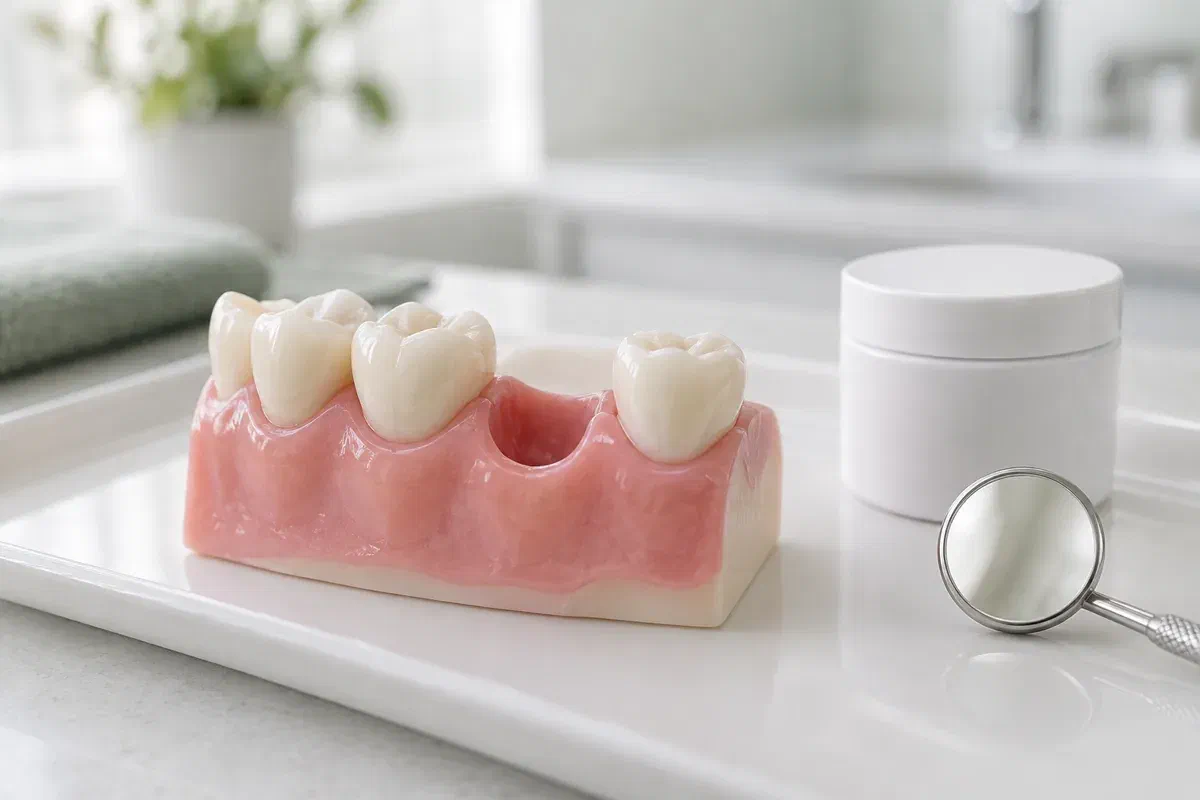
Illustrative dental teaching model showing an empty socket between neighbouring teeth
Worth saying out loud

How will you want to chew on this side again?

A final answer isn’t needed. Sharing your thoughts lets the clinician judge whether preserving the socket makes sense for a back tooth like this.

You’d like a fixed tooth back

Implants in the back of the mouth depend on available bone and the position of nearby structures. If this appeals, mention it. Ask whether socket care could help in this spot and what assessments would follow before implant work.

You’re open to other replacements

A bridge or a removable partial can also restore chewing on this side. Each relates differently to the healed ridge. Ask how the site’s shape could affect them, and remember that grafting now doesn’t bind you to any one choice.

The crack reaches below the gum

A deep split, infection, or damage to the socket walls can change the plan. Ask what imaging suggests and what will only be visible once the tooth is out. Talk through how a change of approach would be handled before consenting.

Removing a cracked tooth and grafting its socket are two separate decisions. If there is any time, ask whether a reasonable option for saving the tooth exists before going ahead with an irreversible extraction.

Why it might be suggested

A firmer starting point for a future chewing tooth.

Grafting at extraction is meant to limit some of the ridge change that follows, which may help the site suit the replacement you choose. Ask what difference the clinician anticipates for a molar in this position. Preservation should be recommended because it fits your case, not because every extraction gets the same treatment.

There are added materials, fees, home care, and appointments to think about, and healing doesn’t follow one script. Even with preservation, more augmentation may be needed later. Look at the possible benefit, the limits, and what letting the socket heal on its own would mean before you decide.

Patient information: British Dental Journal — socket preservation

Thinking about the final tooth

Ask how this socket connects to the bridge, partial, or implant you may pick. An X-ray or model can show the area clearly. It helps to understand the reason now, even if replacement waits.

Knowing the graft product

Graft materials and membranes are sourced in different ways. Bring up any preference before the extraction. Ask what is planned, why it was chosen for this site, and whether another material would alter the plan.

A meaningful check-up

Ask when healing will be assessed and what signs indicate the site can move to the next stage. A gum that no longer feels tender hasn’t necessarily finished healing beneath. A scheduled review sets a clear moment to talk replacement.

From cracked tooth to healed site

What the visits usually look like.

Each tooth and socket is different. Ask which parts of the plan are fixed and which may change when the clinician can see the site.

  1. Confirm the crack and talk about the gap

    The clinician examines the tooth, gums, bone, and imaging, and reviews your medical history. You discuss why it can’t be kept and whether grafting suits the site. Mention smoking, medicines, past healing trouble, and how you’d like to chew on that side again.

  2. Go through the socket plan

    Review material sources, the likely method, fees, and alternatives. Ask about stitches, any protective layer, and whether a later visit will be needed to remove anything. Plan your eating and any temporary replacement during healing.

  3. Removal and grafting

    If you proceed as agreed and the site is suitable, the molar is removed and the socket treated. A cracked tooth sometimes holds surprises, so the approach may change. Your instructions will reflect the procedure that was done.

  4. Healing review

    Attend the follow-up and get in touch with concerns between visits. Further imaging or examination may be needed before replacement is confirmed. Ask whether more site preparation is required and when to revisit your choices.

Eating and caring for the site

Chew on the other side, and follow your sheet.

Your written aftercare and our contact details should stay within reach. The method, materials, and any temporary tooth affect the instructions that apply to you.

Spare the treated side

Follow the advice on food, rinsing, brushing near the area, and activity. Chewing on the opposite side is often suggested; ask what applies to you. Avoid prodding the site or checking it with your tongue or finger.

Partial dentures and temporary teeth

An appliance may need adjusting or limited wear so it doesn’t bear down on the healing socket. Bring it to planning appointments and confirm when to use it. Slipping in comfortably doesn’t prove the pressure is safe.

Tell us about anything unusual

Call about increasing discomfort, unexpected bleeding, discharge, or a concern about stitches or the covering. Mention when it began and follow the guidance you are given. Don’t try to adjust the wound or replace material.

Patient information: Cambridge University Hospitals — graft materials and healing considerations

Ways to manage a molar socket

Different sites, different sensible plans.

Ask how the condition of this socket and your hopes for chewing on that side shape the recommendation.

Without a socket graft

Natural healing

The socket fills in on its own, and the ridge is assessed when you are ready to replace the tooth. Ask what changes to expect and whether extra preparation might be needed. Chosen knowingly, this is a reasonable path and leaves future options open to assessment.

Grafting the fresh socket

Preservation as the tooth comes out

The agreed graft and any covering are placed during removal. Ask what improvement is realistic, what it cannot achieve, and how home care changes. Further grafting may still be required when the replacement is planned.

When the crack or socket needs another approach

A different sequence

Some molar sites need later ridge augmentation or a different carefully assessed method. Placing an implant straight away is a separate question of suitability. Ask what the steps would be and how you will manage chewing in the meantime.

Back-tooth extraction questions

What people ask before losing a molar.

Bring questions about the extraction, the socket, and eating afterwards. These decisions link together but deserve separate answers.

(905) 876-4488
What can I eat in the first days after a socket graft?
Soft, cool, or lukewarm foods are often suggested at first, but follow the specific advice you are given. Ask what to avoid, such as very hard or crunchy foods, and when you can return to your normal diet.
Do I need to replace a back tooth at all?
That is a reasonable question to ask. The clinician can explain how a missing molar might affect chewing and neighbouring teeth in your case, and what each option, including leaving the space, would involve.
Will a cracked molar make socket preservation harder?
A crack that extends deep into the root can sometimes affect the surrounding bone or socket walls. Ask what the imaging shows and how the clinician would adapt if the site is more damaged than expected.
Could the bone still shrink even with a graft in place?
Yes, some change is expected. Preservation aims to reduce it, not stop natural remodelling. Results depend on the site, technique, and healing. Ask whether further treatment might be needed later.
If I’m not ready to decide on an implant, should I still discuss the socket?
Yes. You can share the options you’re considering without committing to any. Ask how preservation would fit each one, and whether it makes sense for this particular site.
My molar was removed last year. Can the gap still be assessed?
Yes. The healed area and your replacement options can still be examined, though the approach differs from preservation at extraction. Tell us when the tooth was removed and what care was given.
Georgetown molar planning

Plan for the chewing tooth you’ll miss.

Arrange a conversation at our Bronte Street practice before the molar is removed where you can. We will look at the tooth, explain the socket options, and help you connect healing with the replacement choices ahead.

If the cracked tooth is painful or swelling is developing, call for advice about prompt assessment rather than waiting while you consider replacements.

Visit Milton Dental Clinic
Unit 1, 342 Bronte St. S, Milton, ON L9T 5B7
Get directions Clinic hours
Monday–Thursday
11am–7pm
Friday–Sunday
By appointment only

Areas we serve

  • Milton
  • Oakville
  • Mississauga
  • Georgetown
  • Halton Hills
  • Acton
  • Campbellville
  • Brampton
  • Burlington
  • Puslinch
  • Rockwood
  • Erin
  • Caledon
  • Etobicoke
  • Old Milton
  • Bronte Meadows
  • Timberlea
  • Dorset Park
  • Dempsey
  • Clarke
  • Beaty
  • Coates
  • Harrison
  • Scott
  • Willmott
  • Ford
  • Bowes
  • Cobden
  • Walker
  • Mountain View
  • Milton Heights
  • Hawthorne Village
  • Valley View
  • Fallingbrook
  • Nassagaweya
  • Trafalgar
  • Esquesing
  • Nelson
  • Brookville
  • Moffat
  • Glen Williams
  • Norval
  • Limehouse
  • Stewarttown
  • Ashgrove
  • Hornby
  • Silver Creek
  • Speyside
  • Scotch Block
  • North Oakville
  • River Oaks
  • Glen Abbey
  • West Oak Trails
  • Palermo
  • Bronte Creek
  • College Park
  • Joshua Creek
  • Uptown Core
  • Preserve
  • Iroquois Ridge
  • Lisgar
  • Meadowvale
  • Meadowvale Village
  • Churchill Meadows
  • Erin Mills
  • Central Erin Mills
  • Streetsville
  • East Credit
  • Creditview
  • Heartland
  • Sheridan
  • Mount Pleasant
  • Credit Valley
  • Huttonville
  • Churchville
  • Springbrook
  • Northwest Brampton
  • Bram West
  • Fletcher's Meadow
  • Fletcher's Creek South
  • Alton Village
  • Orchard
  • Millcroft
  • Headon Forest
  • Tansley
  • Brant Hills
  • Tyandaga
  • Kilbride
  • Lowville
  • Aberfoyle
  • Morriston
  • Arkell
  • Hillsburgh
  • Freelton
  • Carlisle
  • Waterdown
  • Flamborough
  • Mountsberg

How can we help?

Milton Dental Clinic

Have a question about your smile? Choose the option that works best for you.

For urgent dental concerns, please call.
Messages are reviewed during clinic hours.