

Illustrative consultation about an extraction site and future replacement planning
Restorative Dentistry

Socket Preservation in Halton Hills

Grafting the socket, letting it heal naturally, or staging the work: each is a legitimate route after a tooth comes out. For adults across Halton Hills, we lay the choices side by side before the extraction so you can see what each would mean for a future replacement.

Comparing the routes first

Graft, heal, or wait and stage it?

Many people assume an extraction is followed by one standard approach. In fact, a clinician might suggest leaving the socket to heal untouched, filling it with graft material as the tooth is removed, or planning a later procedure to rebuild the ridge. Which one fits depends on the tooth, its surroundings, and what you hope to put in the gap.

Socket preservation is the middle option. Graft material is placed in the empty socket, sometimes protected by a membrane, to limit some of the shrinkage that bone and gum go through as they heal. It cannot rescue the tooth, prevent every natural change, or settle in advance whether an implant will be possible.

From anywhere in Halton Hills, the most useful step is a planning conversation before the extraction date. We can go over why removal is advised, what the site looks like, and how each route would lead toward a bridge, a partial denture, or an implant assessment.

Compare the site options with us
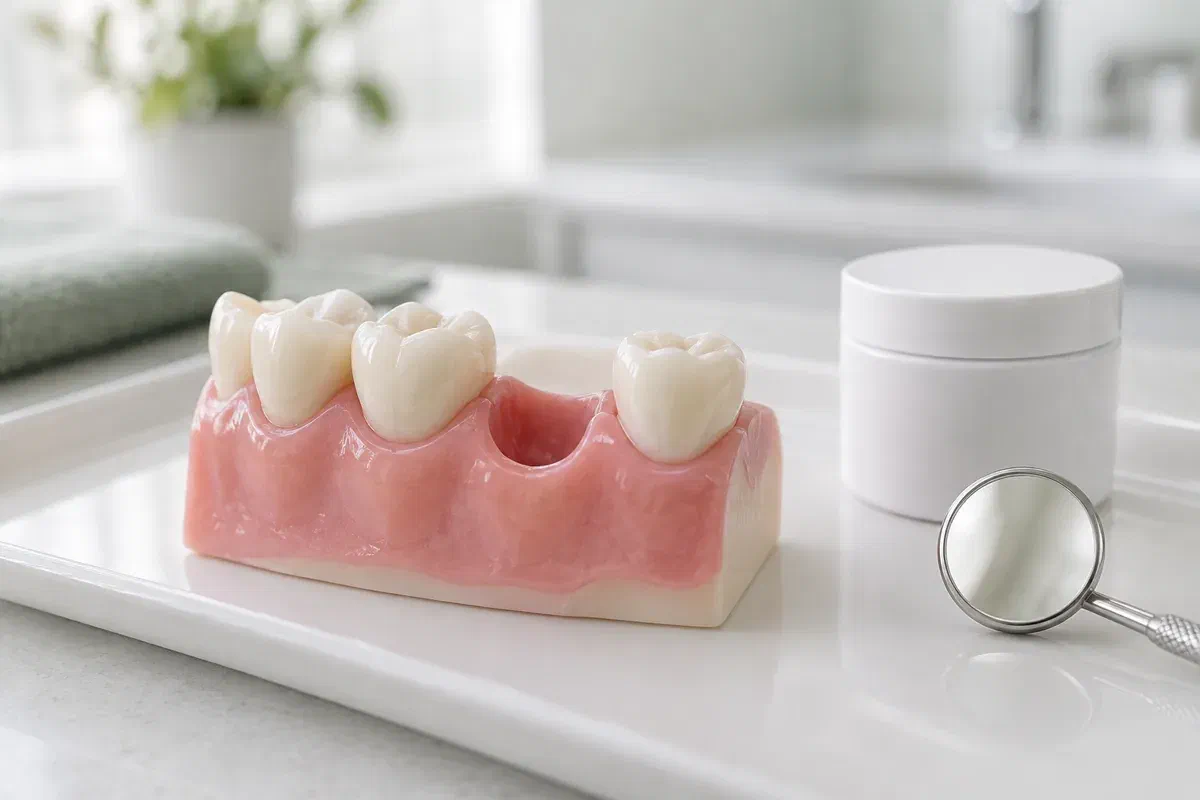
Illustrative dental teaching model showing an empty socket between neighbouring teeth
What tips the balance

Your replacement hopes, and the condition of the site.

Neither has to be settled yet. Describe what you are leaning toward, and the clinician can say whether preservation is a strong candidate or one of several reasonable paths.

If an implant is a real possibility

Implant planning hinges on bone volume and where the new tooth should sit. That can make grafting at extraction more relevant, but not automatically necessary. Ask how this site compares and which assessments would still come before implant treatment.

If a bridge or partial is more likely

The healed ridge still matters to how these fit and look, though the considerations differ. Ask the clinician to compare natural healing with grafting for these replacements. No route commits you to one particular appliance.

If the socket is compromised

Infection, missing bone, or a broken socket wall may push the plan toward a staged approach. Ask what is known from imaging and what only removal will reveal. Agree beforehand how a change of route would be discussed.

Choosing a socket strategy comes after, and separately from, the decision to extract. If circumstances allow, ask whether a reasonable option for keeping the tooth remains before agreeing to remove it permanently.

The case for and against grafting

Benefits weighed against extra steps.

In favour of preservation, a graft can reduce some of the ridge change that follows removal, which may leave the site better suited to your chosen replacement. Ask the clinician to describe that difference realistically for this tooth, without promises. The argument should rest on your circumstances, not on habit.

Against it, or at least to weigh, are added materials, fees, aftercare, and review visits. Healing is unpredictable from person to person, and further augmentation may be needed regardless. Natural healing has its own consequences for later options, so ask the clinician to spell those out as well.

Patient information: British Dental Journal — socket preservation

Each route linked to a replacement

Ask how natural healing, grafting, or staging would each affect the bridge, denture, or implant you may choose. A model or X-ray can help you picture the difference.

What a graft would be made of

Materials and membranes come from various sources. Mention preferences early. Ask what would be used, why it suits the site, and whether a different product would change the comparison between routes.

How healing will be judged

Whichever path you take, ask when the site will be reviewed and what will show it is ready for the next step. A gum that feels normal may not reflect what the bone is doing. A booked review gives you a set time to revisit decisions.

How a decision becomes a plan

Compare, choose, carry out, review.

The steps change slightly with each route. Ask which are firm and which could change once the tooth has been removed and the socket is visible.

  1. Lay out the routes

    The clinician reviews the tooth, surrounding tissue, imaging, and your medical history, then explains which approaches are reasonable. Mention smoking, medications, previous healing problems, and what you would ideally like to replace the tooth with.

  2. Choose one, with a fallback

    Discuss the materials, technique, costs, and what happens if the site differs from expectations. Ask about stitches, any covering, and follow-up removal. Agree what you will use for appearance and chewing while healing.

  3. Carry out the extraction

    If the agreed plan goes ahead and the site allows, the tooth is removed and the socket is managed as chosen. Findings may mean switching to the fallback. You receive instructions for whatever was actually done.

  4. Review and look ahead

    Keep the follow-up and call with concerns in between. More examination or imaging may come before replacement is confirmed. Ask whether the site needs further preparation and when to revisit your options.

After the extraction, whichever route

Instructions differ, so keep yours close.

Grafted and ungrafted sockets can come with different advice. Keep the written sheet and our number handy, and follow what applies to your site.

Be gentle around the area

Follow the guidance on rinsing, brushing, food, and exercise. Avoid touching the site or pulling your cheek aside to look. Before using any new mouthwash or cleaning aid nearby, ask the team.

Ask before wearing a temporary tooth

A denture or removable replacement might need adjusting, or wearing for shorter periods, to keep pressure off the socket. Bring it to your visit and confirm when it can go back in. If it feels fine, that alone doesn’t confirm it is safe.

Keep the team informed

Report pain that is building, bleeding you weren’t told to expect, discharge, or concern about stitches or the covering. Say when it began and follow the advice you get. Never try to rearrange material or close the wound yourself.

Patient information: Cambridge University Hospitals — graft materials and healing considerations

The three routes in detail

What each path involves.

The best fit depends on this socket and your goals. Ask how the condition of the site and your replacement preferences lead to the recommendation.

Natural healing, assessed later

Leaving the socket to heal

No graft is placed. Once healed, the ridge and your options are reviewed. Ask how much change to expect and whether site work might be needed before a replacement. Made with full information, this choice is valid and doesn’t mean future care is impossible.

Preservation at the extraction visit

Grafting as the tooth comes out

Graft material, and a covering if needed, are placed during removal. Ask what improvement is realistic, where the method falls short, and what home care follows. More grafting could still be needed when a replacement is planned.

A staged or alternative approach

Rebuilding later in stages

Some sites are better treated with ridge augmentation at a later date, or another carefully assessed method. Immediate implant placement is its own question of suitability. Ask what the stages would be and how the gap is managed between them.

Comparing the choices

Questions about which route to take.

Ask about the extraction, the socket strategy, and the replacement. They influence each other, but each has its own answer.

(905) 876-4488
How do I know whether grafting or natural healing suits my tooth?
The clinician will consider the tooth’s position, the condition of the socket, your health, and the replacement you are considering. Ask them to explain why one route is favoured, and what you would give up by choosing the other.
If I skip the graft now, can the ridge be rebuilt later?
Ridge augmentation is sometimes possible later, but it is a separate procedure with its own assessment, and suitability varies. Ask what a later rebuild might involve for your site before deciding to skip preservation.
Is a staged plan slower overall?
It can involve more appointments and healing time, though it may be more appropriate for some sites. Ask the clinician to outline the stages and roughly how they would fit together for you.
Can socket preservation stop all bone loss after an extraction?
No. It aims to limit some of the change, not stop natural remodelling. The result depends on the site, technique, and healing. Ask what to expect and whether additional treatment might still be needed.
Can an implant go in at the same time as the extraction instead?
Immediate implant placement is a different option with its own suitability criteria. It is not the same as socket preservation. Ask whether your site might be assessed for it and how it compares.
Can I group the visits if I live in a smaller Halton Hills community?
Yes. Share your availability and how far you’re coming, and we can try to combine planning, extraction, and review sensibly. If pain or swelling develops, call promptly rather than waiting for a grouped visit.
Halton Hills planning visits

See all three routes before choosing one.

Book a conversation at our Bronte Street practice in advance of the extraction where possible. We will examine the tooth, compare the socket options, and help you understand how each path leads to your replacement decisions.

If the tooth is painful or swelling is appearing, call for advice about being seen promptly rather than delaying while you compare options.

Visit Milton Dental Clinic
Unit 1, 342 Bronte St. S, Milton, ON L9T 5B7
Get directions Clinic hours
Monday–Thursday
11am–7pm
Friday–Sunday
By appointment only

Areas we serve

  • Milton
  • Oakville
  • Mississauga
  • Georgetown
  • Halton Hills
  • Acton
  • Campbellville
  • Brampton
  • Burlington
  • Puslinch
  • Rockwood
  • Erin
  • Caledon
  • Etobicoke
  • Old Milton
  • Bronte Meadows
  • Timberlea
  • Dorset Park
  • Dempsey
  • Clarke
  • Beaty
  • Coates
  • Harrison
  • Scott
  • Willmott
  • Ford
  • Bowes
  • Cobden
  • Walker
  • Mountain View
  • Milton Heights
  • Hawthorne Village
  • Valley View
  • Fallingbrook
  • Nassagaweya
  • Trafalgar
  • Esquesing
  • Nelson
  • Brookville
  • Moffat
  • Glen Williams
  • Norval
  • Limehouse
  • Stewarttown
  • Ashgrove
  • Hornby
  • Silver Creek
  • Speyside
  • Scotch Block
  • North Oakville
  • River Oaks
  • Glen Abbey
  • West Oak Trails
  • Palermo
  • Bronte Creek
  • College Park
  • Joshua Creek
  • Uptown Core
  • Preserve
  • Iroquois Ridge
  • Lisgar
  • Meadowvale
  • Meadowvale Village
  • Churchill Meadows
  • Erin Mills
  • Central Erin Mills
  • Streetsville
  • East Credit
  • Creditview
  • Heartland
  • Sheridan
  • Mount Pleasant
  • Credit Valley
  • Huttonville
  • Churchville
  • Springbrook
  • Northwest Brampton
  • Bram West
  • Fletcher's Meadow
  • Fletcher's Creek South
  • Alton Village
  • Orchard
  • Millcroft
  • Headon Forest
  • Tansley
  • Brant Hills
  • Tyandaga
  • Kilbride
  • Lowville
  • Aberfoyle
  • Morriston
  • Arkell
  • Hillsburgh
  • Freelton
  • Carlisle
  • Waterdown
  • Flamborough
  • Mountsberg

How can we help?

Milton Dental Clinic

Have a question about your smile? Choose the option that works best for you.

For urgent dental concerns, please call.
Messages are reviewed during clinic hours.