

Illustrative consultation about an extraction site and future replacement planning
Restorative Dentistry

Socket Preservation in Mississauga

What actually goes into an extraction socket, and where does it come from? For anyone in Mississauga weighing socket preservation, we explain the materials, the reasons they might be suggested, and how the healed site connects to replacing the tooth.

Knowing what will be placed

Materials matter to many people. Ask about them early.

For some, the first concern about socket preservation isn’t the procedure but the product. Graft materials can be synthetic or derived from human or animal sources, and membranes vary too. Personal, dietary, or faith-based preferences are entirely reasonable to raise, and the right moment is well before the extraction.

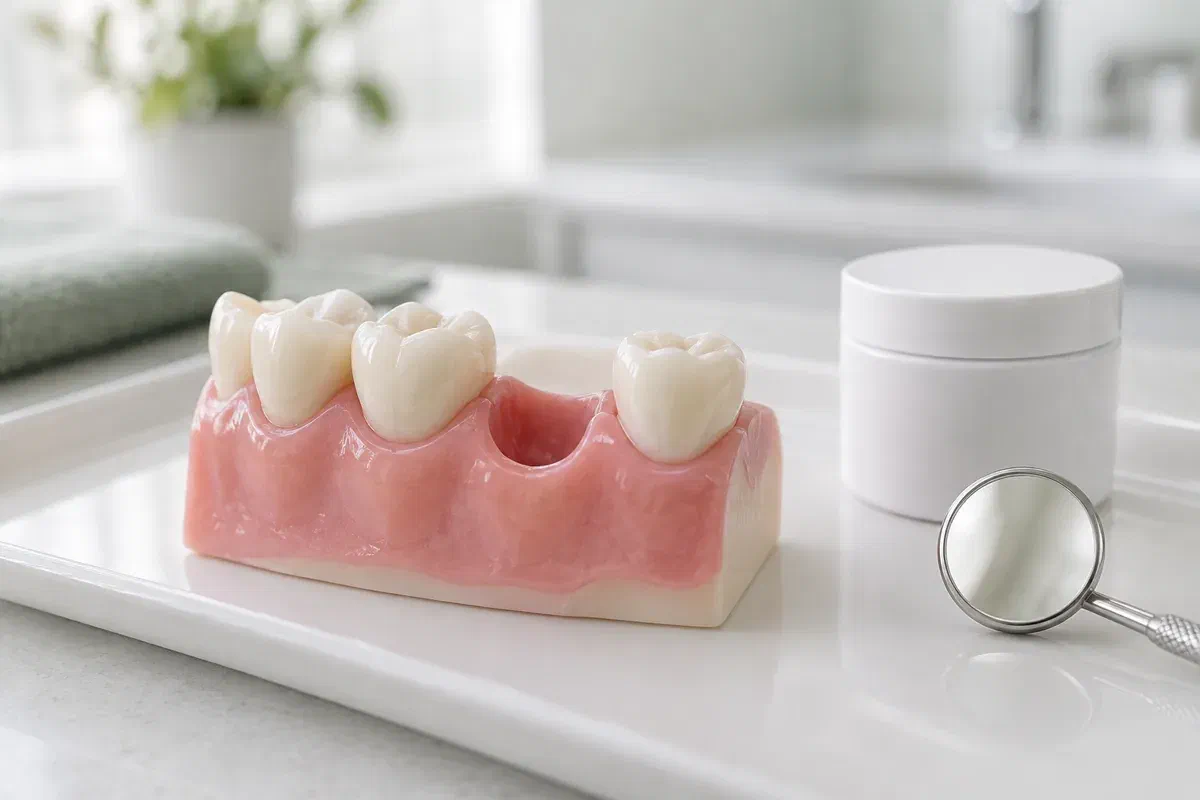
To put the material in context: a tooth’s roots are held in a bony socket, and after removal the area heals and tends to shrink in width and height. Preservation means placing graft material in that fresh socket, sometimes with a membrane on top, to reduce part of the change when it suits your plan. It doesn’t save the tooth, keep the bone exactly as it was, or confirm that an implant will work later.

When you come from Mississauga for a planning visit, bring your questions about sources along with your thoughts on a bridge, partial denture, or implant. We can explain why removal is advised, what we know about the site, and whether an alternative material would change anything in the plan.

Ask about graft materials before removal
Illustrative dental teaching model showing an empty socket between neighbouring teeth
Before you agree to a graft

Your preferences and plans both count.

You can arrive with questions rather than decisions. Share what matters to you so the clinician can explain whether preservation is relevant and which materials would fit.

An implant may follow

Implant planning considers bone volume and where the new tooth would be positioned. If it is on your list, say so. Ask whether preserving this site could help, which material would be used, and what separate checks would still be needed before an implant.

Another replacement is more likely

A bridge or a removable partial also rests on or over the healed ridge. Discuss these before removal where you can. The clinician can explain whether socket care matters for them, and clarify that one step doesn’t commit you to the next.

The site may hold surprises

Infection, bone loss around the root, or a damaged socket wall can affect both the technique and the material chosen. Ask what imaging shows now and what can only be judged during removal. Possible changes belong in the consent conversation.

Agreeing to grafting is a separate decision from agreeing to extraction. Where time allows, ask whether a reasonable option to keep the tooth exists before a removal that can’t be undone.

Why a graft might be offered

A site prepared for what comes next.

The purpose is to limit some of the ridge change that follows extraction, giving a site that better suits the replacement in your plan. Ask the clinician how much benefit they foresee for this tooth and how the chosen material contributes. The case for preservation should rest on your situation, not on a belief that every socket needs filling.

Grafting adds a product, a fee, aftercare, and review visits, and healing is never identical between people. Further augmentation may still be required. A balanced choice compares the possible gain, the limits, and what natural healing without any graft would mean for your future options.

Patient information: British Dental Journal — socket preservation

Purpose tied to the replacement

Ask how this socket relates to the tooth or appliance you may choose. Images or a model can make the contours easier to understand. The reason should be clear even if the replacement is months away.

Sources explained in plain terms

Ask whether the proposed graft is synthetic, human-derived, or animal-derived, and the same for any membrane. Explain any preference. Ask why the product suits the site and whether an alternative would change the expected outcome.

Healing judged properly

Ask when and how the site will be examined. The gum settling comfortably doesn’t reveal everything about the bone. A planned review gives you a defined time to discuss replacement again.

Steps from consultation to check-up

Each stage includes a chance to ask.

The procedure is tailored to the tooth and socket. Ask which parts are firm and which depend on what the clinician sees once the tooth is out.

  1. Consultation and records

    Your tooth, gums, bone, imaging, and health history are reviewed. The clinician explains why removal is recommended and whether preservation suits the site. Tell them about smoking, medications, earlier healing issues, and replacement ideas.

  2. Choosing the material and method

    Discuss the graft and membrane sources, the expected technique, costs, and alternatives. Ask whether stitches or a covering will be used and if anything needs removing later. Plan what you will use for appearance and eating meanwhile.

  3. The extraction and socket care

    When the agreed plan proceeds and the site permits, the tooth is removed and the chosen material placed. Unexpected findings may change the approach or the product used. Instructions and comfort measures reflect what was actually done.

  4. Review and next decisions

    Attend the follow-up and get in touch about any worries in between. More examination or X-rays may be needed before a replacement is confirmed. Ask whether more preparation is needed and when to revisit your options.

Protecting the material while it settles

Small habits help the graft stay put.

Keep your written instructions and the clinic’s number within reach. The material, the technique, and any temporary tooth influence the guidance you should follow.

Don’t disturb the socket

Follow the advice on rinsing, brushing around the area, food, and exercise. Avoid poking the site or stretching your lip to inspect it. Check with the team before using a new mouthwash or cleaning product there.

Use temporary teeth carefully

A removable replacement or an existing denture might need adjusting or limited wear so it doesn’t press on the graft. Bring it to planning visits and ask when it can be worn. A comfortable fit doesn’t prove the pressure is safe.

Let the team know about changes

Report worsening pain, unexpected bleeding, discharge, or concerns that the cover, stitches, or material have shifted. Explain when it began and follow their advice. Don’t try to press material back or adjust the wound yourself.

Patient information: Cambridge University Hospitals — graft materials and healing considerations

Site management choices

With a graft, without one, or in stages.

Sockets differ, and so do the sensible approaches. Ask how this one’s condition, your material preferences, and your replacement plans affect the advice.

When preservation is declined or not needed

No graft, natural healing

The socket heals without added material, and the ridge is assessed later alongside your options. Ask which changes are expected and whether site preparation might be needed in future. Declining a graft can be an informed, reasonable choice.

When treating the fresh socket fits the plan

Graft placed at extraction

The agreed material, and any indicated cover, is placed as part of the procedure. Ask about the expected benefit, the limits, and the aftercare. More grafting may still be needed when the final replacement is planned.

When the site needs another sequence

Staged or alternative care

Some sites call for later ridge augmentation or another carefully assessed approach. Placing an implant straight away is a separate suitability question. Ask what the alternative involves and how the area will be protected in the meantime.

Questions we hear from Mississauga

Ask anything about what goes in the socket.

Questions about the graft itself, the extraction, and later replacement are all welcome. They are linked decisions, each with its own answer.

(905) 876-4488
Can I ask for a synthetic graft instead of one from an animal or human source?
You can certainly ask. The clinician can explain which materials are available for your site and whether a synthetic option would suit it. Share your reasons openly so the trade-offs, if any, can be explained clearly.
Will the clinician tell me exactly which product is used?
You can ask for the type of graft and membrane before you consent, and for that information to be recorded. If findings during removal change the plan, ask how and when that would be explained to you.
Can I have socket preservation if I have allergies?
Tell the clinician about all allergies and sensitivities, including to medicines, latex, or specific materials. They can explain how this affects product choice and whether further information from your doctor would help.
Is the ridge still going to change after grafting?
Some change is expected even with preservation, which aims to limit it rather than stop natural remodelling. Ask what difference the clinician expects in your case and whether extra bone or gum treatment may still be needed later.
Do I have to decide on a replacement before the graft is placed?
No, though sharing your possibilities helps. Preservation doesn’t commit you to an implant. Ask how it fits each reasonable replacement plan so you can make an informed choice now and a final decision later.
Does preservation at removal mean I can put off replacement for years?
It isn’t a guarantee that the site will stay unchanged. Your oral health and the area should be reassessed when you are ready. Tell the clinician your likely timing and ask when the next check should be.
Planning for Mississauga

Clear answers about materials, before the extraction.

Book a conversation at our Bronte Street clinic ahead of removal where possible. We will look at the tooth, explain the socket care and material options, and help you see how healing leads into your replacement choices.

If the tooth is aching or swelling has begun, call for advice about assessment rather than delaying care while you consider replacements.

Visit Milton Dental Clinic
Unit 1, 342 Bronte St. S, Milton, ON L9T 5B7
Get directions Clinic hours
Monday–Thursday
11am–7pm
Friday–Sunday
By appointment only

Areas we serve

  • Milton
  • Oakville
  • Mississauga
  • Georgetown
  • Halton Hills
  • Acton
  • Campbellville
  • Brampton
  • Burlington
  • Puslinch
  • Rockwood
  • Erin
  • Caledon
  • Etobicoke
  • Old Milton
  • Bronte Meadows
  • Timberlea
  • Dorset Park
  • Dempsey
  • Clarke
  • Beaty
  • Coates
  • Harrison
  • Scott
  • Willmott
  • Ford
  • Bowes
  • Cobden
  • Walker
  • Mountain View
  • Milton Heights
  • Hawthorne Village
  • Valley View
  • Fallingbrook
  • Nassagaweya
  • Trafalgar
  • Esquesing
  • Nelson
  • Brookville
  • Moffat
  • Glen Williams
  • Norval
  • Limehouse
  • Stewarttown
  • Ashgrove
  • Hornby
  • Silver Creek
  • Speyside
  • Scotch Block
  • North Oakville
  • River Oaks
  • Glen Abbey
  • West Oak Trails
  • Palermo
  • Bronte Creek
  • College Park
  • Joshua Creek
  • Uptown Core
  • Preserve
  • Iroquois Ridge
  • Lisgar
  • Meadowvale
  • Meadowvale Village
  • Churchill Meadows
  • Erin Mills
  • Central Erin Mills
  • Streetsville
  • East Credit
  • Creditview
  • Heartland
  • Sheridan
  • Mount Pleasant
  • Credit Valley
  • Huttonville
  • Churchville
  • Springbrook
  • Northwest Brampton
  • Bram West
  • Fletcher's Meadow
  • Fletcher's Creek South
  • Alton Village
  • Orchard
  • Millcroft
  • Headon Forest
  • Tansley
  • Brant Hills
  • Tyandaga
  • Kilbride
  • Lowville
  • Aberfoyle
  • Morriston
  • Arkell
  • Hillsburgh
  • Freelton
  • Carlisle
  • Waterdown
  • Flamborough
  • Mountsberg

How can we help?

Milton Dental Clinic

Have a question about your smile? Choose the option that works best for you.

For urgent dental concerns, please call.
Messages are reviewed during clinic hours.