

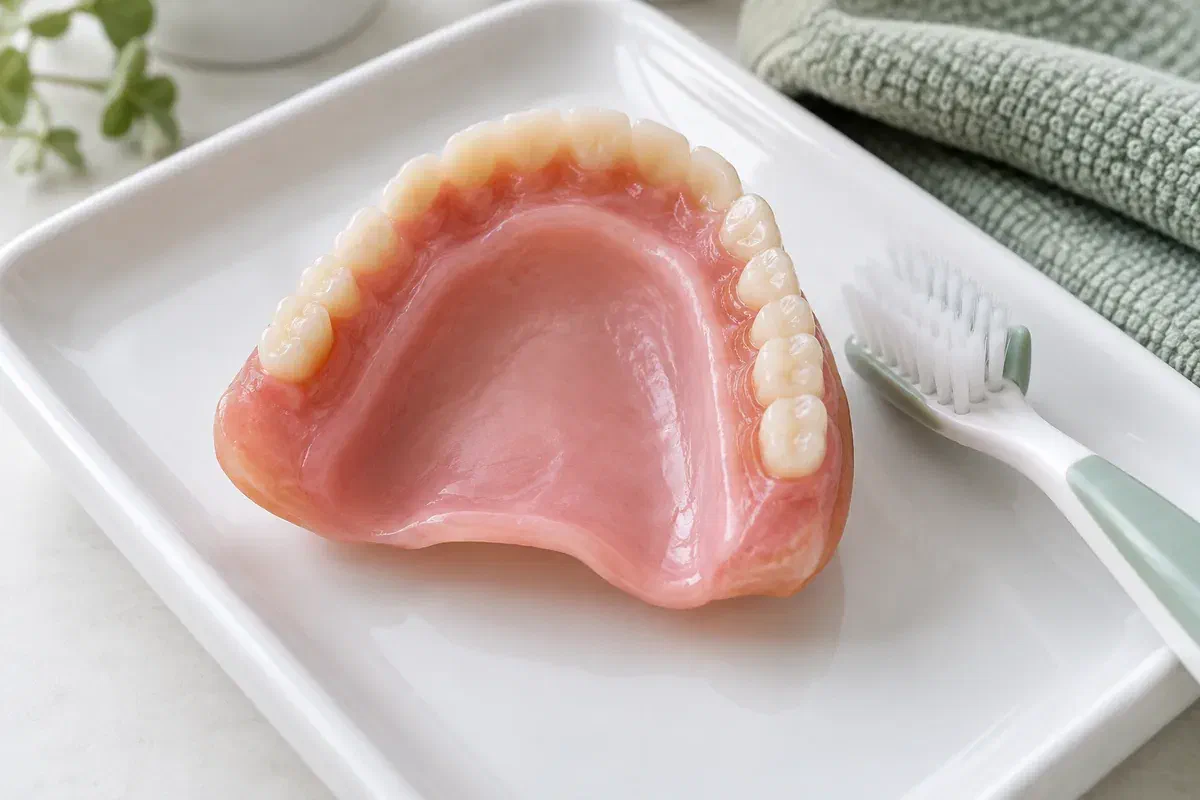
Illustrative discussion of the fitting surface of a removable denture
Restorative Dentistry

Soft Denture Relines

A sensitive denture-bearing area needs a careful fit review. Discuss soft denture relines in Milton, including when a cushioning material may help, how it is maintained, and what other care may be needed.

A closer look at soft denture relines

Consider the surface against your gums, and the fit behind it.

A soft denture reline adds a resilient material to the surface of a suitable denture that rests against the tissues. It may be considered when that contact needs cushioning or when a temporary tissue-management approach is appropriate. The material and intended duration depend on the clinical situation.

Soreness under a denture is not a diagnosis by itself. Pressure points, movement, the bite, changes in the supporting ridge, and tissue conditions can all influence comfort. A soft layer cannot reliably compensate for every problem, so the denture and your mouth need to be examined before relining is recommended.

At Milton Dental Clinic, bring the appliance and explain where and when discomfort occurs. Tell us about previous adjustments, liners, or products you have tried. We can discuss whether a soft reline has a useful role, what it would be expected to improve, and how it compares with adjusting, relining differently, or replacing the denture.

Arrange a denture comfort assessment
Illustrative upper denture with a smooth pale pink lining on its fitting surface
Understanding the discomfort

Describe the contact, movement, and wearing pattern.

The most helpful account includes how the denture feels during ordinary use and what changes when you take it out. Do not keep wearing a painful appliance simply to prove the problem.

Tenderness beneath the denture

Point out the area that becomes sore and whether it happens immediately or after several hours. Mention any ulcer, redness, or bleeding. The clinician examines the tissues and the corresponding part of the denture rather than assuming a softer lining is the only answer.

A fit that has changed

Tell us if the appliance has become loose, rocks, or needs more adhesive than before. The tissues supporting a denture can change over time. The assessment considers adaptation, support, and the bite before deciding what kind of reline or other care is appropriate.

An existing liner that feels different

Bring the denture if a soft lining has hardened, separated, become rough, or developed a persistent odour. Explain how you clean and store it. The material may need review or replacement, and the underlying reason for using it should be reassessed too.

A persistent sore area should be examined rather than covered repeatedly with new material. Contact the clinic if a mouth ulcer or unexplained tissue change is not healing.

What cushioning may contribute

Set a specific comfort goal and a review plan.

For an appropriate denture and tissue condition, a resilient lining can change how the fitting surface contacts sensitive areas. Ask which part of your discomfort it is intended to address. A useful goal might concern tolerance of the appliance during normal use, rather than a promise that all pressure or movement will disappear.

Soft materials have their own care and replacement needs. They can change with use, and not every cleaning product is suitable. Discuss whether the proposed material is a short-term measure or a longer-term lining, how its condition will be checked, and what would lead the clinician to recommend a different approach.

Patient information: ACP — assessment before relining or replacing dentures

A purpose matched to the findings

Ask whether the aim is cushioning, temporary tissue management, or another specific need. Different materials and techniques may be used for different purposes. Understanding the reason makes the follow-up discussion clearer when you describe how the denture feels afterward.

An opportunity to retain a suitable appliance

If the denture’s teeth, design, and overall condition remain appropriate, a reline may allow continued use of that appliance. The clinician should explain what it can preserve and which existing limitations will remain. Relining does not renew every part of a denture.

A practical care routine

Ask which brush, cleanser, and storage method are appropriate for the material selected. Demonstrate any difficulty handling the appliance so the instructions can be made manageable. The proposed comfort benefit needs to be balanced with a routine you can maintain.

Your soft reline appointments

Assess the tissues before changing the fitting surface.

The technique and appointment sequence vary with the material and intended purpose. Ask whether the denture will need to be left at the clinic or sent for laboratory work.

  1. Review the mouth and current appliance

    The clinician examines sore areas, fit, support, the bite, and the denture’s condition. Explain how long you wear it and which products you use. Tissue treatment or adjustment may be needed before a reline is considered.

  2. Discuss the appropriate material and alternatives

    Ask whether a soft lining is suitable and whether it is intended as temporary or ongoing care. Review the limitations, maintenance, estimated costs, and other reasonable options. Confirm how any existing liner will be managed.

  3. Adapt the fitting surface using the chosen method

    The denture is prepared and the appropriate records or lining procedure are completed. Some approaches are carried out directly and others involve a laboratory. The clinician explains what happens during the visit and any period when the appliance will be unavailable.

  4. Check the result and arrange review

    The fit, borders, bite, and comfort are assessed after the reline. You receive instructions specific to the material. Confirm when to return so the clinician can review tissue response and whether the lining is meeting its intended purpose.

Caring for the softer surface

Gentle, material-specific care is part of the treatment.

Keep the cleaning instructions for the liner actually used. Advice that suited your old acrylic denture may not be suitable for the new lining.

Check products before soaking

Ask which cleansers can be used and for how long. Some products or prolonged soaking may damage a soft lining. Do not assume that a tablet labelled for dentures is suitable for every material, and avoid hot water or abrasive cleaning.

Handle the edges without pulling

Clean as demonstrated and avoid picking at the junction between the liner and the denture base. If an edge lifts or becomes rough, arrange a review. Do not trim, glue, or add another home lining material over it.

Describe comfort and material changes

Report persistent pressure, new sores, unusual odour, separation, or a change in softness. Keep the recommended appointment even if the initial result feels comfortable. The clinician needs to assess both the material and the tissues over time.

Patient information: Royal Cornwall Hospitals — care of dentures with a soft lining

Choosing how to improve the fit

The solution depends on what is causing the difficulty.

Ask which option addresses the tissue findings and the appliance’s limitations. A softer surface is one possible tool within a wider assessment.

When a specific cause needs attention

Adjustment or treatment of a local problem

A pressure point, bite issue, or tissue condition may need its own treatment. Relining before understanding that problem could leave the cause unresolved. Ask what the examination shows and whether a limited intervention is appropriate.

When the fitting surface needs renewal

A soft or hard reline

Different reline materials serve different purposes. A hard reline and a resilient lining are not interchangeable choices based only on preference. Discuss the expected fit, cushioning needs, maintenance, and duration for the material proposed.

When the existing appliance has wider limitations

A new denture or broader reassessment

Worn teeth, repeated repairs, an unsuitable design, or substantial bite problems may make replacement more appropriate. Ask what a reline would leave unchanged and how a new appliance would address those limitations. Compare the full plan and any interim care.

Questions about soft denture relines

Know what the liner is meant to do and how to care for it.

The material name and instructions are useful details to keep. Bring them to later appointments if the denture was relined elsewhere.

(905) 876-4488
Is a soft denture reline the same as adding denture adhesive?
No. A reline changes the denture’s fitting surface using a material selected and placed for a clinical purpose. Adhesive is a separate product used to assist retention. Ask whether your fit problem needs assessment rather than increasing adhesive to compensate for discomfort or movement.
Does a soft reline replace worn denture teeth?
No. It acts on the tissue-facing surface and does not renew the teeth or correct every bite problem. The clinician assesses whether the rest of the appliance remains suitable. If tooth wear or design is a major issue, a different plan may be recommended.
How long can I expect a soft lining to stay useful?
That depends on the material, its intended purpose, your mouth, and how it is maintained. Some linings are temporary and others are intended for longer use. Ask for the expected review schedule and signs of deterioration rather than relying on a universal replacement interval.
Can I continue using my usual denture-soaking tablets after a soft reline?
Check with the clinician first. Some products or soaking routines can affect the lining. Ask for instructions for the specific material, including cleaning frequency and storage. If you do not know what liner was used, contact the practice that placed it before changing products.
What should I do if the soft lining starts peeling at an edge?
Arrange a review and avoid pulling or trimming the material. Explain whether the edge is catching food or causing soreness. The clinician can assess the lining’s condition and whether it needs repair, replacement, or a different approach to the underlying denture fit.
Can a soft reline be used while my mouth changes after extractions?
A temporary lining or tissue-conditioning approach may be considered in selected circumstances, but the choice depends on healing and the appliance. Ask how it fits the longer-term denture plan and when the fit will be reassessed as the tissues change.
Soft denture reline assessments in Milton

Let’s understand the soreness before changing the surface.

Bring your denture to our Bronte Street practice for a review of comfort, fit, and tissue health. We can explain whether a soft lining is appropriate and what maintenance or other treatment the appliance may need.

Mention persistent ulcers, bleeding, or difficulty wearing the denture when you call so the team can plan an appropriate assessment.

Visit Milton Dental Clinic
Unit 1, 342 Bronte St. S, Milton, ON L9T 5B7
Get directions Clinic hours
Monday–Thursday
11am–7pm
Friday–Sunday
By appointment only

How can we help?

Milton Dental Clinic

Have a question about your smile? Choose the option that works best for you.

For urgent dental concerns, please call.
Messages are reviewed during clinic hours.