

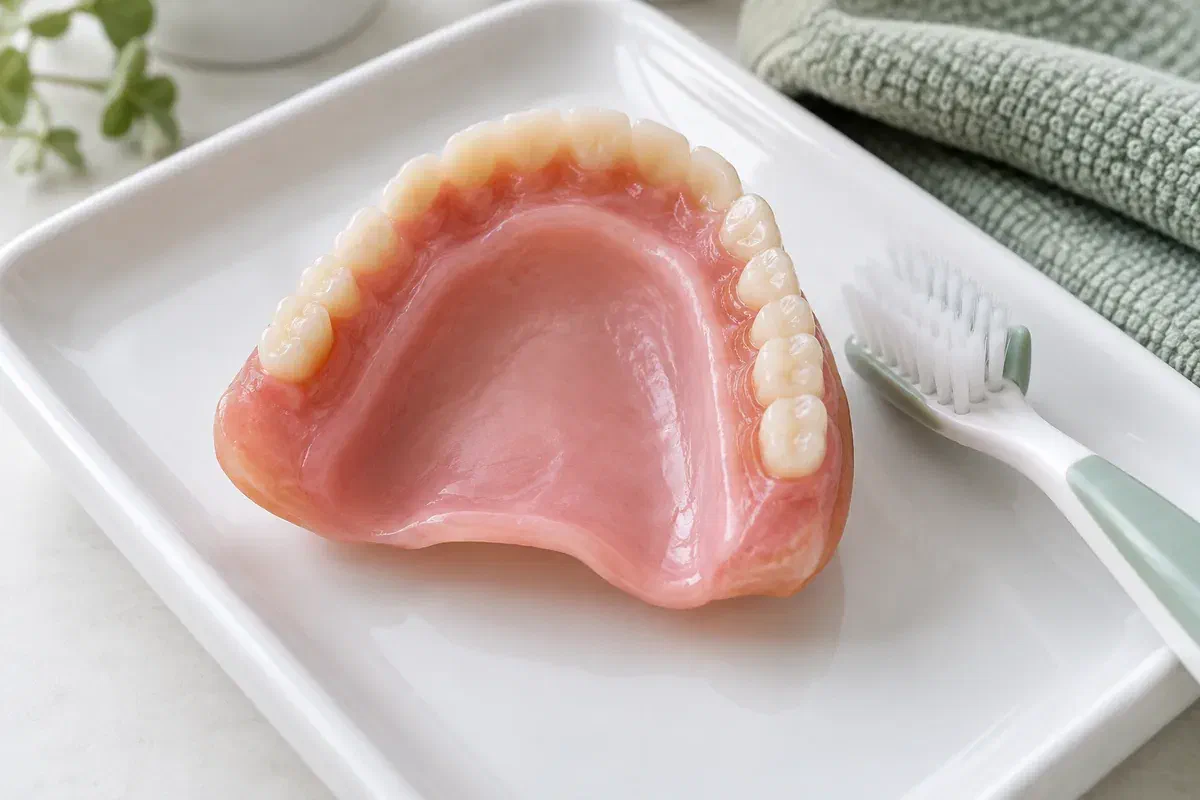
Illustrative discussion of the fitting surface of a removable denture
Restorative Dentistry

Soft Denture Relines in Acton

Lower dentures are often the harder ones to live with, especially over a thin or sharp ridge. Wearers from Acton can have the lower ridge, the fit and the gums examined, and hear whether a resilient soft lining could ease the pressure.

Acton · lower denture comfort

Why the bottom denture often hurts more

An upper denture spreads its load across the palate. A lower one rests on a narrower horseshoe of gum and bone, and over years that ridge can become thin, flat or sharp in places. Every bite then presses a small area of tissue against hard acrylic. A soft reline is one approach a clinician may consider here: a pliable layer is bonded to the tissue side of a suitable denture to soften that contact.

A difficult lower ridge is not the only reason for pain, though. The denture may move with the tongue and cheeks, the bite may load one side, a border may be too long, or the tissue may be irritated for another reason. Cushioning answers some of these and hides others. So the lower ridge, the appliance and the way your teeth meet are all examined before any lining is offered.

Bring both dentures when you visit from Acton, even if only the lower one is sore. Tell us where it hurts, whether it is worse during meals or speaking, and what adjustments, liners or adhesives you have already tried. We can then explain whether a soft lining is reasonable for your ridge, what it is expected to change, and how it compares with adjusting, a hard reline or a new appliance.

Book a lower denture assessment
Illustrative upper denture with a smooth pale pink lining on its fitting surface
Common lower denture complaints

Sharp spots, sliding and sore chewing

Lower dentures tend to show problems during meals and conversation. Describe what you notice at those times, and what changes when the denture is out. Please do not keep wearing a painful one just to bring the soreness to the appointment.

Pinpoint pain along the ridge

A thin or bony ridge can produce a sharp, specific soreness when you bite. Show us where it is and whether it appears straight away or after a while. Ulcers, redness or bleeding are important to mention. We look at the ridge and the denture above it before suggesting cushioning.

Lifting and sliding on the bottom

Lifting when you open wide, moving when you talk, or needing more and more adhesive are common lower-denture frustrations. The ridge may have shrunk over time. We assess support, the borders and your bite before choosing a reline approach.

An existing liner that has worn through

On a lower denture, a soft lining takes a lot of load. If yours has thinned, hardened, separated or begun to smell, bring it in. Describe how you clean and store it. The material may need renewal, and its purpose should be rechecked.

A spot on the ridge that is sore every time you eat should be examined rather than padded over again. Call the clinic if an ulcer or any unexplained change in your mouth is not healing.

What cushioning can do for a lower ridge

Spread the pressure, set the expectations.

For a suitable lower denture over a ridge that is thin or tender, a resilient lining can change how biting pressure reaches the tissue. Ask which symptom it is aimed at. A reasonable goal may be eating and talking with less soreness. It does not make a lower denture as stable as natural teeth, and it will not stop all movement.

Soft linings bring their own upkeep. They age with use, and certain cleaners or heat can damage them. Ask whether the lining is meant to be temporary or to stay longer, how it will be examined at future visits, and what findings would lead the clinician to suggest a hard reline, a new denture or a referral to discuss other options.

Patient information: ACP — assessment before relining or replacing dentures

A reason matched to your ridge

Cushioning a sharp ridge, supporting irritated tissue for a while and other aims call for different materials. Ask which one is being targeted. That helps you report clearly at review how meals and speaking have changed.

Keeping a lower denture you can use

When the teeth, design and overall state of the denture are still serviceable, relining may let you continue with it. Ask what it preserves and which problems, such as worn teeth or design limits, it leaves as they are.

Upkeep that suits your routine

Ask which brush, cleaning product and overnight storage the lining needs. If gripping a small lower denture is awkward, show us. A comfort gain is only worthwhile if the maintenance is manageable for you every day.

Relining a lower denture

From the ridge exam to the review visit

Timing depends on the material and its role. Ask whether your denture can be lined during the visit or needs time at a laboratory, and how that affects meals.

  1. Examine the ridge, bite and denture

    We check sore points, the shape of the ridge, support, borders, the bite and the denture’s condition. Mention your daily wearing time and products. An adjustment or tissue care may be needed before any reline.

  2. Explain suitability and alternatives

    We discuss whether a resilient lining is appropriate for your lower ridge and whether it is short-term or ongoing. Limitations, care, estimated costs and other reasonable options are reviewed, including any liner already present.

  3. Apply the lining

    The denture base is readied and the selected lining or impression is completed. Some techniques are finished chairside; others involve a laboratory. We let you know how long the appointment takes and whether the appliance will be away.

  4. Check comfort under load

    Fit, borders, bite and comfort are checked, including how the denture behaves when you close and chew. You receive care advice for that material and a review date so we can see how the ridge tissue is responding.

Looking after a lined lower denture

A softer surface asks for a gentler routine.

Keep the instructions for the specific liner. Lower dentures are easily dropped and the lining easily scuffed, so handle them over a folded towel or a basin of water.

Check every cleaning product

Ask which cleansers suit the lining and how long it can soak. Some products and long soaks can damage soft materials. Avoid hot water and anything abrasive.

Protect the thin edges

Lower linings often have narrow borders. Clean as shown, avoid picking at the edge, and book a visit if it lifts or roughens. Do not trim, glue or add a pharmacy liner over it.

Notice how meals feel

Report lasting pressure, new sore spots, odour, peeling or the material getting firmer. Attend your review even if the denture feels better. The lining and the ridge tissue both need checking over time.

Patient information: Royal Cornwall Hospitals — care of dentures with a soft lining

Options for a difficult lower ridge

Cushion it, reline it firmly, or rethink the denture?

Ask which option answers the exam findings and the limits of your current denture. A softer lining is one possibility in a wider plan.

When a single point is the problem

Relieve a pressure spot or treat tissue

A sharp area, a high spot or a tissue condition may need direct adjustment or treatment. Relining before that could leave the cause in place. Ask what the exam showed and whether a smaller fix is enough.

When the lower fitting surface needs renewing

Soft lining or hard reline

Each material has its own purpose and they are not chosen by preference alone. Discuss the expected fit, how much cushioning your ridge needs, maintenance and how long the material should last.

When the appliance itself limits comfort

A new lower denture or wider review

Worn teeth, repeated repairs, a poor design or major bite issues may favour replacement. Ask which problems relining leaves untouched and how a new denture, or other options the clinician may discuss, would compare.

Lower denture questions from Acton

Thin ridges, soft liners and stability

Keep a note of the material placed and its care advice. If another office lined your denture, bring that information.

(905) 876-4488
Why is my lower denture so much harder to wear than my upper?
A lower denture has less supporting area and is moved by the tongue and cheeks, so it is often less stable. A thin ridge adds pressure. The clinician can explain which factors apply in your case and what may help.
Can a soft lining help a sharp or thin lower ridge?
In suitable cases a resilient lining may be considered to cushion a ridge that is thin or tender. It depends on the denture and the tissue. The clinician will explain whether it is appropriate and what it can realistically change.
Will a soft reline stop my lower denture moving when I talk?
It may improve fit, but movement during speech has several causes, including ridge shape and the design of the denture. A soft lining cannot guarantee stability. Ask what improvement is realistic for you.
Should I line both dentures if only the lower one hurts?
Not necessarily. The clinician assesses each appliance and the bite between them. Sometimes only one needs attention; sometimes changes to one affect how the other fits. Bring both so they can be checked together.
How will I know when the liner on my lower denture needs replacing?
Signs include thinning, hardening, peeling, roughness or an odour that will not clean away. Lifespan depends on the material, its purpose and your care. Ask for a review schedule rather than counting on a fixed interval.
Can I use denture paste on top of a soft liner?
Ask the clinician first, since some adhesives may not suit certain lining materials. If you are relying on more paste to keep the denture comfortable, mention it at your review because the fit may need reassessing.
Lower denture reviews for Acton

We start with the ridge, not the lining.

At our Bronte Street practice we examine your lower ridge, the fit of both dentures and the health of your gums. We will explain whether a resilient lining is suitable and what other care your lower denture may need.

When you call, mention any sore that is not healing, bleeding, or being unable to wear the lower denture, so the right appointment can be arranged.

Visit Milton Dental Clinic
Unit 1, 342 Bronte St. S, Milton, ON L9T 5B7
Get directions Clinic hours
Monday–Thursday
11am–7pm
Friday–Sunday
By appointment only

Areas we serve

  • Milton
  • Oakville
  • Mississauga
  • Georgetown
  • Halton Hills
  • Acton
  • Campbellville
  • Brampton
  • Burlington
  • Puslinch
  • Rockwood
  • Erin
  • Caledon
  • Etobicoke
  • Old Milton
  • Bronte Meadows
  • Timberlea
  • Dorset Park
  • Dempsey
  • Clarke
  • Beaty
  • Coates
  • Harrison
  • Scott
  • Willmott
  • Ford
  • Bowes
  • Cobden
  • Walker
  • Mountain View
  • Milton Heights
  • Hawthorne Village
  • Valley View
  • Fallingbrook
  • Nassagaweya
  • Trafalgar
  • Esquesing
  • Nelson
  • Brookville
  • Moffat
  • Glen Williams
  • Norval
  • Limehouse
  • Stewarttown
  • Ashgrove
  • Hornby
  • Silver Creek
  • Speyside
  • Scotch Block
  • North Oakville
  • River Oaks
  • Glen Abbey
  • West Oak Trails
  • Palermo
  • Bronte Creek
  • College Park
  • Joshua Creek
  • Uptown Core
  • Preserve
  • Iroquois Ridge
  • Lisgar
  • Meadowvale
  • Meadowvale Village
  • Churchill Meadows
  • Erin Mills
  • Central Erin Mills
  • Streetsville
  • East Credit
  • Creditview
  • Heartland
  • Sheridan
  • Mount Pleasant
  • Credit Valley
  • Huttonville
  • Churchville
  • Springbrook
  • Northwest Brampton
  • Bram West
  • Fletcher's Meadow
  • Fletcher's Creek South
  • Alton Village
  • Orchard
  • Millcroft
  • Headon Forest
  • Tansley
  • Brant Hills
  • Tyandaga
  • Kilbride
  • Lowville
  • Aberfoyle
  • Morriston
  • Arkell
  • Hillsburgh
  • Freelton
  • Carlisle
  • Waterdown
  • Flamborough
  • Mountsberg

How can we help?

Milton Dental Clinic

Have a question about your smile? Choose the option that works best for you.

For urgent dental concerns, please call.
Messages are reviewed during clinic hours.