
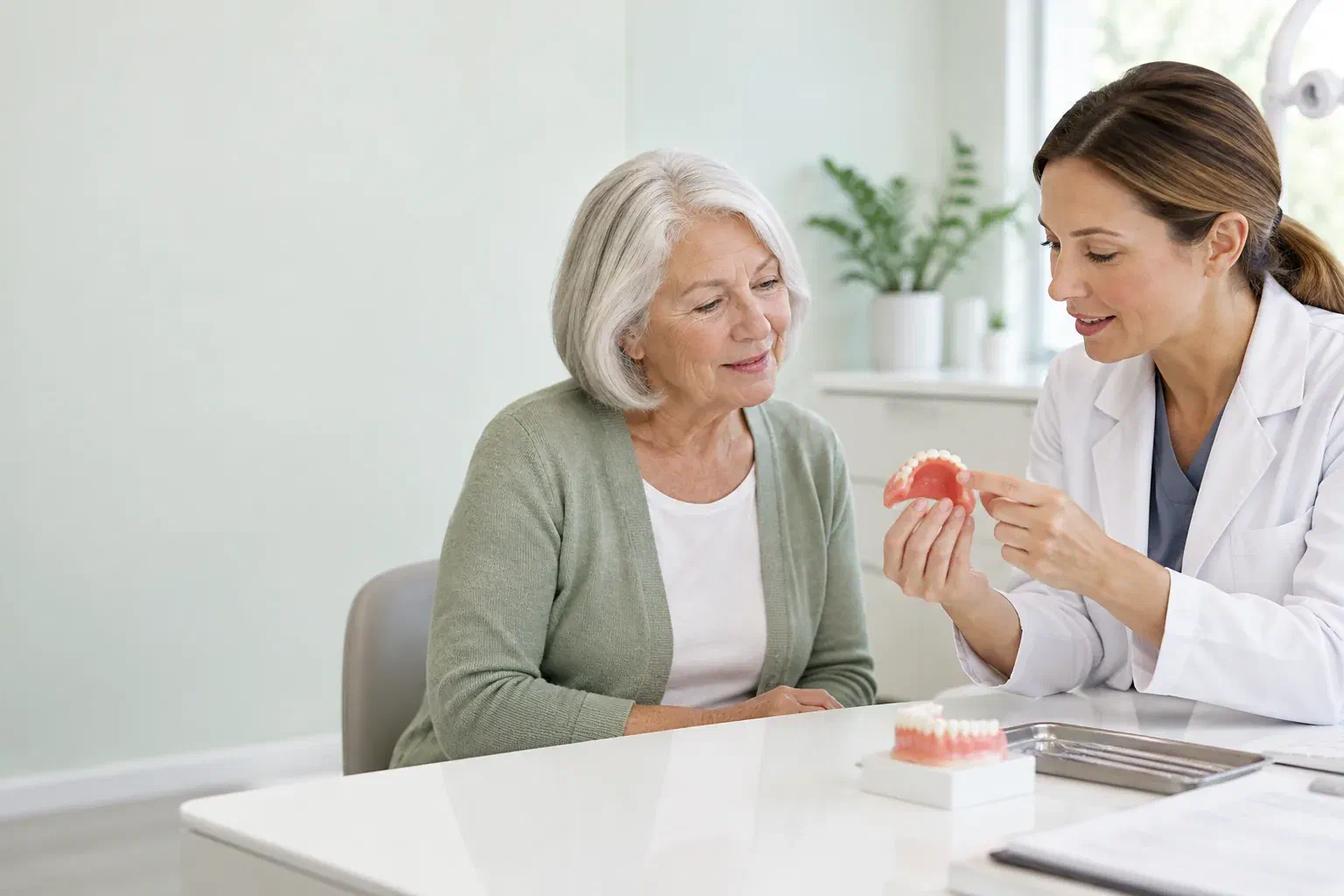
Illustrative discussion of the fitting surface of a removable denture
Restorative Dentistry

Soft Denture Relines in Brampton

Sometimes it is a son or daughter who notices that a parent keeps taking their denture out. Families from Brampton can bring a relative in to review sore gums, denture fit and whether a soft reline, with a manageable care routine, is appropriate.

Brampton families and denture care

When a loved one stops wearing their denture

A denture left on the bedside table, softer meals at dinner, or a parent who has gone quiet at family gatherings can all point to the same problem. The appliance hurts. A soft reline is one way a clinician may respond: a flexible material is added to the gum side of a suitable denture to cushion contact, or to give sore tissue a temporary chance to recover.

Still, avoiding the denture is a symptom with several possible causes. A pressure spot, a loose fit, an uneven bite, a ridge that has changed or an irritated patch of tissue may be responsible. A softer surface cannot correct all of them, so the denture and the mouth both need examining before any lining is recommended.

If you are helping someone come in from Brampton, it is useful to attend the appointment with them if they wish. Bring the denture and any notes about when it is worn and where it seems to hurt. Mention earlier adjustments, liners or products. We can then discuss whether a soft reline fits, what it is meant to improve and how it compares with other options.

Book a visit for a family member
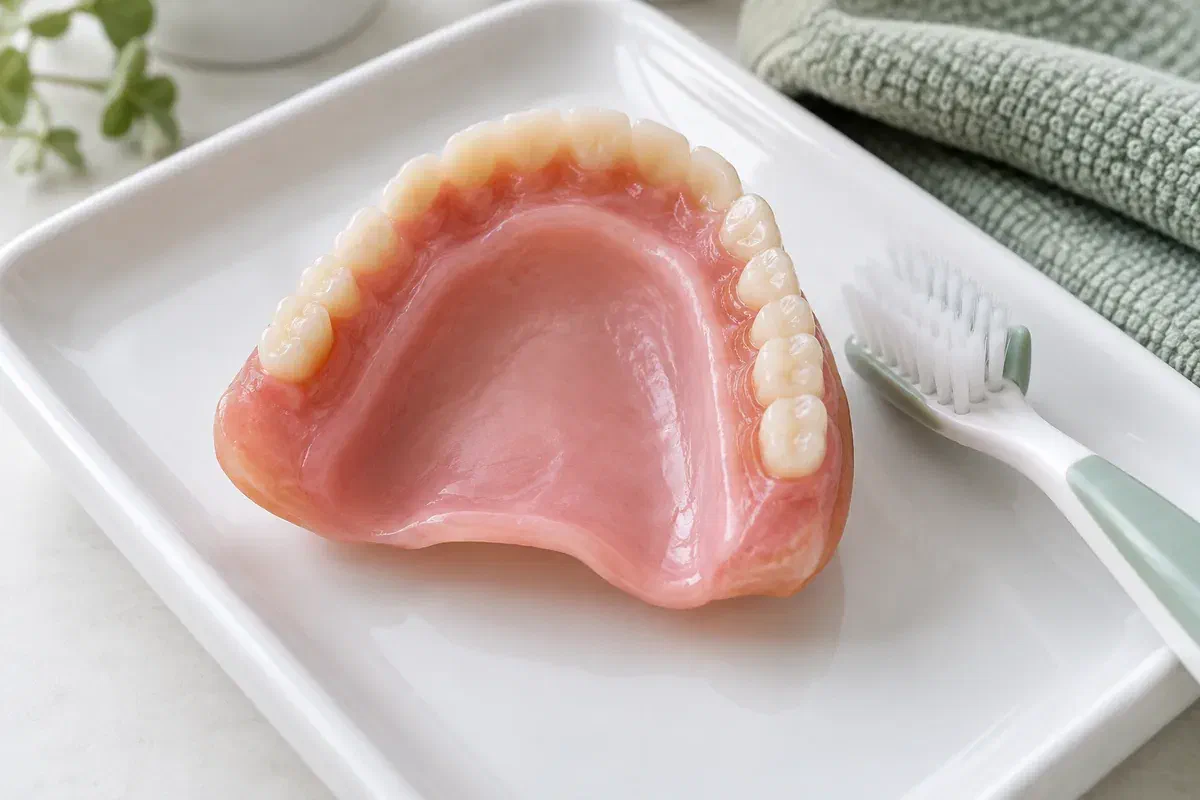
Illustrative upper denture with a smooth pale pink lining on its fitting surface
What you might be noticing

Changes at home that are worth mentioning

Caregivers often see patterns the wearer does not mention. Share what happens during an ordinary day, and do not encourage your relative to keep wearing a painful appliance just to demonstrate the problem.

Wincing or rubbing at the gums

Note whether discomfort seems to start right away or after hours of wear, and where. Mention ulcers, redness or bleeding you have seen. We examine the tissue and the part of the denture that rests on it, instead of assuming cushioning is the solution.

A denture that slips or clicks

Movement during speech, dropping while eating or an increasing reliance on adhesive suggests the fit may have changed. Supporting tissues reshape over time. We review adaptation, support and the bite before deciding on any reline.

A liner that seems worn or unclean

If an existing soft lining looks hardened, separated or rough, or holds an odour, bring the denture in. Tell us who cleans it and how it is stored overnight. The material may need replacing and its original purpose reviewed.

A sore area that keeps returning should be examined, not hidden under more lining material. Contact us if a mouth ulcer or unexplained change does not heal.

What a soft lining may offer

A comfort goal the whole family understands

For a suitable denture and tissue condition, a resilient lining alters how the fitting surface meets tender spots. Ask which part of the discomfort it is intended to address. A useful goal might be wearing the denture through meals and visits more comfortably, not a promise that all pressure or movement will stop.

These materials carry their own care needs, which matters when more than one person helps with cleaning. They change with use and some products are not suitable. Ask whether the lining is temporary or longer term, how it will be monitored, and what would lead the clinician to suggest a different approach.

Patient information: ACP — assessment before relining or replacing dentures

A clearly explained reason

Cushioning, temporary tissue support or another specific need each lead to different materials and techniques. Ask which applies so everyone involved in care understands. That makes it easier to report back at the follow-up.

Keeping a familiar denture

If the teeth, design and overall condition are still suitable, relining may let your relative continue with an appliance they are used to. The clinician should explain what it preserves and which limitations remain.

Care steps anyone can follow

Ask which brush, cleaner and storage method suit the material, and whether written instructions can be provided. Show us any difficulty with handling the denture. The benefit must be balanced against a routine the household can manage.

Planning the appointments

Here is what happens, in order.

The sequence depends on the material and its purpose. If you are arranging transport or time off to help, ask early whether the denture will stay with us or go to a laboratory.

  1. Examine the mouth and denture

    The clinician checks the tender gum, how securely the denture sits, the way the teeth meet and the state of the appliance. Tell us how long it is worn each day and which products are used. Tissue treatment or adjustment may be needed before relining.

  2. Explain the options together

    We discuss whether a soft lining is suitable and whether it is temporary or ongoing. Limitations, maintenance, estimated costs and reasonable alternatives are reviewed with the wearer and anyone they want involved.

  3. Carry out the reline

    The denture is prepared and the chosen lining or impression is completed. Some methods are finished during the visit and others use a laboratory. We explain any period when the appliance will be unavailable so meals can be planned.

  4. Check comfort and set a review

    Fit, borders, bite and comfort are assessed, and care instructions specific to the material are given. A return visit lets us see how the tissues respond and whether the lining is doing what it was meant to.

Shared care at home

Everyone who helps should know the routine

Keep the written advice for the liner used, and share it with anyone who cleans the denture. Older habits may not suit the new material.

Use only approved cleansers

Ask which products are suitable and how long soaking can last. Some cleansers or long soaks can damage a soft lining. Avoid hot water and abrasive products, and make sure the whole household knows this.

Handle the denture gently

Clean as demonstrated and avoid pulling at the edge where the liner meets the base. If it lifts or roughens, arrange a review rather than trimming, gluing or adding an over-the-counter liner.

Watch for changes and report them

Mention it if pressure lingers, a new sore appears, the lining smells, starts to come away or feels firmer than it did. Keep the follow-up appointment even if comfort improves. Both material and tissues need monitoring.

Patient information: Royal Cornwall Hospitals — care of dentures with a soft lining

Deciding together

Three directions, depending on what we find

Ask which option addresses the exam findings and the appliance’s limitations. A softer lining is one tool, not the only one.

When a single cause is identified

Adjust or treat one specific problem

A pressure point, a bite issue or a tissue condition may need its own care. Relining first could leave it unresolved. Ask what was found and whether a limited intervention would be enough.

When the fitting surface needs renewal

A soft or a hard reline

Reline materials have different purposes and are not interchangeable by preference. Discuss the expected fit, cushioning needs, cleaning demands and how long the proposed material should last.

When the appliance has wider limits

A new denture

Worn teeth, repeated repairs, an unsuitable design or significant bite problems may make replacement better. Ask what a reline would not change and how a new denture would address that. Consider interim care too.

Questions families from Brampton ask

Helping someone through a soft reline

Keep the liner material name and the care instructions in a place everyone can find. Bring them to future appointments.

(905) 876-4488
Can I come into the appointment with my parent?
Yes, if they would like you there. A family member can help describe what happens at home and take note of care instructions. The clinician will speak with the wearer directly and involve you as they wish.
My mother has arthritis. Can the cleaning routine be simplified?
Tell us about any difficulty with grip or dexterity. The clinician can suggest suitable brushes, cleansers and storage methods for the material and demonstrate the steps. The routine should be realistic for whoever does the cleaning.
Is it all right to leave the denture out at night after a soft reline?
Many clinicians recommend giving the tissues a rest, but ask for advice specific to your relative’s mouth and lining material. Ask how the denture should be stored overnight so the liner is protected.
What if my parent cannot tell me where it hurts?
Note what you observe, such as avoiding certain foods, removing the denture or touching one area. The clinician will examine the tissues and the appliance directly. Mention any change in eating or behaviour when you book.
Does adhesive replace the need for a soft reline?
No. Adhesive assists retention, while a reline changes the fitting surface for a clinical reason. If more and more adhesive is being used to keep the denture comfortable, the fit should be assessed.
How long should a soft lining remain in good condition?
It depends on the material, its purpose, the mouth and the care routine. Some linings are temporary and others are designed for longer use. Ask for a review schedule and the signs of wear to watch for at home.
Family-friendly denture reviews for Brampton

Comfort first, then the right lining

Bring your relative and their denture to our Bronte Street practice for a review of fit, comfort and gum health. We will explain whether a soft lining is appropriate and what care or other treatment may help.

If your relative has an ulcer that is not healing, any bleeding, or now refuses to wear the denture, say so on the phone. It helps the team book enough time.

Visit Milton Dental Clinic
Unit 1, 342 Bronte St. S, Milton, ON L9T 5B7
Get directions Clinic hours
Monday–Thursday
11am–7pm
Friday–Sunday
By appointment only

Areas we serve

  • Milton
  • Oakville
  • Mississauga
  • Georgetown
  • Halton Hills
  • Acton
  • Campbellville
  • Brampton
  • Burlington
  • Puslinch
  • Rockwood
  • Erin
  • Caledon
  • Etobicoke
  • Old Milton
  • Bronte Meadows
  • Timberlea
  • Dorset Park
  • Dempsey
  • Clarke
  • Beaty
  • Coates
  • Harrison
  • Scott
  • Willmott
  • Ford
  • Bowes
  • Cobden
  • Walker
  • Mountain View
  • Milton Heights
  • Hawthorne Village
  • Valley View
  • Fallingbrook
  • Nassagaweya
  • Trafalgar
  • Esquesing
  • Nelson
  • Brookville
  • Moffat
  • Glen Williams
  • Norval
  • Limehouse
  • Stewarttown
  • Ashgrove
  • Hornby
  • Silver Creek
  • Speyside
  • Scotch Block
  • North Oakville
  • River Oaks
  • Glen Abbey
  • West Oak Trails
  • Palermo
  • Bronte Creek
  • College Park
  • Joshua Creek
  • Uptown Core
  • Preserve
  • Iroquois Ridge
  • Lisgar
  • Meadowvale
  • Meadowvale Village
  • Churchill Meadows
  • Erin Mills
  • Central Erin Mills
  • Streetsville
  • East Credit
  • Creditview
  • Heartland
  • Sheridan
  • Mount Pleasant
  • Credit Valley
  • Huttonville
  • Churchville
  • Springbrook
  • Northwest Brampton
  • Bram West
  • Fletcher's Meadow
  • Fletcher's Creek South
  • Alton Village
  • Orchard
  • Millcroft
  • Headon Forest
  • Tansley
  • Brant Hills
  • Tyandaga
  • Kilbride
  • Lowville
  • Aberfoyle
  • Morriston
  • Arkell
  • Hillsburgh
  • Freelton
  • Carlisle
  • Waterdown
  • Flamborough
  • Mountsberg

How can we help?

Milton Dental Clinic

Have a question about your smile? Choose the option that works best for you.

For urgent dental concerns, please call.
Messages are reviewed during clinic hours.