Rubbing that has returned
Show us the spot that has become sore again and when it starts. Mention any ulcer, redness or bleeding. We compare that tissue with the part of the denture resting on it, rather than assuming the liner alone is to blame.


Soft linings do not stay soft forever. If yours has stiffened, peeled or started to smell, our team can see Burlington denture wearers to review the liner, the gums beneath it and whether relining again is the right step.
It is common to hear that a soft lining was a relief for months and then slowly lost its give. Resilient denture liners are flexible materials added to the tissue-facing side of a suitable appliance. They can cushion sensitive gums or serve as a short-term measure while tissue recovers, and like most flexible materials, they age with use and cleaning.
A worn liner is one possibility, but not the only one. The ridge under the denture may have kept changing, the bite may be off, a hard edge may press, or the tissue may be irritated for another reason. Simply laying down a new layer could miss those problems, so we examine the denture and your mouth before anything is replaced.
Bring the appliance as it is now, without trimming or cleaning off any loose sections. Tell us when it was relined, by whom if you know, and what material was used. With that history we can explain whether a fresh soft reline makes sense, or whether adjustment, a firmer reline or a new denture would be the better choice.
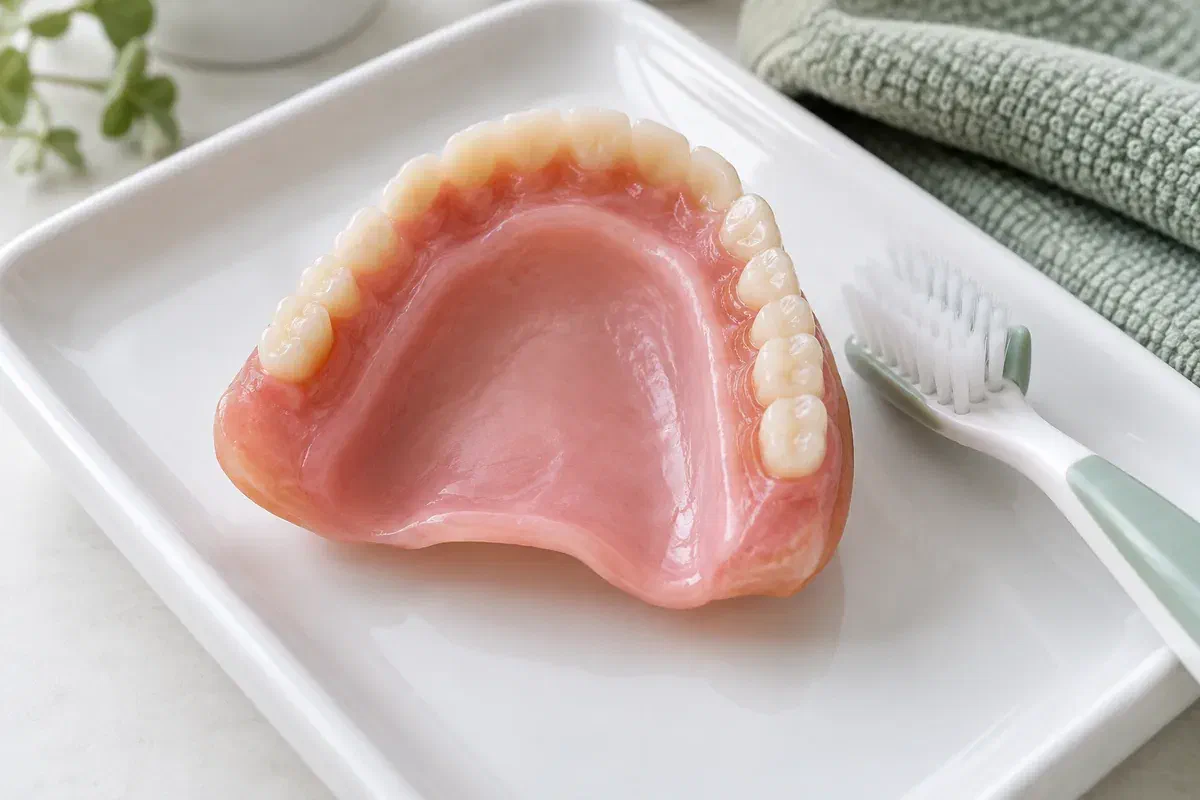
Tell us how the denture behaves on a typical day and whether your gums settle when it is out. Wearing a sore appliance longer will not make the exam more accurate.
Show us the spot that has become sore again and when it starts. Mention any ulcer, redness or bleeding. We compare that tissue with the part of the denture resting on it, rather than assuming the liner alone is to blame.
Movement when speaking, lifting at the back or needing extra adhesive can follow gradual changes in the ridge. We check adaptation, support and the bite to judge which reline approach, if any, fits the current situation.
A soft lining that has firmed up, separated from the base, developed a rough patch or kept an odour after cleaning needs a look. Describe how you clean and store the denture. The material may need replacing and its purpose reconsidered.
A sore patch that returns despite new material deserves examination, not another layer. Call the clinic if a mouth ulcer or unusual tissue change is not healing.
On a well-suited denture over suitable tissue, a fresh resilient lining changes how the fitting surface meets tender areas. Ask which symptom it is meant to help. A realistic target might be comfortable wear through ordinary meals and conversation, not freedom from every bit of pressure or motion.
Because the previous liner aged, it is worth asking what will happen with this one. Ask whether the new material is intended for short-term use or longer service, how it will be checked, how your cleaning routine might need to change, and what findings would point toward a different plan.
Patient information: ACP — assessment before relining or replacing dentures
Cushioning, temporary tissue support and other aims each guide the choice of material and technique. Ask which applies to you. That clarity makes your report at the next visit more useful.
Where the teeth, design and overall condition remain suitable, relining again may let you keep the appliance. Ask the clinician what this preserves and which limitations remain. A reline renews the fitting surface only.
Ask which brush, cleanser and storage method fit the material chosen. If the last liner aged quickly, review your previous routine together. Show us any difficulty you have handling the denture so the steps can be simplified.
Steps differ with the material and its role. Ask whether the work can be completed during the visit or needs laboratory time.
The clinician examines the existing lining, sore areas, fit, support, bite and the denture overall. Share how long you wear it and what you clean it with. Tissue care or adjustment may be needed before relining again.
Ask whether another soft lining is appropriate and whether it is meant as temporary or ongoing care. Limitations, upkeep, estimated costs and reasonable alternatives are reviewed, along with removal of the old material.
The old material is managed as needed and the fitting surface is prepared. The new lining or impression step follows, sometimes in the chair and sometimes with a laboratory. You are told whether the denture will be unavailable for a time.
Fit, borders, bite and comfort are reviewed and you receive material-specific instructions. A follow-up lets us see how your tissue responds and whether this liner is meeting its purpose.
Keep the instructions for the material actually used this time. They may differ from the advice you received with your last lining.
Ask which cleansers suit the new liner and how long it may soak. Some products and long soaking periods can degrade soft materials. Avoid hot water, abrasive pastes and stiff scrubbing.
Do not pick at, trim or glue the border where the liner meets the base. If an edge loosens or roughens, arrange a visit. Adding a home lining kit over it can complicate the fit.
Pressure that will not settle, a fresh sore, a smell, a lifting edge or a liner going stiff again are all worth reporting. Keep the planned review even if comfort is good. Watching the material and tissues over time helps catch problems early.
Patient information: Royal Cornwall Hospitals — care of dentures with a soft lining
Bring the name of the previous material and any care sheet if you have them. If not, the clinician can still assess the liner directly.
Visit our Bronte Street practice for a review of your soft lining, the fit of the denture and the health of your gums. We will explain whether relining again is appropriate and what else the appliance may need.
Tell the team about any ulcer that will not heal, bleeding, or inability to wear the denture when you call, so the visit can be planned properly.
