One tender area
A single sore spot, especially one that started after a change, often has a local cause. Show us where it is and whether it is immediate or delayed. Mention ulcers, redness or bleeding. Adjustment may be more useful than a lining.


Adjust it, line it softly, reline it firmly or replace it: each answer suits a different problem. Denture wearers from Bolton and across Caledon can have their appliance examined and the choices laid out side by side before deciding.
People often arrive having already decided they need a soft reline, a new denture or just a quick trim. Sometimes they are right. Often the examination points somewhere else. A soft reline is one specific option: a pliable material bonded to the gum side of a suitable denture to cushion tender tissue, or occasionally used for a limited time while irritation settles.
Choosing well depends on knowing why the denture hurts. A localized high point usually calls for adjustment. Generalized looseness from ridge change may call for relining. A worn-out appliance with flattened teeth may need replacing. A tissue condition may need its own care. Looking at both the denture and your mouth lets each possibility be weighed honestly.
When you visit from Caledon, bring the denture and any older ones, and share what you have already tried. Tell us where and when it hurts, and what matters most to you, whether that is comfort while eating, fewer visits or keeping a denture you like. We will set out how a soft lining compares with the other routes for your situation.
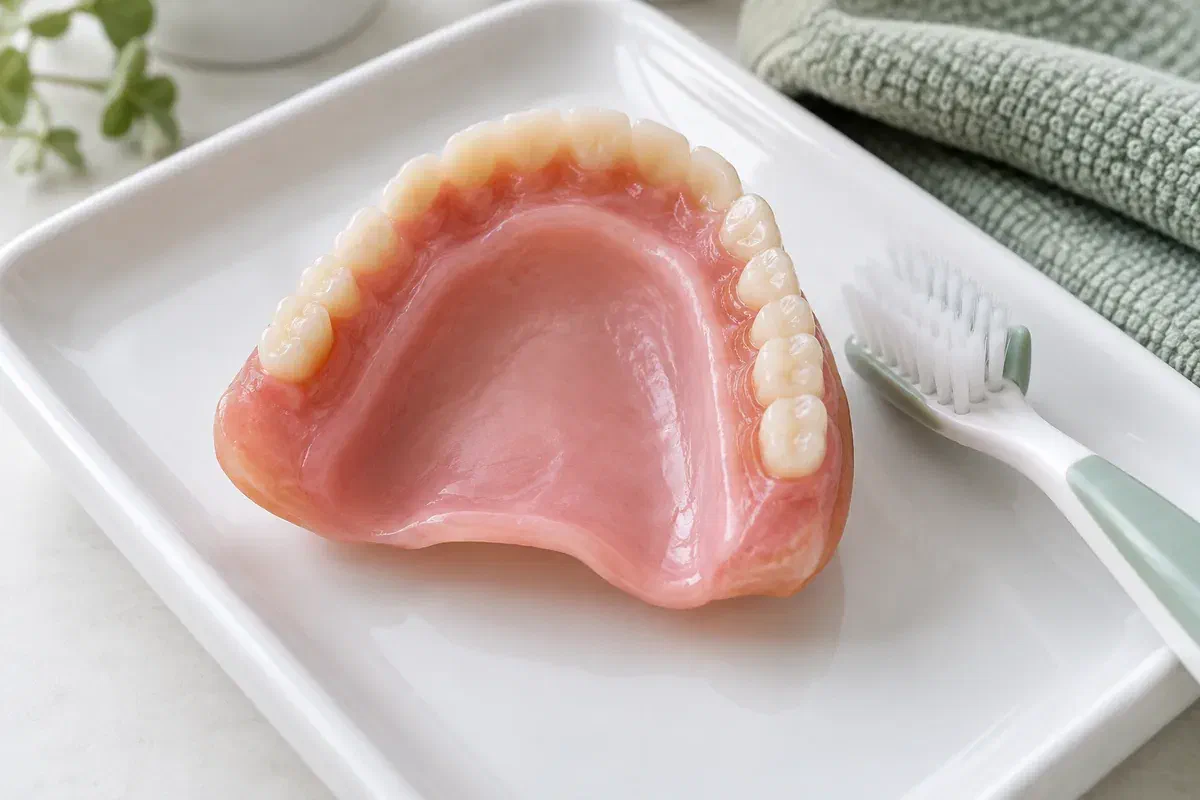
Describe a typical day with the denture and how your gums feel without it. Wearing a painful appliance longer than you need to will not make the comparison clearer.
A single sore spot, especially one that started after a change, often has a local cause. Show us where it is and whether it is immediate or delayed. Mention ulcers, redness or bleeding. Adjustment may be more useful than a lining.
A denture that lifts, rocks or now depends on adhesive across the whole arch suggests the ridge has changed. That may point toward relining. We check support, adaptation and the bite to see which type of reline, if any, fits.
A soft lining that has hardened, peeled or held odour, or a denture with flattened teeth and many repairs, may have reached its limit. Bring it in and describe your care routine so both the material and the appliance can be judged.
Whatever the eventual choice, a sore that keeps returning or will not heal should be examined. Call the clinic if any ulcer or unexplained change in your mouth persists.
For a suitable denture over tender or sensitive tissue, a resilient lining changes how the base meets those areas in a way that a hard reline does not. Ask which symptom it would target. A realistic goal is more comfortable daily wear, not the elimination of every pressure point or every bit of movement.
The trade-off compared with a hard reline is upkeep. Soft materials change with use, may need renewing sooner and can be damaged by some cleaners. Ask whether the proposed lining is temporary or longer lasting, how it will be monitored, and which findings would tip the recommendation toward another option.
Patient information: ACP — assessment before relining or replacing dentures
Knowing whether the aim is cushioning, short-term tissue support or something else lets you compare it fairly with adjustment, a firm reline or replacement. It also helps you report clearly at review.
Relining, soft or hard, may let you keep a denture whose teeth, design and condition remain suitable. A new denture changes everything at once. Ask what relining would preserve and what it would leave as it is.
Ask which brush, cleaner and storage method the soft material needs, and compare that with a firm reline. If handling the denture is hard for you, show us. The extra comfort should justify the extra care.
Visit sequence differs between the options. If a soft lining is chosen, ask whether it is placed in the chair or processed at a laboratory.
The clinician checks tender tissue, the ridge, retention, borders, the bite and the appliance’s condition. Share your wearing hours and products. Treatment of a tissue problem may be needed before any option goes ahead.
We compare adjustment, a soft lining, a hard reline and replacement as they apply to you, covering limitations, care, estimated costs, timelines and how any existing liner would be handled.
If a soft reline is selected, the base is readied and the lining or impression is completed, chairside or with a laboratory. You will know beforehand whether you will be without the denture for a time.
Comfort, fit, borders and bite are checked, and care instructions for the material are given. A follow-up visit confirms how your tissue is responding and whether the choice is doing what it was meant to.
Keep the written instructions for the specific material. Some habits from a plain acrylic denture will need to change.
Ask which soaking products suit the liner and how long they can be used. Some products and prolonged soaks degrade soft materials. Avoid hot water and abrasive cleaners.
Clean gently and leave the line where liner meets base alone. If an edge loosens or roughens, book a visit. Cutting, gluing or applying a home liner can create new problems.
Lasting pressure, new sore spots, a smell, peeling or the material becoming firmer are all worth mentioning. Keep the follow-up even when comfort is good, so the lining and tissues can be reviewed together.
Patient information: Royal Cornwall Hospitals — care of dentures with a soft lining
If a previous lining was placed elsewhere, bring the material name and care advice. It helps the comparison.
At our Bronte Street practice, we assess the fit of your denture, your comfort and the health of your gums, then lay out how a soft lining compares with adjustment, a hard reline or a new appliance for you.
When booking, mention a sore that has not healed, bleeding, or being unable to wear the denture, so the team can set aside enough time.
