
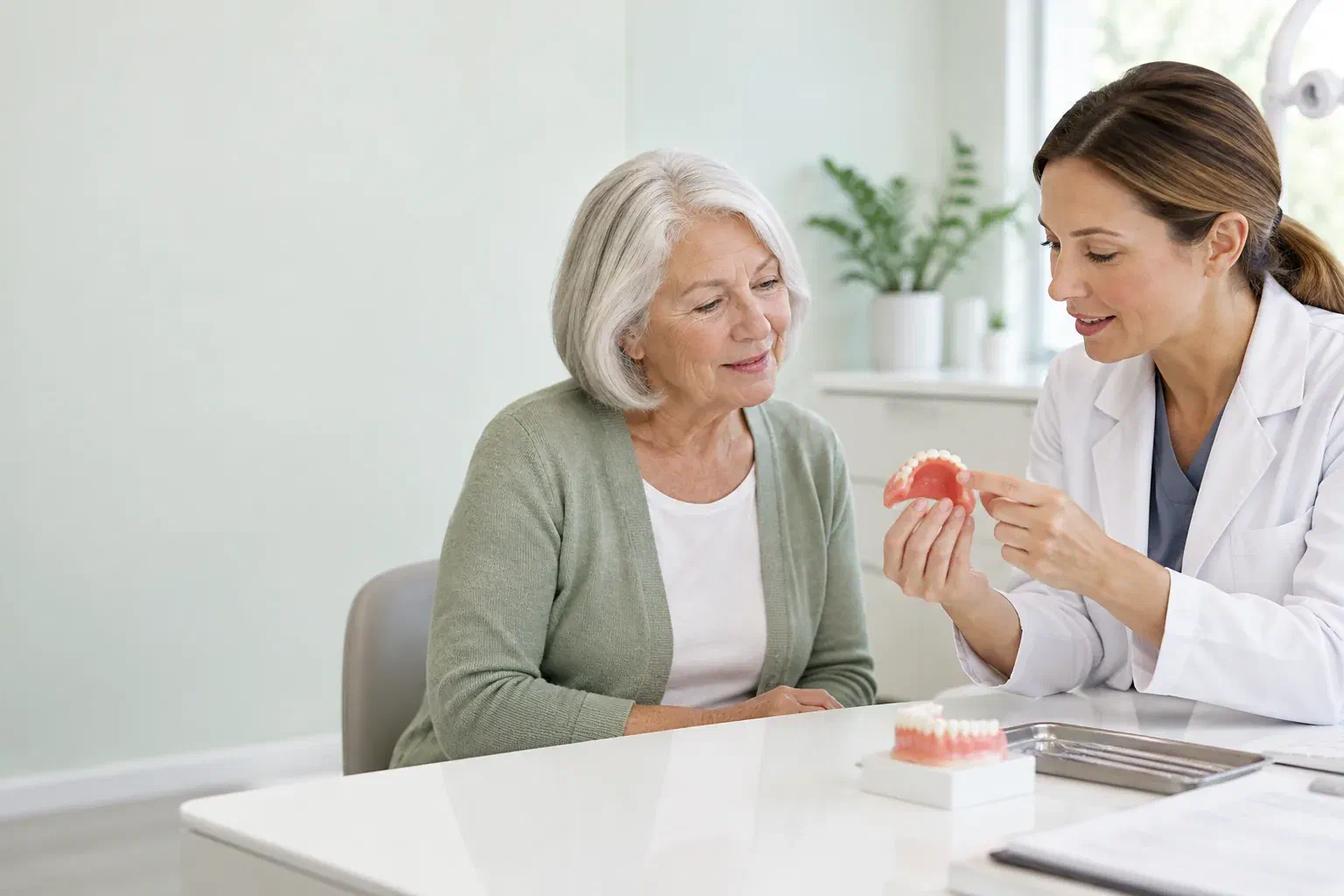
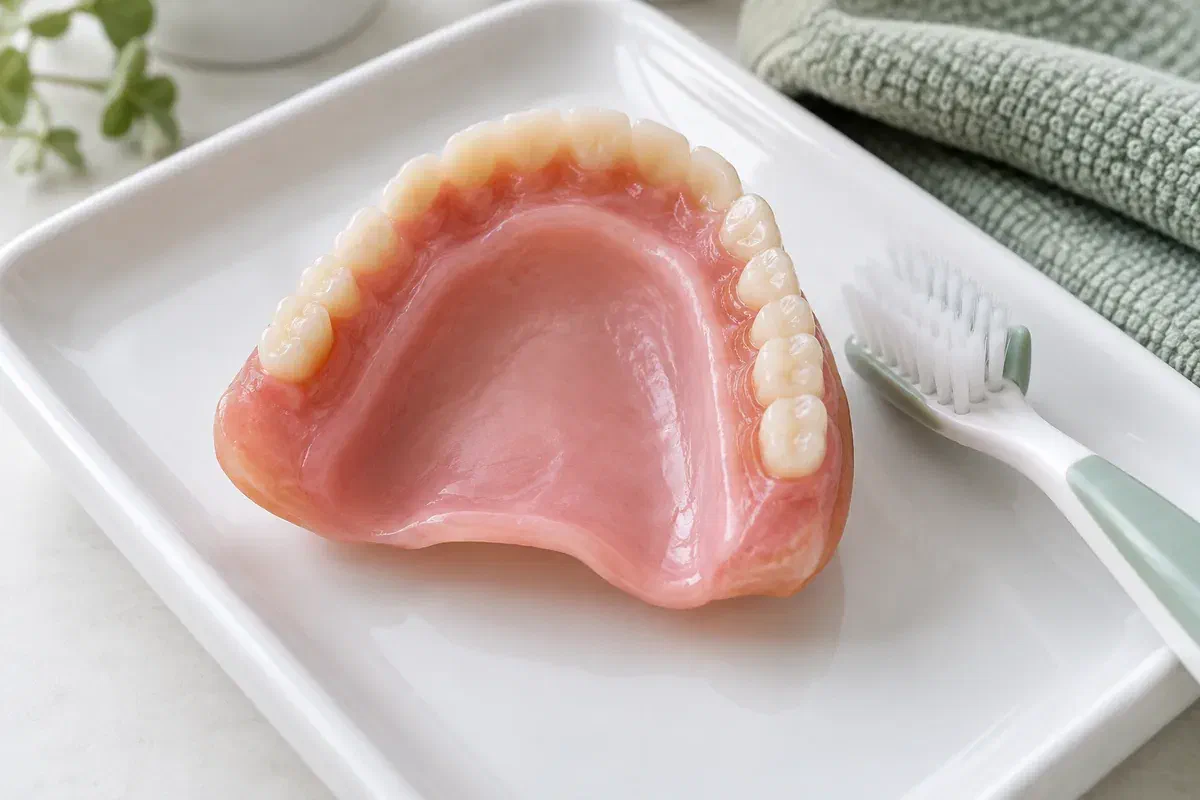
Illustrative discussion of the fitting surface of a removable denture
Restorative Dentistry

Soft Denture Relines in Etobicoke

A soft reline can involve more than one appointment, so it pays to plan. Coming from Etobicoke, you can have your denture fit and gums assessed and the visits organized so the trip is worthwhile and the time without your denture is clear.

Etobicoke · planning your reline

Fewer trips, a clearer plan

From the west end of Toronto, a denture appointment is something you plan around rather than squeeze in. Knowing what a soft reline involves helps. A resilient material is applied to the gum-facing surface of a suitable denture, either to cushion tender areas or, in some cases, as a short-term measure while inflamed tissue recovers.

The first visit is about cause rather than material. Soreness may come from a high spot, a loose fit, the way the teeth meet, a ridge that has shrunk, or a tissue condition. A softer surface helps with only some of these, so the clinician examines the appliance and your mouth before any reline is planned.

Before travelling in, gather what helps us make the most of that visit: the denture, any previous ones, and a short note of when and where it hurts, past adjustments and products you have tried. We can then talk through whether a soft lining suits you, what it should improve, how it compares with alternatives, and how many visits each would need.

Plan a denture assessment
Illustrative upper denture with a smooth pale pink lining on its fitting surface
Before you book

Write down what you notice, then bring the list.

A clear account of daily wear and how your mouth feels with the denture out can shorten the path to a plan. Do not keep wearing a painful appliance to make the problem easier to see.

Tender gum beneath the base

Note the exact spot and whether pain is immediate or builds through the day. Record any ulcer, redness or bleeding. The exam links that tissue to the section of denture over it rather than assuming cushioning alone will help.

Looseness that has crept in

Write down if the denture now lifts, tips or needs more adhesive. The ridge supporting a denture changes gradually. We assess support, adaptation and your bite before deciding which reline, if any, is appropriate.

A liner showing its age

A soft lining that has hardened, pulled away, roughened or kept a smell should be seen. Bring the denture and describe cleaning and storage. The liner may need replacing, and its purpose should be reconsidered.

A sore spot that recurs needs examination, not another coat of material. Contact us if an ulcer or unexplained tissue change is not healing, and seek closer care if symptoms are severe.

Realistic expectations

What can a soft lining actually change?

With a suitable denture over appropriate tissue, a resilient lining alters how contact reaches sensitive areas. Ask which symptom it targets. A fair goal is often steadier daily comfort when wearing the appliance, not an assurance that every pressure point or bit of movement will be gone.

Soft liners need upkeep and periodic checks, which matters when visits take planning. Ask whether the material is temporary or longer lasting, how often it should be reviewed, whether reviews can be combined with other dental care, and what findings would lead to a different recommendation.

Patient information: ACP — assessment before relining or replacing dentures

A defined clinical purpose

Is the aim cushioning, temporary tissue care or something else? The answer guides material and technique. Knowing it lets you judge comfort at home and report clearly, which can make follow-up visits more efficient.

Keeping a denture worth keeping

If the teeth, design and condition remain suitable, a reline may let you go on using the appliance. Ask what it preserves and which limitations stay. It renews the fitting surface, not the whole denture.

A care routine you can manage alone

Ask which brush, cleanser and storage method suit the material, so you are not left guessing between visits. Show us any handling difficulty. The comfort gain has to match a routine you can keep without frequent check-ins.

Mapping the visits

Know each step before you set out.

Sequence varies with the material and its purpose. Ask at the first visit whether relining is done chairside or needs laboratory time, so you can plan travel and any days without the denture.

  1. Assessment visit

    We examine sore areas, fit, support, the bite and the denture. Share your wearing hours and products. If tissue treatment or adjustment is needed first, we will explain how that affects the timing.

  2. Plan, options and costs

    We discuss whether a soft lining suits you and whether it is temporary or ongoing. Limitations, care, estimated costs and alternatives are reviewed, and we can talk about grouping steps where that is clinically reasonable.

  3. The reline appointment

    The fitting surface is prepared and the lining or impression step is completed. Some methods are done in one sitting and others use a laboratory. You will know in advance how long you may be without the appliance.

  4. Review and next steps

    Fit, borders, bite and comfort are checked, and you get instructions for the specific material. Agree on a review date that works with your travel so we can check tissue response and the liner’s performance.

At home after relining

Care that holds up between visits

Keep the instructions for the liner placed. When home is in Etobicoke and appointments are spaced further apart, following them closely matters even more, because small problems have longer to grow before anyone sees them.

Use suitable cleaners only

Ask which products can be used and how long soaking may last. Some cleansers or extended soaks can damage soft linings. Avoid hot water and abrasive materials.

Leave a lifting edge alone

Clean as shown and do not pick at the liner’s border. If an edge loosens or roughens, call us before making the trip. Do not trim, glue or apply a home liner over it.

Track comfort and changes

Note persistent pressure, new sores, odour, separation or a change in softness. Call to describe them, as some can be discussed before deciding whether a visit is needed. Keep your scheduled review.

Patient information: Royal Cornwall Hospitals — care of dentures with a soft lining

Weighing the alternatives

Each option has a different visit plan.

Ask which choice fits the findings and the denture’s limits, and how many appointments each involves. A softer surface is one possibility among several.

When one cause stands out

Adjustment or local treatment

A pressure point, bite problem or tissue condition may need direct treatment. Relining first could leave that cause untouched. Ask what the exam found and whether a limited step could be done during the assessment.

When the surface needs renewing

Soft versus hard reline

Each material has a different role and they are not chosen by preference alone. Discuss fit, cushioning, care, expected lifespan and whether the method needs laboratory time and an extra trip.

When the appliance itself is limited

Replacement denture

Worn teeth, many repairs, a poor design or major bite problems may favour a new denture. Ask what a reline would leave unchanged, how replacement would help and what interim care would look like across the visits.

Questions about relining from a distance

Planning, timing and caring for a soft liner

Keep the liner’s material name and care instructions handy. If it was placed elsewhere, bring those details to save time.

(905) 876-4488
How many appointments does a soft reline usually take?
It varies. Some linings are completed at one visit after assessment, while others need impressions and laboratory work. Tissue treatment may come first. Ask for the expected sequence at your assessment so you can plan travel.
Can the assessment and reline happen on the same day?
Sometimes, depending on the findings and the material. If tissue needs to settle or an adjustment is needed first, a separate visit is more appropriate. The clinician will explain what is clinically sensible.
What should I do if my liner fails between visits?
Call the clinic and describe what has happened before travelling in from Etobicoke. Some problems can be discussed by phone first, which helps decide how soon you need to be seen. Avoid trimming, gluing or patching it. If you have swelling, fever or severe pain, seek prompt care closer to home.
Is a hard reline ever a better choice than a soft one?
It can be. Hard and soft relines serve different purposes, and the choice depends on the tissue, the denture and the goal. Ask the clinician to explain why one is recommended over the other for you.
Will I leave without my denture on the reline day?
With chairside methods you usually leave wearing it. If a laboratory is involved, the denture may be away for a period, and you may need to return to collect it. Ask in advance so you can plan meals, work and the trip back.
Can I keep my usual cleaning tablets after the lining is placed?
Ask the clinician first. Some products and long soaks can affect soft materials. Request instructions specific to the liner used, and if it was placed elsewhere, check with that office before changing products.
Organized reline visits for Etobicoke

A plan that makes each trip count

Our Bronte Street practice can review the fit of your denture, your comfort and the tissues it rests on, then lay out the visits a soft lining or alternative would involve. Ask us to group steps where that is appropriate.

When you call, mention any ulcer that is not healing, bleeding or difficulty wearing the denture, so the first appointment covers what it needs to.

Visit Milton Dental Clinic
Unit 1, 342 Bronte St. S, Milton, ON L9T 5B7
Get directions Clinic hours
Monday–Thursday
11am–7pm
Friday–Sunday
By appointment only

Areas we serve

  • Milton
  • Oakville
  • Mississauga
  • Georgetown
  • Halton Hills
  • Acton
  • Campbellville
  • Brampton
  • Burlington
  • Puslinch
  • Rockwood
  • Erin
  • Caledon
  • Etobicoke
  • Old Milton
  • Bronte Meadows
  • Timberlea
  • Dorset Park
  • Dempsey
  • Clarke
  • Beaty
  • Coates
  • Harrison
  • Scott
  • Willmott
  • Ford
  • Bowes
  • Cobden
  • Walker
  • Mountain View
  • Milton Heights
  • Hawthorne Village
  • Valley View
  • Fallingbrook
  • Nassagaweya
  • Trafalgar
  • Esquesing
  • Nelson
  • Brookville
  • Moffat
  • Glen Williams
  • Norval
  • Limehouse
  • Stewarttown
  • Ashgrove
  • Hornby
  • Silver Creek
  • Speyside
  • Scotch Block
  • North Oakville
  • River Oaks
  • Glen Abbey
  • West Oak Trails
  • Palermo
  • Bronte Creek
  • College Park
  • Joshua Creek
  • Uptown Core
  • Preserve
  • Iroquois Ridge
  • Lisgar
  • Meadowvale
  • Meadowvale Village
  • Churchill Meadows
  • Erin Mills
  • Central Erin Mills
  • Streetsville
  • East Credit
  • Creditview
  • Heartland
  • Sheridan
  • Mount Pleasant
  • Credit Valley
  • Huttonville
  • Churchville
  • Springbrook
  • Northwest Brampton
  • Bram West
  • Fletcher's Meadow
  • Fletcher's Creek South
  • Alton Village
  • Orchard
  • Millcroft
  • Headon Forest
  • Tansley
  • Brant Hills
  • Tyandaga
  • Kilbride
  • Lowville
  • Aberfoyle
  • Morriston
  • Arkell
  • Hillsburgh
  • Freelton
  • Carlisle
  • Waterdown
  • Flamborough
  • Mountsberg

How can we help?

Milton Dental Clinic

Have a question about your smile? Choose the option that works best for you.

For urgent dental concerns, please call.
Messages are reviewed during clinic hours.