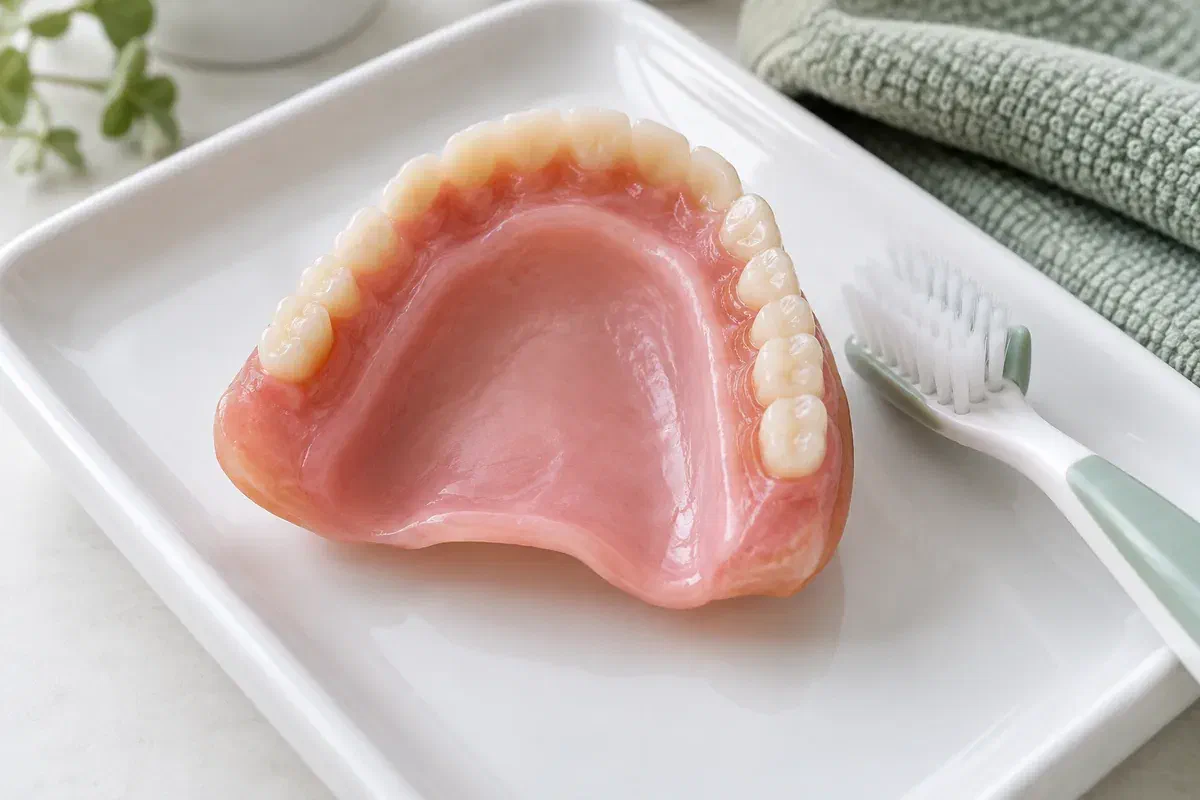
Illustrative discussion of the fitting surface of a removable denture
Restorative Dentistry

Soft Denture Relines in Georgetown

The cleaning cupboard matters more than most people expect with a soft lining. Denture wearers from Georgetown can learn whether a cushioning reline suits their gums, and exactly which care routine keeps that material in good shape.

Georgetown · liner care from day one

Think about the soaking glass before the reline.

Most denture wearers have a routine that has not changed in years: a tablet in a glass, a brush, a rinse in the morning. A soft reline can disrupt that. It bonds a pliable material to the gum side of a suitable denture to cushion sore areas or briefly support irritated tissue, and that material may react differently to products that suited plain acrylic.

Before care comes suitability. Soreness can stem from a pressure point, a loose fit, the bite, a ridge that has changed, or a tissue problem. A cushioned surface may help with some of these and do little for others, so the clinician examines the appliance and your mouth before proposing a lining at all.

When you come in from Georgetown, bring the denture and, if you can, the cleaning products you use. Tell us where it hurts, when, and what has been tried. We will explain whether a soft reline is worthwhile, how your routine may need to change, and how it compares with adjustment, a firmer reline or replacement.


Talk to us about a soft lining
Illustrative upper denture with a smooth pale pink lining on its fitting surface
What brings people in

Soreness, slack fit, or a liner that looks tired

Explain what wearing the denture is like across a day, and what eases once it is out. Continuing to wear something painful will not make the assessment clearer.

One area that keeps getting sore

Show us the spot and say whether it hurts immediately or later. Mention ulcers, redness or bleeding. We compare that tissue with the part of the denture touching it, because the answer may be an adjustment rather than a lining.

Fit that has drifted

Lifting, rocking or relying on extra adhesive suggests the support underneath has changed. That happens gradually with most dentures. We look at adaptation, support and the bite before choosing a reline type or other care.

A liner discoloured or roughened by cleaning

Some soft linings change colour, stiffen or roughen when exposed to unsuitable products. Bring the denture and the cleaners you use. The material may need replacing, and the reason it was placed deserves another look.

Recurring soreness under new material is a reason for examination, not another layer. Contact us if a mouth ulcer or unexplained change in your tissue is not healing.

Comfort, with upkeep attached

Why would a soft lining be worth it for you?

On a suitable denture with appropriate tissue findings, a resilient lining alters how the fitting surface meets tender spots. Ask which symptom it is meant to help. A realistic aim might be easier everyday wear, not an assurance that all pressure or movement will be eliminated.

The trade-off is maintenance. Soft materials alter with use and can be damaged by certain cleaners, heat and abrasion. Ask whether yours is intended as temporary or longer term, how its condition will be judged at review, and what would make the clinician recommend a different route.

Patient information: ACP — assessment before relining or replacing dentures

A reason you can repeat back

Cushioning, short-term tissue support and other aims guide different material choices. If you can explain in a sentence why the lining was placed, it becomes much easier to say at review whether it has worked.

More use from a sound appliance

If the teeth, design and overall condition remain suitable, a reline may let you keep the denture you have. Ask what it maintains and which shortcomings remain, since only the fitting surface is renewed.

A cleaning kit matched to the material

Ask the clinician to name a suitable brush, cleanser and overnight storage method for the liner chosen. If handling the denture is difficult, show us. Comfort only lasts if the routine protecting it is one you can sustain.

The appointment sequence

Examine first. Line second. Teach the care routine third.

Visit length and order vary with the material. Ask whether the work happens in the chair or needs the denture to go to a laboratory.

  1. Look at your tissues and denture

    The clinician checks sore areas, fit, support, the bite and the appliance overall. Mention your wearing hours and cleaning products. Adjustment or tissue treatment may be needed before relining.

  2. Choose a material and agree on care

    We discuss suitability, whether the lining is temporary or ongoing, limitations, maintenance, estimated costs and reasonable alternatives. Any existing liner and how it will be handled is covered too.

  3. Line the denture

    The surface is readied and the chosen lining or impression step is carried out, either chairside or with laboratory involvement. You are told in advance how long it takes and whether the denture will be away.

  4. Demonstrate cleaning and book review

    Fit, borders, bite and comfort are checked, and the cleaning routine is shown in person. A review visit lets the clinician assess tissue response and whether the lining is doing its intended job.

Your new cleaning routine

What goes in the glass now

Keep the written instructions for the specific liner used. The product you have relied on may need to be replaced.

Swap products only on advice

Ask which cleansers are compatible with the soft material and for how long it may soak. Some tablets, bleach-based products and long soaks can damage linings. Avoid hot water and gritty pastes.

Brush gently around the border

Use the technique shown and do not dig at the line where liner meets base. If an edge lifts or feels rough, book a visit rather than trimming, gluing or applying a store-bought reline kit.

Watch colour, texture and smell

Tell us about persistent pressure, new sore spots, discolouration, odour, peeling or stiffening. Keep the review appointment even if things feel fine. The clinician monitors the liner and the tissues over time.

Patient information: Royal Cornwall Hospitals — care of dentures with a soft lining

Other ways to improve comfort

A lining is one tool. Here are the others.

Ask which approach suits the exam findings and the appliance’s limits. Upkeep differs between them, and that can be part of the decision.

When a particular cause is found

Adjust the denture or treat the tissue

A pressure point, bite interference or tissue condition may be treated directly. Relining first could leave it in place. Ask what the exam found and whether a smaller step would be enough.

When the surface needs renewal

Hard reline instead of soft

Hard and soft materials serve different purposes, and a firm reline usually has simpler care needs. Discuss fit, cushioning, maintenance and how long each option is expected to stay serviceable.

When the appliance is the limitation

Replacing the denture

Worn teeth, frequent repairs, an unsuitable design or a significant bite problem may favour a new denture. Ask what a reline would not change and how replacement would help. Compare the complete plan and interim care.

Everyday questions from Georgetown

Cleaning, storing and checking a soft lining

Write down the name of the liner material and the products recommended. Bring them if you see another provider later.

(905) 876-4488
Which denture cleaners are safe for a soft lining?
It depends on the material. Ask the clinician to recommend specific products and soaking times for your liner. Some common cleansers and long soaks can damage soft linings, so check before using anything new.
Can I use bleach or a household cleaner on my denture?
No. Household products can damage both the lining and the denture base and may be unsafe in the mouth. Use only the products the clinician recommends for your specific material, and if a family member helps with cleaning, make sure they know this too.
Why has my soft liner changed colour?
Discolouration can come from food, drinks, cleaning products or the material ageing. It does not always mean failure, but mention it at review. If it comes with roughness, odour or stiffening, the liner may need replacing.
How should I store a denture with a soft lining overnight?
Ask for storage advice specific to your material. Many clinicians recommend keeping the denture clean and protected rather than letting it dry out or sit in very hot water. Follow the instructions you were given.
Is an electric toothbrush safe on the liner?
Ask before using one. Soft materials can be damaged by abrasion, and the pressure from a powered brush is easy to misjudge. The clinician may recommend a soft denture brush and a gentle technique instead. A short demonstration at your appointment can make the difference, especially if you are used to scrubbing hard acrylic.
Is a soft reline a way to deal with denture teeth that are worn?
No. The liner only affects the tissue-facing surface. Worn teeth and some bite problems need separate consideration. The clinician will tell you whether the rest of the denture is still suitable.
Soft lining consultations for Georgetown

Suitability first, then a routine you can keep

At our Bronte Street practice we assess comfort, fit and the health of the tissues under your denture. If a soft lining is right for you, we will explain its care in practical terms before you leave, and if it is not, we will tell you what would serve the denture better.

When you call, mention ulcers that are not healing, any bleeding, or trouble wearing the denture, so the team can allow suitable time.

Visit Milton Dental Clinic
Unit 1, 342 Bronte St. S, Milton, ON L9T 5B7
Get directions Clinic hours
Monday–Thursday
11am–7pm
Friday–Sunday
By appointment only

Areas we serve

  • Milton
  • Oakville
  • Mississauga
  • Georgetown
  • Halton Hills
  • Acton
  • Campbellville
  • Brampton
  • Burlington
  • Puslinch
  • Rockwood
  • Erin
  • Caledon
  • Etobicoke
  • Old Milton
  • Bronte Meadows
  • Timberlea
  • Dorset Park
  • Dempsey
  • Clarke
  • Beaty
  • Coates
  • Harrison
  • Scott
  • Willmott
  • Ford
  • Bowes
  • Cobden
  • Walker
  • Mountain View
  • Milton Heights
  • Hawthorne Village
  • Valley View
  • Fallingbrook
  • Nassagaweya
  • Trafalgar
  • Esquesing
  • Nelson
  • Brookville
  • Moffat
  • Glen Williams
  • Norval
  • Limehouse
  • Stewarttown
  • Ashgrove
  • Hornby
  • Silver Creek
  • Speyside
  • Scotch Block
  • North Oakville
  • River Oaks
  • Glen Abbey
  • West Oak Trails
  • Palermo
  • Bronte Creek
  • College Park
  • Joshua Creek
  • Uptown Core
  • Preserve
  • Iroquois Ridge
  • Lisgar
  • Meadowvale
  • Meadowvale Village
  • Churchill Meadows
  • Erin Mills
  • Central Erin Mills
  • Streetsville
  • East Credit
  • Creditview
  • Heartland
  • Sheridan
  • Mount Pleasant
  • Credit Valley
  • Huttonville
  • Churchville
  • Springbrook
  • Northwest Brampton
  • Bram West
  • Fletcher's Meadow
  • Fletcher's Creek South
  • Alton Village
  • Orchard
  • Millcroft
  • Headon Forest
  • Tansley
  • Brant Hills
  • Tyandaga
  • Kilbride
  • Lowville
  • Aberfoyle
  • Morriston
  • Arkell
  • Hillsburgh
  • Freelton
  • Carlisle
  • Waterdown
  • Flamborough
  • Mountsberg

How can we help?

Milton Dental Clinic

Have a question about your smile? Choose the option that works best for you.

For urgent dental concerns, please call.
Messages are reviewed during clinic hours.