

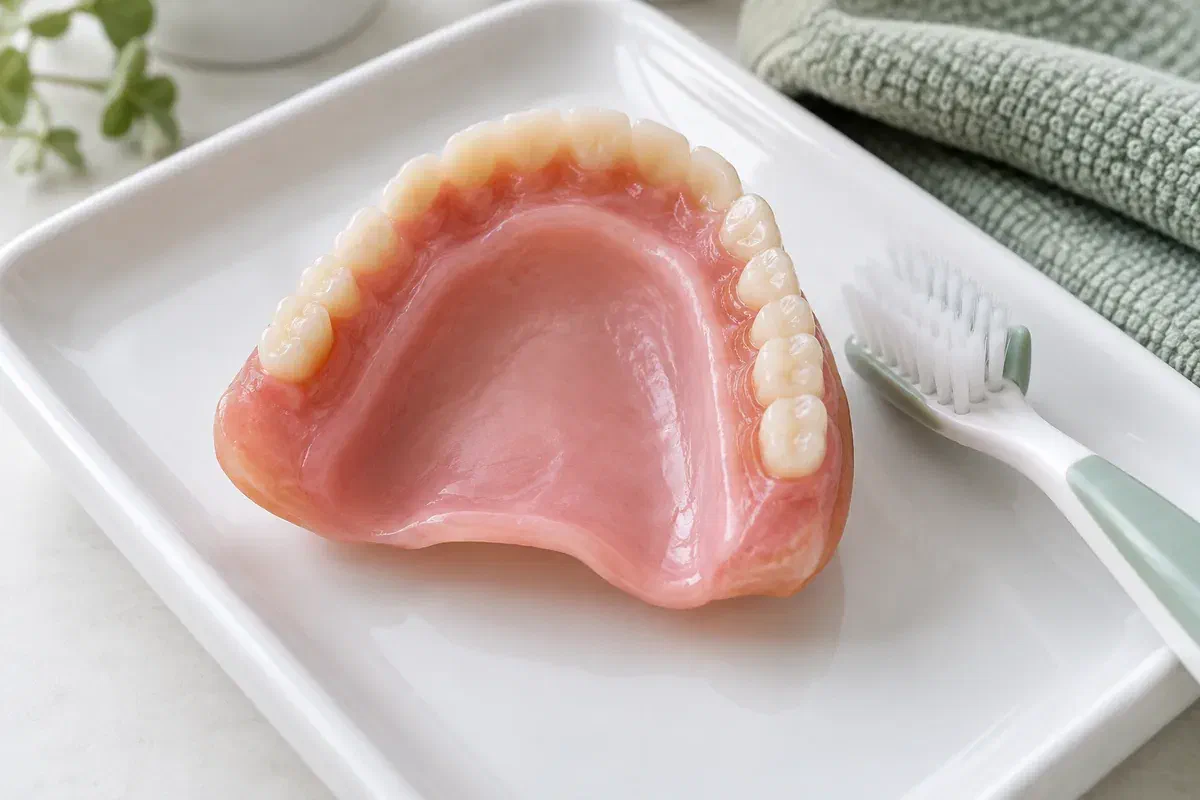
Illustrative discussion of the fitting surface of a removable denture
Restorative Dentistry

Soft Denture Relines in Mississauga

Cutting back on crusty bread or raw vegetables because your gums complain is a signal worth acting on. Denture wearers from Mississauga can have chewing comfort, fit and tissue health reviewed, including whether a soft reline is suitable.

Mississauga · chewing comfort

Meals tell you a lot about denture fit.

Biting down transfers force through the denture onto the gum and bone beneath it. When those tissues are tender, firmer foods are usually where you feel it first. A soft denture reline places a flexible material on the side of a suitable appliance that touches the gums, which may soften that contact or act as a temporary measure while irritated tissue settles.

Pain while chewing has many possible sources, though. The teeth may not meet evenly, the denture may slide forward when you bite, a ridge may have thinned, or one edge may dig in. Cushioning helps with some of these and masks others. That is why we examine the appliance and your mouth together before recommending a lining.

When you book from Mississauga, think about which foods have become difficult and which side you tend to chew on. Bring the denture and mention past adjustments or liners. We can then explain whether a soft reline has a clear role, what it should change at mealtimes, and how it compares with bite adjustment, a firm reline or a new denture.

Arrange a chewing comfort check
Illustrative upper denture with a smooth pale pink lining on its fitting surface
Mealtime clues

Where does it hurt when you bite?

The details of an ordinary meal, and how your gums feel afterward, help us focus the exam. Pushing through painful chewing to keep the denture in will not help us diagnose it.

A sore spot under pressure

Point out where the gum hurts when you bite and whether it lingers after the meal. Mention any ulcer, redness or bleeding. We examine that tissue and the matching area of the denture, since the cause is not always something cushioning can fix.

Sliding or tipping as you chew

A denture that rocks on one side, drops when you bite into something or needs more adhesive at meals may no longer fit the ridge well. Ridges change gradually. We assess support, adaptation and how the teeth come together before choosing a reline.

Food trapped under an old lining

If an existing soft liner has pulled away, roughened or begun to collect food, bring the denture in. Explain how you clean and store it. The liner may need attention, and the reason it was placed should be reviewed as well.

Pain at the same spot with every meal should be examined rather than layered over with new material. Contact us if a mouth ulcer or unexplained tissue change is not healing.

How a resilient lining might help

Choose one meal you want to be easier.

On a suitable denture over appropriate tissue, a soft lining changes how biting forces reach sensitive spots. Ask which part of the discomfort it is aimed at. A practical goal might be managing everyday meals with less soreness. It is not a promise that you will chew exactly as you did with natural teeth or that every pressure point will vanish.

Soft materials need their own maintenance. They can change with time and some cleaners are unsuitable. Ask whether the lining is a short-term step or longer-lasting, how it will be checked at reviews, and what signs would make the clinician recommend a different approach to your chewing difficulty.

Patient information: ACP — assessment before relining or replacing dentures

An aim that matches the exam

Cushioning, temporary tissue care and other specific needs each guide different material and technique choices. Ask which applies. Knowing the aim helps you describe mealtime comfort accurately at your follow-up.

Keeping a denture that still bites well

If the teeth, design and overall state of the appliance are still suitable, relining may let you keep using it. The clinician should explain what the reline preserves and which bite or wear limits remain unchanged.

Cleaning after meals made simple

Ask which brush, cleanser and storage method suit the chosen material, and how to rinse after eating. If handling the denture is difficult, show us. The comfort gain has to be balanced against a routine you can actually keep up.

Step by step

Bite, tissue and fit come before any new lining.

The number of visits and their order depend on the material and its purpose. Ask whether the denture will need to stay with us or go to a laboratory.

  1. Check your bite and tissues

    We look at sore areas, how the teeth meet, support, fit and the overall condition of the denture. Mention how long you wear it and what you use to clean it. A bite adjustment or tissue care may come first.

  2. Agree on material and alternatives

    We discuss whether a soft lining suits you and whether it is a temporary or ongoing measure. Limitations, care, estimated costs and other reasonable options are covered, along with how any existing liner will be handled.

  3. Complete the reline

    The fitting surface is prepared and the chosen lining or impression step is done. Some methods are completed in the chair and others are processed by a laboratory. You will know beforehand whether you will be without the denture for a time.

  4. Test it, including a bite check

    Fit, borders, bite and comfort are reviewed after relining, and you receive care instructions for the material. A follow-up visit lets us see how your tissue responds to chewing and whether the lining is serving its purpose.

Caring for it between meals

Protect the lining and the gums under it

Keep the care advice for the specific material placed. A routine that suited a hard acrylic surface may not suit a softer one.

Check soaking and cleaning products

Ask which cleansers are suitable and for how long the denture may soak. Some products and extended soaks can damage soft linings. Avoid hot water and abrasive cleaning, even when food residue is stubborn.

Do not dig at trapped food

Rinse and clean as shown rather than picking at the junction of liner and base. If an edge lifts or roughens, book a review. Trimming, gluing or covering it with a home liner can make the fit worse.

Keep a note of mealtime comfort

Report persistent pressure, new sore spots, odour, separation or a change in softness. Keep the follow-up even if chewing feels better. Material and tissue both need monitoring over time.

Patient information: Royal Cornwall Hospitals — care of dentures with a soft lining

Options for easier chewing

Fix the bite, the surface, or the denture

Ask which choice responds to the findings and to the appliance’s limits. A softer lining is one tool within a broader assessment.

When one specific cause is found

Adjust the bite or a pressure point

An uneven bite, a high spot or a tissue condition may need its own treatment. Relining before that is addressed could leave the problem in place. Ask what the exam showed and whether a limited step is appropriate.

When the fitting surface needs renewal

Soft or hard reline

Reline materials serve different purposes and are not chosen purely by preference. Discuss expected fit, the amount of cushioning needed, upkeep and how long the proposed material is likely to remain useful.

When wear or design limits chewing

A new denture

Worn teeth, repeated repairs, a poor design or a significant bite problem may make replacement more appropriate. Ask what a reline would leave unchanged and how a new appliance would address it. Compare the full plan and any interim care.

Mississauga mealtime questions

Eating, biting and soft liners

Note the liner material and the care instructions you were given. If another practice placed it, bring those details along.

(905) 876-4488
Will a soft reline let me eat everything I used to?
It may make some foods more comfortable, but it cannot guarantee a return to every food. Chewing with a denture depends on fit, the bite, the ridge and the appliance’s design. Ask what improvement is realistic in your case.
Should I avoid certain foods after a soft reline?
Ask the clinician for advice suited to the material used. Very sticky or hard foods can be demanding on any denture. Report any edge that catches or new soreness during meals so it can be reviewed.
Can my bite be adjusted at the same visit as the reline?
Sometimes the bite is checked and adjusted as part of the appointment. In other cases a separate visit is needed. The clinician will explain the planned sequence once the denture and tissues have been examined.
Is a soft lining harder to keep clean after eating?
Soft materials can need more careful cleaning than acrylic. Rinse after meals and clean as instructed for the specific liner. Avoid abrasive pastes and harsh brushing. Ask for a demonstration if you are unsure.
Does a reline do anything for denture teeth that have flattened?
No. The lining sits against the gums and does not renew worn teeth or correct every bite problem. If tooth wear is affecting chewing, the clinician may discuss whether the denture remains suitable or another plan is better.
If I relined my denture with a kit from the store, can you still help?
Yes, bring the denture in and tell us what product you used. Home liners can change the fit in ways that are hard to predict. The clinician will assess the appliance and your tissues and explain what can be done.
Chewing comfort reviews for Mississauga

Let’s find out why chewing hurts before relining.

Bring your denture to our Bronte Street practice for a review of fit, bite, comfort and gum health. We will explain whether a soft lining is a good fit for your situation and what other care may help.

When you call, mention ulcers that are not healing, bleeding, or difficulty eating with the denture so the team can plan the right appointment.

Visit Milton Dental Clinic
Unit 1, 342 Bronte St. S, Milton, ON L9T 5B7
Get directions Clinic hours
Monday–Thursday
11am–7pm
Friday–Sunday
By appointment only

Areas we serve

  • Milton
  • Oakville
  • Mississauga
  • Georgetown
  • Halton Hills
  • Acton
  • Campbellville
  • Brampton
  • Burlington
  • Puslinch
  • Rockwood
  • Erin
  • Caledon
  • Etobicoke
  • Old Milton
  • Bronte Meadows
  • Timberlea
  • Dorset Park
  • Dempsey
  • Clarke
  • Beaty
  • Coates
  • Harrison
  • Scott
  • Willmott
  • Ford
  • Bowes
  • Cobden
  • Walker
  • Mountain View
  • Milton Heights
  • Hawthorne Village
  • Valley View
  • Fallingbrook
  • Nassagaweya
  • Trafalgar
  • Esquesing
  • Nelson
  • Brookville
  • Moffat
  • Glen Williams
  • Norval
  • Limehouse
  • Stewarttown
  • Ashgrove
  • Hornby
  • Silver Creek
  • Speyside
  • Scotch Block
  • North Oakville
  • River Oaks
  • Glen Abbey
  • West Oak Trails
  • Palermo
  • Bronte Creek
  • College Park
  • Joshua Creek
  • Uptown Core
  • Preserve
  • Iroquois Ridge
  • Lisgar
  • Meadowvale
  • Meadowvale Village
  • Churchill Meadows
  • Erin Mills
  • Central Erin Mills
  • Streetsville
  • East Credit
  • Creditview
  • Heartland
  • Sheridan
  • Mount Pleasant
  • Credit Valley
  • Huttonville
  • Churchville
  • Springbrook
  • Northwest Brampton
  • Bram West
  • Fletcher's Meadow
  • Fletcher's Creek South
  • Alton Village
  • Orchard
  • Millcroft
  • Headon Forest
  • Tansley
  • Brant Hills
  • Tyandaga
  • Kilbride
  • Lowville
  • Aberfoyle
  • Morriston
  • Arkell
  • Hillsburgh
  • Freelton
  • Carlisle
  • Waterdown
  • Flamborough
  • Mountsberg

How can we help?

Milton Dental Clinic

Have a question about your smile? Choose the option that works best for you.

For urgent dental concerns, please call.
Messages are reviewed during clinic hours.