
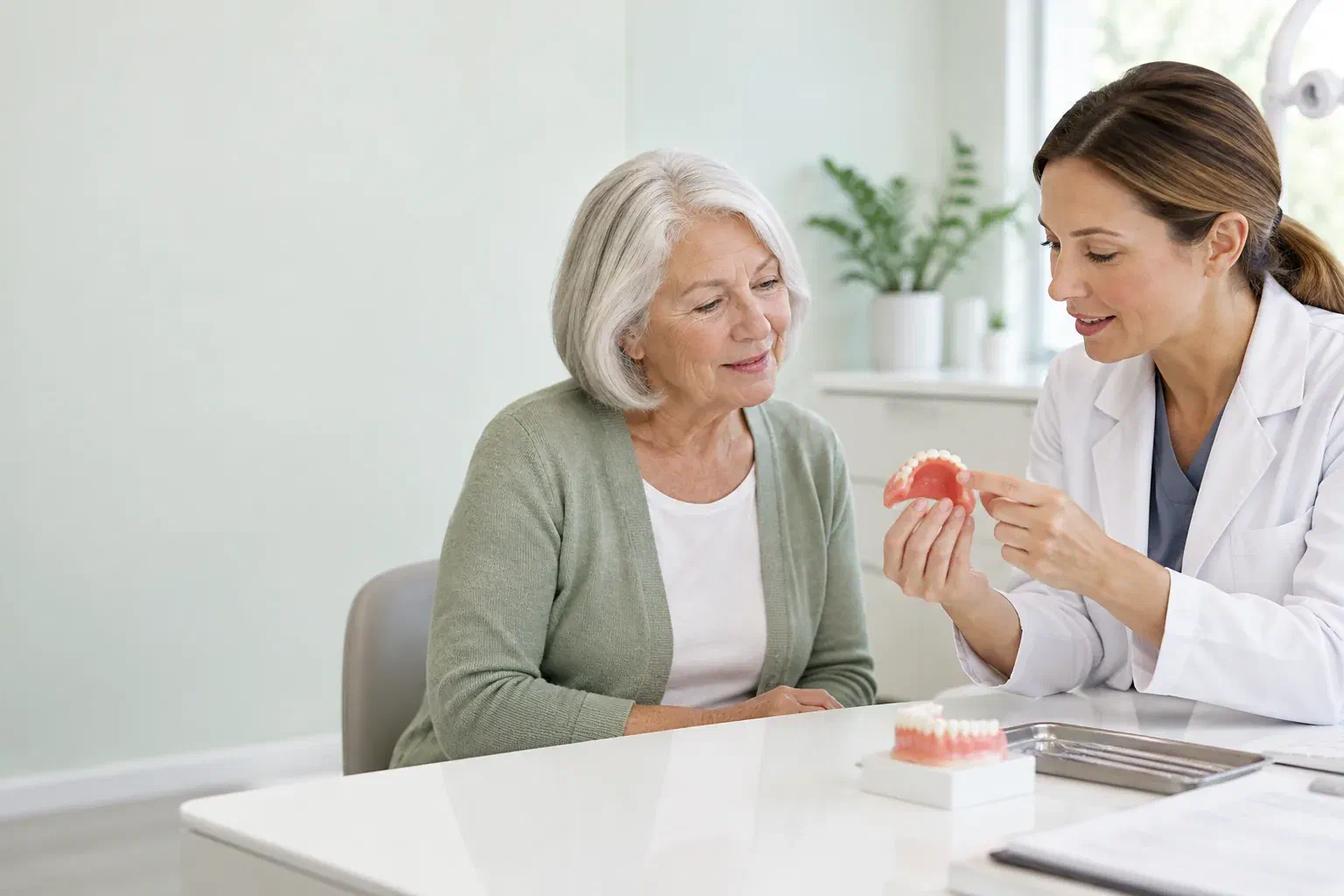
Illustrative discussion of the fitting surface of a removable denture
Restorative Dentistry

Soft Denture Relines in Oakville

Reaching for more adhesive every week usually means the fit has changed. For denture wearers in Oakville, we can assess whether a soft reline would help tender gums, or whether the appliance needs a different kind of attention.

Oakville · fit and comfort

Is adhesive doing a job the fit should do?

A thicker bead of paste each morning is an easy habit to slip into. It can hold a loose denture in place for a while, but it does not change the shape of the surface resting on your gums. A soft reline does: a resilient material is bonded to the tissue side of a suitable denture to cushion contact, or occasionally to give irritated tissue a temporary chance to recover.

Needing more adhesive, and feeling sore, are symptoms rather than answers. The ridge may have changed, the bite may have shifted, one edge may press too hard, or the tissue itself may be inflamed. A cushioning layer is helpful in some of these situations and unhelpful in others, which is why both the appliance and your mouth are examined first.

Bring the denture, and the adhesive you currently use, when you visit from Oakville. Tell us how much you apply, when the denture starts to move, and which spots get tender. We can then explain whether a soft reline has a sensible role, what it should improve, and how it compares with adjusting the base, a firm reline or a replacement.

Ask about a denture fit assessment
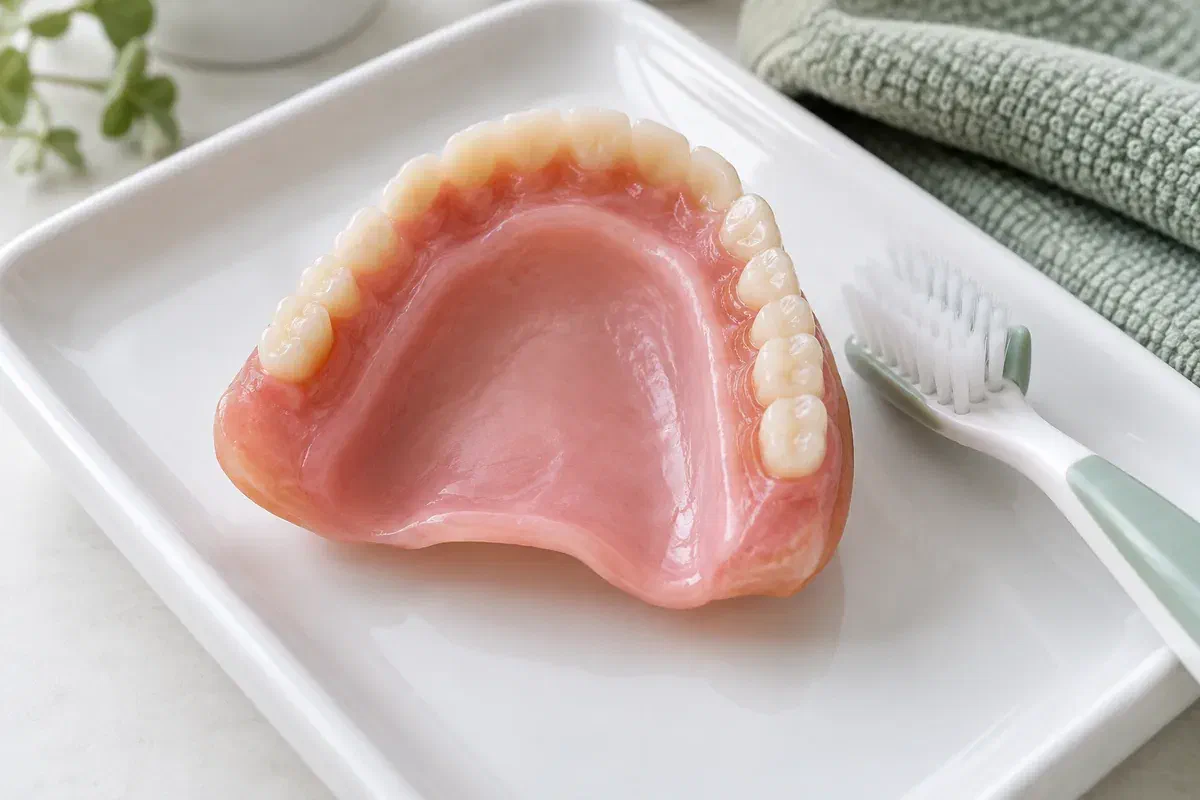
Illustrative upper denture with a smooth pale pink lining on its fitting surface
Clues worth sharing

Movement, pressure and the paste you rely on

Describe what the denture does over a normal day and how your mouth feels once it is out. There is no benefit in wearing a painful appliance longer just so the soreness is visible at the appointment.

Soreness in one particular area

Tell us where it hurts and whether the tenderness appears straight away or creeps in over hours. Mention ulcers, redness or bleeding. We look at the tissue and the section of denture over it, since cushioning is only one of the possible remedies.

Slipping despite more adhesive

Lifting while you talk, tipping when you bite into food, or a growing reliance on paste all suggest the fit has altered. The support under a denture tends to change over the years. We review adaptation, support and your bite before choosing any reline approach.

A soft liner that has changed texture

If a liner you already have has become firm, separated, rough or hard to keep fresh, bring the denture in. Explain your cleaning and storage habits. It may need repair or replacement, and the original purpose for it should be revisited.

Covering a recurring sore area with new material is not a substitute for finding its cause. Call us if a mouth ulcer or unexplained change in the tissue is not healing.

What relining may change

A comfort goal you can actually check

With the right denture and suitable tissue, a resilient lining alters the way the fitting surface presses on tender spots. Ask exactly which symptom it is expected to help. A reasonable expectation is more comfortable everyday wear and perhaps less dependence on adhesive, not a promise that every movement or pressure point disappears.

Every soft material brings its own maintenance needs. It changes with use, and not all cleaners are compatible with it. Ask whether the lining is temporary or meant to last, how its condition will be assessed at future visits, and what would make the clinician advise a different solution instead.

Patient information: ACP — assessment before relining or replacing dentures

A stated purpose

Is the goal cushioning, short-term tissue recovery or something else? Different purposes call for different materials and techniques. Knowing which applies helps you describe the result accurately when you return for review.

Keeping a denture that is otherwise sound

If the teeth, design and overall state of the denture are still in good order, a reline may let you continue with it. Ask what it preserves and what existing drawbacks remain. Relining refreshes the fitting surface only.

Cleaning that fits your day

Ask which brush, cleaning product and storage method are right for the material used. If you struggle to hold or rinse the denture, show us and the steps can be made easier. The benefit has to be weighed against upkeep you can sustain.

What the visits involve

Examine, plan, reline, review.

Sequence and visit length vary with the chosen material and its role. Ask whether the denture can be relined during your appointment or needs to go to a laboratory.

  1. Assessment of tissues and fit

    We look at tender areas, retention, support, your bite and the condition of the denture. Mention your daily wearing time and the adhesives or cleansers you use. Sometimes the tissue needs treatment or the base needs adjusting first.

  2. Choosing a material, or another route

    We discuss whether a soft lining suits you and whether it is short-term or ongoing. Limitations, care, estimated costs and reasonable alternatives are reviewed, along with how any current liner will be dealt with.

  3. Relining the denture

    The fitting surface is prepared and the selected lining or impression is completed. Some methods are finished in the chair; others involve laboratory processing. You hear in advance how long the visit takes and whether you will be without the denture.

  4. Fit check and follow-up booking

    We assess fit, borders, bite and comfort once relining is complete, and give you care advice for that material. A follow-up visit lets the clinician see how your gums have responded and whether the lining is fulfilling its purpose.

After the reline

Treat the new lining as delicate.

Keep the care sheet for the specific liner placed. Habits that suited a plain acrylic denture, including your adhesive routine, may need to change.

Confirm cleansers and adhesives

Ask which soaking products and adhesives can be used with the lining, and for how long. Some products, or extended soaking, may damage soft material. Avoid hot water and abrasive pastes or brushes.

Keep fingers off the seam

Follow the cleaning method you were shown and do not pick at the edge where liner meets base. If it lifts or roughens, arrange a visit. Trimming, gluing or adding an over-the-counter liner can make matters worse.

Tell us what changes

Report ongoing pressure, new sore spots, odour, separation or a change in how soft the lining feels. Attend your review appointment even if comfort is good. The clinician tracks both the material and your tissues.

Patient information: Royal Cornwall Hospitals — care of dentures with a soft lining

Comparing the choices

Different causes, different fixes

Ask which approach addresses what the exam showed and the limits of the appliance you have. A cushioning lining is one possibility in a broader plan.

When the cause is localized

Adjust or treat a specific problem

A sore pressure point, a bite interference or a tissue condition may need treatment on its own. Relining before that is understood could leave it unresolved. Ask what was found and whether a smaller step is appropriate.

When the fitting surface needs renewing

Soft lining versus hard reline

Each type of reline material has a particular purpose. A firm reline and a resilient one are not chosen by preference alone. Talk about the expected fit, your need for cushioning, upkeep and how long the chosen material should serve.

When the appliance itself is the limit

A new denture or full reassessment

Worn teeth, repeated breakages, an unsuitable design or a notable bite problem may point toward replacement. Ask what a reline would not change and how a new appliance would help. Compare the whole plan, including care in between.

Oakville denture wearers ask

Answers on liners, adhesive and upkeep

Make a note of the liner material and its care advice. If another office placed it, bring that information to your next visit here.

(905) 876-4488
Will a soft reline mean I can stop using denture adhesive?
Some people find they need less once the fit improves, but that is not guaranteed. Adhesive and relining do different jobs. Ask the clinician whether your adhesive is compatible with the liner and whether continued heavy use suggests another fit problem.
How is a soft reline different from the cushion pads sold in pharmacies?
A clinical reline uses a material selected for your situation and placed after examining your mouth and denture. Over-the-counter pads or liners are applied without that assessment and can alter the fit unpredictably. Ask us before using one on a relined denture.
Can a soft lining be added to a partial denture?
It may be possible for some partial dentures, depending on the design and how it is supported. The clinician will consider the clasps, remaining teeth and tissue before advising. Ask whether a soft lining or another approach suits your particular appliance.
Is relining likely to change how I speak?
A new fitting surface can feel different at first, and some people notice small changes as they adapt. Tell us if speech or tongue comfort is affected after a few days. The borders and thickness can be reviewed at the follow-up.
How often will the lining need to be looked at?
There is no single interval. It depends on whether the material is temporary or longer term, your tissues and how it is maintained. Ask for a review schedule and the warning signs to watch for between visits.
Is a soft lining a fix for worn denture teeth too?
No. The lining sits on the tissue side and does not restore worn teeth or correct every bite problem. If tooth wear is significant, the clinician will explain whether the denture remains suitable or whether another plan is more appropriate.
Soft reline visits from Oakville

First the reason it hurts. Then the right surface.

Bring your denture to our Bronte Street practice for an assessment of fit, comfort and gum health. We will explain whether a soft lining is suitable and what maintenance or other treatment the denture might need.

Mention any ulcer that is not healing, bleeding, or difficulty keeping the denture in when you call, so the team can book the right appointment.

Visit Milton Dental Clinic
Unit 1, 342 Bronte St. S, Milton, ON L9T 5B7
Get directions Clinic hours
Monday–Thursday
11am–7pm
Friday–Sunday
By appointment only

Areas we serve

  • Milton
  • Oakville
  • Mississauga
  • Georgetown
  • Halton Hills
  • Acton
  • Campbellville
  • Brampton
  • Burlington
  • Puslinch
  • Rockwood
  • Erin
  • Caledon
  • Etobicoke
  • Old Milton
  • Bronte Meadows
  • Timberlea
  • Dorset Park
  • Dempsey
  • Clarke
  • Beaty
  • Coates
  • Harrison
  • Scott
  • Willmott
  • Ford
  • Bowes
  • Cobden
  • Walker
  • Mountain View
  • Milton Heights
  • Hawthorne Village
  • Valley View
  • Fallingbrook
  • Nassagaweya
  • Trafalgar
  • Esquesing
  • Nelson
  • Brookville
  • Moffat
  • Glen Williams
  • Norval
  • Limehouse
  • Stewarttown
  • Ashgrove
  • Hornby
  • Silver Creek
  • Speyside
  • Scotch Block
  • North Oakville
  • River Oaks
  • Glen Abbey
  • West Oak Trails
  • Palermo
  • Bronte Creek
  • College Park
  • Joshua Creek
  • Uptown Core
  • Preserve
  • Iroquois Ridge
  • Lisgar
  • Meadowvale
  • Meadowvale Village
  • Churchill Meadows
  • Erin Mills
  • Central Erin Mills
  • Streetsville
  • East Credit
  • Creditview
  • Heartland
  • Sheridan
  • Mount Pleasant
  • Credit Valley
  • Huttonville
  • Churchville
  • Springbrook
  • Northwest Brampton
  • Bram West
  • Fletcher's Meadow
  • Fletcher's Creek South
  • Alton Village
  • Orchard
  • Millcroft
  • Headon Forest
  • Tansley
  • Brant Hills
  • Tyandaga
  • Kilbride
  • Lowville
  • Aberfoyle
  • Morriston
  • Arkell
  • Hillsburgh
  • Freelton
  • Carlisle
  • Waterdown
  • Flamborough
  • Mountsberg

How can we help?

Milton Dental Clinic

Have a question about your smile? Choose the option that works best for you.

For urgent dental concerns, please call.
Messages are reviewed during clinic hours.