

Illustrative conversation about an interim tooth repair and the next appointment
Restorative Dentistry

Temporary Dental Restorations

Know what protects your tooth between appointments. Discuss temporary dental restorations in Milton, including their purpose, everyday care, and the next treatment stage that completes the plan.

A closer look at temporary dental restorations

Protect the tooth while the next stage is being planned.

A temporary restoration is an interim repair used for a defined stage of dental care. It might be a filling that closes an opening between treatment visits, a crown that protects a prepared tooth, or another provisional restoration within a broader plan. Its purpose should be clear before you leave the appointment.

Temporary does not mean unimportant. The restoration may protect the tooth, maintain a usable shape, or help manage an interval while the next stage is arranged. It also has limits. The care instructions and expected duration depend on the material, the tooth, and the reason it was placed.

At Milton Dental Clinic, ask what has been completed today and what remains to be done. We can explain how to use and clean the area, which changes need a call, and when to return. If a temporary repair was placed elsewhere, bring the treatment details so we can assess its condition and understand the intended next step.

Discuss your temporary restoration
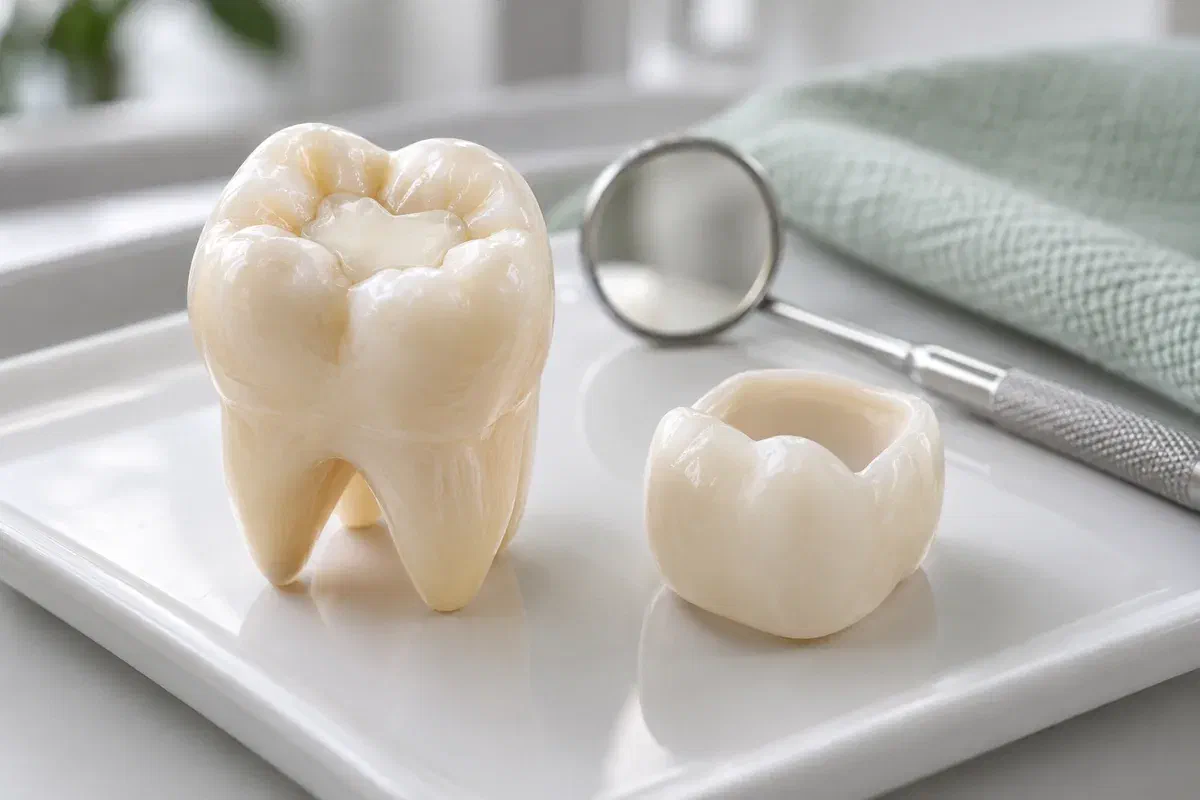
Illustrative molar model with a temporary filling beside a separate temporary crown
Reasons to clarify the interim plan

A comfortable tooth may still need another appointment.

The label temporary covers several different situations. Tell the team what treatment you have had and what you were told about the restoration.

A repair placed during an urgent visit

An appointment for pain or a broken tooth may provide initial protection without completing every part of treatment. Ask what the temporary repair was intended to achieve and whether further diagnosis or restoration is needed. Relief from a symptom does not establish that the overall plan is finished.

Protection while a crown or bridge is made

A provisional crown or bridge may cover prepared teeth during a fabrication interval. Confirm the fitting appointment and the instructions for eating and cleaning. Tell the team about travel or other events that could make returning on the planned date difficult.

An unfinished internal treatment stage

A temporary filling may be used between root canal appointments or before the final restoration. Ask whether the canals are still being treated or that stage is complete. Those details help you understand which clinician to contact and what the next visit is for.

If you are unsure whether a restoration is temporary or definitive, contact the treating clinic. Its appearance or how comfortable it feels cannot reliably answer that question.

The role of interim protection

Give the treatment sequence a clear and useful bridge.

A planned temporary restoration allows care to proceed in stages while managing the tooth between them. The benefit depends on its purpose: covering prepared surfaces, closing an access opening, or providing an interim form for function and appearance. Ask which of these roles applies to your tooth.

The provisional stage can also provide useful feedback. Tell the dentist about the bite, cleaning access, or appearance where relevant to the plan. That information may help guide the next restoration, but a temporary repair is not always intended to reproduce every feature of the final result.

Patient information: Leeds Teaching Hospitals — temporary protection during crown treatment

Protection with clear limits

Ask what loads or habits the temporary restoration should avoid and how long the planned interval is. A material selected for interim use may not be suitable for an open-ended delay. Knowing the limits helps you use the tooth appropriately while waiting.

A defined reason for the next visit

Confirm whether the next appointment is for reassessment, continuation of treatment, or placement of the final restoration. Each has a different purpose. You should be able to explain what remains to be completed without having to interpret technical notes yourself.

A point of contact if something changes

Ask whom to call if the temporary repair loosens or a symptom returns, especially when more than one clinic is involved. Keep the appointment and contact information together. Clear communication makes it easier to arrange a review before the problem disrupts the next stage.

Your interim restoration pathway

Place the protection and keep the final destination in view.

The procedure varies with the tooth and treatment stage. Ask for an explanation of the temporary restoration as part of the full plan, including any separate appointments or estimates.

  1. Identify the reason for interim care

    The dentist reviews the tooth, symptoms, and work already performed. Explain any earlier temporary repair and whether it has changed. The assessment establishes what needs protection or further investigation before the next stage can proceed.

  2. Explain what the temporary repair will do

    Discuss the material or design, expected use, limitations, and planned duration. Ask whether it is intended to manage comfort, protect prepared tooth, or close an opening. Clarify which parts of the complete treatment are still outstanding.

  3. Fit and check the interim restoration

    The temporary filling, crown, or other provisional repair is placed as appropriate for the situation. The clinician checks the relevant shape, contacts, and bite. Speak up about an obvious high spot or an edge that feels uncomfortable before leaving.

  4. Arrange the next appointment and instructions

    Confirm when the tooth will be reviewed or definitively restored. Ask for eating, cleaning, and contact advice suited to the repair. If the next stage depends on specialist care or laboratory work, establish how the appointment will be coordinated.

Between appointments

Use the tooth carefully and keep the area clean.

Follow the instructions given for your particular restoration. Temporary fillings and provisional crowns can have different handling and cleaning needs.

Avoid testing the repair

Wait for numbness to wear off before chewing and follow the guidance about food choices. Avoid deliberately biting hard or sticky items to check its strength. Describe any ordinary chewing difficulty to the clinic rather than repeatedly loading the same area.

Ask how to clean around it

Continue cleaning your mouth while using the technique demonstrated for the temporary area. Some provisional crowns or bridges need particular care when cleaning between teeth. If floss catches or an edge moves, stop pulling on it and seek advice.

Keep the scheduled completion visit

Contact the clinic if you need to change the appointment so the tooth’s interim protection can be considered. Do not simply leave the temporary restoration indefinitely because it feels comfortable. Ask whether a review is needed if the planned interval becomes longer.

Patient information: CDA — stages of root canal care and restoration

Choosing the next restorative step

The interim repair should lead to an explained decision.

Ask which pathway fits the tooth’s present condition. The next step may be completion, reassessment, or a revised plan if new findings emerge.

When an interval is still needed

Continue the planned temporary stage

The existing repair may remain appropriate until the scheduled next step, or it may need adjustment or renewal. Confirm the reason and review date. Continuing interim care should be an active plan, not an assumption based solely on the absence of pain.

When the tooth is ready for the final repair

Complete the definitive restoration

A filling, crown, bridge, or another agreed restoration may complete the planned stage. Ask what makes the tooth ready and what checks are needed before placement. The final choice depends on the remaining structure and the treatment already performed.

When a symptom or finding changes the plan

Reassess before moving ahead

Persistent discomfort, a fracture, or an unexpected finding may require more investigation before final restoration. The clinician can explain what has changed and how the tooth will be managed meanwhile. Replacing temporary material alone does not resolve every underlying problem.

Questions about a temporary tooth repair

Know what is finished and what is still ahead.

If the appointment was urgent or you were uncomfortable, it is reasonable to ask for the instructions again. The team can help clarify the treatment stage.

(905) 876-4488
How can I tell whether the filling I received is only temporary?
Ask the clinician who placed it or check the treatment instructions. Colour, texture, and comfort are not reliable ways to identify the intended duration. Confirm what procedure was performed, what material was placed, and whether another appointment is required to complete care.
Can I keep a temporary filling if the tooth has stopped hurting?
Do not assume symptom relief means the plan is complete. The restoration may be protecting a tooth that still needs treatment or a definitive repair. Contact the clinic to confirm the next step and follow the recommended review or replacement timing.
What if my temporary crown comes off shortly before the final fitting appointment?
Keep the crown safely and call the clinic, even if the fitting appointment is soon. The team can advise whether the tooth needs protection or an earlier review. Do not use household adhesive or assume an uncovered prepared tooth can be left without advice.
Should a temporary restoration reproduce the exact colour of my final crown?
Not always. A provisional restoration may have different materials and appearance limitations, depending on its purpose. Tell the dentist about any concerns and ask which features are being assessed for the final result. Discuss the definitive shade and shape before final placement.
Can another dentist complete treatment after a temporary repair was placed elsewhere?
You can arrange an assessment, but the new clinician needs to understand what was done and what remains. Ask for relevant records and describe any symptoms or instructions. The tooth will be reviewed before the next treatment and estimate are confirmed.
What should I do if travel will delay replacing my temporary restoration?
Tell the treating clinic before leaving where possible. Ask whether the tooth should be reviewed or the schedule changed, and keep the treatment details and contact information with you. The appropriate advice depends on the repair and underlying treatment stage, not a universal safe delay.
Temporary dental restoration care in Milton

Let’s make the next stage clear.

Visit our Bronte Street practice to review a temporary repair or plan the completion of your treatment. Bring available records so we can assess the tooth, explain its current protection, and discuss what should happen next.

Call if a temporary restoration is lost or the tooth becomes painful. Online requests are for non-urgent appointment planning.

Visit Milton Dental Clinic
Unit 1, 342 Bronte St. S, Milton, ON L9T 5B7
Get directions Clinic hours
Monday–Thursday
11am–7pm
Friday–Sunday
By appointment only

How can we help?

Milton Dental Clinic

Have a question about your smile? Choose the option that works best for you.

For urgent dental concerns, please call.
Messages are reviewed during clinic hours.