

Illustrative conversation about an interim tooth repair and the next appointment
Restorative Dentistry

Temporary Dental Restorations in Burlington

Root canal care often happens in stages, with a temporary filling sealing the tooth between them. From Burlington, find out what that seal is doing and what the final repair will be.

Sealed between stages

The canal work is underway. The tooth is closed for now.

When treatment inside a tooth takes more than one appointment, the opening made to reach the canals has to be closed in between. A temporary filling usually does that. It is one example of an interim restoration, alongside provisional crowns over shaped teeth and other short-term repairs that each serve a particular stage.

That small seal carries real responsibility. It helps keep the inside of the tooth protected, preserves a surface you can use with care, and holds things steady until the next visit. Its limits are real too. How long it can stay and how it should be treated depend on the material, the tooth and the treatment it is part of.

Ask before you leave whether the canals are finished or still in progress, and what the next appointment will do. Travelling from Burlington, you will want the date and the warning signs clear in your mind. If a temporary filling was placed at another clinic, bring the treatment details so we can examine it and understand the plan.

Ask about a temporary between visits
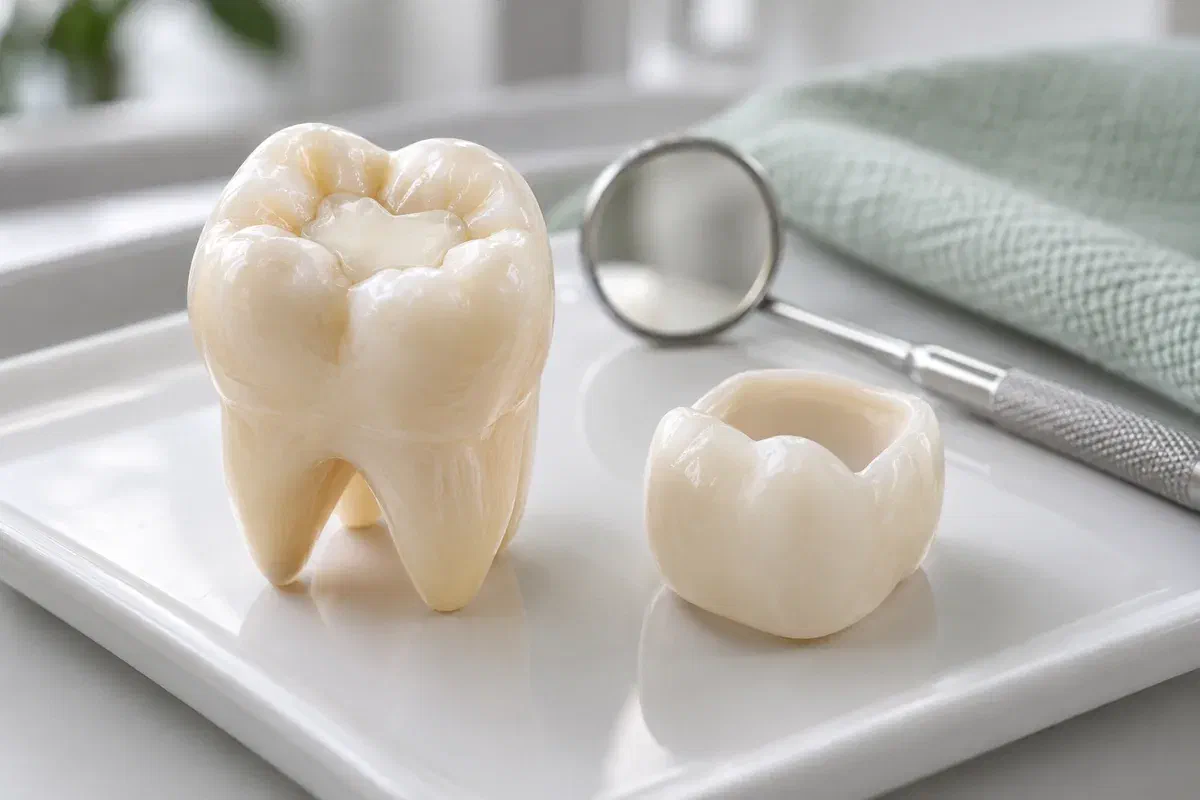
Illustrative molar model with a temporary filling beside a separate temporary crown
Making sense of your stage

Which part of the plan are you in?

A temporary repair means something different depending on how you got it. Let us know what treatment has happened and what you were told.

First aid on an aching tooth

Urgent visits sometimes end with a sedative or interim filling that calms things down before full treatment is planned. Ask what was done and whether more diagnosis or a permanent restoration is still needed. Relief is welcome, but it does not mean care is complete.

Covered while a crown is made

Teeth prepared for a crown or bridge are often protected by a provisional during the making of the final piece. Check when the fitting is and how to eat and clean until then. Flag any trip or commitment that might clash with the date.

Root canal treatment in progress

A temporary filling may close the tooth between canal appointments or before the final filling or crown. Ask whether the canals still need work or are complete. That tells you who to contact with questions and what the next visit is for.

Only the treating clinic, or a careful examination, can say whether a repair is meant to be temporary. Feel and appearance can be misleading.

What the seal gives you

Time to finish the job properly

Planned interim restorations let complex care be split into manageable visits. Depending on the tooth, the temporary may close an access opening, protect prepared surfaces or provide a provisional form for eating and appearance. Knowing which applies tells you how cautious to be.

Your experience during the interval is worth sharing. If the bite feels different, a spot is hard to clean, or appearance matters for a front tooth, tell the dentist, because that may inform the final restoration. Bear in mind that a temporary is not always designed to replicate the finished result.

Patient information: Leeds Teaching Hospitals — temporary protection during crown treatment

Short-term by design

Ask what to avoid and how long the interval is meant to last. A temporary seal chosen for a few weeks may not hold up through an indefinite delay. Understanding this helps you protect the tooth until it is completed.

Each appointment explained

Find out whether the next visit continues canal treatment, reviews healing, or places the final restoration. These are not interchangeable. You should leave able to describe the remaining steps without needing to decipher clinical terms.

A clear line of contact

If the seal wears, the temporary cracks or symptoms return, you should know whom to call, especially when a specialist is sharing the care. Keep appointment and contact details together so a check can be arranged before the next stage is affected.

Closing the tooth for now

Step by step at an interim visit

Procedures vary with the tooth and stage of treatment. Ask how this temporary restoration sits within the complete plan, including any separate visits or estimates.

  1. Clarify why a temporary is needed

    The dentist assesses the tooth, your symptoms and any treatment already completed. Mention an existing temporary and any changes you have noticed. This establishes what needs to be sealed, protected or investigated further.

  2. Explain the seal and its lifespan

    You will hear what the temporary is made of, how to use the tooth, what to avoid and roughly how long it should stay. Ask whether it is mainly for comfort, protection of prepared tooth or closing an opening, and what remains outstanding.

  3. Place and check it

    The temporary filling, crown or other interim repair is placed as appropriate. The clinician checks its shape, how it meets neighbouring teeth and your bite. Mention any high spot or rough edge before leaving.

  4. Schedule what comes next

    Agree when the tooth will be reviewed, the canal work continued or the final restoration placed. Ask for eating, cleaning and contact guidance. If a specialist or laboratory is involved, confirm how that timing will be organised.

Caring for a sealed tooth

Protect the seal until your next appointment

Follow the instructions for your specific temporary. A filling between canal visits and a provisional crown may come with different advice.

Chew on the other side where you can

Wait for numbness to wear off before eating, and follow any food advice. Favouring the opposite side and skipping very hard or sticky foods can help the seal last. If eating normally is difficult, call rather than persisting.

Keep the area clean without disturbing it

Brush and clean as usual, using the technique shown for the temporary tooth. Some provisional crowns and bridges need extra care between the teeth. If floss catches or something moves, stop and ask for guidance.

Return when planned

Contact the clinic if you need to rearrange, so the temporary’s limits can be factored into a new date. Do not leave the tooth with only a temporary seal because it feels comfortable. Ask about a review if the wait gets longer.

Patient information: CDA — stages of root canal care and restoration

After the seal

Three possible next moves

Which step follows depends on the tooth’s current state. It may be time to complete treatment, to review again, or to adjust the plan based on new findings.

When treatment still needs time

Continue with the interim seal

If the canals or healing need another interval, the temporary may stay, or it may be adjusted or renewed. You should know the reason and the review date. A tooth left on a temporary seal needs an active plan behind it, whatever it feels like day to day.

When canal treatment is complete

Place the permanent restoration

Once the tooth is ready, a filling, crown or other agreed restoration can complete the stage. Ask what confirms readiness and what checks come first. The best choice depends on how much natural tooth remains and what treatment it has had.

When symptoms persist or something new appears

Look again before restoring

Continuing discomfort, a fracture or an unexpected finding may call for more investigation before the final restoration. The dentist will explain the change and how the tooth will be protected in the meantime. A fresh temporary on its own does not cure the underlying cause.

Asked by Burlington visitors

Questions between root canal appointments

Urgent visits can be a blur. It is perfectly reasonable to ask for the instructions again, and we can help you work out where treatment stands.

(905) 876-4488
Why is root canal treatment sometimes split across two visits?
It depends on the tooth, the complexity of the canals and how it responds. Some teeth are treated in one appointment, others in more. Your dentist can explain why your plan has an interval and what happens at each stage.
Is it all right to eat normally between canal appointments?
Usually you can eat, but with care on that tooth. Avoid very hard and sticky foods, and chew on the other side if you can. Follow the specific advice given, since it depends on the tooth and the temporary used.
Part of my temporary filling seems to have worn away. What should I do?
Call the clinic. A temporary seal can wear or chip, and a shallow dip or rough patch may mean it needs to be checked or refreshed. The team can advise how soon you should be seen.
Do I still need a crown after root canal treatment?
Some teeth do, especially back teeth with significant structure lost, while others can be restored with a filling. The dentist will recommend an option based on the remaining tooth. Ask why a particular restoration is advised.
Who finishes the tooth if a specialist did the canal work?
Often the general dentist places the final restoration after the specialist completes their part, but arrangements vary. Confirm who is responsible for each step and make sure records are shared between the offices.
If the tooth feels great, can I put off the final restoration for a while?
It is best not to. A temporary seal is designed for a limited interval, and a tooth that feels fine may still be vulnerable. Talk to the clinic before delaying so they can advise on timing.
Interim restoration help for Burlington

Bring the tooth in and finish what was started.

Our Bronte Street practice can review a temporary filling or crown and plan the appointment that completes your treatment. Bring any records you have so we can examine the tooth and explain how it is protected now.

If a temporary comes out or the tooth becomes painful, please call. Online requests are for non-urgent appointments.

Visit Milton Dental Clinic
Unit 1, 342 Bronte St. S, Milton, ON L9T 5B7
Get directions Clinic hours
Monday–Thursday
11am–7pm
Friday–Sunday
By appointment only

Areas we serve

  • Milton
  • Oakville
  • Mississauga
  • Georgetown
  • Halton Hills
  • Acton
  • Campbellville
  • Brampton
  • Burlington
  • Puslinch
  • Rockwood
  • Erin
  • Caledon
  • Etobicoke
  • Old Milton
  • Bronte Meadows
  • Timberlea
  • Dorset Park
  • Dempsey
  • Clarke
  • Beaty
  • Coates
  • Harrison
  • Scott
  • Willmott
  • Ford
  • Bowes
  • Cobden
  • Walker
  • Mountain View
  • Milton Heights
  • Hawthorne Village
  • Valley View
  • Fallingbrook
  • Nassagaweya
  • Trafalgar
  • Esquesing
  • Nelson
  • Brookville
  • Moffat
  • Glen Williams
  • Norval
  • Limehouse
  • Stewarttown
  • Ashgrove
  • Hornby
  • Silver Creek
  • Speyside
  • Scotch Block
  • North Oakville
  • River Oaks
  • Glen Abbey
  • West Oak Trails
  • Palermo
  • Bronte Creek
  • College Park
  • Joshua Creek
  • Uptown Core
  • Preserve
  • Iroquois Ridge
  • Lisgar
  • Meadowvale
  • Meadowvale Village
  • Churchill Meadows
  • Erin Mills
  • Central Erin Mills
  • Streetsville
  • East Credit
  • Creditview
  • Heartland
  • Sheridan
  • Mount Pleasant
  • Credit Valley
  • Huttonville
  • Churchville
  • Springbrook
  • Northwest Brampton
  • Bram West
  • Fletcher's Meadow
  • Fletcher's Creek South
  • Alton Village
  • Orchard
  • Millcroft
  • Headon Forest
  • Tansley
  • Brant Hills
  • Tyandaga
  • Kilbride
  • Lowville
  • Aberfoyle
  • Morriston
  • Arkell
  • Hillsburgh
  • Freelton
  • Carlisle
  • Waterdown
  • Flamborough
  • Mountsberg

How can we help?

Milton Dental Clinic

Have a question about your smile? Choose the option that works best for you.

For urgent dental concerns, please call.
Messages are reviewed during clinic hours.