

Illustrative conversation about an interim tooth repair and the next appointment
Restorative Dentistry

Temporary Dental Restorations in Campbellville

Out in Campbellville, a trip into town often has to do several jobs at once. Plan your temporary restoration visits so each one moves the tooth closer to being finished.

Making each trip count

A few visits, planned around rural life

Rural days rarely leave room for unplanned errands, so it helps to know from the start how many appointments a tooth will take. Where treatment is staged, a temporary restoration covers the gaps. It may be a filling that closes a tooth between visits, a provisional crown over a tooth prepared for a lab-made one, or another interim repair with a specific role.

In that role it earns its keep: guarding the tooth, letting you chew with care and holding things steady until the next booking. It is still a short-term measure. The safe interval is set by what it is made of, which tooth it sits on, and why it was needed in the first place.

Ask us to sketch the whole sequence before you head back to Campbellville, so you can line up visits with work, school pick-ups and other family appointments. We will explain what was completed, what remains and which changes warrant a phone call. If the temporary came from elsewhere, share the details and we will assess where things stand.

Map out your remaining visits
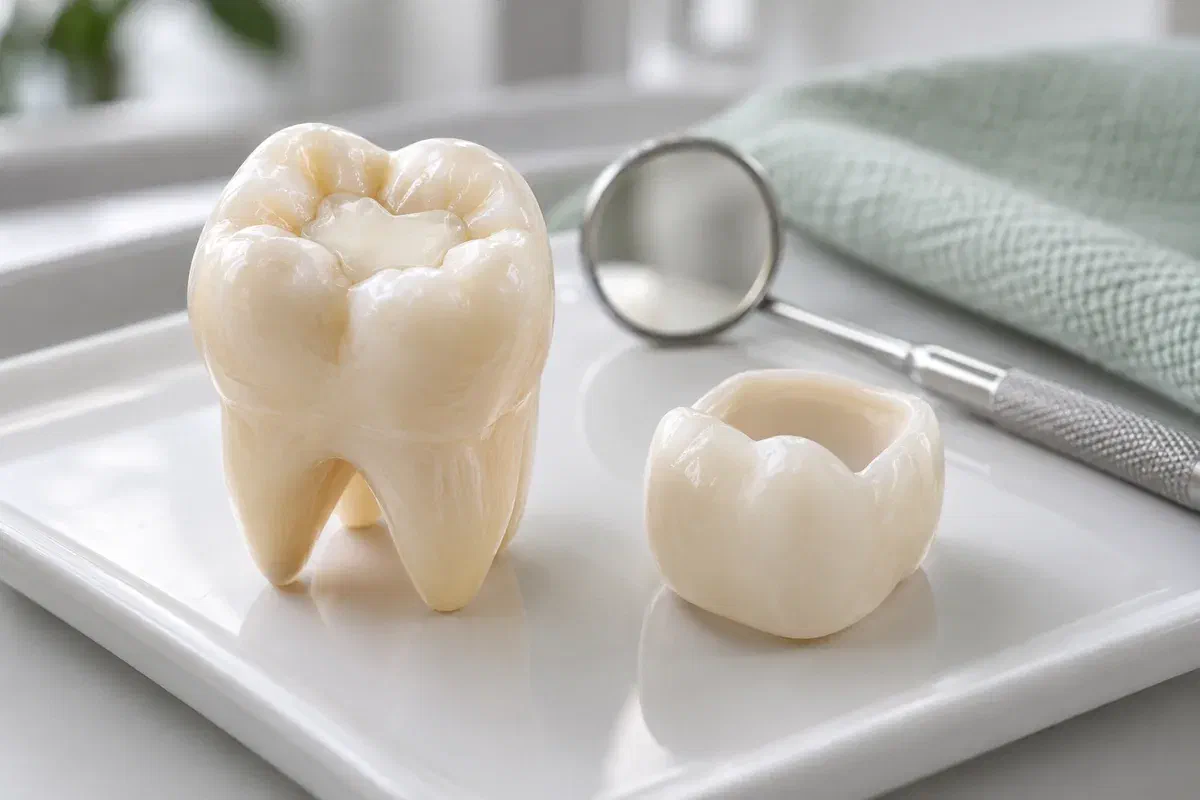
Illustrative molar model with a temporary filling beside a separate temporary crown
Starting points

Not every temporary has the same job

Knowing why the repair was placed tells you what the next appointment is for. Fill us in on any treatment and instructions you received.

Placed after a sudden problem

A tooth that broke or flared up may have been patched at an urgent visit simply to get you through. Ask whether a diagnosis or lasting repair was meant to follow. Being comfortable again is welcome, but it does not tell you the job is complete.

Covering teeth prepared for lab work

A provisional crown or bridge protects shaped teeth while the final piece is made. Write the fitting date down, along with food and cleaning advice. If seasonal work or travel might get in the way of that date, raise it early.

Holding a root canal between stages

Canal treatment sometimes spans more than one appointment, with a temporary filling closing the tooth between them. Ask whether that part is finished. It determines which office you contact with questions and what happens at the next visit.

Looks and comfort do not reveal whether a repair is interim. If in doubt, ask the clinic that placed it.

What staged care makes possible

Treatment broken into manageable steps

Because a planned temporary keeps the tooth covered, complex work can be split across appointments that fit your life. Its exact purpose varies. It might seal an access opening, protect prepared tooth surfaces or offer an interim form for biting and appearance. Ask which one applies, since that affects how gently it should be treated.

The interval also gives you a chance to notice things. If the bite feels off, food packs around the tooth or cleaning is tricky, tell the dentist, because it may help shape the final restoration where relevant. Keep in mind that a temporary is not always built to show every feature of the finished result.

Patient information: Leeds Teaching Hospitals — temporary protection during crown treatment

Sturdy enough, within limits

Ask which foods and habits to avoid and how long the gap between visits should be. Materials meant for a few weeks may not cope with a season-long delay. Knowing the limits helps you protect the tooth until it is done.

Visits with a clear aim

Find out whether your next appointment is a review, further treatment or the fitting of the final restoration. Each one differs in time and purpose, which matters when you are grouping trips. You should be able to explain what is left without technical notes.

One number for problems

Agree whom to call if the temporary shifts, chips or starts to ache, especially if a specialist also has a role. Keep that number with your appointment card. A quick call often settles whether a trip in is needed straight away.

Inside a staged appointment

Each visit has four parts

The specifics change with the tooth and the stage of treatment. Ask how the temporary fits into the complete plan, including separate appointments or estimates.

  1. Look at what is there now

    The dentist examines the tooth, asks about symptoms and reviews any work already done. If you have an earlier temporary, mention whether it has changed. This tells us what needs covering or closer investigation.

  2. Explain the temporary

    We cover what the repair is made of, how to use the tooth, what to avoid and roughly how long it is meant to stay. Ask whether it is mainly for comfort, protecting a prepared tooth or sealing an opening, and what is still ahead.

  3. Place it and check the fit

    The temporary filling, crown or other interim repair is placed, then its shape, contacts and bite are checked. Since another trip in is not always easy, mention any high spot or rough edge before leaving.

  4. Book the sequence

    Where possible, we book the next step before you leave and explain how laboratory or specialist timing will be coordinated. You will go home with food, cleaning and contact advice for the interim.

Back home, in between

Keep the temporary working until the next trip

Follow the instructions for your own restoration. A temporary filling may need different care from a provisional crown.

Ease off on that tooth

After numbness fades, chew on the other side where you can and follow the food advice. Avoid hard or sticky foods and using your teeth as tools. If everyday chewing feels uncomfortable, call rather than pressing on.

Clean it the way you were shown

Brush and clean as usual, using the technique demonstrated for the temporary area. Some provisional crowns and bridges need extra care between teeth. If floss snags or an edge lifts, stop and phone for advice.

Keep the planned appointment

If you must change the date, call so the temporary’s limits can be weighed. A comfortable tooth is not a reason to leave interim material in place without end. Ask whether a review is needed if the delay grows.

Patient information: CDA — stages of root canal care and restoration

Choosing the next stage

Wait, finish or rethink?

At each visit, the dentist will suggest a direction based on the tooth’s current condition. You can ask how each route would affect the number of trips.

When the tooth or the lab needs more time

Wait a little longer

The temporary may stay as it is, or be touched up or swapped for a fresh one, until the next step is ready. Confirm the reason and the date of the next check. Waiting works best as a planned choice, not a drift.

When it is ready for the final repair

Finish the tooth

A permanent filling, crown, bridge or other agreed restoration can complete this stage. Ask what tells the dentist the tooth is ready and which checks come first. The choice depends on the remaining structure and the treatment it has had.

When symptoms or findings change

Rethink the plan

Persistent discomfort, a crack or something unexpected may call for more investigation before final restoration. The dentist will explain the concern and what interim cover makes sense. Another temporary alone does not fix every underlying cause.

Planning from Campbellville

Practical questions about staged visits

Instructions given during a numb, busy appointment are easy to lose. Ask again any time, and we will help you understand where the tooth stands.

(905) 876-4488
Can two family members have their appointments back to back?
Often, yes, depending on availability and the treatment each person needs. Mention it when booking and the team will try to arrange consecutive times, which can cut down on separate trips.
How far ahead can I book the visit after my temporary?
In many cases you can book the next step before you leave, once the dentist knows the expected interval. If the timing depends on laboratory work, we will tell you when the date can be confirmed.
Is it all right to do heavy physical work with a new temporary?
Usually, yes. If you clench your teeth when lifting or concentrating, mention it, since that pressure can be hard on a temporary. Ask whether any precautions apply to your situation.
What if the temporary chips while I am working outdoors?
Rinse your mouth, avoid chewing on that side and call the clinic for advice. A small chip is not always urgent, but the team can tell you whether the tooth should be seen soon.
Will a temporary filling be affected by very cold weather or drinks?
The material is not usually affected, but the tooth underneath may be more sensitive to cold for a while. If sensitivity is strong, lasting or worsening, call so the tooth can be checked.
Can the final restoration be done sooner to save a trip?
Sometimes the schedule can be tightened, but it depends on healing, laboratory time and the tooth. Ask the dentist whether any step can be combined or brought forward safely.
Staged care for Campbellville

Trips planned, tooth finished.

Come to our Bronte Street practice to have a temporary looked at and the remaining appointments laid out, so you know what each visit is for. Bring any treatment details you have, and we will check the tooth and explain the next step.

Call if a temporary is lost or the tooth becomes painful. Online requests are for non-urgent appointments.

Visit Milton Dental Clinic
Unit 1, 342 Bronte St. S, Milton, ON L9T 5B7
Get directions Clinic hours
Monday–Thursday
11am–7pm
Friday–Sunday
By appointment only

Areas we serve

  • Milton
  • Oakville
  • Mississauga
  • Georgetown
  • Halton Hills
  • Acton
  • Campbellville
  • Brampton
  • Burlington
  • Puslinch
  • Rockwood
  • Erin
  • Caledon
  • Etobicoke
  • Old Milton
  • Bronte Meadows
  • Timberlea
  • Dorset Park
  • Dempsey
  • Clarke
  • Beaty
  • Coates
  • Harrison
  • Scott
  • Willmott
  • Ford
  • Bowes
  • Cobden
  • Walker
  • Mountain View
  • Milton Heights
  • Hawthorne Village
  • Valley View
  • Fallingbrook
  • Nassagaweya
  • Trafalgar
  • Esquesing
  • Nelson
  • Brookville
  • Moffat
  • Glen Williams
  • Norval
  • Limehouse
  • Stewarttown
  • Ashgrove
  • Hornby
  • Silver Creek
  • Speyside
  • Scotch Block
  • North Oakville
  • River Oaks
  • Glen Abbey
  • West Oak Trails
  • Palermo
  • Bronte Creek
  • College Park
  • Joshua Creek
  • Uptown Core
  • Preserve
  • Iroquois Ridge
  • Lisgar
  • Meadowvale
  • Meadowvale Village
  • Churchill Meadows
  • Erin Mills
  • Central Erin Mills
  • Streetsville
  • East Credit
  • Creditview
  • Heartland
  • Sheridan
  • Mount Pleasant
  • Credit Valley
  • Huttonville
  • Churchville
  • Springbrook
  • Northwest Brampton
  • Bram West
  • Fletcher's Meadow
  • Fletcher's Creek South
  • Alton Village
  • Orchard
  • Millcroft
  • Headon Forest
  • Tansley
  • Brant Hills
  • Tyandaga
  • Kilbride
  • Lowville
  • Aberfoyle
  • Morriston
  • Arkell
  • Hillsburgh
  • Freelton
  • Carlisle
  • Waterdown
  • Flamborough
  • Mountsberg

How can we help?

Milton Dental Clinic

Have a question about your smile? Choose the option that works best for you.

For urgent dental concerns, please call.
Messages are reviewed during clinic hours.