

Illustrative conversation about an interim tooth repair and the next appointment
Restorative Dentistry

Temporary Dental Restorations in Puslinch

Brushing and flossing around a temporary can feel risky. For households in Puslinch, learn how to keep the area clean without dislodging the repair, and what the next stage involves.

Clean, but carefully

Your toothbrush and the temporary can get along.

Standing at the bathroom mirror the first night, many people hesitate. Will flossing pull it off? Should that side be skipped? A temporary restoration, such as a filling sealing a tooth between visits or a provisional crown covering a prepared one, needs cleaning just like the rest of the mouth, only with a slightly different technique.

Keeping it clean supports what the repair is there to do: protect the tooth, give you a surface to chew with care, and hold the plan together until the next appointment. Interim materials are not as tough as finished restorations, and the right care routine, as well as the expected lifespan, depends on the type of repair, the tooth and the treatment stage.

Before heading home to Puslinch, ask for a quick demonstration of how to clean the area and what to watch for. Also confirm what was done today and what remains. If another clinic placed your temporary, bring what you know about the treatment, and we will check its condition and the intended next step.

Ask for cleaning tips for your temporary
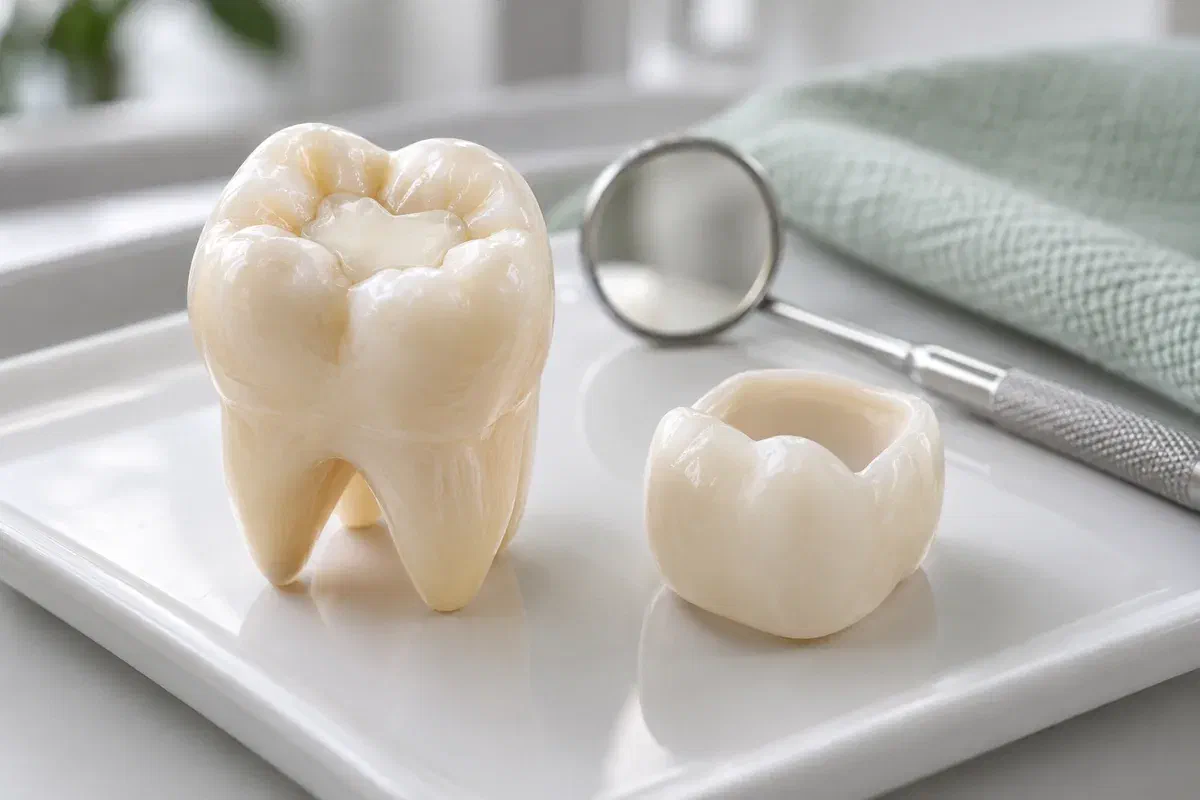
Illustrative molar model with a temporary filling beside a separate temporary crown
Why the reason matters for cleaning

Each kind of temporary has its own weak points

How you clean depends partly on why the repair was placed. Tell us what treatment you have had and what you were told.

Urgent cover for a painful tooth

An interim filling placed for pain may be a holding measure while the cause is worked out. Ask whether further diagnosis or a permanent repair is planned. A tooth that feels calm still needs gentle, thorough cleaning, and relief does not mean treatment is over.

A provisional crown or bridge

These cover prepared teeth while final work is made, and their edges near the gum need careful cleaning. Confirm the fitting date and the flossing method. If a trip or busy period could clash with the fitting, tell us early.

A tooth between root canal visits

A temporary filling may close the access opening until the next canal appointment or final restoration. Ask whether the canals are finished. That tells you what the next visit is for and who to call with questions.

Only the clinic that placed it can reliably tell you whether a repair is meant to be temporary. Appearance and feel are not dependable clues.

Why keeping it clean pays off

Healthy gums make the next step easier

A planned temporary lets treatment progress in steps, with the tooth covered in between. It might be sealing an access opening, protecting prepared surfaces or giving you an interim shape for chewing and appearance. Clean gums around it can also make the final fitting more straightforward, so the daily routine matters.

The interval is a chance to notice how the area behaves. If floss catches, gums bleed easily or food packs in, tell the dentist, since that may help shape the final restoration where relevant. A temporary is not always intended to reproduce every contour or contact of the finished one.

Patient information: Leeds Teaching Hospitals — temporary protection during crown treatment

Gentle routines, clear limits

Ask what cleaning tools are suitable and which foods or habits to avoid, along with how long the temporary should stay. Interim materials can wear or loosen if the wait drags on. Knowing the limits keeps the repair working.

An understood next visit

Find out whether the next appointment is a check, further treatment or the final placement. Each has a different purpose. You should be able to explain what remains in plain words.

Help when cleaning goes wrong

Know whom to call if the temporary loosens while you floss or a symptom returns, especially if a second office is involved. Keep the contact details near your appointment card. Prompt advice can prevent a small problem from upsetting the next stage.

At the interim appointment

From assessment to a cleaning demonstration

Every tooth and treatment stage differs. Ask how the temporary fits into your full plan, including any separate appointments or estimates.

  1. Assess the tooth

    The dentist examines the tooth and gums, asks about symptoms and reviews any work done so far. Mention an earlier temporary and whether it has changed. This shows what needs covering or investigating.

  2. Explain the repair

    You will learn what material is used, how to chew with it, what to avoid and the planned interval. Ask whether its main role is comfort, protecting a prepared tooth or sealing an opening, and what treatment is still ahead.

  3. Place it and show you how to clean

    The interim piece is placed and its shape, contacts and bite are checked. Then ask to see how to brush and floss around it. If anything feels high or rough, mention it before you go.

  4. Confirm the next date

    We agree when the next stage will happen and give eating and contact advice. If laboratory or specialist work is involved, we explain how those appointments will be lined up.

A cleaning routine that protects it

Brush, floss and rinse with a lighter touch

Follow the instructions for your repair. A provisional crown and a temporary filling can need different cleaning methods.

Brush gently along the edges

Use a soft brush and small, gentle strokes along the gumline around the temporary. You do not need to scrub hard to keep it clean. Wait until numbness wears off before eating, and follow the food guidance you received.

Thread floss out instead of up

For many provisional crowns, it helps to slide floss down between the teeth, then pull it out sideways rather than lifting it back up. If floss shreds, catches repeatedly or the crown moves, stop and call for advice.

Return for completion

If you need to change your appointment, call so the temporary’s limits are considered. A clean, comfortable temporary still should not stay in place indefinitely. Ask about a review if the wait gets longer.

Patient information: CDA — stages of root canal care and restoration

After the interim period

What the next appointment could bring

The dentist will recommend a step based on the tooth and gums as they are now. It may be completion, more time or reassessment.

When more time is needed

Keep the temporary in place

The temporary may still be the right cover, sometimes after being refreshed. Confirm why it is staying and when it will be checked. Extending the interval should be a joint decision with the dentist, not a default because the area is easy to clean.

When the tooth and gums are ready

Place the final restoration

A permanent filling, crown, bridge or other agreed option can complete this stage. Ask what tells the dentist it is time and what checks come first. The choice depends on the remaining tooth and earlier treatment.

When symptoms or findings change

Investigate first

Gums that stay tender or bleed, a crack, or another finding may need a closer look before anything permanent goes in. You will be told what is going on and what interim cover suits the tooth while it is worked out. Simply renewing the temporary does not settle every underlying issue.

Cleaning questions from Puslinch

Brushing, flossing and gum care

It is easy to forget a demonstration given while you were numb. Ask us to show you again, and we will help you understand the treatment stage.

(905) 876-4488
Can I use an electric toothbrush on a temporary crown?
Usually yes, with gentle pressure and a soft head. Let the brush do the work rather than pressing hard. If you notice the crown moving or the area becoming sore, stop and ask the clinic.
Is a water flosser safe to use around a provisional?
Many people use one on a low setting, but ask your dentist first. Some provisional crowns and bridges benefit from it, while others may need a different approach depending on the fit.
Why do my gums bleed a little around the temporary?
Gums can be tender after a tooth has been prepared or treated, and some bleeding while cleaning may happen at first. If bleeding is heavy, increasing or comes with swelling, call the clinic for advice.
Should I use mouthwash while I have a temporary filling?
A gentle rinse is usually fine unless you were told otherwise. Mouthwash does not replace brushing and cleaning between teeth. Ask whether any particular product is recommended or best avoided for your situation.
What can I use if floss keeps catching on my temporary?
Try sliding it out sideways, and ask about floss threaders or small interdental brushes. Repeated catching may mean an edge needs smoothing, so mention it to the clinic. It is usually a quick adjustment, and it makes daily cleaning far less frustrating.
Do I need a cleaning appointment before my final crown is placed?
Not always, but healthy gums help. The dentist may suggest one depending on your gum health and timing. Ask whether a hygiene visit would be useful in your plan, and if so, whether it can be booked close to the fitting to save a separate trip.
Support for Puslinch smiles

We will show you how, then finish the tooth.

Our Bronte Street practice can check a temporary, demonstrate how to clean around it and plan the visit that completes your treatment. Share any details from earlier appointments, and we will assess the tooth and explain what comes next.

Call if a temporary is lost or the tooth starts to hurt. Online requests are for non-urgent appointments.

Visit Milton Dental Clinic
Unit 1, 342 Bronte St. S, Milton, ON L9T 5B7
Get directions Clinic hours
Monday–Thursday
11am–7pm
Friday–Sunday
By appointment only

Areas we serve

  • Milton
  • Oakville
  • Mississauga
  • Georgetown
  • Halton Hills
  • Acton
  • Campbellville
  • Brampton
  • Burlington
  • Puslinch
  • Rockwood
  • Erin
  • Caledon
  • Etobicoke
  • Old Milton
  • Bronte Meadows
  • Timberlea
  • Dorset Park
  • Dempsey
  • Clarke
  • Beaty
  • Coates
  • Harrison
  • Scott
  • Willmott
  • Ford
  • Bowes
  • Cobden
  • Walker
  • Mountain View
  • Milton Heights
  • Hawthorne Village
  • Valley View
  • Fallingbrook
  • Nassagaweya
  • Trafalgar
  • Esquesing
  • Nelson
  • Brookville
  • Moffat
  • Glen Williams
  • Norval
  • Limehouse
  • Stewarttown
  • Ashgrove
  • Hornby
  • Silver Creek
  • Speyside
  • Scotch Block
  • North Oakville
  • River Oaks
  • Glen Abbey
  • West Oak Trails
  • Palermo
  • Bronte Creek
  • College Park
  • Joshua Creek
  • Uptown Core
  • Preserve
  • Iroquois Ridge
  • Lisgar
  • Meadowvale
  • Meadowvale Village
  • Churchill Meadows
  • Erin Mills
  • Central Erin Mills
  • Streetsville
  • East Credit
  • Creditview
  • Heartland
  • Sheridan
  • Mount Pleasant
  • Credit Valley
  • Huttonville
  • Churchville
  • Springbrook
  • Northwest Brampton
  • Bram West
  • Fletcher's Meadow
  • Fletcher's Creek South
  • Alton Village
  • Orchard
  • Millcroft
  • Headon Forest
  • Tansley
  • Brant Hills
  • Tyandaga
  • Kilbride
  • Lowville
  • Aberfoyle
  • Morriston
  • Arkell
  • Hillsburgh
  • Freelton
  • Carlisle
  • Waterdown
  • Flamborough
  • Mountsberg

How can we help?

Milton Dental Clinic

Have a question about your smile? Choose the option that works best for you.

For urgent dental concerns, please call.
Messages are reviewed during clinic hours.