

Illustrative consultation about a temporary replacement for missing teeth
Restorative Dentistry

Temporary Partial Dentures

An interim tooth replacement can help you navigate the space between treatment stages. Explore temporary partial dentures in Milton, with a clear plan for comfort, care, and what comes after healing.

A closer look at temporary partial dentures

A place for your smile while the next step takes shape.

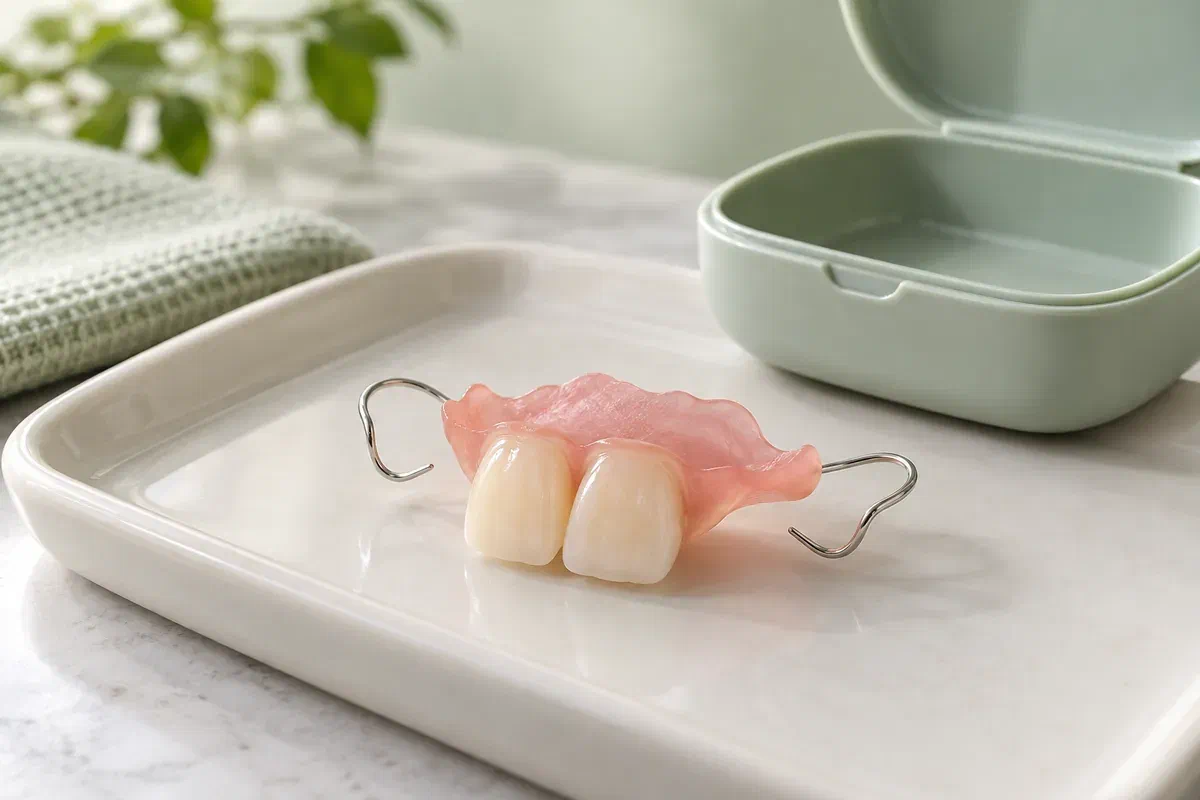
A temporary partial denture is a removable appliance that replaces one or several missing teeth for an interim period. It may be considered while an extraction site heals, while other dental treatment is completed, or while you decide on a longer-term replacement. Some people call a small acrylic version a flipper. The name alone does not describe how it will fit or what you can comfortably do with it.

The useful question is what the appliance needs to achieve during this stage of your care. You may be most concerned about a visible gap at work, speaking in front of others, or understanding how meals will change. We discuss those priorities alongside the condition of your remaining teeth, the tissues supporting the denture, and any planned surgery.

At Milton Dental Clinic, an interim replacement should come with an explanation of its limits and a review plan. Temporary does not mean that comfort or follow-up can be overlooked. Bring your existing treatment information if another dentist or specialist is involved so the proposed appliance can be considered within the wider sequence of care.

Discuss an interim tooth replacement
Illustrative removable acrylic partial appliance with two replacement front teeth
When an interim appliance may help

A missing tooth can affect more than the next appointment.

An assessment helps establish whether a temporary partial is appropriate, when it could be fitted, and what changes to expect. It cannot substitute for treating active disease or making a plan for the teeth that remain.

An extraction is being planned

If a visible tooth needs removal, ask about replacement before the extraction date. An immediate partial is prepared in advance and inserted after removal when suitable. This requires coordination; it cannot be assumed to be available simply because an extraction has been booked.

A longer treatment sequence

Healing, gum treatment, or an implant assessment may create a period before the final replacement is ready. Discuss whether an interim appliance can be worn safely during that period, particularly around a surgical site where pressure may need to be avoided.

Time to consider your choices

You may want a temporary way to address a gap while comparing a bridge, a definitive partial, or implant treatment. Explain your budget and priorities early. The interim choice should not be presented as a commitment to a particular final procedure.

A temporary partial does not treat the reason a tooth was lost. Pain, infection, gum disease, or problems with supporting teeth need their own assessment and management.

What this stage can offer

A practical pause, with realistic expectations.

An interim partial may reduce the visible effect of a missing tooth while a broader plan develops. Its shape and tooth shade are considered in relation to your mouth. Appearance is only part of the discussion: bulk, retention, speech, and the way the appliance meets the opposite teeth also affect the experience.

A temporary design is not necessarily intended to tolerate every food or provide the stability of a completed long-term restoration. Ask which activities it is intended for and what would signal a need for adjustment. A useful treatment plan explains both what you gain now and what will need attention later.

A removable interim option

The appliance can be taken out as instructed for cleaning and tissue rest. You will need to practise handling it; secure placement and removal should be demonstrated rather than left to guesswork.

Continuity during a change

For someone concerned about a front-tooth gap, having a planned replacement may make the transition feel more manageable. Discuss important events early, while allowing for assessment, fabrication, and adaptation.

A defined review point

An interim appliance creates an opportunity to revisit comfort and the longer-term plan as your mouth changes. Agree who will arrange follow-up and what information is needed before the next decision.

Planning and fitting

Make the sequence clear before treatment starts.

Tell us about planned extractions, specialist appointments, and any dates that matter to you. Those details help us explain what can realistically be arranged and where the schedule may need flexibility.

  1. Assess the mouth and the purpose

    We review the missing teeth or proposed extractions, the supporting tissues, and the condition of neighbouring teeth. Discuss your health history, daily needs, and treatment preferences. Where relevant, additional records or imaging help clarify the plan before an appliance is prescribed.

  2. Record the shape and agree the plan

    Impressions or other appropriate records allow an appliance to be made for your mouth. We discuss the proposed design, estimated fees, and expected fitting sequence. Ask whether adjustments, relines, or a later replacement are separate parts of the treatment estimate.

  3. Fit and practise together

    At fitting, the denture is checked against the teeth and tissues, and areas of unwanted pressure are assessed. Practise placing and removing it under guidance. If it is fitted after an extraction, receive specific instructions that account for both the wound and the appliance.

  4. Review as conditions change

    A follow-up visit checks comfort, stability, and how you are managing at home. Healing can alter the fit, so a previously comfortable appliance may later need attention. Review the next treatment stage rather than allowing a temporary arrangement to continue without reassessment.

Living with your temporary partial

Protect the appliance and the mouth supporting it.

Follow the instructions for your particular design. The wearing schedule immediately after an extraction can differ from the usual routine for a healed mouth, so ask for clarification if the advice seems unfamiliar.

Learn its limits at mealtimes

Ask whether to wear this appliance while eating and which foods to avoid. If eating with it is advised, begin with manageable textures and small pieces. Do not test a new partial by biting hard food with the replacement front teeth.

Clean the teeth as well as the appliance

Remove and clean the denture using the products and method recommended for its material. Continue cleaning your natural teeth and the areas around any clasps. A temporary replacement does not protect those teeth from plaque or decay.

Keep adjustments professional

Report rubbing, rocking, a crack, or difficulty seating the denture. Do not bend clasps, file the acrylic, or use household glue. Bring the appliance and any broken pieces to the appointment so the team can assess what happened.

Patient information: American Dental Association — removable partial denture care

Looking beyond the interim stage

Choose the next replacement around your mouth.

A temporary partial is one step, not a prediction of the final treatment. Reassess your preferences alongside healing, the health of remaining teeth, and the practical demands of maintaining each option.

For a longer-term removable approach

A definitive removable partial

A new partial may be planned once the supporting tissues are more stable. Its design can differ from the interim appliance. Discuss retention, tooth support, visible components, and cleaning rather than assuming it will simply be an identical replacement.

When neighbouring teeth can support care

A suitable fixed bridge

A bridge is fixed in the mouth and relies on an appropriate supporting arrangement. The condition of adjacent teeth, the size of the gap, and your bite influence suitability. Ask about the effect on those teeth and how the area would be cleaned.

When assessment supports an implant plan

Implant-supported replacement

An implant option involves separate evaluation of health, bone, tissues, and restorative space. Surgery, healing, costs, and maintenance need discussion. Having a temporary partial does not confirm implant suitability or mean that an implant must be your final choice.

Patient information: Leeds Teaching Hospitals — partial dentures and alternatives

Questions about the in-between stage

Know what temporary means for your own plan.

Bring questions about daily wear, an upcoming extraction, or the transition to your final replacement. An answer is most useful when it relates to the specific appliance and treatment sequence being proposed.

(905) 876-4488
Is a flipper the same as every temporary partial denture?
Flipper is an informal name often used for a small acrylic partial. Temporary partial is a broader description of an appliance’s intended role. Ask to see or discuss the proposed design, how it stays in place, and whether it is intended mainly for appearance or also for selected eating activities.
Can a temporary partial be ready when my front tooth is removed?
Sometimes an immediate partial can be planned before removal. Records and fabrication must be arranged ahead of the extraction, and clinical suitability still matters. Tell the team that avoiding a visible gap is important to you, but confirm the actual sequence before assuming both procedures will happen together.
What happens if the temporary partial loosens as my gum heals?
Contact the clinic for a fit assessment. The tissues can change after extraction, so an appliance made around the original shape may need adjustment, relining, or replacement. The appropriate response depends on the condition of the denture and the next treatment stage, rather than simply adding adhesive.
Should I sleep with a newly fitted temporary partial?
Follow the wearing schedule given at fitting. Immediate post-extraction instructions may include an initial period of wear that differs from the later routine. Once that phase is over, removal for tissue rest is commonly advised. Ask when your schedule changes and how to store your particular appliance safely.
Can I keep my interim partial instead of proceeding with an implant?
You can reconsider your preferences, but have the appliance and supporting mouth reassessed before treating an interim device as a long-term solution. The team can explain whether a different removable design would be more appropriate. Choosing an interim partial does not oblige you to have implant treatment.
How are temporary partial denture fees separated from the final replacement?
Ask for an estimate that identifies the interim appliance, related appointments, and any expected later work. Clarify what adjustments are included and what would be charged separately. The fee for a future bridge, implant restoration, or definitive denture should not be assumed to be covered by the temporary appliance fee.
Temporary partial dentures in Milton

Let’s plan the space between today and your next step.

Arrange a visit at our Bronte Street clinic to discuss an upcoming extraction or an existing gap. Bring details of any specialist care and tell us which everyday situations concern you most. We can assess the interim options and explain the decisions still ahead.

Call about pain, swelling, or problems at a recent extraction site. Online appointment requests are for non-urgent enquiries.

Visit Milton Dental Clinic
Unit 1, 342 Bronte St. S, Milton, ON L9T 5B7
Get directions Clinic hours
Monday–Thursday
11am–7pm
Friday–Sunday
By appointment only

How can we help?

Milton Dental Clinic

Have a question about your smile? Choose the option that works best for you.

For urgent dental concerns, please call.
Messages are reviewed during clinic hours.