

Illustrative conversation about the appearance of a tooth-coloured repair
Restorative Dentistry

Tooth-Coloured Dental Fillings

A repair should suit the tooth you use every day. Discuss tooth-coloured dental fillings in Milton, from matching a visible surface to choosing a material that can manage the demands of your bite.

A closer look at tooth-coloured dental fillings

Consider the colour. Look closely at the tooth.

Tooth-coloured fillings restore a damaged part of a tooth using a material selected to resemble natural tooth structure. Composite resin is a common example, but the description can also include other materials used for particular situations. Choosing a white filling is therefore more than choosing a colour: the repair needs to suit the location, size, and condition of the tooth.

You might notice a cavity near your smile, a chipped corner, or an existing restoration that feels rough. Alternatively, an examination may identify damage you cannot see. At Milton Dental Clinic, we start by explaining what needs attention and why. The appearance of the finished restoration is considered alongside the way it will function and how it can be maintained.

Tell us what you hope to change, including concerns about a visible edge or differences between neighbouring teeth. We can discuss what a direct filling is likely to achieve and when another approach deserves consideration. A natural-looking result should follow a sound treatment decision, with realistic expectations agreed before the repair begins.

Ask about a tooth-coloured repair
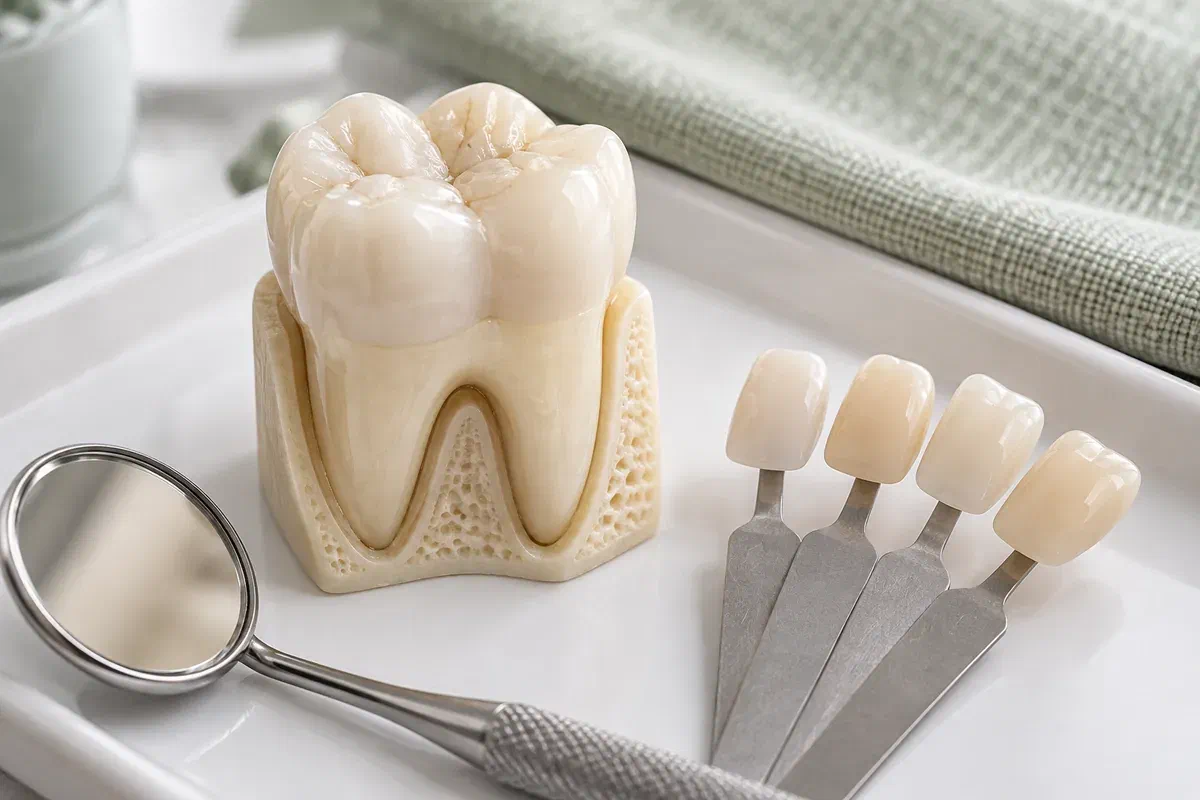
Illustrative molar model beside dental shade samples and a mirror
Reasons to arrange an assessment

Start with the change you have noticed.

A mark, rough surface, or sensitive area does not establish a diagnosis on its own. Explain when the change appeared and whether it affects eating, cleaning, or the way you feel about your smile.

A cavity in a visible area

A tooth-coloured material may be considered when decay requires restoration. The dentist checks how far the damage extends and whether the area can be restored predictably. Early changes without a cavity may call for preventive care and monitoring instead.

A small damaged edge

A limited chip may be suitable for a bonded repair, but the cause and bite need attention too. Describe any injury, repeated chipping, or habit of biting objects. A deeper crack or extensive loss can change the recommendation.

An older filling that looks different

Discolouration, staining, and a failing margin are not interchangeable findings. An assessment helps decide whether to monitor, polish, repair, or replace an existing restoration. A colour concern alone does not establish that the entire filling has failed.

If a tooth hurts spontaneously, the pain lingers, or swelling develops, call for assessment. Choosing a filling shade cannot resolve a problem inside the tooth that requires different treatment.

Why appearance and function belong together

Blend the repair into an everyday smile.

Composite can be selected in shades that relate to the surrounding tooth and shaped directly during treatment. This can make it useful for appropriately sized repairs where appearance matters. It is also considered for selected back teeth, where chewing forces and the amount of remaining structure need careful evaluation.

There are limits to any material. Moisture control, the depth of the repair, and access to the area affect placement. A large restoration under heavy loading may need a different design. Ask why the recommended material suits your particular tooth rather than assuming that the same white filling is suitable everywhere.

Patient information: American Dental Association — tooth-coloured fillings

A considered shade choice

Natural teeth contain variations in colour and translucency. Discuss the area you will see when talking or smiling and the appearance that is realistic for the planned repair, especially across a larger visible surface.

Attention to shape and contact

The finished contour matters when you bite and clean between teeth. Let the team know if food has been catching before treatment so the contact with the neighbouring tooth can be assessed as part of the restoration.

Care planned around the defect

A suitable direct repair can address a localized area without automatically covering the whole tooth. The amount of preparation depends on the damage and the chosen material, not simply on a wish to make every tooth look uniform.

The repair appointment

Understand the choices before the tooth is prepared.

Tell us about dental anxiety, previous sensitivity, material reactions, or plans to change your tooth shade. These details help shape the conversation about treatment and the order in which care is arranged.

  1. Establish what needs restoring

    The dentist examines the tooth, its existing restorations, and the surrounding area. X-rays or other assessments may be recommended if they would answer a clinical question. Discuss whether a filling is indicated, the available alternatives, and the expected fee before proceeding.

  2. Select and prepare

    When composite is appropriate, a shade is selected and the area is prepared for treatment. Local anaesthetic may be used. The damaged portion is managed while the dentist works to maintain a clean, sufficiently dry surface for the chosen restorative technique.

  3. Place the chosen material

    Composite is commonly shaped in stages and hardened with a curing light. Other tooth-coloured materials have their own placement requirements. The dentist develops a contour suited to the tooth, including the contact area where the restoration meets a neighbouring tooth.

  4. Check how the tooth meets

    Finishing and polishing refine the surface, and the bite is checked. Speak up if one tooth seems to meet before the others. You will receive instructions for eating, cleaning, and reporting symptoms that continue or become worse after the visit.

After your restoration

Keep the repair clean and pay attention to changes.

The restoration becomes part of a tooth that still needs daily care. Follow the advice for the material used and tell the clinic about persistent discomfort rather than assuming it is something you must tolerate.

Allow sensation to return

If your mouth was numbed, avoid chewing until normal sensation returns and be careful with hot drinks. Ask about any additional eating restrictions that apply to your restoration. Do not judge the final bite solely while your lips and cheek are still numb.

Describe sensitivity clearly

Some teeth feel sensitive after treatment. Note whether cold, pressure, or another trigger causes it and whether it settles quickly. A tooth that feels high, worsening pain, or symptoms that do not settle should be reviewed rather than repeatedly tested at home.

Protect the surrounding tooth

Brush with fluoride toothpaste and clean between teeth as advised. Attend examinations so the restoration and its margins can be assessed. Mention frequent clenching, chips, or wear; replacing a filling without considering repeated loading may leave the underlying problem unresolved.

Choosing a suitable material

Tooth-coloured does not describe just one solution.

Ask the dentist to name the proposed material and explain its purpose. Compare the expected benefits, limitations, maintenance, and costs for your tooth rather than choosing from appearance alone.

For an appropriate bonded repair

A direct composite restoration

Composite is placed directly and can provide a natural-looking surface for many suitable defects. The size of the cavity, moisture control, and biting forces influence its use. It is not a promise that every damaged tooth can be repaired in the same way.

For a different clinical requirement

Another direct filling material

Glass ionomer or another material may be discussed in selected circumstances. These materials differ in strength, appearance, and handling. Ask what problem the recommendation is intended to solve and whether the restoration is planned as interim or definitive care.

When a broader repair is needed

An indirect restoration

An inlay, onlay, or crown may be considered when a direct filling cannot adequately address the damage or structural needs. Such treatment involves a different design and fee. It should be justified by the condition of the tooth rather than simply by its colour.

Patient information: FDA — treatment options and restorative materials

Questions about a natural-looking repair

Discuss the details that matter to your smile.

Shade, material, and the condition of the tooth all influence the answer. Bring any concerns about previous fillings so the new treatment can be explained in the context of your own experience.

(905) 876-4488
Does tooth-coloured always mean a composite resin filling?
No. Composite is widely used, but other restorative materials can also resemble tooth colour. Ask which material is proposed and why it suits this location. The expected appearance and durability of different materials are not identical, even when each is described as white or tooth-coloured.
Can one white filling shade match all of my teeth?
Not necessarily. Colour can vary between teeth and within a single tooth. Shade selection considers the area being repaired rather than applying one universal white. Discuss visible front-tooth work carefully, including what can realistically be blended with the enamel that will remain.
Should whitening be discussed before a visible tooth-coloured filling?
Yes, mention it before treatment is planned. Natural teeth and restorative materials do not respond to whitening in the same way, so the order of care can affect the eventual shade match. The dentist can discuss timing without delaying treatment that is needed to address active disease.
Does a dark line beside a white filling mean it needs replacing?
A visible line can have different explanations, including staining or a problem at the restoration margin. Examination helps distinguish them. Depending on the findings, monitoring, finishing, repair, or replacement may be discussed. A photograph or colour change alone cannot establish the correct treatment.
Do I need to change sound silver fillings to tooth-coloured ones?
Not simply because they are silver. Replacing a sound amalgam filling can remove additional tooth structure, and the FDA does not recommend routine removal when there is no decay beneath it unless medically necessary. Explain your concerns so the benefits and drawbacks of any proposed change can be discussed.
Will benefits coverage treat all tooth-coloured fillings the same way?
Coverage depends on your plan and the submitted procedure, not just the material’s colour. Request an estimate and confirm any restrictions or differences in reimbursement with the benefits provider. Ask the clinic to clarify the planned surfaces and treatment so you understand the estimate before deciding.

Patient information: FDA — decisions about existing amalgam fillings

Tooth-coloured dental fillings in Milton

Talk through the repair you have in mind.

Visit our Bronte Street practice to assess a cavity, chip, or concern about an existing filling. Tell us what you notice in the mirror and what you feel when eating. We can explain the findings and discuss a repair that considers both appearance and the tooth's needs.

Call for significant pain, swelling, or a broken restoration causing discomfort. Online requests are for non-urgent appointments.

Visit Milton Dental Clinic
Unit 1, 342 Bronte St. S, Milton, ON L9T 5B7
Get directions Clinic hours
Monday–Thursday
11am–7pm
Friday–Sunday
By appointment only

How can we help?

Milton Dental Clinic

Have a question about your smile? Choose the option that works best for you.

For urgent dental concerns, please call.
Messages are reviewed during clinic hours.