

Illustrative conversation about the appearance of a tooth-coloured repair
Restorative Dentistry

Tooth-Coloured Dental Fillings in Caledon

Teeth are not plain white, so a filling should not be either. From Bolton or elsewhere in Caledon, discuss how shade and translucency are chosen so a tooth-coloured repair sits quietly among its neighbours.

Beyond plain white

Colour, depth and the light

Hold a front tooth up to the light and you will see it is not one colour. It is warmer near the gum, often clearer at the biting edge, and sometimes flecked with faint white or amber. Matching a filling to that means looking closely, not reaching for the brightest shade available.

Tooth-coloured fillings use materials made to resemble natural tooth, most often composite resin, with other materials chosen for specific situations. Shade is only part of the decision. The repair must also suit the tooth's location, the size and condition of the damage, and the way it will be cleaned and maintained.

On your visit from Caledon, tell the dentist what bothers you about the area, whether it is a dark spot, an edge that catches the light, or an old filling that no longer blends. You will hear what a direct filling can realistically match, when another approach would serve the tooth better, and what to expect before work begins.

Ask how a shade is chosen
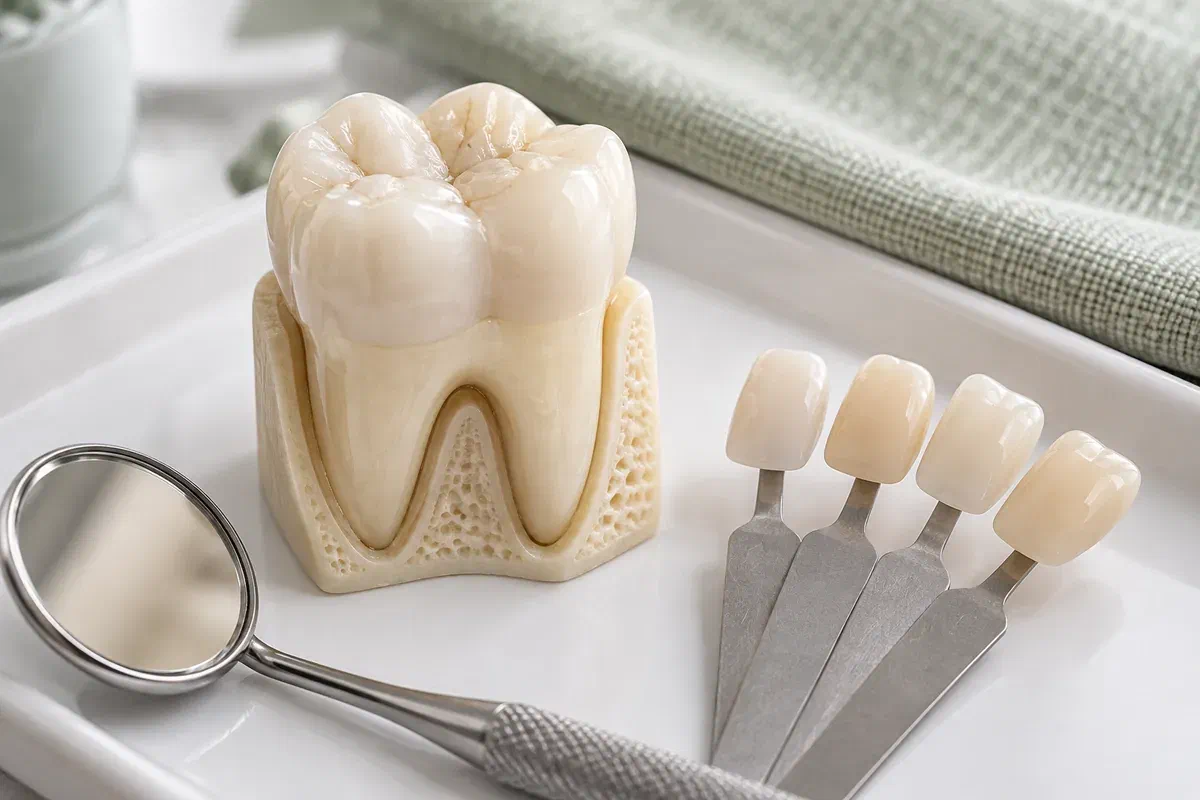
Illustrative molar model beside dental shade samples and a mirror
Things people notice

When a tooth stops blending in

A shadow, a sharp edge or a mismatched filling is worth showing us, though none of them is a diagnosis on its own. Mention when you noticed it and whether it affects eating, cleaning or smiling.

A cavity near the front

If decay has created a cavity, it may be restored with a tooth-coloured material after the dentist checks the depth and confirms the tooth can be rebuilt reliably. A very early change may respond to preventive care and follow-up instead.

A chipped or uneven edge

Small chips are often bonded, though understanding why they happened comes first. Describe any knock, repeated chipping, or biting habits. Where a crack runs deeper or more tooth is missing, the dentist may recommend a different approach.

An old repair that no longer matches

A filling may look off because of surface stain, a change in the material's colour, or a breaking margin. The dentist examines it and advises whether to monitor, polish, repair or replace. A mismatch alone does not show that it has failed.

Colour is never the priority when a tooth aches on its own, hurts long after hot or cold, or the gum swells. Call us, because those signs need assessment rather than a shade discussion.

The case for composite

A blend you have to look for

Composite comes in many shades and levels of translucency, and it is shaped directly on the tooth. That lets the dentist build up a repair that reflects light more like enamel, which is useful for appropriately sized repairs where appearance matters, and for selected back teeth once chewing forces are weighed.

There are practical limits. A dry working area is essential, deep or awkward repairs are more demanding, and a wide filling on a molar that takes a lot of chewing force may be better made another way. A great colour match is no substitute for a material that suits the tooth's demands.

Patient information: American Dental Association — tooth-coloured fillings

Layered shade selection

Some repairs use more than one shade or translucency to mimic natural layering. Discuss which areas are visible when you talk and smile, and what level of blending is realistic for the size of the repair.

Shape that catches light naturally

Surface texture and contour affect how a filling reflects light, as well as how you bite and clean. Mention food catching nearby, so the contact with the neighbouring tooth is assessed while the repair is shaped.

A repair that stays local

Where the damage is contained, a direct filling can mend just that portion and leave sound enamel untouched. The size of the defect and the material dictate the preparation; matching every tooth to a single shade is not the goal.

How the shade comes together

Matching first, then building

Let us know about dental anxiety, earlier sensitivity, reactions to materials, or plans to whiten. Each can affect shade decisions and the order in which care is arranged.

  1. Examine and discuss

    The dentist checks the tooth, existing fillings and surrounding area, and may suggest an X-ray if it would answer a clinical question. Before you decide, you will hear whether repair is warranted, what the other routes are, and what the fee is expected to be.

  2. Choose the shade early

    Teeth can look lighter as they dry during treatment, so the shade is usually selected at the start. Local anaesthetic may be used, the damaged area is prepared, and saliva is kept away from the surface so the material can bond.

  3. Layer for a natural look

    Composite is placed in increments and hardened with a curing light, sometimes in more than one shade. Glass ionomer and similar materials are handled differently. Either way, the repair is contoured to its tooth and to the contact beside it.

  4. Polish and check

    Finishing and polishing give the surface a natural lustre, and the bite is checked. Tell us if anything feels high. You will receive advice on eating, cleaning, and reporting symptoms that continue or worsen.

Keeping it looking right

Care for the colour and the tooth

A good-looking filling still sits in a tooth that needs brushing and flossing every day. Keep to the instructions for your material, and get in touch if soreness carries on rather than living with it.

After the freezing

Hold off on chewing until your lip and tongue wake up, and let hot drinks cool. Check whether your restoration comes with other eating limits. Your bite and even the way the filling feels can seem different while you are numb, so wait before judging.

Sensitivity signals

Some sensitivity after a filling is not unusual. Pay attention to what sets it off, cold or biting for example, and how long each episode lasts. If the tooth seems to strike first, the ache is building, or nothing is settling, have it reviewed.

Protect the surface

Brush gently with fluoride toothpaste and floss daily. Regular exams and cleanings help keep the surface and margins in good shape. Mention clenching, chips or wear, since repeated loading can dull or chip a filling over time.

Choosing the material

Appearance is one factor among several

Ask the dentist to name the material proposed and explain its purpose. Compare benefits, limitations, upkeep and cost for your tooth rather than choosing on colour alone.

For a suitable bonded repair

Composite resin

Direct composite can be layered to look natural on many suitable defects. Cavity size, moisture control and biting forces affect whether it is appropriate, and some teeth simply call for something sturdier.

For particular clinical needs

Glass ionomer and related materials

These may be proposed in selected situations. They generally offer less colour depth than composite and differ in strength and handling. Ask what the material is meant to solve and whether it is planned as interim or definitive.

When more coverage is needed

Porcelain or ceramic restorations

An inlay, onlay or crown may be considered if a direct filling cannot adequately address the damage or structural needs. Its design, number of visits and fee all differ, and the reason for it should be the tooth's structure, not a wish for a whiter look.

Patient information: FDA — treatment options and restorative materials

Shade questions

How close can a match really be?

No two teeth give quite the same answer, because condition, material and colour all differ. Whether a past repair was done in Caledon or further afield, tell us about fillings that never quite matched, so this one can be explained against that experience.

(905) 876-4488
Why does the dentist pick the shade before starting?
Teeth can appear lighter as they dry out during treatment, which could lead to a filling that looks too bright once your mouth is back to normal. Choosing the shade at the start, with the tooth moist, gives a more reliable match.
Can the colour of a white filling be changed afterwards?
Polishing can refresh the surface, but the shade itself is set once the material hardens. If a filling clearly does not blend, adding to it or replacing it may be discussed. Raise colour concerns early.
Why can two white fillings next to each other look different?
They may have been placed at different times, in different materials, or on teeth that differ slightly in colour. Over time, surface stain can also affect each differently. The dentist can explain what is causing the difference.
Can a filling blend with a tooth that has translucent edges?
Often, by layering shades and translucencies. Results depend on the size of the repair and how much natural tooth remains. The dentist can describe what level of blending is realistic before treatment.
Would changing my silver fillings to white improve how my smile looks?
It might change how back teeth look when you laugh, but drilling out sound amalgam costs natural tooth. FDA guidance is that intact amalgam without decay underneath need not be removed unless there is a medical reason. Talk through the pros and cons before deciding.
Does whitening affect how well a new filling will match later?
It can. Bleaching lightens enamel while composite largely holds its original colour, so a filling matched today may look darker after whitening. Share any plans before a visible filling goes in, and the dentist can suggest an order that does not hold up necessary care.

Patient information: FDA — decisions about existing amalgam fillings

Coming from Caledon

Let's look at the match together

Bring a cavity, a chip or a filling that has stopped blending to our Bronte Street practice. Point out the spot that catches your eye and anything you notice when chewing. The dentist will walk you through what the exam shows and how a repair can look right and still protect the tooth.

Swelling, strong pain or a cracked filling that is sore should be phoned in, not booked online. The request form is for appointments that can wait a little.

Visit Milton Dental Clinic
Unit 1, 342 Bronte St. S, Milton, ON L9T 5B7
Get directions Clinic hours
Monday–Thursday
11am–7pm
Friday–Sunday
By appointment only

Areas we serve

  • Milton
  • Oakville
  • Mississauga
  • Georgetown
  • Halton Hills
  • Acton
  • Campbellville
  • Brampton
  • Burlington
  • Puslinch
  • Rockwood
  • Erin
  • Caledon
  • Etobicoke
  • Old Milton
  • Bronte Meadows
  • Timberlea
  • Dorset Park
  • Dempsey
  • Clarke
  • Beaty
  • Coates
  • Harrison
  • Scott
  • Willmott
  • Ford
  • Bowes
  • Cobden
  • Walker
  • Mountain View
  • Milton Heights
  • Hawthorne Village
  • Valley View
  • Fallingbrook
  • Nassagaweya
  • Trafalgar
  • Esquesing
  • Nelson
  • Brookville
  • Moffat
  • Glen Williams
  • Norval
  • Limehouse
  • Stewarttown
  • Ashgrove
  • Hornby
  • Silver Creek
  • Speyside
  • Scotch Block
  • North Oakville
  • River Oaks
  • Glen Abbey
  • West Oak Trails
  • Palermo
  • Bronte Creek
  • College Park
  • Joshua Creek
  • Uptown Core
  • Preserve
  • Iroquois Ridge
  • Lisgar
  • Meadowvale
  • Meadowvale Village
  • Churchill Meadows
  • Erin Mills
  • Central Erin Mills
  • Streetsville
  • East Credit
  • Creditview
  • Heartland
  • Sheridan
  • Mount Pleasant
  • Credit Valley
  • Huttonville
  • Churchville
  • Springbrook
  • Northwest Brampton
  • Bram West
  • Fletcher's Meadow
  • Fletcher's Creek South
  • Alton Village
  • Orchard
  • Millcroft
  • Headon Forest
  • Tansley
  • Brant Hills
  • Tyandaga
  • Kilbride
  • Lowville
  • Aberfoyle
  • Morriston
  • Arkell
  • Hillsburgh
  • Freelton
  • Carlisle
  • Waterdown
  • Flamborough
  • Mountsberg

How can we help?

Milton Dental Clinic

Have a question about your smile? Choose the option that works best for you.

For urgent dental concerns, please call.
Messages are reviewed during clinic hours.