

Illustrative conversation about the appearance of a tooth-coloured repair
Restorative Dentistry

Tooth-Coloured Dental Fillings in Campbellville

A checkup flagged an early spot, and now you are deciding: fill it, or keep watching? From Campbellville, get a clear explanation of the finding and when a tooth-coloured filling is the sensible step.

Treat now, or watch?

Not every spot needs a drill

Hearing that a tooth “has something going on” can leave you unsure what happens next. Some findings are early mineral loss that may harden again with good habits and fluoride. Others are true cavities that will keep growing. Knowing which one you have is the basis of a sensible decision.

When repair is the right call, a tooth-coloured filling rebuilds the lost structure with a material made to blend with enamel. Composite resin is the usual example; other tooth-coloured materials are reserved for certain cases. The choice depends on where the tooth sits, how big the problem is, and how it will be kept clean.

For households around Campbellville who prefer to plan ahead, it helps to ask directly: what did you see, how sure are you, and what happens if we wait? The dentist can explain whether a direct filling is warranted now, when monitoring is reasonable, and what a repair would look like if one is needed.

Ask whether a spot needs filling
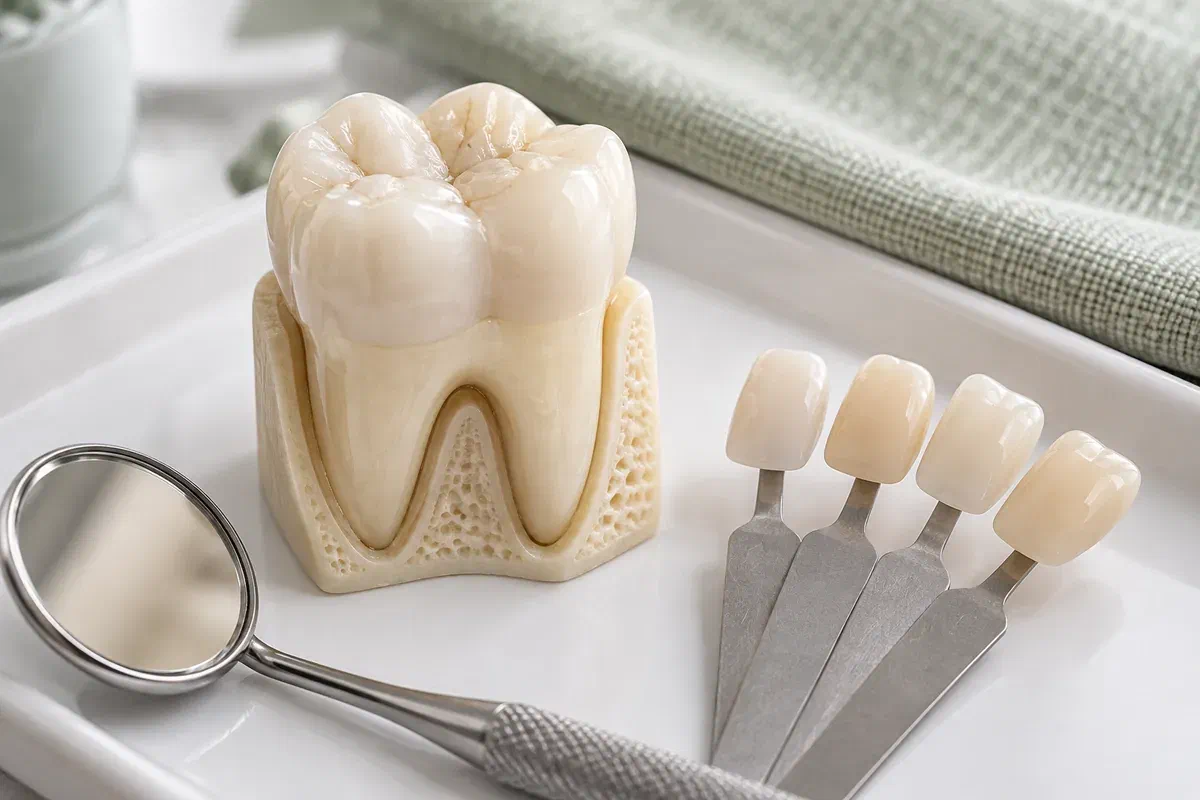
Illustrative molar model beside dental shade samples and a mirror
Findings worth understanding

What a checkup might turn up

A dark fissure, a chalky patch or a little sensitivity is a starting point, not a conclusion. Let us know how long you have noticed it and whether it bothers you when eating, cleaning or smiling.

A cavity that has formed

If decay has broken through the enamel surface, it generally needs restoring, and a tooth-coloured material is often considered. The dentist checks the depth and whether the tooth can be rebuilt predictably. A spot that has not cavitated may only need prevention and monitoring.

A minor chip

Small chips are sometimes simply smoothed, and sometimes bonded. The cause matters: mention an injury, repeated chipping, or chewing hard items. A crack that runs further or a larger loss may change what is recommended.

An older filling with a mark

Surface stain, discolouration and a breakdown at the edge can look alike. The dentist decides whether to monitor, polish, repair or replace. A mark on an old filling is not, by itself, a sign that it has failed.

Waiting and watching is never the plan for a tooth that aches by itself, hurts long after a hot or cold drink, or has swelling nearby. Call us, because those signs need assessment, not a filling shade.

If a filling is the answer

A repair that blends and lasts

Because composite bonds to the tooth, a small cavity caught at the right time can often be repaired without removing much healthy structure. It is matched in shade and shaped directly, which suits appropriately sized repairs on visible teeth and some back teeth, once chewing forces have been weighed.

It has boundaries. The area has to stay dry while the material is placed, deeper cavities are harder to restore, and access affects the result. A large repair under heavy biting may need another design. Asking why the dentist favours a particular material is always fair.

Patient information: American Dental Association — tooth-coloured fillings

Shade that fits the tooth

Teeth carry subtle shifts in colour and translucency. Talk about which surfaces show in everyday conversation and how close a match is realistic, especially if the repair grows larger than expected.

Contacts and contours

The shape of a filling affects chewing and flossing. If food has been catching near the tooth, mention it, so the contact with the neighbouring tooth can be assessed and formed as the repair is built.

Treating early, treating less

When a cavity is genuinely small, a direct repair can address it without involving the whole tooth. Preparation reflects the damage and the chosen material, not a desire for every tooth to look the same.

If we proceed

Four steps, no surprises

Mention if you are anxious, have had sensitive teeth, react to any dental material, or plan to whiten. These details shape both the conversation and the order of care.

  1. Decide together

    The dentist reviews the tooth, existing fillings and nearby areas, and may suggest an X-ray if it would clarify depth. You can weigh filling against monitoring, hear the alternatives, and learn the expected fee before agreeing.

  2. Prepare gently

    If composite is chosen, a shade is matched and the area is prepared. Local anaesthetic may be offered, though small repairs sometimes need little. The decayed part is removed and the tooth is kept clean and dry for bonding.

  3. Build and harden

    Composite is placed in thin layers and set with a curing light, while other tooth-coloured materials have their own methods. The dentist shapes the repair to suit the tooth and its contact with the one beside it.

  4. Polish and review

    The surface is smoothed and polished, and your bite is checked. Tell us if a tooth seems to meet early. You will leave with advice on eating, cleaning, and any symptoms that should prompt a call.

After a small repair

Keep the next spot from forming

A filled tooth relies on the same daily brushing and cleaning between teeth as before, and so do its neighbours. Follow your material's instructions, and call if discomfort lingers.

When freezing was used

Wait until normal feeling returns before chewing, and be careful with hot drinks, since a numb lip cannot warn you about heat. Ask whether any further eating limits apply to your material. Your bite cannot be judged fairly while your lip and cheek are still numb, so give it a few hours.

Sensitivity to watch

Some teeth react to cold or pressure for a short time. Note what triggers it and whether it settles quickly. Get in touch if the tooth feels high, the pain grows, or the sensitivity is not easing, rather than testing it over and over with ice water.

Prevention for the long run

Fluoride toothpaste, daily cleaning between teeth and regular exams help protect the filling and the spots still being watched. Mention clenching, chips or wear, since heavy forces can affect any repair and may need their own attention.

Possible next steps

From monitoring to a full restoration

If treatment is recommended, ask which material is planned and what it is for. Compare benefits, limits, upkeep and fees for this tooth rather than going by colour.

For a cavity of suitable size

A composite filling

Bonded composite can repair many small and moderate cavities with a natural look. Cavity size, moisture control and bite forces decide whether it fits, and it is not a promise that every tooth can be repaired in exactly the same way.

For selected needs

Glass ionomer and related materials

These may be discussed in certain cases, such as areas that are difficult to keep dry. They behave differently from composite in strength and finish. Ask why it is proposed and whether it is temporary or long-term.

If the damage is larger

An inlay, onlay or crown

Where a direct filling cannot adequately handle the extent of the damage or the tooth's structure, an indirect restoration may be considered. Its design and fee differ, and it should be justified by the tooth's condition.

Patient information: FDA — treatment options and restorative materials

Deciding on treatment

Questions to ask before you say yes

The answer depends on the shade, the material and the condition of the tooth. Tell us about past fillings you were unhappy with so the recommendation can be put in context.

(905) 876-4488
Can an early cavity heal without a filling?
Very early mineral loss, before the surface breaks down, can sometimes be reversed or stopped with fluoride, good cleaning and diet changes. Once a true cavity has formed, it will not grow back. The dentist explains which stage the spot appears to be at.
What happens if I wait on a small cavity?
Once formed, a cavity tends to grow, and a larger one may need a bigger filling or a different restoration. Monitoring can be reasonable for some early findings. Ask the dentist how confident they are and when the spot should be rechecked.
How is a spot monitored over time?
The dentist may record its appearance, compare X-rays at later visits, and suggest preventive steps in the meantime. If it changes, treatment can be discussed then. Keeping regular appointments matters when a spot is being watched.
Does a stained groove on a back tooth mean decay?
Not always. Grooves can pick up stain without being decayed, and they can also hide early decay. Examination, and sometimes an X-ray, helps tell the difference before anyone decides a filling is needed.
Should a sound silver filling be swapped while another tooth is being treated?
Not unless it has a problem. Removing intact amalgam takes away more tooth, and the FDA does not recommend routinely removing sound amalgam with no decay unless medically necessary. Raise any concern and the dentist can discuss it.
How can I plan an appointment from Campbellville around a busy week?
Ask for an estimate of how long the filling visit will take once the tooth has been assessed, and book a time that leaves room for the freezing to wear off. We are open Monday to Thursday, with Friday to Sunday by appointment, which gives some flexibility.

Patient information: FDA — decisions about existing amalgam fillings

Booking from Campbellville

Get a clear answer on that spot

Visit our Bronte Street practice in Milton to have an early spot, cavity, chip or older filling explained. Tell us what you have noticed and what you feel when chewing, and the dentist will set out the options, from monitoring to a repair that suits the tooth and your smile.

If a tooth is throbbing, the face is swelling, or a filling has cracked and hurts, phone us. Online requests are for visits that can be scheduled normally.

Visit Milton Dental Clinic
Unit 1, 342 Bronte St. S, Milton, ON L9T 5B7
Get directions Clinic hours
Monday–Thursday
11am–7pm
Friday–Sunday
By appointment only

Areas we serve

  • Milton
  • Oakville
  • Mississauga
  • Georgetown
  • Halton Hills
  • Acton
  • Campbellville
  • Brampton
  • Burlington
  • Puslinch
  • Rockwood
  • Erin
  • Caledon
  • Etobicoke
  • Old Milton
  • Bronte Meadows
  • Timberlea
  • Dorset Park
  • Dempsey
  • Clarke
  • Beaty
  • Coates
  • Harrison
  • Scott
  • Willmott
  • Ford
  • Bowes
  • Cobden
  • Walker
  • Mountain View
  • Milton Heights
  • Hawthorne Village
  • Valley View
  • Fallingbrook
  • Nassagaweya
  • Trafalgar
  • Esquesing
  • Nelson
  • Brookville
  • Moffat
  • Glen Williams
  • Norval
  • Limehouse
  • Stewarttown
  • Ashgrove
  • Hornby
  • Silver Creek
  • Speyside
  • Scotch Block
  • North Oakville
  • River Oaks
  • Glen Abbey
  • West Oak Trails
  • Palermo
  • Bronte Creek
  • College Park
  • Joshua Creek
  • Uptown Core
  • Preserve
  • Iroquois Ridge
  • Lisgar
  • Meadowvale
  • Meadowvale Village
  • Churchill Meadows
  • Erin Mills
  • Central Erin Mills
  • Streetsville
  • East Credit
  • Creditview
  • Heartland
  • Sheridan
  • Mount Pleasant
  • Credit Valley
  • Huttonville
  • Churchville
  • Springbrook
  • Northwest Brampton
  • Bram West
  • Fletcher's Meadow
  • Fletcher's Creek South
  • Alton Village
  • Orchard
  • Millcroft
  • Headon Forest
  • Tansley
  • Brant Hills
  • Tyandaga
  • Kilbride
  • Lowville
  • Aberfoyle
  • Morriston
  • Arkell
  • Hillsburgh
  • Freelton
  • Carlisle
  • Waterdown
  • Flamborough
  • Mountsberg

How can we help?

Milton Dental Clinic

Have a question about your smile? Choose the option that works best for you.

For urgent dental concerns, please call.
Messages are reviewed during clinic hours.