

Illustrative conversation about the appearance of a tooth-coloured repair
Restorative Dentistry

Tooth-Coloured Dental Fillings in Milton

Spotted a shadow on a front tooth in a family photo? Book an assessment in Milton to learn what the mark is and whether a tooth-coloured filling suits the size and position of the repair.

Noticed it in a photo?

When a small mark shows up in your smile

Plenty of people first notice a problem in a picture: a greyish shadow beside a front tooth, or a rough corner that catches the light. A tooth-coloured filling replaces damaged tooth structure with a material chosen to look like enamel. Composite resin is the most familiar version, though other tooth-coloured materials exist for particular needs.

What the mark actually is matters more than how quickly it can be covered. Stain, early mineral loss, decay and a worn older filling can look alike on a phone screen. Our Milton team examines the tooth, explains what is happening and whether a repair is needed, then weighs appearance against strength and how easily the area can be kept clean.

Bring the photo along if it helps. Point out the edge or colour difference that bothers you and say how much of it shows when you talk. Then we can be honest about what a direct filling can blend in, where its limits are, and when a different option deserves a look before anything is prepared.

Ask about the mark you noticed
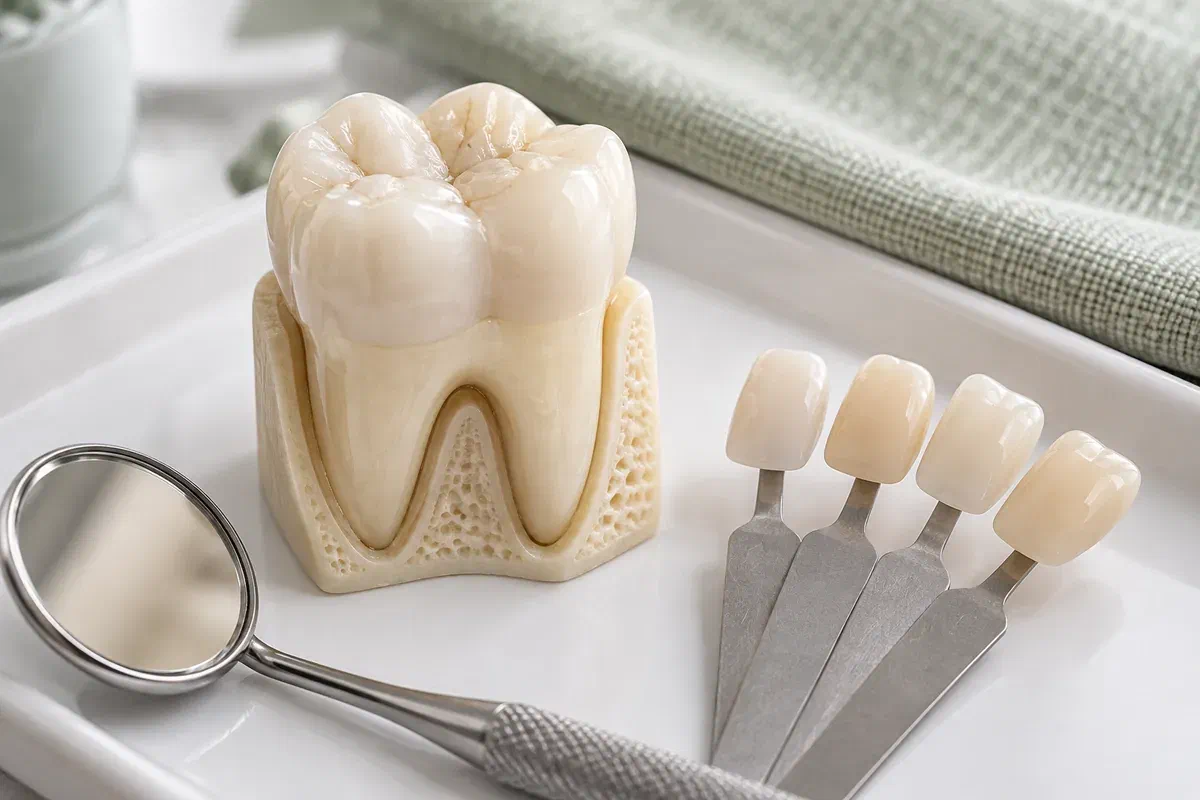
Illustrative molar model beside dental shade samples and a mirror
What brings people in

Three changes worth having examined

None of these settles a diagnosis by itself. Tell us when you first saw the change and whether it affects chewing, brushing or your confidence when you smile.

Decay near the front of your smile

When a cavity needs restoring, a tooth-coloured material is often part of the conversation. First, the dentist checks how deep the damage goes and whether the tooth can be restored predictably. An early change with no cavity may only need prevention and a watchful eye.

A corner that has chipped

A small chip can often be bonded, but it helps to know why it happened. Mention a fall, a hard bite, or a habit such as chewing pens. A crack that runs deeper, or a larger loss of tooth, may point toward a different plan.

A filling that no longer matches

An older restoration can darken, pick up surface stain, or develop a leaking edge, and these are different problems. Examination shows whether polishing, repair, replacement or simple monitoring makes sense. Colour on its own does not prove the filling has failed.

Pain that starts by itself, an ache that lingers, or any swelling needs a phone call rather than a wait for a cosmetic appointment. A good shade match cannot fix a problem inside the tooth.

Looks and function, together

A repair that holds up when you eat and when you smile

Composite comes in a range of shades and is shaped directly on the tooth, which is why it is often chosen for suitably sized repairs in visible places. It can also be used on selected back teeth, though there the dentist looks closely at chewing forces and how much healthy tooth remains around the cavity.

No material is right everywhere. The repair has to stay dry while it is placed, deep or hard-to-reach areas are more demanding, and a broad filling on a heavily loaded tooth may need another design. It is fair to ask why a material was picked for this tooth in particular.

Patient information: American Dental Association — tooth-coloured fillings

Shade chosen in good light

Teeth are rarely one flat colour; they shift from edge to gum and vary in translucency. Talk about which part of the tooth shows when you speak and what kind of match is realistic, especially across a larger visible surface.

Contour you can floss around

The shape of the finished filling affects your bite and how floss passes between teeth. If food has been catching in that spot, say so, and the contact with the neighbouring tooth can be assessed as the repair is shaped.

Only the damage is treated

A well-suited direct filling can manage a localized problem without covering the entire tooth. How much is prepared depends on the damage and the material, not on a goal of making every tooth look identical.

How the visit runs

Choices first, then the repair

Let us know about dental nerves, past sensitivity, any reaction to dental materials, or plans to whiten. Those details shape the discussion and the order in which treatment is arranged.

  1. Confirm what needs repair

    The dentist looks at the tooth, any existing fillings, and the gum and teeth around it. X-rays may be suggested when they would answer a specific question. Before anything starts, you can discuss whether a filling is needed, what the alternatives are, and the likely fee.

  2. Match and prepare

    If composite suits the tooth, a shade is picked and the area is readied. Local anaesthetic may be offered. The damaged part is removed or managed while the surface is kept clean and dry enough for the bonding technique being used.

  3. Build the filling

    Composite is usually added in layers and set with a curing light, while other tooth-coloured materials follow their own steps. The dentist shapes the filling to suit the tooth, including where it touches the tooth next door.

  4. Finish and test the bite

    The surface is smoothed and polished, and your bite is checked. Tell us if one spot meets first. Before you leave, you will get advice on eating, cleaning, and which symptoms to report if they persist or get worse.

The days after

Look after the whole tooth, not only the filling

A filled tooth still relies on daily brushing and cleaning between teeth. Follow the advice for the material that was used, and call if discomfort hangs on instead of assuming you have to put up with it.

Wait for the numbness to fade

Hold off on chewing until feeling returns, and take care with hot drinks so you do not burn yourself or bite your cheek. Ask whether any other eating limits apply. A bite that feels odd while you are still frozen is not a reliable test.

Notice what triggers sensitivity

A tooth may feel sensitive for a while after treatment. Keep track of whether cold, biting pressure, or something else sets it off, and how fast it fades. A tooth that feels high, pain that grows, or sensitivity that will not ease should be checked.

Keep the edges healthy

Use fluoride toothpaste and clean between teeth as you were shown. Regular exams let the dentist check the filling and its margins. Mention clenching, new chips or wear, because a replacement that ignores heavy loading can leave the real cause in place.

Material choices

There is more than one kind of white filling

Ask which material is planned and what it is meant to do. Compare benefits, limits, upkeep and cost for this tooth, not just how each option looks.

Bonded repairs of a suitable size

Direct composite

Placed and shaped in one sitting, composite can give a natural-looking surface for many defects. Cavity size, moisture control and bite forces all affect whether it is appropriate. It does not mean every damaged tooth can be repaired the same way.

For specific clinical needs

Glass ionomer and similar materials

These may be suggested in particular situations. They differ from composite in strength, appearance and handling. Ask what the recommendation is meant to solve and whether the filling is intended as a temporary step or the long-term repair.

When more of the tooth needs support

Inlay, onlay or crown

If a direct filling cannot properly handle the damage or the strength the tooth needs, an indirect restoration may be discussed. It uses a different design and fee, and should be chosen because of the tooth's condition, not its colour.

Patient information: FDA — treatment options and restorative materials

Your questions

Before a visible filling is placed

The answer usually depends on the shade, the material and the state of the tooth. Mention any past fillings you were unhappy with so we can explain how this one is planned.

(905) 876-4488
Will a tooth-coloured filling on a front tooth be noticeable?
That depends on the size of the repair, where its edges sit, and how much natural colour variation the tooth has. Small repairs can often blend well. For a larger visible area, the dentist can describe what a realistic match looks like before work begins, so expectations are clear.
Can a mark I saw in a photo be stain rather than decay?
Yes. Surface stain, early mineral loss, decay and an aging filling can all show up as a shadow in a picture. Only an examination, sometimes with an X-ray, can tell them apart, and some of those findings do not need a filling at all.
I'm thinking about whitening. Should that come before a front filling?
Raise it before the filling is planned. Whitening can lighten natural enamel but does not change composite in the same way, so the order of treatment affects how well the shade matches later. If decay needs attention now, the dentist can discuss timing without putting off necessary care.
Can a tooth-coloured filling pick up stain from coffee or tea?
Composite surfaces can gather stain over time, much as enamel does. Brushing, cleaning between teeth and regular exams help, and polishing may improve surface marks. Darkening right at the edge is a different finding and should be examined rather than scrubbed at home.
Is it worth swapping my old silver fillings for white ones?
Not because of colour alone. Taking out a sound amalgam filling can mean losing more tooth, and FDA guidance does not advise routinely removing intact amalgam with no decay beneath it unless there is a medical reason. Share your concerns and the dentist can lay out the trade-offs.
How do I find out what my benefits plan will pay toward?
Plans differ, and coverage follows the procedure and surfaces submitted rather than the colour of the material. Ask for an estimate, check limits with your provider, and let the clinic explain the planned treatment so the numbers make sense before you decide.

Patient information: FDA — decisions about existing amalgam fillings

Book in Milton

Show us what caught your eye

Come to our Bronte Street practice in Milton for a look at a cavity, a chip, or an older filling that bothers you. Describe what you see in the mirror and what you feel when you chew, and we will explain the findings and a repair suited to both appearance and the tooth.

Call us for significant pain, swelling, or a broken filling that hurts. Online requests are for non-urgent visits.

Visit Milton Dental Clinic
Unit 1, 342 Bronte St. S, Milton, ON L9T 5B7
Get directions Clinic hours
Monday–Thursday
11am–7pm
Friday–Sunday
By appointment only

Areas we serve

  • Milton
  • Oakville
  • Mississauga
  • Georgetown
  • Halton Hills
  • Acton
  • Campbellville
  • Brampton
  • Burlington
  • Puslinch
  • Rockwood
  • Erin
  • Caledon
  • Etobicoke
  • Old Milton
  • Bronte Meadows
  • Timberlea
  • Dorset Park
  • Dempsey
  • Clarke
  • Beaty
  • Coates
  • Harrison
  • Scott
  • Willmott
  • Ford
  • Bowes
  • Cobden
  • Walker
  • Mountain View
  • Milton Heights
  • Hawthorne Village
  • Valley View
  • Fallingbrook
  • Nassagaweya
  • Trafalgar
  • Esquesing
  • Nelson
  • Brookville
  • Moffat
  • Glen Williams
  • Norval
  • Limehouse
  • Stewarttown
  • Ashgrove
  • Hornby
  • Silver Creek
  • Speyside
  • Scotch Block
  • North Oakville
  • River Oaks
  • Glen Abbey
  • West Oak Trails
  • Palermo
  • Bronte Creek
  • College Park
  • Joshua Creek
  • Uptown Core
  • Preserve
  • Iroquois Ridge
  • Lisgar
  • Meadowvale
  • Meadowvale Village
  • Churchill Meadows
  • Erin Mills
  • Central Erin Mills
  • Streetsville
  • East Credit
  • Creditview
  • Heartland
  • Sheridan
  • Mount Pleasant
  • Credit Valley
  • Huttonville
  • Churchville
  • Springbrook
  • Northwest Brampton
  • Bram West
  • Fletcher's Meadow
  • Fletcher's Creek South
  • Alton Village
  • Orchard
  • Millcroft
  • Headon Forest
  • Tansley
  • Brant Hills
  • Tyandaga
  • Kilbride
  • Lowville
  • Aberfoyle
  • Morriston
  • Arkell
  • Hillsburgh
  • Freelton
  • Carlisle
  • Waterdown
  • Flamborough
  • Mountsberg

How can we help?

Milton Dental Clinic

Have a question about your smile? Choose the option that works best for you.

For urgent dental concerns, please call.
Messages are reviewed during clinic hours.