

Illustrative conversation about the appearance of a tooth-coloured repair
Restorative Dentistry

Tooth-Coloured Dental Fillings in Mississauga

Planning to brighten your smile and also need a front filling? From Mississauga, talk through the sequence first, so a tooth-coloured repair is matched to the shade your teeth will settle at.

Shade, sequence and repair

Which comes first: the whitening or the filling?

It is a common situation: a wedding, a new job or simply a decision to brighten up, and then a cavity or chip turns up on a tooth that shows. Natural enamel and filling materials do not respond to whitening in the same way, so the order of care deserves a conversation before anything is booked.

A tooth-coloured filling restores damaged tooth structure with a material made to resemble enamel. Composite resin is the usual choice, though other tooth-coloured materials have a place in certain situations. Beyond colour, the repair has to suit the tooth's position, the size of the damage, and how it will be kept clean.

Tell the dentist what you are hoping for and on what timeline. Active decay usually should not wait for a cosmetic plan, but there may be ways to sequence care sensibly. You will hear what a direct filling can blend, when another restoration is worth considering, and what to expect before preparation starts.

Plan a filling around your shade goals
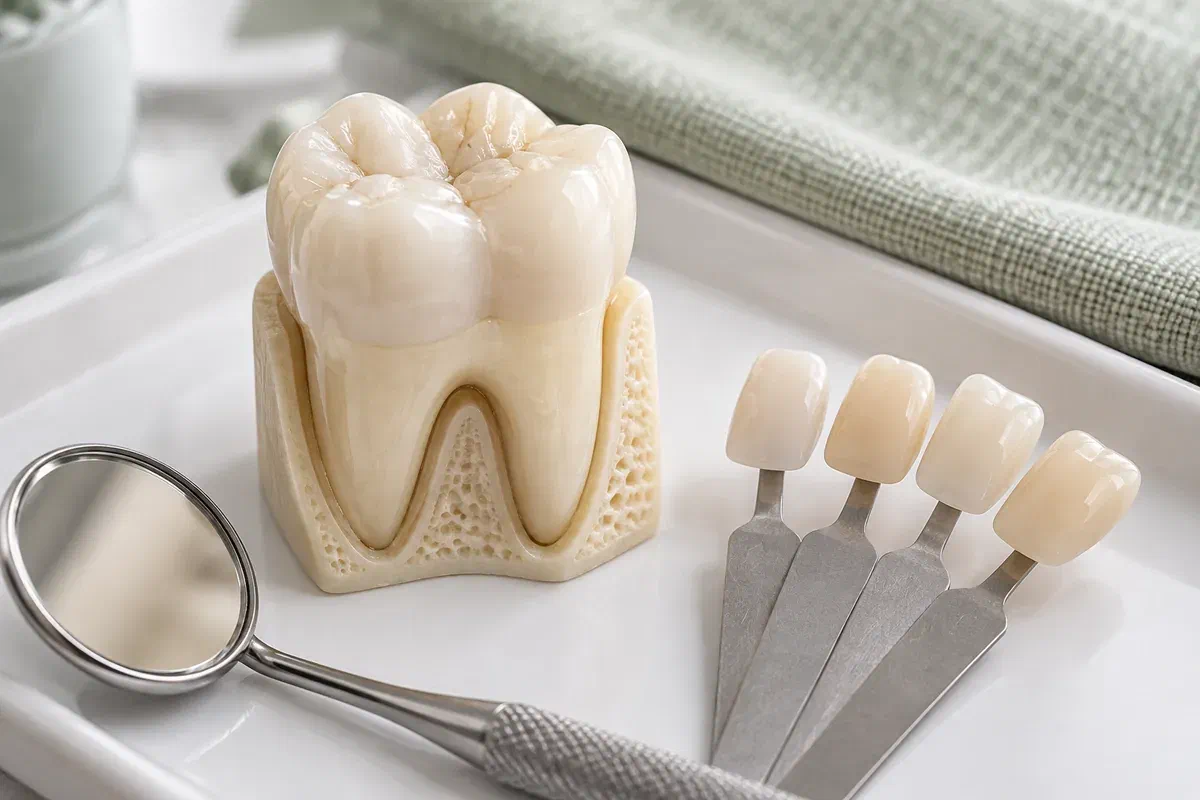
Illustrative molar model beside dental shade samples and a mirror
Reasons people book

Spots, breaks and fading repairs

A dark area, a sharp edge or a twinge is worth reporting, though it does not explain itself. Say when you first noticed it and whether eating, flossing or smiling feels different.

A cavity on a tooth that shows

Where decay calls for a filling, tooth-coloured material is often considered. The dentist first checks the extent of the damage and whether the tooth can be restored in a predictable way. Early mineral loss without a cavity may be handled with prevention and review.

A little piece missing

A minor chip may be a good candidate for bonding, provided the cause is understood. Mention any accident, chips that keep recurring, or using your teeth as tools. A crack that goes deeper, or more extensive loss, may need something else.

An old filling that stands out

A restoration that looks off may be stained, discoloured throughout, or failing at its margin, and each calls for different handling. The dentist decides whether to monitor, polish, repair or replace. A mismatch in colour does not by itself mean failure.

Spontaneous pain, an ache that lingers, or swelling near a tooth is a reason to call, not to wait for a shade appointment. No filling colour can correct a problem within the tooth.

Where composite helps

Colour you can plan, strength you can count on

Composite is available in a wide range of shades and is shaped directly on the tooth during treatment, which suits appropriately sized repairs where appearance is a priority. On selected back teeth it can also work, though the dentist assesses chewing forces and how much natural structure remains first.

It still has limits. The tooth must stay dry while the material is placed, depth and access affect the result, and a large filling under heavy chewing may need a different design. A good question to ask is why a particular material is being proposed for this tooth and not another.

Patient information: American Dental Association — tooth-coloured fillings

Matching to the right moment

Teeth carry natural variations in colour and translucency. If whitening is part of your plans, the shade chosen for a visible filling may depend on timing, so discuss which surfaces show and what match is achievable.

Shape for comfort and cleaning

The contour of the filling influences your bite and whether floss slides through cleanly. If food has been wedging nearby, mention it, so the contact with the next tooth can be assessed during the repair.

Focused on the problem area

A suitable direct filling can deal with a localized defect without covering the whole tooth. Preparation depends on the damage and the material chosen, not on a goal of making all teeth look alike.

Inside the appointment

A repair built in four parts

Let us know about nervousness, earlier sensitivity, reactions to dental materials, and any whitening you are considering. Those details shape the plan and the order in which visits are arranged.

  1. Examine and explain

    The dentist looks over the tooth, any fillings already present, and the surrounding area. X-rays may be recommended when they would clarify a clinical question. Before deciding, you can talk about whether a filling is indicated, the alternatives on offer, and the expected fee.

  2. Settle the shade

    If composite is a good fit, a shade is matched to your current teeth, or to an agreed plan, and the area is prepared. Local anaesthetic may be used. The damage is managed while the surface is kept clean and dry for bonding.

  3. Layer the material

    Composite usually goes on in stages, each set with a curing light; other tooth-coloured materials are handled differently. The dentist builds a contour that suits the tooth, including where it touches its neighbour.

  4. Polish and confirm the bite

    After shaping, the filling is polished and your bite is checked. Speak up if one tooth seems to hit first. You will get instructions on eating, cleaning, and which symptoms to report if they linger or worsen.

Afterwards

Small habits that help the repair last

The filled tooth still needs the same daily care as the rest of your mouth. Follow the instructions given for the material used, and tell the clinic about discomfort that will not go away.

Hold off while you're frozen

Avoid chewing until the numbness wears off, and take hot drinks slowly. Ask whether your restoration comes with further food limits. Feeling for the bite with a numb lip or cheek can be misleading, so wait before judging it.

Describe any sensitivity

A treated tooth can be sensitive for a time. Note whether cold, biting or something else sets it off and how quickly it passes. If the tooth feels high, pain is climbing, or symptoms are not settling, arrange a review instead of testing it at home.

Keep the area clean

Brush twice a day with a fluoride toothpaste and floss or use interdental brushes as recommended. Regular exams let the filling and its edges be checked. Mention clenching, chips or wear, since redoing a filling without considering heavy loading can leave the cause in place.

Material options

White is a colour, not a material

Ask the dentist which material is proposed and why. Compare its benefits, limitations, upkeep and cost for this specific tooth instead of choosing on looks alone.

For appropriate bonded repairs

Composite resin

Applied and shaped directly, composite can look natural on many suitable defects. Its use depends on cavity size, how well moisture can be controlled, and the forces on the tooth. It is not a promise that all damage can be handled the same way.

For particular clinical needs

Glass ionomer or similar

In some situations, glass ionomer or another material may be recommended. These differ in strength, appearance and handling. Ask what the material is meant to accomplish and whether it is planned as a temporary measure or long-term care.

When a filling isn't enough

Inlays, onlays and crowns

If a direct filling cannot adequately manage the damage or the tooth's structural needs, an indirect restoration may be discussed. It has a different design and fee, and it should be justified by the tooth's condition rather than its colour.

Patient information: FDA — treatment options and restorative materials

Shade and timing questions

Getting the colour right over time

The right answer depends on the shade, the material and the condition of the tooth. If earlier fillings ended up not matching, tell us, so this plan can be explained with that in mind.

(905) 876-4488
Will whitening gel lighten a composite filling too?
Not in the way it lightens natural enamel. Composite largely keeps the shade it was given, so after whitening, an older filling may look darker than the teeth around it. This is why it helps to raise whitening plans before a visible filling is placed.
How long after whitening should a front filling be placed?
Dentists often suggest waiting a short period after whitening so the tooth shade settles and bonding is not affected, but the right timing depends on your situation. Ask the dentist for advice that fits your teeth and the products you are using.
If I already have a cavity, should whitening wait?
Often the cavity comes first, because decay should not be left to progress. The dentist can discuss whether a temporary or interim approach makes sense, or whether the filling can be placed now and revisited later if the shade no longer suits.
Do white fillings match teeth that have a lot of natural variation?
Teeth can shift in colour from the gumline to the edge, and some have translucent tips or faint white spots. Shade selection considers the area being treated, and the dentist can explain how closely a small or larger repair is likely to blend.
Would switching my silver fillings to white make whitening work better?
Not necessarily, and removing a sound amalgam costs healthy tooth. The FDA does not recommend routinely taking out intact amalgam fillings that have no decay unless it is medically necessary. Share your goals so the benefits and drawbacks can be discussed.
Is whitening covered the same way as a filling?
Usually not. Benefits plans tend to treat fillings and cosmetic whitening differently, and coverage depends on your plan and the submitted procedure. Ask for an estimate and confirm details with your provider, and the clinic can clarify what is planned.

Patient information: FDA — decisions about existing amalgam fillings

Booking from Mississauga

Bring your shade plans with you

From Meadowvale, Churchill Meadows or anywhere else in Mississauga, you are welcome at our Bronte Street practice in Milton. Tell us about the tooth, what you see when you smile, and any whitening plans, and we will explain the findings and a sensible order of care.

Call for significant pain, swelling, or a broken filling that is uncomfortable. Online requests are for non-urgent appointments only.

Visit Milton Dental Clinic
Unit 1, 342 Bronte St. S, Milton, ON L9T 5B7
Get directions Clinic hours
Monday–Thursday
11am–7pm
Friday–Sunday
By appointment only

Areas we serve

  • Milton
  • Oakville
  • Mississauga
  • Georgetown
  • Halton Hills
  • Acton
  • Campbellville
  • Brampton
  • Burlington
  • Puslinch
  • Rockwood
  • Erin
  • Caledon
  • Etobicoke
  • Old Milton
  • Bronte Meadows
  • Timberlea
  • Dorset Park
  • Dempsey
  • Clarke
  • Beaty
  • Coates
  • Harrison
  • Scott
  • Willmott
  • Ford
  • Bowes
  • Cobden
  • Walker
  • Mountain View
  • Milton Heights
  • Hawthorne Village
  • Valley View
  • Fallingbrook
  • Nassagaweya
  • Trafalgar
  • Esquesing
  • Nelson
  • Brookville
  • Moffat
  • Glen Williams
  • Norval
  • Limehouse
  • Stewarttown
  • Ashgrove
  • Hornby
  • Silver Creek
  • Speyside
  • Scotch Block
  • North Oakville
  • River Oaks
  • Glen Abbey
  • West Oak Trails
  • Palermo
  • Bronte Creek
  • College Park
  • Joshua Creek
  • Uptown Core
  • Preserve
  • Iroquois Ridge
  • Lisgar
  • Meadowvale
  • Meadowvale Village
  • Churchill Meadows
  • Erin Mills
  • Central Erin Mills
  • Streetsville
  • East Credit
  • Creditview
  • Heartland
  • Sheridan
  • Mount Pleasant
  • Credit Valley
  • Huttonville
  • Churchville
  • Springbrook
  • Northwest Brampton
  • Bram West
  • Fletcher's Meadow
  • Fletcher's Creek South
  • Alton Village
  • Orchard
  • Millcroft
  • Headon Forest
  • Tansley
  • Brant Hills
  • Tyandaga
  • Kilbride
  • Lowville
  • Aberfoyle
  • Morriston
  • Arkell
  • Hillsburgh
  • Freelton
  • Carlisle
  • Waterdown
  • Flamborough
  • Mountsberg

How can we help?

Milton Dental Clinic

Have a question about your smile? Choose the option that works best for you.

For urgent dental concerns, please call.
Messages are reviewed during clinic hours.