

Illustrative conversation about the appearance of a tooth-coloured repair
Restorative Dentistry

Tooth-Coloured Dental Fillings in Puslinch

A treatment plan arrives listing surfaces, codes and a material you have never heard of. For Puslinch households, we walk through what a tooth-coloured filling involves and why, before you commit.

Reading the treatment plan

Know what you're agreeing to

An estimate for a filling often reads like shorthand: a tooth number, a few letters for surfaces, a material and a fee. Each piece reflects a clinical decision. Understanding them makes it easier to compare options, talk to your benefits provider, and decide with confidence rather than guesswork.

At its core, a tooth-coloured filling replaces damaged tooth with a material that resembles enamel. Composite resin is used most often, and other tooth-coloured materials are chosen for particular purposes. Which one is proposed depends on the tooth's position, the size of the damage, and how the repair will be maintained.

If you're coming from Puslinch, bring your questions, including the ones that feel basic. The dentist can explain why a filling is suggested, what a direct repair is expected to achieve, when an indirect restoration would be more appropriate, and what the visible result should look like. Agreeing on expectations comes before any preparation.

Ask us to explain your estimate
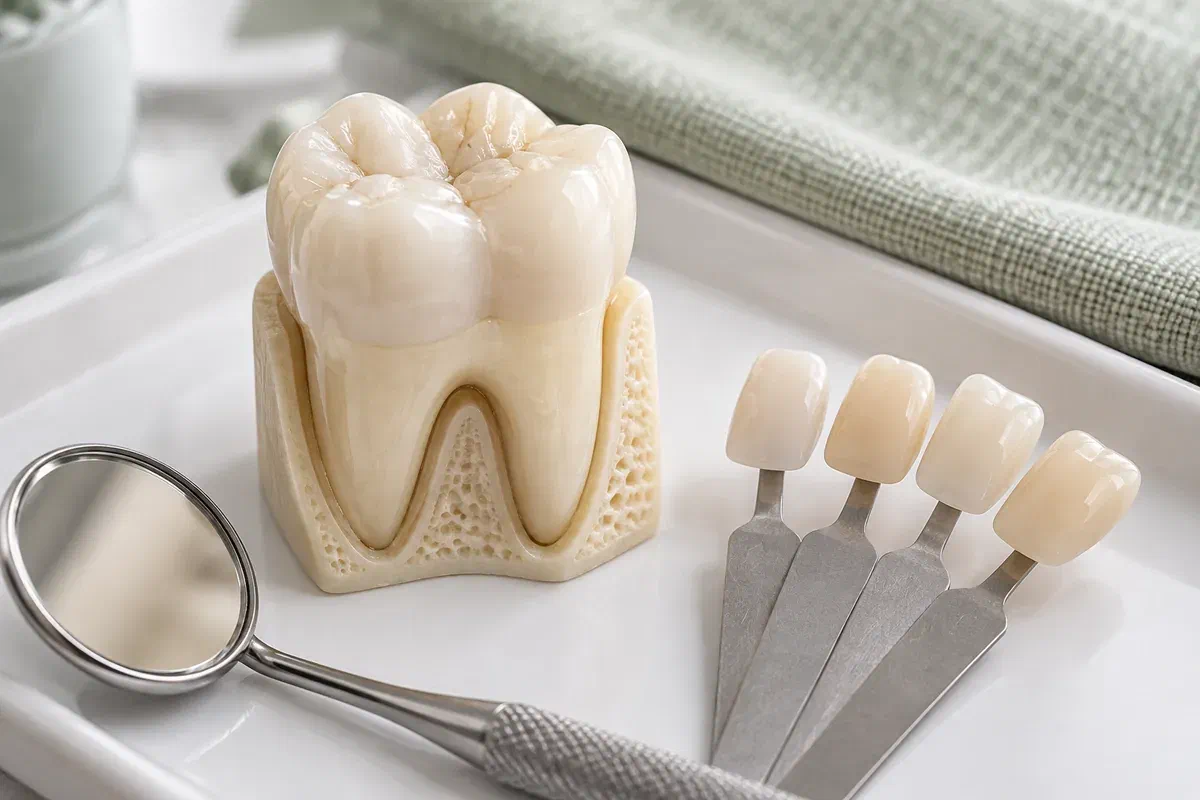
Illustrative molar model beside dental shade samples and a mirror
How a plan usually begins

The finding behind the paperwork

Every line on a treatment plan starts with something seen or felt. Tell us when you noticed the change and whether it interferes with eating, cleaning or how you feel about your teeth.

A cavity needing repair

Decay that has created a cavity is the most common reason for a filling. The dentist estimates its depth and whether the tooth can be restored predictably, which affects the surfaces and fee listed. Early changes without a cavity may only call for prevention.

A chip along an edge

A small chip may be bonded, and the plan might list it as a filling. Share what caused it, whether it keeps happening, and any habit of biting hard things. A deeper fracture can lead to a different, often more involved, recommendation.

An older filling flagged for attention

A filling can be stained, discoloured or breaking down at its margin. Those findings do not all need the same response. Ask whether monitoring, polishing or a partial repair is reasonable before agreeing to full replacement because of colour alone.

Paperwork can wait; pain that starts on its own, lingers or comes with swelling should not. Call us so the tooth can be assessed, since a filling shade is no answer for a problem inside it.

Value in the right place

Paying for what the tooth actually needs

Composite is shade-matched and shaped directly on the tooth, so a suitable repair can usually be finished in one appointment. That makes it practical for appropriately sized repairs on visible teeth, and for selected back teeth once the dentist has considered chewing forces and how much tooth remains.

A lower-cost option is not a bargain if it does not suit the tooth. Placement depends on keeping the area dry, on depth and on access, and a large repair under heavy chewing may need a more durable design. Ask how the proposed material matches the demands on this particular tooth.

Patient information: American Dental Association — tooth-coloured fillings

Colour chosen for the area

Natural teeth vary in shade and translucency. Talk about which surfaces show and what blend is realistic, especially for a larger visible repair, so expectations line up with the plan you are paying for.

A shape that keeps working

The finished contour affects your bite and how easily you can clean between teeth. Mention food catching before treatment, so the contact with the next tooth is checked as part of the same visit.

Treatment scaled to the damage

A direct filling can often fix a defined area without covering the whole tooth. The amount of work, and therefore the fee, follows the extent of the damage and the material rather than a goal of matching every tooth.

From estimate to finished tooth

How the visit is structured

Let us know about dental anxiety, earlier sensitivity, reactions to materials, or whitening plans. These details can change the material, the sequence, and sometimes the estimate itself.

  1. Assess and estimate

    The dentist examines the tooth and its surroundings and may advise an X-ray if it would answer a clinical question. You receive an explanation of whether a filling is needed, the alternatives, and the expected fee, and you can take time to decide.

  2. Prepare the tooth

    On the day, a shade is selected if composite is planned, and local anaesthetic may be used. The damaged part is removed, and the area is kept clean and dry. Occasionally damage proves larger than expected, and the dentist will explain any change.

  3. Restore the shape

    Composite is placed in increments and hardened with a curing light; other tooth-coloured materials follow different steps. The dentist rebuilds a contour suited to the tooth, including its contact with the next one.

  4. Finish and confirm

    The filling is polished and your bite is checked, so speak up about anything that feels high. You will be given instructions for eating, cleaning, and contacting us if symptoms continue or worsen.

Protecting your investment

Make the repair last as long as it can

A filling is only as healthy as the tooth around it. Brush and clean between teeth every day, follow the instructions for your material, and call about discomfort that does not settle.

Go easy while numb

Avoid chewing until feeling returns and be careful with hot drinks. Ask whether other eating limits apply to your restoration. A bite that feels strange while you are frozen often feels different an hour later.

Report sensitivity early

Some teeth are sensitive after treatment. Note whether cold, biting or another trigger is involved and how quickly it fades. A high-feeling tooth, rising pain or lingering symptoms are easier to sort out if reported promptly.

Keep up the basics

Fluoride toothpaste, daily flossing and regular exams help the filling's edges stay sound. Mention clenching, chips or wear; replacing a filling without dealing with heavy forces can mean paying for the same problem twice.

Comparing what's on the plan

Options, costs and trade-offs

Ask the dentist to name the proposed material and explain why. Compare expected benefits, limitations, maintenance and fees for your tooth, not just the colour of the finished repair.

For a suitable bonded repair

Direct composite

Usually completed in one visit, composite can give a natural-looking result for many defects. Cavity size, moisture control and bite forces shape whether it is appropriate, and it does not mean every tooth can be repaired the same way.

For specific requirements

Glass ionomer or similar

In selected situations another direct material may be listed. These vary in durability, finish and handling. Ask what the choice is meant to achieve and whether it is planned as a temporary measure or long-term care.

When a filling won't do

Inlay, onlay or crown

If a direct filling cannot adequately manage the damage or the tooth's strength, an indirect restoration may appear on the plan. It involves a different design, more steps and a different fee, and should be justified by the tooth's condition.

Patient information: FDA — treatment options and restorative materials

Estimate questions

Making sense of the numbers

Shade, material and the state of the tooth all affect the plan. If you have had fillings that disappointed you, mention them, so the recommendation can be explained in light of that.

(905) 876-4488
What does the number of surfaces on my estimate mean?
Each tooth has several surfaces, such as the biting surface and the sides that touch neighbouring teeth. A filling that covers more surfaces is generally more involved. The dentist can point out which surfaces are planned and why.
Why might the final fee differ from the estimate?
Occasionally the damage turns out to be larger once the tooth is opened, which can change the surfaces involved. If that happens, the dentist will explain the change. Asking about this possibility in advance helps avoid surprises.
Is it all right to delay a filling for budget reasons?
Discuss it openly. Some findings can be monitored for a while, but an active cavity tends to grow, which may lead to larger treatment later. The dentist can help you prioritize which work matters most.
Can I take the treatment plan home to think about it?
Yes. Ask for the plan and estimate in writing, take it home to Puslinch, check it with your benefits provider, and call or come back with questions. If a tooth is causing pain or swelling, though, call rather than waiting.
Would replacing sound silver fillings be covered?
Coverage varies, and there may be little clinical reason to replace a sound amalgam. The FDA does not recommend routine removal of intact amalgam without decay unless medically necessary, and removal costs tooth structure. Ask the dentist and your provider.
Can the estimate be sent to my insurer before treatment?
Many plans accept a pre-treatment estimate. Coverage depends on the plan and the procedure submitted, not the material’s colour. Ask the clinic to clarify the planned surfaces, then confirm any limits or reimbursement differences with your provider.

Patient information: FDA — decisions about existing amalgam fillings

Visiting from Puslinch

Bring the estimate and your questions

Book an appointment at our Bronte Street practice for a cavity, chip or older filling. Tell us what you see and feel, and bring any treatment plan you would like explained. The dentist will go through the findings and a repair that suits both the tooth and your budget questions.

Severe pain, swelling or a filling that breaks and hurts is a reason to phone instead. The online form is meant for routine requests.

Visit Milton Dental Clinic
Unit 1, 342 Bronte St. S, Milton, ON L9T 5B7
Get directions Clinic hours
Monday–Thursday
11am–7pm
Friday–Sunday
By appointment only

Areas we serve

  • Milton
  • Oakville
  • Mississauga
  • Georgetown
  • Halton Hills
  • Acton
  • Campbellville
  • Brampton
  • Burlington
  • Puslinch
  • Rockwood
  • Erin
  • Caledon
  • Etobicoke
  • Old Milton
  • Bronte Meadows
  • Timberlea
  • Dorset Park
  • Dempsey
  • Clarke
  • Beaty
  • Coates
  • Harrison
  • Scott
  • Willmott
  • Ford
  • Bowes
  • Cobden
  • Walker
  • Mountain View
  • Milton Heights
  • Hawthorne Village
  • Valley View
  • Fallingbrook
  • Nassagaweya
  • Trafalgar
  • Esquesing
  • Nelson
  • Brookville
  • Moffat
  • Glen Williams
  • Norval
  • Limehouse
  • Stewarttown
  • Ashgrove
  • Hornby
  • Silver Creek
  • Speyside
  • Scotch Block
  • North Oakville
  • River Oaks
  • Glen Abbey
  • West Oak Trails
  • Palermo
  • Bronte Creek
  • College Park
  • Joshua Creek
  • Uptown Core
  • Preserve
  • Iroquois Ridge
  • Lisgar
  • Meadowvale
  • Meadowvale Village
  • Churchill Meadows
  • Erin Mills
  • Central Erin Mills
  • Streetsville
  • East Credit
  • Creditview
  • Heartland
  • Sheridan
  • Mount Pleasant
  • Credit Valley
  • Huttonville
  • Churchville
  • Springbrook
  • Northwest Brampton
  • Bram West
  • Fletcher's Meadow
  • Fletcher's Creek South
  • Alton Village
  • Orchard
  • Millcroft
  • Headon Forest
  • Tansley
  • Brant Hills
  • Tyandaga
  • Kilbride
  • Lowville
  • Aberfoyle
  • Morriston
  • Arkell
  • Hillsburgh
  • Freelton
  • Carlisle
  • Waterdown
  • Flamborough
  • Mountsberg

How can we help?

Milton Dental Clinic

Have a question about your smile? Choose the option that works best for you.

For urgent dental concerns, please call.
Messages are reviewed during clinic hours.