Illustrative dental discussion about daily habits and enamel protection
Restorative Dentistry

Tooth Erosion Treatment

Changes in enamel deserve more than a quick cover-up. Explore tooth erosion treatment in Milton, with attention to acid exposure, sensitivity, and whether worn areas need protection or repair.

A closer look at tooth erosion treatment

Understand the wear before deciding how to repair it.

Dental erosion involves the effect of non-bacterial acids on tooth structure. It differs from decay, although both can affect the same mouth. Over time, erosive wear can change the shape or surface of teeth. The most useful starting point is identifying the pattern and possible contributing exposures, rather than assuming every smooth or sensitive area needs a filling.

You might notice thinner-looking edges, shallow hollows on chewing surfaces, or a change in how your teeth feel with cold drinks. These observations can help guide an assessment, but they do not confirm the cause. Grinding, brushing habits, existing restorations, and other factors can overlap with erosion, so the whole picture matters.

At Milton Dental Clinic, we discuss what has changed, what may be contributing, and whether protection, monitoring, or restorative treatment is appropriate. The conversation may include food and drinks, dry mouth, or medical symptoms. It should be practical and respectful, with time to explain sensitive concerns privately and to understand why a particular question is being asked.


Arrange a tooth wear assessment
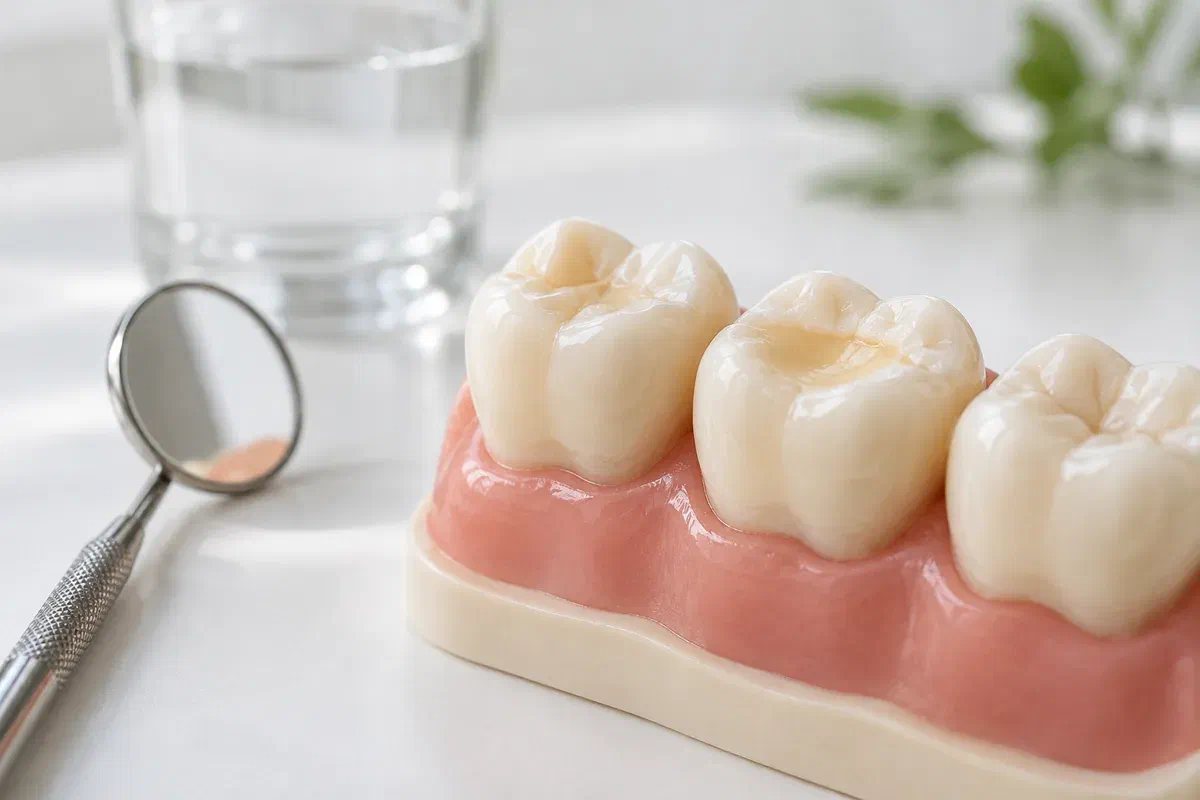
Illustrative dental teaching model with a shallow depression on a molar surface
Changes to bring to our attention

A surface change can be the beginning of a useful conversation.

Tell us when you first noticed a difference and whether it seems to be progressing. Older dental records or photographs may provide context, but an examination is needed to interpret what they show.

Edges or surfaces look different

Teeth may appear smoother, thinner, or altered in shape. A dentist can assess the distribution of wear and compare it with other findings. The visible appearance alone does not tell us how quickly it developed or whether it is currently progressing.

Sensitivity affects everyday choices

Cold, sweet, or acidic items may become uncomfortable for several reasons. Describe the trigger, duration, and location. Sensitivity does not measure the amount of erosion by itself, and a particularly painful tooth may need evaluation for another problem.

Acid exposure is part of your routine

Frequent acidic drinks, reflux, or repeated vomiting can be relevant to the discussion. Share what you feel able to explain. We can consider dental protection and whether medical support would help address an exposure that dental treatment alone cannot resolve.

Do not stop prescribed medication or make major dietary restrictions on your own. Bring your medication list and relevant medical information so advice can be coordinated with the appropriate healthcare professional.

What treatment is working toward

Protect what remains and make repairs purposeful.

Erosion care often begins with reducing the exposures contributing to wear. Lost tooth structure does not grow back, and placing a restoration does not remove the source of acid. A plan therefore considers prevention and symptom management alongside any need to rebuild a damaged surface.

Not every worn area requires immediate restoration. The decision depends on the extent of the change, comfort, function, appearance, and evidence of progression. Ask what will be monitored and what finding would lead to a different recommendation. Knowing those criteria makes a review appointment more useful than simply waiting to see what happens.

Patient information: American Dental Association — dental erosion

A clearer explanation of the pattern

Understanding which surfaces are affected can help connect dental findings with your history. The aim is to identify plausible contributors without assigning a single cause when the evidence suggests that several factors may be involved.

Prevention that fits your day

A practical plan should account for work, meals, exercise, and any medical needs. Tell the team what feels difficult to change so recommendations can be discussed in a way you can realistically follow.

Restoration only where it has a role

If a repair is advised, ask whether its purpose is to protect an area, improve comfort, rebuild shape, or address function. Each proposed restoration should have a reason beyond making every surface look the same.

Your erosion assessment

Bring the history. We will examine the teeth.

You do not need to arrive with an explanation for the wear. A record of symptoms and a typical day's eating and drinking can be useful if requested, but honest conversation matters more than a perfect diary.

  1. Describe the change and your health

    We ask about symptoms, changes in tooth appearance, relevant medical conditions, and medicines. Reflux, vomiting, dry mouth, and dietary exposures may be discussed. Let us know if you would prefer a sensitive part of the history to be addressed privately.

  2. Examine and establish a baseline

    The teeth, existing restorations, and bite are assessed. Clinical records and photographs or other appropriate records may help document the starting point. Additional investigations are considered when they would answer a specific question rather than as an automatic part of every wear assessment.

  3. Agree prevention and treatment priorities

    Discuss which exposures can be addressed, how sensitivity will be managed, and whether any area needs a repair. Where medical input is relevant, dental advice can be coordinated with it. Request an explanation of the proposed stages and estimated costs before committing to restorative work.

  4. Review the response

    At follow-up, we consider symptoms, your experience with the plan, and any changes in the teeth. Review timing depends on the findings. If treatment has not addressed your concerns or the wear appears to continue, the plan may need further investigation or modification.

Everyday protection

Small practical changes need a clear reason.

Use the advice developed for your own sources of risk. Erosion care should support a balanced diet and your general health, rather than turn every meal into a concern about your teeth.

Review repeated acidic exposure

If a particular drink or habit is identified as a contributor, discuss reducing its frequency and keeping it to meals. Avoid holding or swishing acidic drinks around your teeth. Plain water can be a practical alternative between meals.

Keep cleaning gentle and consistent

Continue brushing with an appropriate fluoride toothpaste and avoid harsh abrasive products or forceful scrubbing. Ask which products and technique suit your situation. A specialised toothpaste can support care, but it does not replace attention to the source of acid exposure.

Follow through on health concerns

Seek medical advice for recurring reflux or vomiting and discuss persistent dry mouth. Do not adjust medication independently. If vomiting occurs, rinsing with water can help clear the mouth; ask for individual advice about oral care during recurrent episodes.

Patient information: UK oral health guidance — managing and monitoring tooth wear

Matching care to the extent of wear

The right plan may combine several approaches.

Prevention continues whether or not teeth are restored. Ask how each proposed step relates to the overall problem and which decisions can be reviewed before more extensive work is undertaken.

When restoration is not yet needed

Prevention and observation

An identified area may be monitored with a plan to reduce relevant risks and manage sensitivity. Clarify what will be recorded at reviews and which changes would justify treatment. Observation should be an active decision with follow-up, not an unexplained dismissal of your concern.

For a suitable area of damage

A localized bonded repair

Composite or another appropriate restoration may be considered where a specific worn surface needs rebuilding. Discuss the expected benefit, maintenance, and limits. The bite and ongoing exposure need attention so the repair is considered in the setting in which it will function.

For extensive or complex wear

A broader restorative assessment

Changes involving several teeth may require more detailed planning, staged care, or specialist input. Ask about preserving tooth structure, possible alternatives, and the consequences of treatment. Extensive crowns should not be assumed to be the first or only response to erosion.

Questions about enamel and acid

Get beyond the label on the toothpaste.

Erosion can raise questions about products, eating habits, and long-term repairs. We can discuss those questions alongside the actual pattern seen in your mouth and any medical factors that need attention.

(905) 876-4488
Can tooth erosion occur without a cavity?
Yes. Erosion involves non-bacterial acids affecting tooth structure, whereas decay involves a different disease process. They can occur together, so an examination checks for both. A smooth worn surface should not automatically be treated as a cavity, and a painful area should not automatically be attributed to erosion.
Can an enamel repair toothpaste replace tooth structure already lost to erosion?
A toothpaste cannot rebuild the original shape of a tooth after structure has been physically lost. Suitable products may support protection and symptom management. Ask what a product is intended to do and whether your particular area needs monitoring, a protective approach, or a restoration.
Could reflux matter even if I do not drink much soda?
Stomach acid reaching the mouth can be relevant to erosive wear. Dietary drinks are not the only possible source of acid exposure. Explain any reflux or repeated vomiting so the dentist can consider the history and recommend medical input where appropriate rather than focusing only on beverages.
Should I remove all fruit from my diet if my teeth show erosion?
No blanket restriction is appropriate. A balanced diet remains important, and advice should relate to an identified pattern of exposure in your case. Discuss how and when you consume particular foods or drinks before making broad changes that could unnecessarily reduce nutritional variety.
Does less sensitivity mean my erosive wear is under control?
Not necessarily. Sensitivity can improve without proving that the underlying wear has stopped. Reviews compare clinical findings and your history as well as symptoms. Ask how progression will be assessed and keep follow-up appointments even if a toothpaste or other measure has made the teeth feel better.
Will treating erosion mean crowns on every affected tooth?
No. The amount of wear and its effect on comfort, function, and appearance guide the plan. Some areas may be monitored, others may suit localized repairs, and more extensive changes may need broader assessment. Ask the dentist to explain the purpose of treatment for each tooth.
Tooth erosion treatment in Milton

Let’s look at what your teeth are telling us.

Arrange an assessment at our Bronte Street clinic for changes in tooth shape, surface texture, or sensitivity. Bring your questions about everyday habits and any relevant medical history. We can discuss the findings and the next steps for protecting and, where appropriate, restoring your teeth.

For significant pain or swelling, please call. Online enquiries are intended for non-urgent appointment requests.

Visit Milton Dental Clinic
Unit 1, 342 Bronte St. S, Milton, ON L9T 5B7
Get directions Clinic hours
Monday–Thursday
11am–7pm
Friday–Sunday
By appointment only

How can we help?

Milton Dental Clinic

Have a question about your smile? Choose the option that works best for you.

For urgent dental concerns, please call.
Messages are reviewed during clinic hours.