

Illustrative dental discussion about daily habits and enamel protection
Restorative Dentistry

Tooth Erosion Treatment in Acton

Worn enamel does not always need a filling, and a filling does not always stop the wear. For people coming from Acton, we explain when to repair, when to watch, and how prevention fits around either choice.

Acton · the repair-or-wait question

Fix it now, or keep an eye on it?

It is a fair question, and the answer is rarely obvious from a quick glance. Erosion is the gradual loss of tooth structure to acid that has nothing to do with bacteria: acid from drinks, certain foods, reflux or vomiting. A cavity is a separate, bacterial problem. Both may need treatment, but they call for different reasoning.

A worn hollow can look dramatic yet be stable for years. Another, smaller one may be deepening steadily. Grinding, hard brushing and the edges of older fillings can confuse the picture further. So the real decision is not just whether a tooth looks damaged, but whether it is still changing, causing problems, or at risk if left alone.

When someone travels in from Acton with this question, we start by gathering the whole history: drinks, meals, reflux, medicines, general health. Each question comes with a reason, and anything personal can be discussed privately. Then we lay out the case for repairing, watching or combining the two, so the choice is yours and makes sense to you.

Get a second look at worn teeth
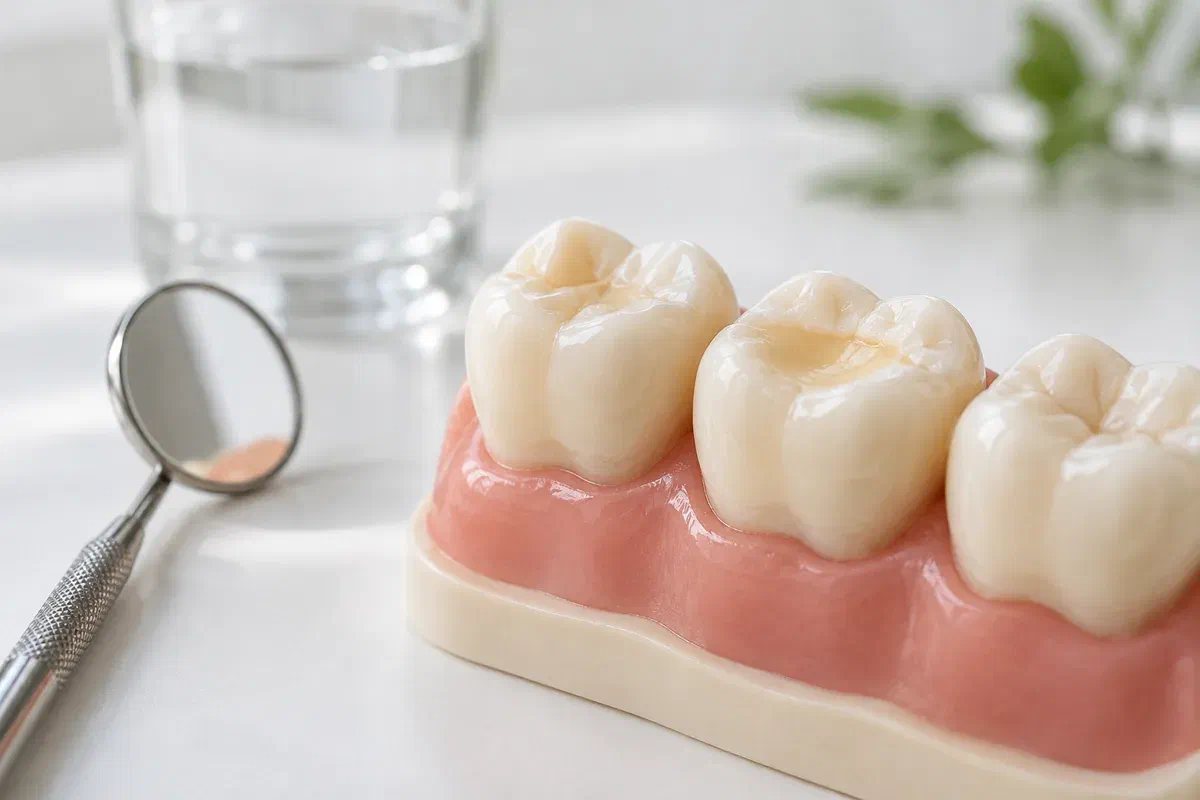
Illustrative dental teaching model with a shallow depression on a molar surface
What shapes the decision

Three things we weigh before recommending a repair.

Let us know when you first noticed a change and whether you think it is still advancing. Earlier X-rays, notes or photos may add useful history, though they need interpreting alongside a fresh examination.

How the tooth looks and is shaped

Depth, location and the way worn surfaces line up with each other all matter. Thin edges, cupped chewing surfaces or a filling sitting proud are recorded. A single look cannot show the speed of change, which is why records over time carry so much weight.

How it feels day to day

Tell us what triggers discomfort, how long it lasts and where it is. Sensitivity is a factor in the decision, but not proof of how much wear has occurred. A tooth with severe or persistent pain may need assessment for another problem before erosion is discussed.

Whether the acid is still present

Frequent acidic drinks, reflux and repeated vomiting influence how a repair would fare. Share what you can. If the exposure continues, we may suggest addressing it first, and involving your doctor where dental care cannot resolve the source.

Keep taking any prescribed medication and avoid making sweeping diet changes on your own. Bring your medication list and relevant health information so advice can be coordinated with your doctor or specialist.

The thinking behind our advice

Every repair should answer a clear need.

Restoring an eroded surface can protect it, ease discomfort and rebuild shape. What it cannot do is remove the acid that caused the damage, and enamel lost to that acid does not regrow. Placing a filling without addressing the exposure risks continued wear around the repair, so prevention is part of every plan.

Waiting can be the right call when wear is shallow, comfortable and stable. Repair becomes more reasonable when wear affects comfort, chewing, appearance or the strength of an edge, or when records show progression. Ask exactly what will be checked and what result would change the advice. That turns waiting into a decision, not drift.

Patient information: American Dental Association — dental erosion

A reasoned recommendation

We explain which surfaces are affected, what may have contributed and why we suggest repairing or watching. If more than one factor is involved, we say so plainly.

Prevention that holds up

Advice should fit your work, meals and health needs. If a change feels unrealistic, tell us. A plan you can keep protects a tooth far better than an ideal you abandon after a week.

Treatment that preserves tooth

When repair is advised, conservative options that keep natural structure are usually considered first. Ask what each restoration is for and what would happen if it were postponed.

From questions to a decision

Here is how the assessment unfolds.

Come as you are. A rough note of symptoms or a sample day of food and drink can help if we ask for one, but a candid conversation is what really guides the plan.

  1. Listen to your history

    We ask about what you have noticed, past treatment, medical conditions and medicines. Topics such as reflux, vomiting or dry mouth may arise. If you would rather discuss something in private, let us know.

  2. Examine and set a benchmark

    Teeth, existing fillings and your bite are assessed. Photographs or other records document where each worn area stands today. Additional tests are added only if they would settle a particular question.

  3. Lay out the options

    We discuss reducing exposures, managing sensitivity and whether any tooth would benefit from repair now or later. If your doctor is involved, we can coordinate. Ask for the stages and estimated costs before agreeing to restorative work.

  4. Recheck and decide again

    At review we compare symptoms, how the plan has worked and whether surfaces have changed. The interval depends on findings. If wear progresses or concerns persist, the recommendation may move toward repair or further investigation.

Whichever path you choose

Prevention keeps both options open.

Follow the advice built around your own risks. Protecting enamel should support a balanced diet and your overall health rather than become a source of stress.

Reduce how often acid visits

If a drink or habit seems to contribute, talk about cutting back on frequency and keeping it with food. Avoid holding acidic drinks in the mouth. Water between meals is a reliable alternative.

Protect repairs and natural teeth alike

Brush with a fluoride toothpaste suited to you, avoid abrasive pastes and use a gentle technique around both enamel and any bonding. Specialised toothpastes may help, but they do not replace tackling the acid.

Address medical contributors

See your doctor about frequent heartburn, reflux or vomiting, and mention persistent dry mouth. Never alter medication without advice. Following vomiting, plain water can rinse acid away; ask us about oral care if episodes recur.

Patient information: UK oral health guidance — managing and monitoring tooth wear

Choosing between approaches

Three ways forward, often combined.

Prevention runs through every option. Ask how each recommendation relates to the overall pattern and what could be reconsidered before more involved care begins.

For stable, shallow wear

Monitor with a clear plan

The area is recorded and rechecked while exposures are reduced and sensitivity is managed. Ask what measurements will be compared and what change would lead to repair. A monitoring plan should have dates and criteria, never vague reassurance.

When one area needs protection

Repair a specific surface

Tooth-coloured bonding or another suitable material may rebuild a worn spot, sometimes with little or no drilling. We discuss benefits, maintenance and limits. If acid exposure or heavy biting forces continue, those are addressed so the repair can do its job.

When wear affects many teeth

Plan for widespread change

Extensive wear may need detailed planning, phased treatment or specialist advice. Ask how much natural tooth each option keeps, what alternatives exist and what the long-term commitments are. Multiple crowns should not be presumed to be the starting point.

Deciding what to do

Questions about repairing eroded teeth.

Choosing between repair and monitoring raises practical questions. We answer them with your own wear, comfort and goals in mind.

(905) 876-4488
Why would a dentist suggest watching a worn spot instead of filling it?
If wear is shallow, comfortable and not changing, a repair may add little benefit and will itself need maintenance. Monitoring alongside prevention can be the more conservative choice. You should be told what will be checked and when.
What signs would mean a worn area needs repair now?
Examples include sensitivity that does not settle, a thin edge at risk of breaking, wear affecting chewing or appearance, or records showing clear progression. The decision depends on your situation, so ask the dentist to explain their reasoning.
Does a filling over an eroded area stop the erosion?
No. A restoration covers and protects the treated surface, but acid can still affect the tooth around it and other teeth. Reducing the source of acid remains important after any repair.
Is it harmful to delay repairing an eroded tooth?
It depends on the tooth. For stable wear, a short delay with monitoring is often reasonable. Where an edge is very thin or wear is advancing, waiting could allow further damage. Ask what risks apply to your specific teeth.
Can I get a second opinion if I have been told I need crowns for erosion?
Yes, a second opinion is reasonable for any extensive treatment. Bring any records you have. We can explain whether more conservative options might suit your situation and what the trade-offs of each approach are.
Can a small bonded repair often be done in one visit?
Many small bonded repairs can be completed in a single appointment, though this depends on the tooth, the area involved and other planned care. We will explain what to expect for your particular repair.
Clear advice for Acton

Leave knowing which teeth need help, and which do not.

Arrange an assessment at our Bronte Street practice for worn, sensitive or changing teeth, or for a second opinion on a repair plan. Bring any previous records and your questions. We will explain what we see and help you decide how to protect and, where appropriate, restore your teeth.

Please call about severe pain or swelling. Our online form is for non-urgent appointment requests.

Visit Milton Dental Clinic
Unit 1, 342 Bronte St. S, Milton, ON L9T 5B7
Get directions Clinic hours
Monday–Thursday
11am–7pm
Friday–Sunday
By appointment only

Areas we serve

  • Milton
  • Oakville
  • Mississauga
  • Georgetown
  • Halton Hills
  • Acton
  • Campbellville
  • Brampton
  • Burlington
  • Puslinch
  • Rockwood
  • Erin
  • Caledon
  • Etobicoke
  • Old Milton
  • Bronte Meadows
  • Timberlea
  • Dorset Park
  • Dempsey
  • Clarke
  • Beaty
  • Coates
  • Harrison
  • Scott
  • Willmott
  • Ford
  • Bowes
  • Cobden
  • Walker
  • Mountain View
  • Milton Heights
  • Hawthorne Village
  • Valley View
  • Fallingbrook
  • Nassagaweya
  • Trafalgar
  • Esquesing
  • Nelson
  • Brookville
  • Moffat
  • Glen Williams
  • Norval
  • Limehouse
  • Stewarttown
  • Ashgrove
  • Hornby
  • Silver Creek
  • Speyside
  • Scotch Block
  • North Oakville
  • River Oaks
  • Glen Abbey
  • West Oak Trails
  • Palermo
  • Bronte Creek
  • College Park
  • Joshua Creek
  • Uptown Core
  • Preserve
  • Iroquois Ridge
  • Lisgar
  • Meadowvale
  • Meadowvale Village
  • Churchill Meadows
  • Erin Mills
  • Central Erin Mills
  • Streetsville
  • East Credit
  • Creditview
  • Heartland
  • Sheridan
  • Mount Pleasant
  • Credit Valley
  • Huttonville
  • Churchville
  • Springbrook
  • Northwest Brampton
  • Bram West
  • Fletcher's Meadow
  • Fletcher's Creek South
  • Alton Village
  • Orchard
  • Millcroft
  • Headon Forest
  • Tansley
  • Brant Hills
  • Tyandaga
  • Kilbride
  • Lowville
  • Aberfoyle
  • Morriston
  • Arkell
  • Hillsburgh
  • Freelton
  • Carlisle
  • Waterdown
  • Flamborough
  • Mountsberg

How can we help?

Milton Dental Clinic

Have a question about your smile? Choose the option that works best for you.

For urgent dental concerns, please call.
Messages are reviewed during clinic hours.