Illustrative dental discussion about daily habits and enamel protection
Restorative Dentistry

Tooth Erosion Treatment in Caledon

Worried that widespread wear means crowns on every tooth? For households in Caledon, we explain extensive erosion step by step and plan conservative, staged care that keeps as much natural tooth as possible.

When the wear is more than a spot or two

Widespread erosion calls for a plan, not a panic.

Hearing that several teeth show wear can be unsettling, especially if you picture a mouthful of crowns. In reality, extensive erosion is usually handled in careful stages. Erosion itself means tooth structure dissolved by acid from food, drink or the stomach rather than by bacteria, which sets it apart from decay, although the two can coexist.

Where wear is widespread, the pattern often reflects more than one force: acid, grinding, a changing bite, brushing pressure or older restorations. Each affects what treatment can achieve and how long it will last. Working out that mix, and whether the wear is still active, comes before any decision about rebuilding teeth.

Many people who come from Caledon, whether from Bolton or a smaller village, prefer a plan with clear stages and well-spaced visits. We begin with history and examination, asking about drinks, meals, reflux, medicines and health, and explaining every question. Private topics can be discussed one-on-one. Then we set priorities together, protecting first and rebuilding only where needed.


Arrange a full wear assessment
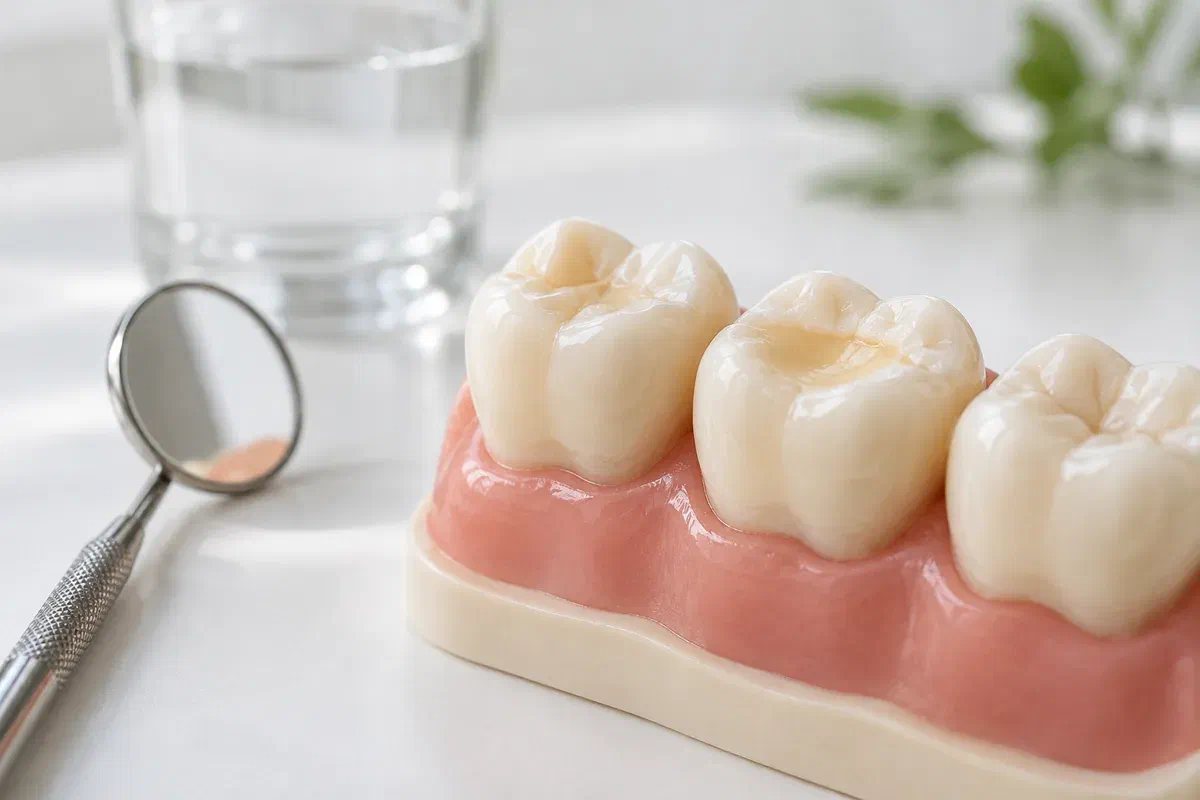
Illustrative dental teaching model with a shallow depression on a molar surface
Caledon · signs of more extensive wear

When several teeth start to change at once.

Let us know when you noticed the first change and whether things appear to be speeding up. Older records or photographs can help map the progression, though they need to be read alongside a careful examination.

Teeth looking shorter or flatter

Several teeth may look shorter, flatter or more worn than before, and fillings may stand out from the surrounding surface. The dentist charts which teeth are involved and how the wear relates across the mouth. Appearance alone cannot reveal its pace or whether it continues.

Comfort or chewing has changed

Sensitivity, a feeling that the bite has shifted, or difficulty chewing certain foods are all worth mentioning. Describe triggers and duration. Sensitivity does not indicate how much enamel has gone, and one very painful tooth may need assessment for a separate issue.

Long-standing acid exposure

Years of acidic drinks, reflux or repeated vomiting may be part of the story. Share what you are comfortable with. We consider protection for the teeth and whether medical advice could help with an exposure that dental work alone cannot address.

Please continue prescribed medicines and avoid drastic diet changes without guidance. A list of medicines and relevant health information will help us coordinate advice with your doctor or specialist.

Principles of a staged plan

Stabilise first. Rebuild in order. Keep natural tooth.

Lost enamel cannot be regrown, and rebuilding teeth while acid exposure continues risks repeating the damage on new surfaces. So extensive cases usually begin with stabilising: reducing exposures, managing sensitivity and recording a baseline. Rebuilding follows in a sequence that makes sense for your bite and priorities.

Even with widespread wear, not every tooth needs work. The plan weighs depth, comfort, function, appearance and progression for each area. Ask what will be monitored, which teeth are priorities and what would change the plan. Knowing this helps you decide on each stage with confidence rather than committing to everything at once.

Patient information: American Dental Association — dental erosion

A map of the whole mouth

Understanding which teeth and surfaces are affected, and how the bite has changed, helps link the wear to its likely causes. We explain where several factors seem to combine.

Prevention that supports every stage

Advice should fit around work, family and medical needs. Tell us which steps are hard, so we can adjust them. Stable habits help any restoration last.

Conservative choices first

Where rebuilding is needed, options that preserve natural tooth, such as bonded additions, are usually considered before crowns. Ask what each stage achieves and what alternatives exist.

Planning extensive care

How a staged erosion plan comes together.

You do not need to explain the wear before you arrive. Should we want a symptom diary or a record of one ordinary day’s meals and drinks, keep it simple; a straightforward version is all we need.

  1. Gather the full history

    We ask about symptoms, changes in the bite, past dental work, health conditions and medicines. Reflux, vomiting, dryness and diet may come up. Let us know if you would prefer to discuss anything privately.

  2. Examine, record and study the bite

    The dentist assesses every tooth, existing restorations and how your teeth meet. Photographs, notes and sometimes models or scans record the baseline. Further tests or a specialist opinion are added only if they would settle something specific.

  3. Set stages and priorities

    We agree how exposures will be reduced, how sensitivity will be managed and which teeth, if any, should be rebuilt first. Medical input can be coordinated. Ask for a written outline of stages and estimated costs before committing to restorative work.

  4. Review between stages

    Before each new stage, we check symptoms, how prevention is going and whether the teeth have changed. Timing depends on findings and your schedule. If wear continues, we pause and investigate further before moving on.

Protecting your teeth and your investment

Habits that help every stage last.

Follow advice tailored to your own risks. Protecting enamel and restorations should fit a balanced diet and your general health without making meals a worry.

Ease off frequent acid

If a drink or habit seems to contribute, discuss having it less often and with food. Avoid holding acidic drinks in the mouth. Plain water between meals helps both natural teeth and restorations.

Clean gently around new work

Use a fluoride toothpaste suited to you, a soft brush and light pressure, and avoid abrasive pastes that can dull bonded surfaces. Ask how to care for each restoration. Specialised toothpastes may help but do not address the acid.

Manage grinding and health factors

If you clench or grind, ask whether a night guard is recommended. See your doctor about recurring reflux, vomiting or a dry mouth, and do not change medication on your own. After vomiting, rinse with water and ask us for advice if it recurs.

Patient information: UK oral health guidance — managing and monitoring tooth wear

Options for extensive wear

A range of approaches, used in combination.

Prevention continues at every stage. Ask how each recommendation fits the whole plan and which decisions can be revisited before the next step begins.

The foundation of every plan

Stabilise and monitor

Wear is recorded and observed while exposures are reduced and sensitivity is managed. Ask what will be compared and what change would trigger the next stage. Monitoring is an active part of the plan, with clear checkpoints.

Conservative rebuilding

Bonded additions to worn teeth

Bonded tooth-coloured resin can be added to rebuild worn surfaces, sometimes across several teeth in planned stages. We explain benefits, maintenance and limits. Your bite and ongoing exposures are considered so the work is built to function well.

When wear is severe

Specialist or complex planning

Severe or complex wear may need detailed bite analysis, staged treatment or a specialist’s involvement. Ask how natural tooth will be preserved, what alternatives exist and what each choice commits you to. Crowns may have a role, but they are not the automatic first step.

Questions about extensive wear

Understanding a bigger plan.

Widespread erosion raises questions about stages, specialists and long-term care. We answer with your mouth, bite and priorities in mind.

(905) 876-4488
What does a staged plan for worn teeth usually look like?
It often begins with prevention and recording a baseline, then moves to rebuilding the most important areas, followed by others if needed. Each stage is reviewed before the next. The exact sequence depends on your bite, comfort and goals.
Why might I be referred to a specialist for tooth wear?
Complex or severe wear can involve the bite, jaw or many teeth at once. A specialist in restorative dentistry may help plan the sequence or provide part of the treatment. We discuss whether a referral would add value in your case.
Can worn teeth change the way my bite feels?
Yes. As teeth wear, the way they meet can shift, and some people notice changes in chewing or comfort. Mention any such change so the dentist can assess your bite as part of the plan.
Will I need crowns on most of my teeth?
Usually not. Many worn areas can be monitored or rebuilt with bonded material. Crowns may be appropriate for some teeth, but they are considered carefully because they involve removing more tooth structure. Ask for the reasoning behind each recommendation.
How are costs explained when treatment is staged?
We provide estimates for each proposed stage before you commit, along with an explanation of what each stage involves. You can review and decide stage by stage. Ask questions about anything that is unclear.
Can a staged plan be spaced around a busy season?
Often, yes. Once the teeth are stable and protected, later stages can sometimes be timed to suit work or family commitments. We will tell you if any area should not wait, and explain why.
Extensive wear care for Caledon

Start with a clear map of your teeth.

Come in to our Bronte Street practice for an assessment if several teeth look worn, feel sensitive or have changed shape. Bring your medication list, any previous dental records and your questions. We will explain our findings and outline a staged plan to protect and, where appropriate, restore your teeth.

For severe pain or swelling, please call us. The online form is for non-urgent appointment requests.

Visit Milton Dental Clinic
Unit 1, 342 Bronte St. S, Milton, ON L9T 5B7
Get directions Clinic hours
Monday–Thursday
11am–7pm
Friday–Sunday
By appointment only

Areas we serve

  • Milton
  • Oakville
  • Mississauga
  • Georgetown
  • Halton Hills
  • Acton
  • Campbellville
  • Brampton
  • Burlington
  • Puslinch
  • Rockwood
  • Erin
  • Caledon
  • Etobicoke
  • Old Milton
  • Bronte Meadows
  • Timberlea
  • Dorset Park
  • Dempsey
  • Clarke
  • Beaty
  • Coates
  • Harrison
  • Scott
  • Willmott
  • Ford
  • Bowes
  • Cobden
  • Walker
  • Mountain View
  • Milton Heights
  • Hawthorne Village
  • Valley View
  • Fallingbrook
  • Nassagaweya
  • Trafalgar
  • Esquesing
  • Nelson
  • Brookville
  • Moffat
  • Glen Williams
  • Norval
  • Limehouse
  • Stewarttown
  • Ashgrove
  • Hornby
  • Silver Creek
  • Speyside
  • Scotch Block
  • North Oakville
  • River Oaks
  • Glen Abbey
  • West Oak Trails
  • Palermo
  • Bronte Creek
  • College Park
  • Joshua Creek
  • Uptown Core
  • Preserve
  • Iroquois Ridge
  • Lisgar
  • Meadowvale
  • Meadowvale Village
  • Churchill Meadows
  • Erin Mills
  • Central Erin Mills
  • Streetsville
  • East Credit
  • Creditview
  • Heartland
  • Sheridan
  • Mount Pleasant
  • Credit Valley
  • Huttonville
  • Churchville
  • Springbrook
  • Northwest Brampton
  • Bram West
  • Fletcher's Meadow
  • Fletcher's Creek South
  • Alton Village
  • Orchard
  • Millcroft
  • Headon Forest
  • Tansley
  • Brant Hills
  • Tyandaga
  • Kilbride
  • Lowville
  • Aberfoyle
  • Morriston
  • Arkell
  • Hillsburgh
  • Freelton
  • Carlisle
  • Waterdown
  • Flamborough
  • Mountsberg

How can we help?

Milton Dental Clinic

Have a question about your smile? Choose the option that works best for you.

For urgent dental concerns, please call.
Messages are reviewed during clinic hours.