

Illustrative dental discussion about daily habits and enamel protection
Restorative Dentistry

Tooth Erosion Treatment in Etobicoke

Coming from Etobicoke for a longer appointment? We plan erosion assessments so each visit does real work, from recording a baseline to agreeing what to protect, monitor or repair, and when to seek help closer to home.

Erosion care worth the trip

Fewer visits, each one well spent.

When the drive is longer, it pays to arrive prepared. An erosion assessment works best with three things in hand: an honest sense of your daily drinks and meals, a list of medicines, and any earlier dental records you can obtain. With those, a single appointment can establish what is happening and what should happen next.

Tooth erosion is wear caused by acids that do not come from bacteria, such as those in some drinks, foods or stomach contents. It differs from a cavity, though the two may coexist. Grinding, brushing pressure and ageing restorations can produce lookalike marks. For that reason, we read the overall pattern before naming a cause or recommending a filling.

For anyone making the trip from Etobicoke, we keep the plan compact. The first visit covers history, examination and baseline records, with time for private conversation about sensitive topics such as reflux or vomiting. We explain every question. Then we agree on priorities and space reviews sensibly, so you are not returning more often than the findings justify.

Plan an erosion assessment
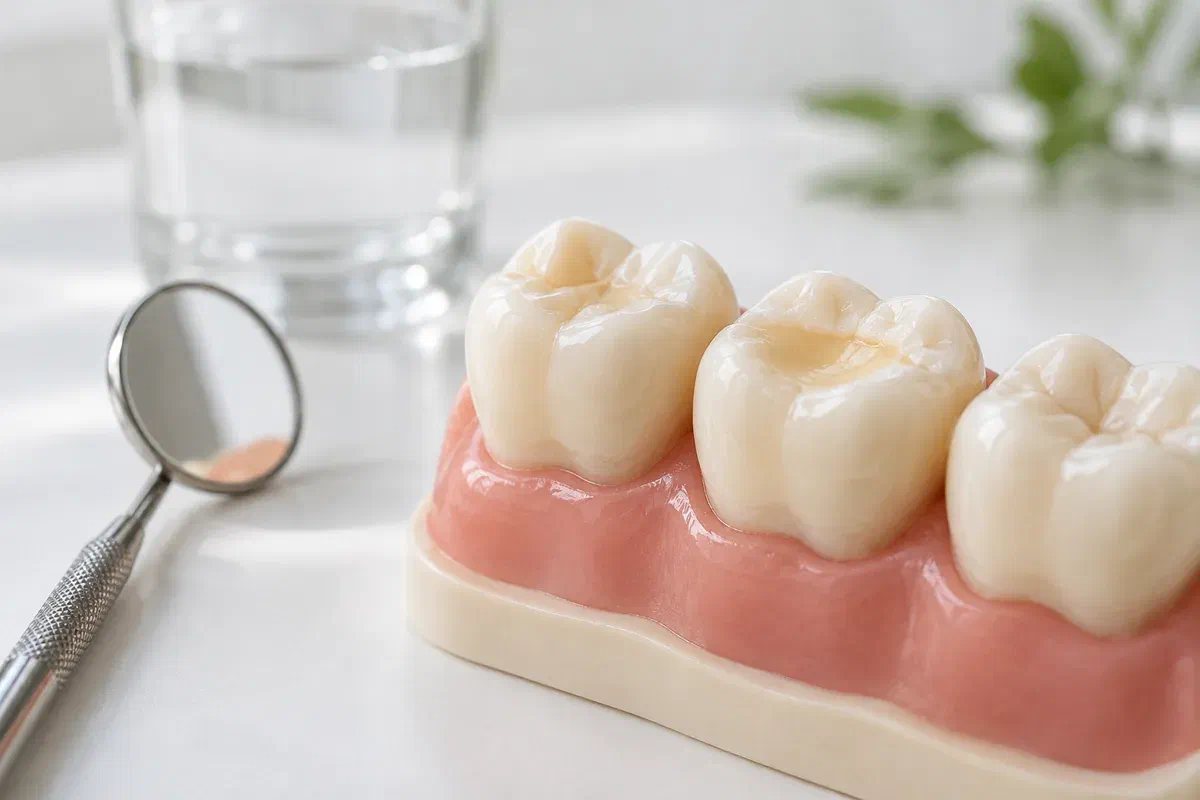
Illustrative dental teaching model with a shallow depression on a molar surface
Worth writing down before you come

A short list makes a long trip more productive.

Jot down when you first noticed a change and whether it is getting worse. Copies of past dental records or older smile photos can be useful; we will interpret them alongside the examination.

Changes in how teeth look

Note any teeth that appear smoother, shorter, more see-through at the edges or slightly hollowed. The dentist will chart where wear appears and compare it with other findings. A tooth’s appearance does not on its own reveal how quickly it changed or whether change is ongoing.

Patterns in your sensitivity

Write down what triggers discomfort, how long it lasts and which teeth react. Sensitivity has many causes and does not measure how much enamel has been lost. A tooth that is suddenly very painful may need prompt care for a separate problem.

Sources of acid in your week

Frequent acidic drinks, reflux and repeated vomiting are all relevant. Share as much as you feel able to. We can talk about protecting the teeth and whether a physician should look at an exposure that dental treatment by itself cannot fix.

Keep taking prescribed medicines and avoid dramatic diet changes before your visit. A current medication list and any relevant medical information will help us coordinate advice with your family doctor or specialist.

Making care purposeful

A plan that protects your enamel and your time.

Enamel lost to acid is not replaced by the body, and a restoration does not stop the source that caused the loss. Efficient care therefore focuses first on the exposures that matter most. Prevention and sensitivity management begin straight away, while any decision to rebuild is made on clear grounds rather than by default.

A worn spot may be perfectly reasonable to watch. What tips the balance toward repair is its depth, your comfort, function, appearance and whether it is changing. Ask which markers will be compared at your next visit and what result would alter the plan. Knowing that in advance helps you judge whether a review is worth the drive.

Patient information: American Dental Association — dental erosion

A clear picture in one sitting

Linking the location of wear with your history can usually produce a useful explanation at the first appointment. Where several contributors seem likely, we tell you so rather than guess at one.

Prevention that works from home

Most protective steps happen between appointments. Tell us which recommendations would be hard to keep up, so we can adjust them to your work, family and health needs.

Grouped, justified repairs

If restorations are advised, ask what each is meant to achieve and whether several can sensibly be planned together. Each repair should have a purpose, such as protection or comfort, rather than simply matching neighbours.

How we organise your care

What happens on the day, and after.

You do not need to know why your teeth are wearing. If we ask for a symptom note or a sample day of food and drink in advance, a quick honest version is perfect.

  1. Start with history

    We go over symptoms, changes you have seen, health conditions and medicines. Reflux, vomiting, dry mouth and diet may be discussed. If you would like to talk about part of this in private, simply ask.

  2. Examine and record thoroughly

    Teeth, existing restorations and bite are assessed in detail. Notes, photographs or other suitable records capture a baseline so future comparisons are meaningful. Extra investigations are suggested only when they would answer a specific question.

  3. Agree on a compact plan

    We discuss which exposures you can reduce, how sensitivity will be eased and whether any surface needs repair. Medical input can be coordinated if relevant. Ask for the proposed stages, how many visits they involve and an estimate of costs before starting restorative work.

  4. Review at a sensible interval

    Follow-up compares symptoms, your experience with the plan and any changes in the teeth. The timing depends on findings, not a fixed routine. If concerns remain or wear continues, the plan may be investigated further or changed.

Back home in Etobicoke

Most of the protecting happens at home.

Use the guidance matched to your own exposures. Enamel care should support a varied diet and your general health, not turn mealtimes into a worry.

Cut down repeat acid contact

If a drink or habit has been flagged as a likely contributor, discuss having it less often and with meals. Do not swish acidic drinks around the teeth. Plain water is a good default between meals.

Keep brushing soft

Use a fluoride toothpaste that suits you, and avoid abrasive pastes or heavy-handed brushing. Ask which technique and products are right for your teeth. Specialised toothpastes help some people but do not tackle the acid source.

Stay on top of health issues

Raise recurring reflux, vomiting or dry mouth with your doctor. Never stop or adjust medication on your own. After vomiting, rinsing with water can help clear acid; ask us for tailored advice if it happens often.

Patient information: UK oral health guidance — managing and monitoring tooth wear

Levels of treatment

Start small, and step up only when it is justified.

Prevention continues whatever is decided about repairs. Ask how each step fits the overall problem and what you can still change your mind about before larger treatment.

When repair is not yet warranted

Watchful prevention

A worn area may be monitored while you reduce exposures and manage sensitivity. Ask what will be compared at the next visit and which changes would trigger treatment. Monitoring should be a purposeful plan with follow-up, not a casual wait.

For a single suitable area

Targeted bonding

Composite or another appropriate material may rebuild a specific worn surface, sometimes in the same visit as other planned care. We explain the expected benefit, maintenance and limits. The bite and ongoing exposures are considered so the repair suits its setting.

For extensive wear

A staged restorative plan

When many teeth are involved, planning may include several stages or a specialist opinion, with visits grouped where possible. Ask how tooth structure will be preserved and what alternatives exist. Multiple crowns should never be the assumed answer.

Planning-minded questions

What to know before you book.

People travelling further often want to understand the process in advance. Here are answers to common questions, which we can expand on once we have examined your teeth.

(905) 876-4488
What should I bring so one visit covers as much as possible?
A list of medicines and health conditions, a rough idea of your usual drinks and meals, and any previous dental records or X-rays you can request. Notes on when sensitivity happens are helpful too. This lets us complete the history and baseline in one appointment.
Can records from my previous dentist help with an erosion assessment?
They can. Older notes, photographs or X-rays may show how your teeth looked in the past, which helps judge whether wear is progressing. We still need to examine your teeth, but earlier records add a valuable point of comparison.
Will photographs be taken of my worn teeth?
Photographs or other records are often used to document the current state of worn surfaces. They give an objective reference for future reviews. Ask what records are planned and how they will be used to track change.
Can erosion make a tooth more likely to chip?
Thinned enamel at the edges of teeth can be more prone to chipping, particularly with clenching or biting hard objects. Not every eroded tooth will chip. If an edge breaks, contact us; if there is severe pain or swelling and we are not reachable, seek urgent care nearby.
Do enamel toothpastes reverse the damage from erosion?
They cannot replace structure that has already been lost. Some formulations may help protect remaining enamel and reduce sensitivity. Ask what a particular product is designed to do and whether your teeth need monitoring, protection or a restoration.
Does erosion treatment mean many appointments?
Not always. Many people need an assessment, home prevention and occasional reviews. Where repairs are advised, we explain the number of visits involved and group them where clinically sensible. Extensive wear may need more planning, which we discuss openly.
Erosion assessments for Etobicoke

Make one trip, and leave knowing exactly where you stand.

Schedule an assessment at our Bronte Street clinic for worn, sensitive or changing teeth. Bring your medication list, any past dental records and your questions about everyday habits. We will explain our findings, outline next steps and plan any follow-up so your visits are well organised.

If pain is severe or there is swelling, please call. Online requests are for non-urgent appointments.

Visit Milton Dental Clinic
Unit 1, 342 Bronte St. S, Milton, ON L9T 5B7
Get directions Clinic hours
Monday–Thursday
11am–7pm
Friday–Sunday
By appointment only

Areas we serve

  • Milton
  • Oakville
  • Mississauga
  • Georgetown
  • Halton Hills
  • Acton
  • Campbellville
  • Brampton
  • Burlington
  • Puslinch
  • Rockwood
  • Erin
  • Caledon
  • Etobicoke
  • Old Milton
  • Bronte Meadows
  • Timberlea
  • Dorset Park
  • Dempsey
  • Clarke
  • Beaty
  • Coates
  • Harrison
  • Scott
  • Willmott
  • Ford
  • Bowes
  • Cobden
  • Walker
  • Mountain View
  • Milton Heights
  • Hawthorne Village
  • Valley View
  • Fallingbrook
  • Nassagaweya
  • Trafalgar
  • Esquesing
  • Nelson
  • Brookville
  • Moffat
  • Glen Williams
  • Norval
  • Limehouse
  • Stewarttown
  • Ashgrove
  • Hornby
  • Silver Creek
  • Speyside
  • Scotch Block
  • North Oakville
  • River Oaks
  • Glen Abbey
  • West Oak Trails
  • Palermo
  • Bronte Creek
  • College Park
  • Joshua Creek
  • Uptown Core
  • Preserve
  • Iroquois Ridge
  • Lisgar
  • Meadowvale
  • Meadowvale Village
  • Churchill Meadows
  • Erin Mills
  • Central Erin Mills
  • Streetsville
  • East Credit
  • Creditview
  • Heartland
  • Sheridan
  • Mount Pleasant
  • Credit Valley
  • Huttonville
  • Churchville
  • Springbrook
  • Northwest Brampton
  • Bram West
  • Fletcher's Meadow
  • Fletcher's Creek South
  • Alton Village
  • Orchard
  • Millcroft
  • Headon Forest
  • Tansley
  • Brant Hills
  • Tyandaga
  • Kilbride
  • Lowville
  • Aberfoyle
  • Morriston
  • Arkell
  • Hillsburgh
  • Freelton
  • Carlisle
  • Waterdown
  • Flamborough
  • Mountsberg

How can we help?

Milton Dental Clinic

Have a question about your smile? Choose the option that works best for you.

For urgent dental concerns, please call.
Messages are reviewed during clinic hours.