Illustrative dental discussion about daily habits and enamel protection
Restorative Dentistry

Tooth Erosion Treatment in Halton Hills

Front teeth looking glassy at the tips, or shorter in recent photos? From anywhere in Halton Hills, we can check whether acid wear is involved and talk through protecting your smile before any cosmetic fix.

When your smile looks different in photos

Why are the tips of my front teeth see-through?

Plenty of people first spot erosion in a picture. The biting edges of the upper front teeth look faintly bluish or clear, a little uneven, perhaps shorter than they used to be. Those changes can happen when acids from drinks, foods or the stomach gradually dissolve enamel. Dentists call that erosion, and it is not the same as decay, which bacteria cause.

Appearance is a fair reason to be concerned, but it is only part of the story. Chipping, grinding, an edge-to-edge bite and vigorous brushing can each change how front teeth look, and they often combine with acid wear. Before thinking about bonding or other cosmetic work, it helps to know what has been shaping the teeth and whether it is still active.

People come to our Bronte Street practice from across Halton Hills, including Georgetown, Acton and Glen Williams, with this exact question. We start by asking about drinks, meals, reflux, medicines and health, and explain why each matters. Sensitive details can be shared privately. Then we discuss whether protecting, watching or rebuilding the teeth is the sensible first move.


Have your worn edges checked
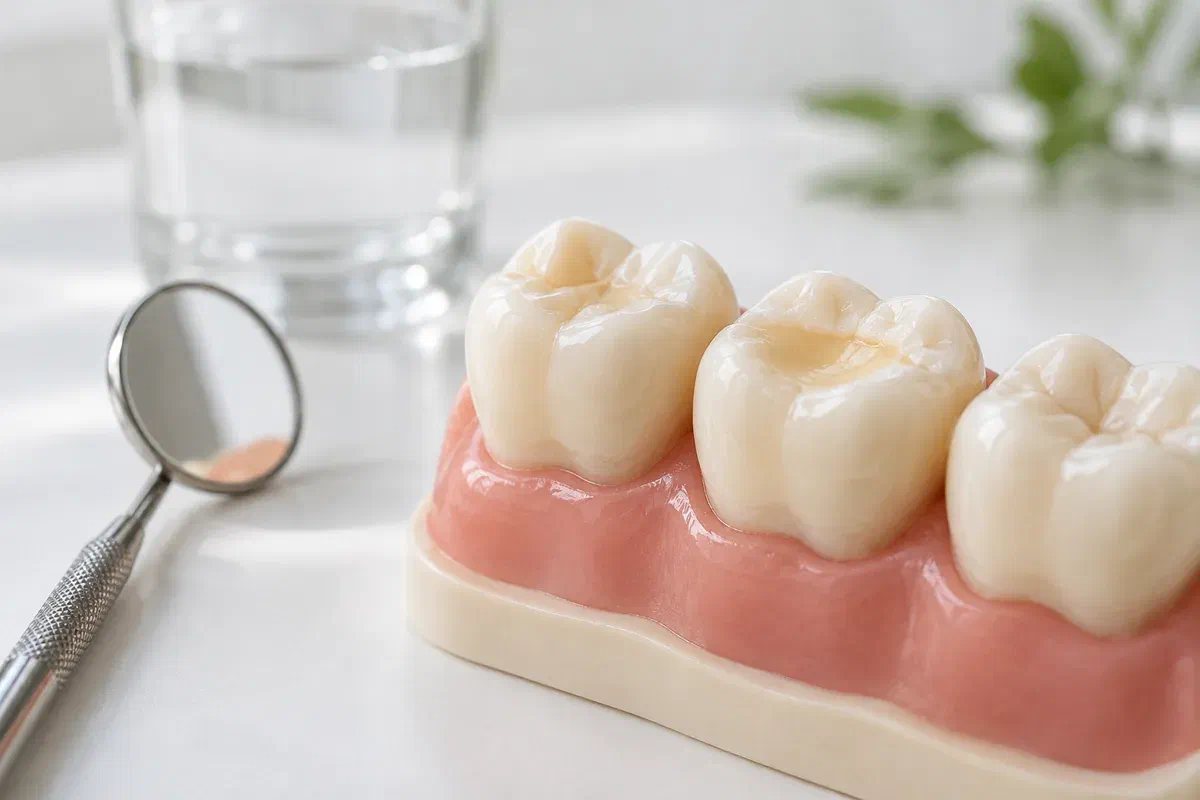
Illustrative dental teaching model with a shallow depression on a molar surface
Changes you can see or feel

Notice it in the mirror? Mention it to us.

If you can, recall when the change first stood out and whether it has crept further since. Holiday snapshots or old dental notes can help us compare, though we still need to examine the teeth to read them correctly.

Clear, chipped or shorter edges

Front teeth may look translucent at the tips or develop small nicks, while back teeth can show cupped dips. The dentist looks at which teeth and surfaces are affected and compares them with other findings. Looks cannot say how quickly a change happened or if it is continuing.

Sensitivity alongside the visual change

Cold air, iced drinks or sour foods may sting for several reasons. Describe the trigger, how long it lasts and which teeth react. How strongly a tooth reacts is not a measure of enamel loss, and a single very sore tooth may need checking for a separate problem.

Acid features in your routine

Frequent fruit juices, soft drinks, wine, reflux or repeated vomiting may all be relevant. Tell us what you are comfortable with. We can discuss protective dental care and whether a doctor should be involved in a source of acid that dentistry cannot address.

Please do not stop prescribed medication or cut out large parts of your diet on your own. Bring your medication list and relevant health information so our advice can be coordinated with your doctor or other provider.

Appearance and protection together

A better-looking smile starts with stable enamel.

It is tempting to fix the look and move on. But eroded enamel does not grow back, and a cosmetic repair placed while acid exposure continues may wear, stain or fail along with the tooth around it. A stronger plan identifies and reduces the source first, manages any sensitivity, and then considers how to improve appearance.

Some changes in appearance are mild enough to leave alone once the wear is under control. Others affect comfort, chewing or confidence enough to justify a repair. Ask what the dentist will monitor and what would change the recommendation. That way, a decision to wait is clearly reasoned and easy to revisit.

Patient information: American Dental Association — dental erosion

Knowing what shaped your teeth

Looking at which edges and surfaces are worn helps relate the change to your habits and history. If grinding and acid both seem to play a part, we will explain how each contributes.

Prevention that fits real life

Work, family dinners, social events and medical needs all shape what is achievable. Tell us which changes seem hard, so the advice can be tuned into something you can keep doing.

Cosmetic work with a protective purpose

Where bonding or another restoration is suggested, ask whether it will protect thin edges, reduce sensitivity, restore length or improve the bite. Improving appearance is a valid goal, but each repair should also make sense for the tooth.

Your assessment

Questions first, then a careful look at every edge.

You do not need to know the cause before you book. If we suggest noting symptoms or a usual day of food and drink, a quick honest outline is all we need.

  1. Share what you have noticed

    We ask about changes in appearance and comfort, your health, and any medicines. We may also touch on reflux, vomiting, dryness and what you eat. If part of the conversation feels personal, tell us and we will make time to talk privately.

  2. Examine, photograph and record

    The dentist assesses your teeth, existing restorations and how your front teeth meet when you bite. Photographs and notes create a reference for later comparison. Further tests are only arranged if they would clarify something particular.

  3. Decide what to address first

    We discuss which exposures can change, how sensitivity will be handled and whether a cosmetic or protective repair makes sense now or later. Medical input can be coordinated if relevant. Ask for stages and estimated costs before committing to restorative care.

  4. Compare at your review

    Next time, we look at symptoms, your experience with the plan and any change in the teeth or photos. Timing depends on findings. If wear seems to continue or you are still unhappy with the result, we may investigate further or adjust the approach.

Protecting edges at home in Halton Hills

Habits that keep thin edges from thinning further.

Follow the advice developed for your own sources of risk. Enamel protection should support good nutrition and general health rather than make you wary of every meal or celebration.

Keep acidic drinks to mealtimes

If juice, wine, soft drinks or another habit seems to contribute, talk about having it less often and with food. Try not to hold drinks against your front teeth. Plain water makes a simple option between meals.

Treat front teeth gently

Pick a fluoride toothpaste we have agreed on, skip abrasive whitening pastes, and brush without heavy pressure. Avoid using thin front edges to bite fingernails or open packages. A specialised toothpaste may help but will not stop acid exposure.

Look after the bigger health picture

Talk to a doctor about frequent heartburn, reflux or vomiting, and mention persistent dry mouth. Do not change medication on your own. Rinsing with water after being sick can help clear acid from the mouth; ask us if it happens regularly.

Patient information: UK oral health guidance — managing and monitoring tooth wear

Ways to approach worn front teeth

Protect, rebuild, or plan more broadly.

Prevention continues however the teeth are treated. Ask how each step fits the overall pattern and which choices can be reconsidered before larger cosmetic or restorative work.

When the change is mild

Protect and photograph over time

Mild edge changes may be monitored while you reduce exposures and manage sensitivity. Ask which photos or measurements will be compared and what change would prompt treatment. Monitoring should be an active plan with follow-up, not a dismissal of how your smile looks to you.

For a defined area of wear

Bond thin or chipped edges

A tooth-coloured resin, or a different material if better suited, may restore a worn edge or surface. We discuss how it should look, how long it may serve, its upkeep and its limits. Your bite and any continuing acid exposure affect how it lasts, so both are considered.

When many teeth are worn

Plan the whole smile

Extensive wear may require detailed planning, staged care or a specialist’s view. Ask how natural tooth will be preserved, what alternatives exist and what each option involves. Covering many teeth with crowns or veneers should not be the assumed first choice.

Looks, wear and repair

Questions about worn front teeth.

Erosion that affects appearance raises its own questions. We answer with your examination, bite and health in mind.

(905) 876-4488
Why do the edges of my front teeth look see-through?
Enamel at the biting edge can become thin enough that light passes through it more easily. Acid erosion is one possible reason, but grinding and chipping can contribute too. An examination helps tell which factors are involved and whether the change is continuing.
Can bonding improve the look of worn front teeth?
Bonding may rebuild length or shape on suitable teeth and can protect thin edges. It needs maintenance and may chip or stain over time. It works best when the cause of wear has been addressed, so assessment comes first.
Will my teeth look more yellow as the enamel thins?
They may. The layer under enamel, called dentine, is naturally more yellow, so thinning enamel can make it more visible. This is one reason to understand the wear before trying to whiten, which may not give the result you expect.
Are veneers a good option for eroded teeth?
In some situations, veneers may be considered as part of a broader plan, but they can involve removing tooth structure. More conservative options are usually discussed first. Ask what each choice would mean for your natural teeth now and in the future.
Does acid wear only affect the front teeth?
No. Erosion can affect chewing surfaces of back teeth and the inner surfaces of teeth, depending on the source of acid and other factors. The dentist examines the whole mouth to understand the pattern.
Will cutting out juice be enough to stop the wear?
It may help if juice is a major contributor, but other exposures, such as reflux or frequent sipping of other acidic drinks, may also play a role. Grinding or brushing habits can add to the picture. A full assessment shows which changes are most worthwhile.
Halton Hills smiles, assessed with care

Find out what is changing the shape of your smile.

Make an appointment at our Bronte Street practice if your front edges look clear, chipped or shorter, or your teeth have become sensitive. Bring any photos you have, your medication list and your questions. We will explain the findings and the options for protecting and, where appropriate, restoring your teeth.

Please phone the clinic about severe pain or swelling. Online requests are for appointments that are not urgent.

Visit Milton Dental Clinic
Unit 1, 342 Bronte St. S, Milton, ON L9T 5B7
Get directions Clinic hours
Monday–Thursday
11am–7pm
Friday–Sunday
By appointment only

Areas we serve

  • Milton
  • Oakville
  • Mississauga
  • Georgetown
  • Halton Hills
  • Acton
  • Campbellville
  • Brampton
  • Burlington
  • Puslinch
  • Rockwood
  • Erin
  • Caledon
  • Etobicoke
  • Old Milton
  • Bronte Meadows
  • Timberlea
  • Dorset Park
  • Dempsey
  • Clarke
  • Beaty
  • Coates
  • Harrison
  • Scott
  • Willmott
  • Ford
  • Bowes
  • Cobden
  • Walker
  • Mountain View
  • Milton Heights
  • Hawthorne Village
  • Valley View
  • Fallingbrook
  • Nassagaweya
  • Trafalgar
  • Esquesing
  • Nelson
  • Brookville
  • Moffat
  • Glen Williams
  • Norval
  • Limehouse
  • Stewarttown
  • Ashgrove
  • Hornby
  • Silver Creek
  • Speyside
  • Scotch Block
  • North Oakville
  • River Oaks
  • Glen Abbey
  • West Oak Trails
  • Palermo
  • Bronte Creek
  • College Park
  • Joshua Creek
  • Uptown Core
  • Preserve
  • Iroquois Ridge
  • Lisgar
  • Meadowvale
  • Meadowvale Village
  • Churchill Meadows
  • Erin Mills
  • Central Erin Mills
  • Streetsville
  • East Credit
  • Creditview
  • Heartland
  • Sheridan
  • Mount Pleasant
  • Credit Valley
  • Huttonville
  • Churchville
  • Springbrook
  • Northwest Brampton
  • Bram West
  • Fletcher's Meadow
  • Fletcher's Creek South
  • Alton Village
  • Orchard
  • Millcroft
  • Headon Forest
  • Tansley
  • Brant Hills
  • Tyandaga
  • Kilbride
  • Lowville
  • Aberfoyle
  • Morriston
  • Arkell
  • Hillsburgh
  • Freelton
  • Carlisle
  • Waterdown
  • Flamborough
  • Mountsberg

How can we help?

Milton Dental Clinic

Have a question about your smile? Choose the option that works best for you.

For urgent dental concerns, please call.
Messages are reviewed during clinic hours.