

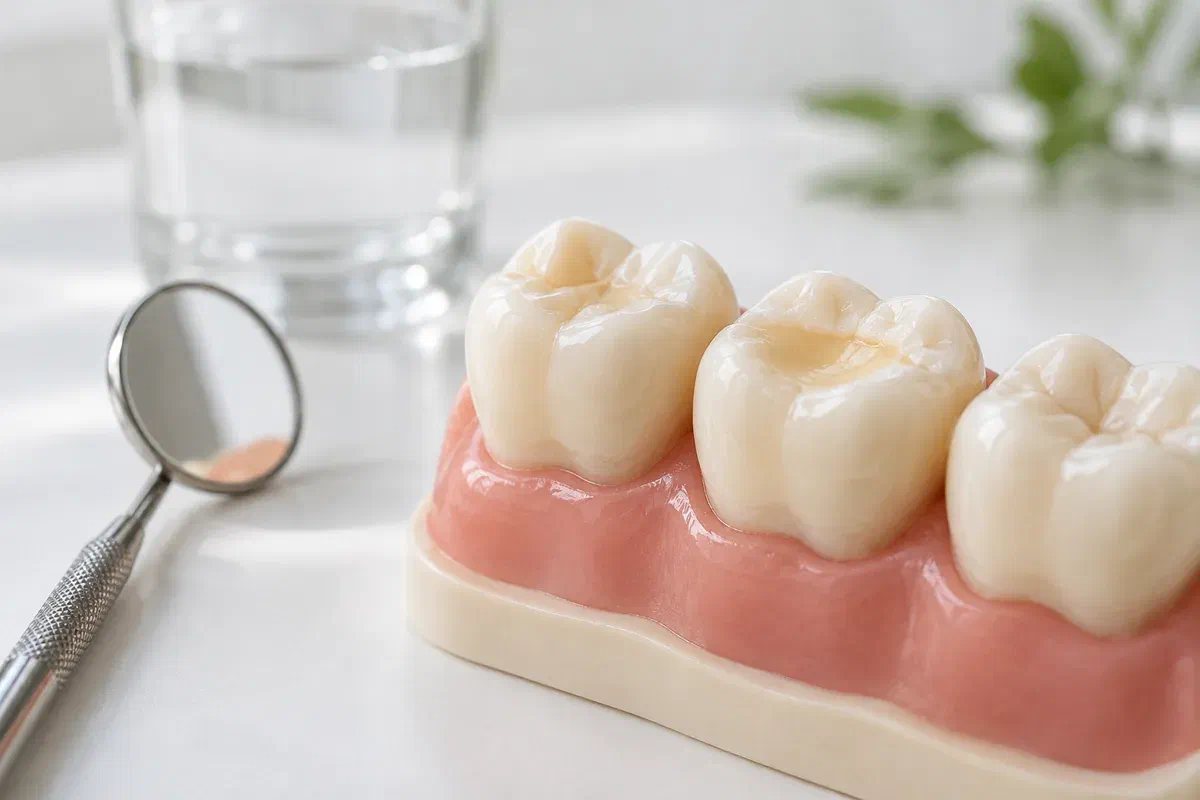
Illustrative dental discussion about daily habits and enamel protection
Restorative Dentistry

Tooth Erosion Treatment in Oakville

Lemon water, sparkling water and fruit smoothies can feel like the healthy choice. For Oakville households noticing sensitive or thinning enamel, we look at how everyday acids add up and what to protect first.

Good intentions, worn enamel

When the healthy habit is the one wearing your teeth.

A warm glass of lemon water before breakfast. A can of flavoured sparkling water at your desk. A fruit smoothie after the gym. None of these sounds risky, and in many ways they are sensible choices. Yet each one bathes the teeth in acid, and when that happens often enough, enamel can slowly soften and wear away. Dentists call this erosion.

Erosion is not the same as decay. Decay comes from bacteria; erosion comes from acids in food, drink or the stomach. Both can show up in one mouth, and other forces such as grinding or brisk brushing can leave similar-looking marks. That overlap is why the pattern of wear matters more than any single shiny or sensitive patch.

For people travelling from Oakville to our Bronte Street practice, a first erosion visit is mostly about understanding. We ask about drinks, meals, exercise, reflux and general health, and explain the reason behind each question. If something feels personal, it can be talked through privately. Then we decide together whether to protect, watch or repair.

Schedule an enamel wear check
Illustrative dental teaching model with a shallow depression on a molar surface
Clues worth mentioning

Notice the little changes, then let us interpret them.

Think about when you first spotted a difference and whether it seems to be spreading. Photos from a few years back or earlier dental notes can be interesting, but an examination is what gives them meaning.

A glassier, thinner look

The biting edges of front teeth can turn slightly translucent, and back teeth may develop small scooped areas. The dentist charts where these changes appear and how they relate to the rest of the mouth. Looks alone cannot reveal the pace of change or whether it is ongoing.

Your morning drink starts to sting

If cold water, citrus or something sweet triggers a sharp response, note what sets it off, how long the feeling lasts and which side it is on. Sensitivity does not tell us how much enamel is missing, and a tooth that hurts intensely may have a different issue altogether.

Acidic choices are frequent

Regular sipping of sparkling or flavoured drinks, kombucha, sports drinks, heartburn, or repeated vomiting may all be part of the story. Share what you are comfortable sharing. We consider how to protect the teeth and whether a physician could help with an acid source dentistry cannot remove.

Please do not stop any prescribed medication or overhaul your diet on your own initiative. Bring a list of medicines and supplements, plus any relevant health information, so dental and medical advice can work together.

What erosion care sets out to do

Keep your habits healthy and your enamel protected.

Worn enamel does not come back, and a tooth-coloured repair does nothing to stop the acid that caused the wear. That is why prevention usually comes first. Small shifts in timing and frequency often matter more than giving up foods you enjoy, and comfort is managed while any need for rebuilding is weighed.

A worn area does not automatically need a filling. The choice depends on depth, comfort, how the teeth function, how they look and whether the wear is moving. Ask the dentist what will be tracked and which findings would change the advice. With that in mind, each follow-up becomes a meaningful check rather than a vague wait.

Patient information: American Dental Association — dental erosion

A link between habits and wear

Where the wear sits can suggest which exposures play a part, and matching that with your routine produces a more convincing explanation. Usually several things contribute, and an honest assessment acknowledges that.

Guidance built around your lifestyle

Workouts, commutes, family meals and health needs all shape what is realistic. Tell us which suggestions feel hard to keep up, and we can find practical alternatives that still protect your teeth.

Repair with a clear reason

If restoration is recommended, ask whether it is meant to cover a sensitive area, rebuild lost shape, strengthen an edge or help the bite. Every repair should earn its place instead of aiming for a perfectly uniform smile.

Inside an erosion assessment

First we listen. Then we look closely.

You are not expected to have the answer when you arrive. If we ask you to note symptoms or a usual day of eating and drinking, a quick, honest sketch is better than a carefully curated record.

  1. Share your routine and health

    We ask what you have noticed, which drinks and foods are regular, and about health conditions and medicines. Reflux, vomiting and a dry mouth may come up. If any of that is delicate, let us know and we will discuss it privately.

  2. Examine and capture a baseline

    Your teeth, any fillings and the way you bite are assessed. Notes, photographs or other suitable records preserve today’s picture for future comparison. Extra investigations are suggested only when they would answer a particular question.

  3. Decide on priorities together

    We talk about which exposures you can realistically reduce, how sensitivity will be eased and whether any surface needs rebuilding. Where medical input is relevant, advice can be coordinated. Before agreeing to restorative work, ask for the stages involved and an estimate of costs.

  4. See how the plan is working

    Later, we look at your symptoms, how the changes have fitted into daily life and whether the teeth have shifted. Timing depends on what we found. If concerns continue or the wear progresses, further investigation or a revised plan may be needed.

Oakville routines, gentler on enamel

Keep what you love. Change how and when.

Use the advice tailored to your own exposures. Protecting enamel should sit comfortably with a varied diet and an active life, rather than make every drink feel like a risk.

Group acidic drinks with meals

If lemon water, sparkling drinks or smoothies appear to contribute, consider having them less often and alongside food rather than sipping across the day. Swallow rather than swishing. Plain water is a simple choice in between.

Brush kindly, with fluoride

Keep brushing with a fluoride toothpaste that suits you, and avoid whitening pastes with harsh grit or a heavy hand. Ask which technique and brush to use. An enamel-focused toothpaste can support care, but it does not address the acid exposure itself.

Take health symptoms seriously

Speak to a doctor about frequent heartburn, reflux or vomiting, and mention a mouth that often feels dry. Do not alter medication on your own. Rinsing with plain water after vomiting can help clear acid; ask us for individual advice if it recurs.

Patient information: UK oral health guidance — managing and monitoring tooth wear

Approaches we may discuss

Care that scales with the wear.

Protective habits continue whatever else is chosen. Ask how each suggestion fits the overall picture, and which decisions can be revisited before anything more involved begins.

If no repair is needed for now

Guard and monitor

Watching an area makes sense when exposures are being reduced and sensitivity is under control. Ask what will be measured at each review and what change would lead to treatment. Monitoring should be a purposeful plan with dates, not a polite way of setting your concern aside.

Where one surface needs it

Rebuild a single area

A bonded tooth-coloured material, or another suitable restoration, may rebuild a specific worn spot. We discuss the benefit you can expect, how to look after it and its limits. Your bite and any continuing acid exposure affect how well it serves, so both are considered.

When wear is extensive

Look at the whole mouth

Wear across many teeth may call for detailed planning, care in stages or a specialist referral. Ask how natural structure will be conserved, what alternatives exist and what each path involves. Covering many teeth with crowns should never be the assumed first step.

Questions about drinks and enamel

Sparkling, sour or simply healthy?

Erosion often prompts questions about specific drinks, products and routines. We answer them with your own wear pattern and health in mind, not with a one-size list of rules.

(905) 876-4488
Is plain sparkling water bad for my teeth?
Carbonated water is more acidic than still water, though plain versions are generally considered much less erosive than soft drinks or juices. Flavoured varieties with added citrus can be more acidic. Frequency matters, so it is worth discussing how often and how you drink it.
Does drinking lemon water every morning damage enamel?
Lemon is acidic, and a daily habit, especially when sipped slowly, can contribute to erosion over time. You may not need to stop altogether. Discuss options such as having it with breakfast, drinking it more quickly or rinsing with plain water afterwards.
Will drinking through a straw protect my teeth?
A straw placed toward the back of the mouth may reduce how much an acidic drink touches the front teeth. It does not remove the acid exposure entirely, and how often you drink still matters. Treat it as one small aid rather than a full solution.
Can I whiten teeth that show signs of erosion?
Eroded enamel is thinner, and whitening may increase sensitivity or make the yellower layer beneath more noticeable rather than less. Have the wear assessed first. The dentist can explain whether whitening is sensible for you and what to expect.
Should I give up citrus fruit altogether?
There is no need for a blanket ban. Fruit is part of a balanced diet, and advice should match the exposures identified in your case. Changing when and how you eat it is often more useful than cutting it out, so talk it through before making big changes.
What can rebuild enamel that erosion has already removed?
No toothpaste or rinse can restore the original shape once structure is physically lost. Some products help protect what remains and ease sensitivity. Where an area needs rebuilding, a bonded restoration may be considered; ask what each option is meant to achieve.
From Oakville to our Milton clinic

Let’s find the habit behind the wear.

Book an assessment at our Bronte Street clinic if your teeth feel more sensitive or look thinner than they once did. Bring a rough idea of what you drink in a typical day and any relevant health details. We will explain what we see and the best next steps for protecting, or where needed rebuilding, your enamel.

Please call us directly if you have significant pain or swelling. The online request form is for non-urgent bookings only.

Visit Milton Dental Clinic
Unit 1, 342 Bronte St. S, Milton, ON L9T 5B7
Get directions Clinic hours
Monday–Thursday
11am–7pm
Friday–Sunday
By appointment only

Areas we serve

  • Milton
  • Oakville
  • Mississauga
  • Georgetown
  • Halton Hills
  • Acton
  • Campbellville
  • Brampton
  • Burlington
  • Puslinch
  • Rockwood
  • Erin
  • Caledon
  • Etobicoke
  • Old Milton
  • Bronte Meadows
  • Timberlea
  • Dorset Park
  • Dempsey
  • Clarke
  • Beaty
  • Coates
  • Harrison
  • Scott
  • Willmott
  • Ford
  • Bowes
  • Cobden
  • Walker
  • Mountain View
  • Milton Heights
  • Hawthorne Village
  • Valley View
  • Fallingbrook
  • Nassagaweya
  • Trafalgar
  • Esquesing
  • Nelson
  • Brookville
  • Moffat
  • Glen Williams
  • Norval
  • Limehouse
  • Stewarttown
  • Ashgrove
  • Hornby
  • Silver Creek
  • Speyside
  • Scotch Block
  • North Oakville
  • River Oaks
  • Glen Abbey
  • West Oak Trails
  • Palermo
  • Bronte Creek
  • College Park
  • Joshua Creek
  • Uptown Core
  • Preserve
  • Iroquois Ridge
  • Lisgar
  • Meadowvale
  • Meadowvale Village
  • Churchill Meadows
  • Erin Mills
  • Central Erin Mills
  • Streetsville
  • East Credit
  • Creditview
  • Heartland
  • Sheridan
  • Mount Pleasant
  • Credit Valley
  • Huttonville
  • Churchville
  • Springbrook
  • Northwest Brampton
  • Bram West
  • Fletcher's Meadow
  • Fletcher's Creek South
  • Alton Village
  • Orchard
  • Millcroft
  • Headon Forest
  • Tansley
  • Brant Hills
  • Tyandaga
  • Kilbride
  • Lowville
  • Aberfoyle
  • Morriston
  • Arkell
  • Hillsburgh
  • Freelton
  • Carlisle
  • Waterdown
  • Flamborough
  • Mountsberg

How can we help?

Milton Dental Clinic

Have a question about your smile? Choose the option that works best for you.

For urgent dental concerns, please call.
Messages are reviewed during clinic hours.