

Illustrative dental discussion about daily habits and enamel protection
Restorative Dentistry

Tooth Erosion Treatment in Old Milton

Decades of service leave a history on every tooth. Near Old Milton, we help you tell settled wear from active acid erosion and decide calmly whether protection, watching or repair makes sense.

Old Milton · wear that built up over years

Is the wear still happening?

Teeth that have been chewing, sipping and smiling for forty or fifty years rarely look the way they did at twenty. Some of that change is ordinary ageing. Some may be erosion, which is the loss of tooth structure to acids that are not produced by bacteria. Erosion is a separate process from decay, although a mouth can show signs of both.

The key question for long-established teeth is often timing. A shallow hollow could have formed during a period of heavy citrus or reflux decades ago and stayed put since, or it could be deepening now. Old fillings, crowns, grinding and years of brushing also leave their own marks, so the dentist reads the whole mouth rather than one worn spot.

Our Bronte Street practice sits a short way from Milton’s historic downtown, and many of the people we see from Old Milton bring long dental histories with them. We take time to ask about past and present habits, health changes and medicines. Personal details can be shared privately, and we explain why we ask before deciding together whether anything needs to change.

Ask about a tooth wear review
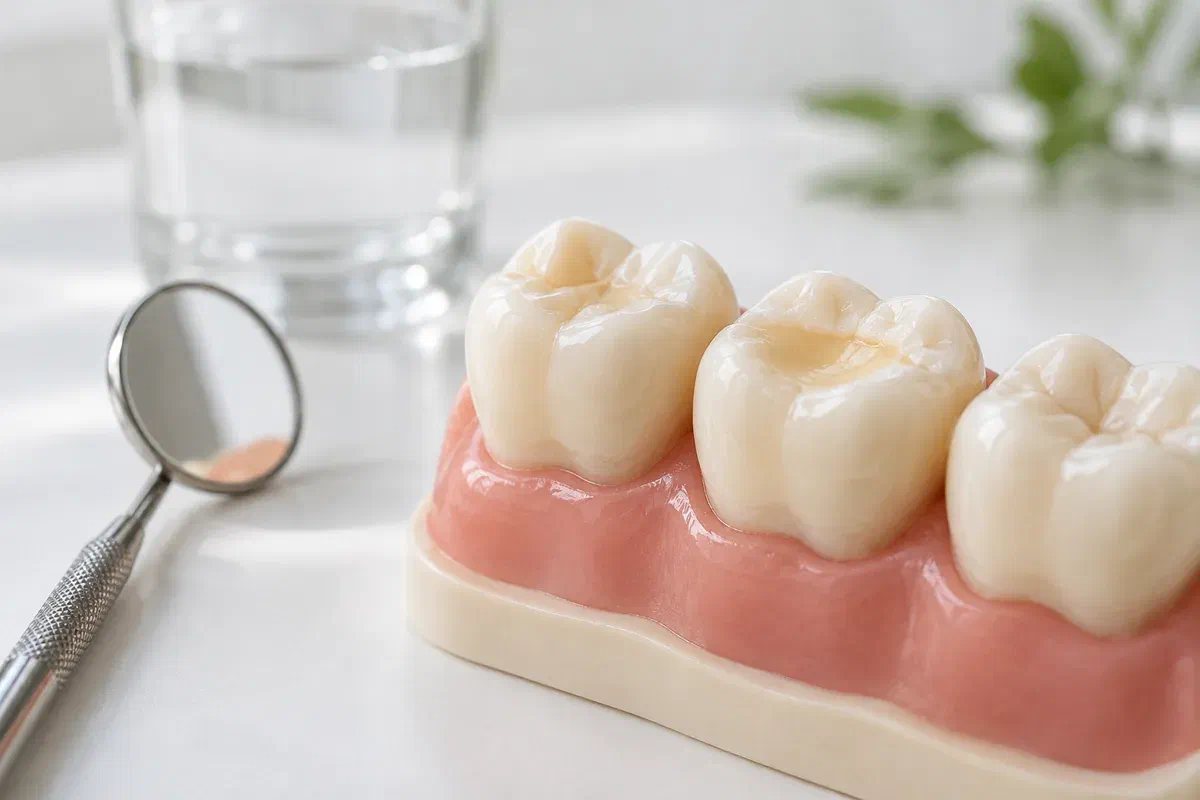
Illustrative dental teaching model with a shallow depression on a molar surface
Signs that deserve a fresh look

Long-familiar teeth can still change.

It helps to know when a difference first caught your attention and whether it seems to be moving. Earlier records or a wedding photo may show how your smile once looked, but an examination is needed to make sense of them.

Edges and chewing surfaces have shifted

You might see thinner front edges, flatter back teeth or a filling that now stands proud of the tooth around it. The dentist looks at where these changes cluster and how they relate to each other. Appearance alone cannot say how fast they happened or whether they are active.

A new twinge with familiar foods

If tea, ice water or a sour candy suddenly bothers a tooth that never complained before, describe what triggers it, how long it lingers and where you feel it. Sensitivity is not a measure of how much enamel has gone, and a sharp, persistent ache may signal a different problem.

Health or medicine changes over the years

Reflux that developed later in life, new prescriptions that leave the mouth dry, or periods of vomiting can all matter. Tell us whatever you are comfortable telling. We weigh dental protection and whether your physician should be involved in an exposure that dental work cannot remove.

Keep taking the medicines your doctor has prescribed, and hold off on sweeping diet changes until we have talked. A printed medication list and any relevant specialist letters make it easier to coordinate advice with your healthcare team.

Why we take a measured approach

Mature teeth deserve care that is proportionate.

Lost enamel cannot regrow, and covering a worn patch does nothing about the acid that wore it. So if wear is active, the first priority is understanding and reducing what drives it. Comfort and prevention come alongside any discussion of rebuilding, and for older teeth, saving natural structure is usually worth a great deal.

Wear that appears settled may simply need recording and checking at future visits. Active wear, or wear that affects chewing, comfort or appearance, may justify more. Ask the dentist which signs would mean the wear is progressing and how that would change the recommendation. Clear markers turn a review into a real comparison.

Patient information: American Dental Association — dental erosion

Separating past from present

Matching the location of wear with what you remember about earlier habits and health helps us decide whether it reflects something that has ended or something ongoing. Often a mix of factors explains the picture.

Prevention that respects your routine

After many years, habits are deeply woven into the day. We discuss which changes are realistic, how they fit with meals and medical needs, and where small adjustments could make a meaningful difference.

Keeping natural tooth where possible

When repair is advised, it should have a clear job, such as sealing a sensitive area or restoring a weakened edge. Removing healthy structure just for uniformity is rarely the right trade for teeth with a long road behind them.

What happens during the review

History, examination, then a shared decision.

No one expects you to explain the wear before you arrive. If we suggest jotting down symptoms or a typical day’s food and drink, a few rough notes are plenty. Candour helps us more than precision.

  1. Cover your dental and medical background

    We ask about symptoms, past dental treatment, health conditions and current medicines. Reflux, vomiting, dry mouth and dietary habits may come up. If part of this is private for you, say so and we will handle it discreetly.

  2. Examine and document

    Teeth, existing fillings and crowns, and the way your bite meets are checked carefully. Notes and photographs, or other suitable records, capture the current state so later visits have something firm to compare against. Extra tests are only suggested when they answer a real question.

  3. Weigh options and priorities

    We talk about which exposures can be reduced, how any sensitivity will be eased and whether a particular tooth needs attention. Where your doctor is involved, advice can be aligned. Ask for the proposed sequence and an estimate of costs before committing to repair work.

  4. Compare at follow-up

    A later visit looks at your comfort, how the plan has suited you and whether the teeth have changed. Timing depends on the original findings. If your concerns persist or the wear advances, we may look further or adjust the approach.

Protection that fits a settled routine

Adjust gently, and only where it counts.

Follow the guidance shaped around your own risks. Caring for enamel should support good nutrition and overall health rather than make mealtimes a source of worry.

Notice how often acidic items appear

If a morning juice, an afternoon lemon tea or another habit seems to contribute, consider keeping it to mealtimes and reducing how often it happens. Avoid holding drinks in your mouth. Plain water between meals is a handy substitute.

Choose a softer touch when brushing

Carry on with a fluoride toothpaste suited to you and set aside abrasive powders or vigorous scrubbing. Ask which brush and technique to use around older fillings and crowns. Special toothpastes can help, but they cannot stand in for reducing acid.

Keep your doctor in the loop

Talk to your physician about recurring heartburn or vomiting, and raise ongoing dry mouth, which some medicines can cause. Do not stop or change a prescription on your own. After vomiting, rinsing with water can help; ask us about oral care if it happens often.

Patient information: UK oral health guidance — managing and monitoring tooth wear

Options for long-serving teeth

From watching closely to rebuilding with care.

Prevention stays in place whatever else is decided. Ask how each suggestion relates to the overall pattern of wear and which steps can be reviewed before anything more involved is started.

When the wear looks stable

Record and recheck

Settled-looking wear can be documented and compared at later visits while sensitivity is managed. Ask what will be measured and what change would lead to treatment. Monitoring is an active choice with a schedule, and your concern should always be taken seriously.

For one surface that needs support

Bond a targeted area

Tooth-coloured composite, or another suitable material, can rebuild a specific worn spot. We discuss the likely benefit, how it is maintained and where its limits lie. Bite forces and any continuing acid exposure are considered so the repair suits the mouth it lives in.

For extensive or interconnected wear

Plan several teeth together

When many teeth are involved, especially around older crowns and bridges, care may be staged or shared with a specialist. Ask how natural structure will be preserved, what alternatives exist and what each choice commits you to. Widespread crowns are not an automatic answer.

Questions from long-time patients

Clear answers for teeth with a past.

People with decades of dental history often wonder how erosion fits alongside older work and the effects of age. We answer with your own mouth and health in view.

(905) 876-4488
Is some enamel wear just part of getting older?
Some gradual wear is expected over a lifetime of chewing. Erosion is different because acids drive it, and it can be faster or follow particular patterns. The dentist considers your age, history and the location of wear to judge whether something beyond ordinary ageing is going on.
Can erosion affect teeth that already have crowns or fillings?
Restorations themselves do not erode the way enamel does, but the natural tooth around them can. A filling standing higher than the surrounding surface is one possible sign. We check the edges of older work and the tooth beside it as part of the assessment.
How do you tell old wear from wear that is still active?
A single visit gives a snapshot. Comparing careful records over time, along with your symptoms and any change in habits or health, shows whether surfaces are still changing. Older photographs can sometimes help. Ask which areas will be tracked and how often.
Could a new medication be making my mouth drier?
Many common medicines can reduce saliva, and saliva helps protect teeth from acid. Mention any new prescription and any dryness you notice. Do not stop a medicine because of this; your doctor or pharmacist may be able to review options, and we can suggest ways to protect your teeth.
Does feeling less sensitive mean my erosion has stopped?
Not by itself. A tooth can feel calmer while wear continues, or remain sensitive for other reasons. Follow-up visits compare clinical findings, not just how things feel, so it is worth keeping those appointments even when discomfort has faded.
Would erosion treatment mean replacing my older dental work?
Not automatically. Older fillings and crowns are only replaced when there is a reason, such as a failing edge or decay. Many plans leave sound work alone and focus on protecting natural tooth. Ask the dentist to explain the purpose behind any change suggested to existing restorations.
Near Old Milton, on Bronte Street

Bring your history. We will help you read it.

Arrange a visit at our Bronte Street practice for teeth that look, feel or fit differently than they used to. Bring a medication list and any questions about habits past and present. We will explain what we see and which steps, if any, would best protect your teeth from here.

If you have serious pain or swelling, please telephone us. The online form is meant for non-urgent requests.

Visit Milton Dental Clinic
Unit 1, 342 Bronte St. S, Milton, ON L9T 5B7
Get directions Clinic hours
Monday–Thursday
11am–7pm
Friday–Sunday
By appointment only

Areas we serve

  • Milton
  • Oakville
  • Mississauga
  • Georgetown
  • Halton Hills
  • Acton
  • Campbellville
  • Brampton
  • Burlington
  • Puslinch
  • Rockwood
  • Erin
  • Caledon
  • Etobicoke
  • Old Milton
  • Bronte Meadows
  • Timberlea
  • Dorset Park
  • Dempsey
  • Clarke
  • Beaty
  • Coates
  • Harrison
  • Scott
  • Willmott
  • Ford
  • Bowes
  • Cobden
  • Walker
  • Mountain View
  • Milton Heights
  • Hawthorne Village
  • Valley View
  • Fallingbrook
  • Nassagaweya
  • Trafalgar
  • Esquesing
  • Nelson
  • Brookville
  • Moffat
  • Glen Williams
  • Norval
  • Limehouse
  • Stewarttown
  • Ashgrove
  • Hornby
  • Silver Creek
  • Speyside
  • Scotch Block
  • North Oakville
  • River Oaks
  • Glen Abbey
  • West Oak Trails
  • Palermo
  • Bronte Creek
  • College Park
  • Joshua Creek
  • Uptown Core
  • Preserve
  • Iroquois Ridge
  • Lisgar
  • Meadowvale
  • Meadowvale Village
  • Churchill Meadows
  • Erin Mills
  • Central Erin Mills
  • Streetsville
  • East Credit
  • Creditview
  • Heartland
  • Sheridan
  • Mount Pleasant
  • Credit Valley
  • Huttonville
  • Churchville
  • Springbrook
  • Northwest Brampton
  • Bram West
  • Fletcher's Meadow
  • Fletcher's Creek South
  • Alton Village
  • Orchard
  • Millcroft
  • Headon Forest
  • Tansley
  • Brant Hills
  • Tyandaga
  • Kilbride
  • Lowville
  • Aberfoyle
  • Morriston
  • Arkell
  • Hillsburgh
  • Freelton
  • Carlisle
  • Waterdown
  • Flamborough
  • Mountsberg

How can we help?

Milton Dental Clinic

Have a question about your smile? Choose the option that works best for you.

For urgent dental concerns, please call.
Messages are reviewed during clinic hours.