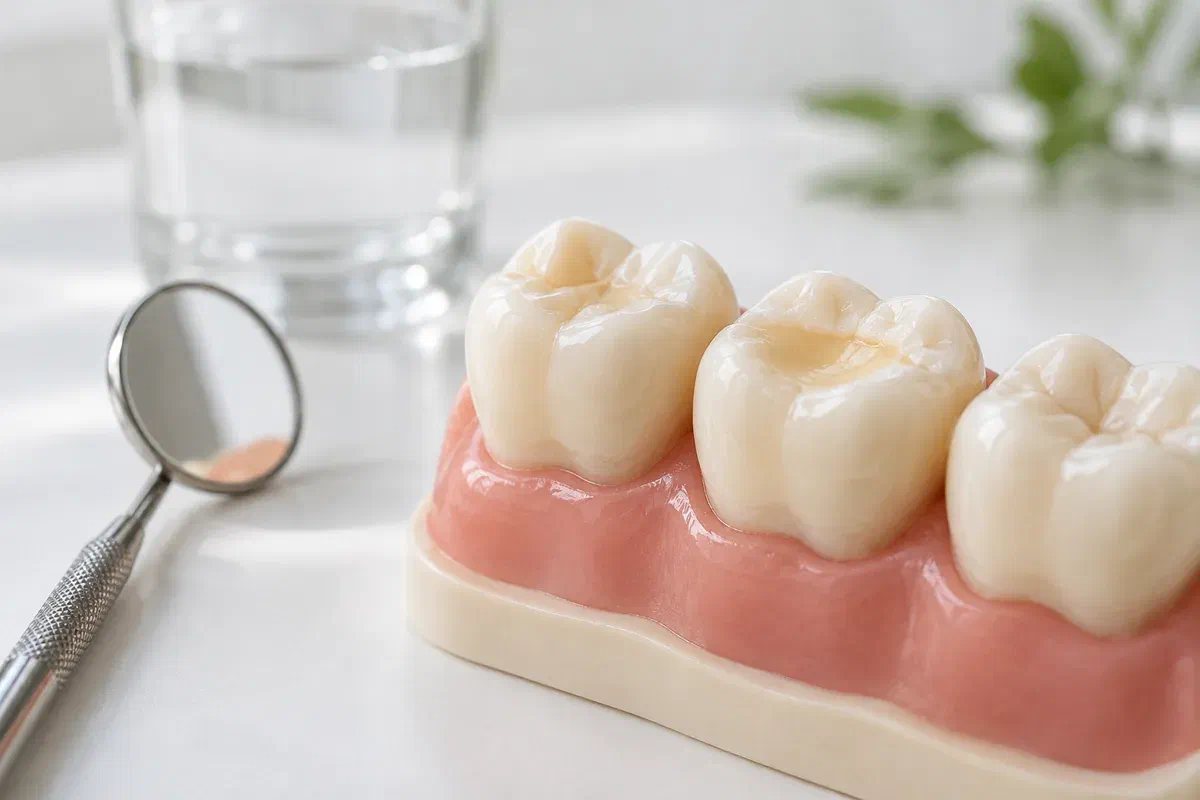
Illustrative dental discussion about daily habits and enamel protection
Restorative Dentistry

Tooth Erosion Treatment in Puslinch

Saliva is your teeth’s quiet defence against acid, and a dry mouth leaves enamel exposed. From Puslinch, come in for an erosion assessment that looks at saliva, medicines and habits together.

The role of saliva

When the mouth runs dry, enamel loses its buffer.

Most of us never think about saliva until it is missing. Yet it does a great deal of quiet work: rinsing food away, diluting acids and helping the mouth return to a neutral state after eating or drinking. When saliva is reduced, by certain medicines, some health conditions, dehydration or mouth-breathing, acids linger longer on the teeth.

That lingering can contribute to erosion, a loss of tooth structure caused by acid rather than by bacteria. Decay is a separate process, although a dry mouth can raise the risk of both. Other kinds of wear, from grinding or brushing too firmly, can look much the same, so the full pattern is examined before any conclusion is drawn.

People who come in from Puslinch often have long days on the road or the land, and appointments need to count. We ask about dryness, medicines, drinks, meals, reflux and health, and explain why each matters. Personal details can be shared privately. Then we agree on whether the teeth need protecting, watching or rebuilding.


Book an enamel and dry mouth check
Illustrative dental teaching model with a shallow depression on a molar surface
Puslinch · signals worth raising

Is your mouth often dry? That matters here.

If you can, note when you first saw or felt a change and whether it seems to be progressing. Past records or photos may help, but we need to examine your teeth to interpret them.

Teeth that look worn or glassy

Surfaces may look smoother, thinner at the edges or slightly cupped. The dentist maps where wear appears and compares it with other signs, including the condition of the gums and soft tissues. Appearance alone cannot show how fast change happened.

Discomfort with temperature or taste

Cold, sweet or sour things may cause twinges for many reasons. Note what triggers them and how long they last. Sensitivity does not measure how much enamel has been lost, and a single very painful tooth may need investigation for something else.

Dryness, acid or both

A dry or sticky mouth, frequent acidic drinks, reflux or repeated vomiting can all be part of the picture. Share what you feel comfortable sharing. We can talk about protecting the teeth and whether your doctor or pharmacist could help with a factor dentistry alone cannot change.

Never stop a prescribed medicine because it dries your mouth. Bring a full list of medicines, including over-the-counter products, so we can discuss options and coordinate with your doctor or pharmacist where appropriate.

Aims of care

Support the mouth’s own defences.

Enamel that has dissolved will not regrow, and a repair does nothing to restore saliva or remove the acid. So care often starts by looking at what reduces your natural protection and what adds acid, then easing both where possible. Comfort and protection come first, with rebuilding considered as a separate question.

Many worn areas can be safely monitored once their contributors are under better control. Others need repair because of depth, comfort, function, appearance or clear progression. Ask what will be compared at review and what finding would lead to a different recommendation. That way each visit answers something specific.

Patient information: American Dental Association — dental erosion

A fuller explanation

Connecting the wear pattern with dryness, diet and health history gives a more complete picture of why teeth are changing. Usually several factors contribute, and we explain how they interact.

Practical relief for a dry mouth

Advice should suit your work, meals and health. Tell us which suggestions are difficult, so we can adapt them into habits you can keep, whether you are at home, at work or travelling.

Restorations only where they help

If a repair is advised, ask whether it will protect a surface, reduce sensitivity, rebuild shape or support chewing. A dry mouth can affect how repairs age, so each one should have a clear purpose.

What the visit involves

We look at the teeth, the tissues and the saliva.

You do not need to know the cause before coming in. If we ask for a note of symptoms or a typical day of eating and drinking, a short, honest version is plenty.

  1. Review medicines and health

    We ask about dryness, symptoms, health conditions and every medicine you take. Questions about reflux, vomiting and diet may follow. Tell us if you would like any part of this conversation held privately.

  2. Examine and record

    The dentist checks teeth, fillings, gums, the soft tissues of the mouth and your bite, and notes signs of reduced saliva. Photographs or other records set a baseline. Additional tests are only suggested when they would clarify a particular point.

  3. Build a plan together

    We discuss ways to manage dryness, which acid exposures can be reduced and whether any tooth needs repair. Where your doctor or pharmacist should be involved, advice can be coordinated. Ask for stages and an estimate of costs before restorative care.

  4. Follow up

    Later, we compare symptoms, how the plan has worked for you and any change in the teeth. Timing depends on what we found. If dryness or wear continues, the plan may need more investigation or adjustment.

Everyday protection for a dry mouth

Keep moisture up and acid contact down.

Follow guidance shaped around your own risks. Caring for enamel should support good nutrition and health, not add worry to every meal.

Sip water, not acid

Frequent sips of plain water can ease dryness without adding acid. If a particular drink seems to contribute, consider limiting it to mealtimes and having it less often. Avoid holding acidic drinks in the mouth.

Brush gently and use fluoride

Keep brushing with a fluoride toothpaste suited to you, avoiding harsh abrasives and hard scrubbing. Ask whether a higher-strength or dry-mouth product makes sense. Such products can help, but they do not remove the acid source.

Talk to your prescriber

If a medicine seems to cause dryness, raise it with your doctor or pharmacist rather than stopping it. Seek medical advice for frequent reflux or vomiting. After being sick, a water rinse can help clear acid; ask us about care if it recurs.

Patient information: UK oral health guidance — managing and monitoring tooth wear

Treatment pathways

Protection first, repair where it earns its place.

Preventive care continues whether or not teeth are restored. Ask how each step fits the bigger picture and which choices can be reconsidered before larger treatment.

When repair is not needed yet

Protect, moisturise and monitor

Worn areas may be observed while dryness is managed and acid exposure reduced. Ask what will be recorded and which changes would justify treatment. Monitoring should come with a schedule and clear criteria, not a vague promise to check later.

For one damaged area

Rebuild a specific surface

Tooth-coloured bonding or another suitable material may restore a worn spot. We explain benefits, maintenance and limits. A dry mouth and continuing acid exposure affect how a repair performs, so they are managed alongside it.

For extensive wear

Wider restorative planning

Wear across many teeth may call for detailed planning, staged care or a specialist’s view. Ask how natural tooth will be kept, which alternatives exist and what each option means long term. Crowns on many teeth should never be the presumed first step.

Saliva, medicines and enamel

Questions about dry mouth and erosion.

A dry mouth raises questions about medicines, products and habits. We answer with your health history and examination in mind.

(905) 876-4488
Why does saliva matter so much for enamel?
Saliva dilutes and clears acids, helps restore a neutral environment after eating and drinking, and carries minerals that support the tooth surface. When there is less of it, acids stay in contact with teeth for longer, which can add to erosion.
What kinds of medicines can leave the mouth dry?
A wide range of common medicines can reduce saliva, including some used for allergies, blood pressure, mood and sleep. Effects vary between people. Bring a complete list so we can discuss whether dryness might be linked, and speak with your prescriber before changing anything.
Does sipping water through the day help protect my teeth?
Regular sips of plain water can ease dryness and help rinse the mouth without adding acid. It does not replace other preventive steps, but it is a simple, useful habit for many people with a dry mouth.
Are dry-mouth gels or sprays worth trying?
Saliva substitutes and dry-mouth products may improve comfort for some people. Their protective effect on enamel varies. Ask us which products might suit you, and check with your pharmacist if you take other medicines.
Is waking up with a very dry mouth a concern?
Breathing through the mouth or snoring at night can dry the mouth, leaving teeth with less protection for hours. Mention it if it happens often. Your doctor may want to look into causes, and we can discuss ways to protect your teeth overnight.
Should I call before driving in if a worn tooth suddenly hurts?
Yes, please call first. We can help you judge whether it needs urgent attention and arrange the most suitable appointment. If pain is severe or there is swelling and we cannot be reached, seek urgent care closer to home.
Erosion care for Puslinch

Let’s protect your teeth from the inside out.

Book an assessment at our Bronte Street practice for teeth that feel dry, sensitive or more worn than before. Bring your complete medicine list and questions about everyday habits. We will explain what we see and how to protect and, where appropriate, restore your teeth.

Please telephone us if you have severe pain or swelling. Online requests are meant for non-urgent appointments.

Visit Milton Dental Clinic
Unit 1, 342 Bronte St. S, Milton, ON L9T 5B7
Get directions Clinic hours
Monday–Thursday
11am–7pm
Friday–Sunday
By appointment only

Areas we serve

  • Milton
  • Oakville
  • Mississauga
  • Georgetown
  • Halton Hills
  • Acton
  • Campbellville
  • Brampton
  • Burlington
  • Puslinch
  • Rockwood
  • Erin
  • Caledon
  • Etobicoke
  • Old Milton
  • Bronte Meadows
  • Timberlea
  • Dorset Park
  • Dempsey
  • Clarke
  • Beaty
  • Coates
  • Harrison
  • Scott
  • Willmott
  • Ford
  • Bowes
  • Cobden
  • Walker
  • Mountain View
  • Milton Heights
  • Hawthorne Village
  • Valley View
  • Fallingbrook
  • Nassagaweya
  • Trafalgar
  • Esquesing
  • Nelson
  • Brookville
  • Moffat
  • Glen Williams
  • Norval
  • Limehouse
  • Stewarttown
  • Ashgrove
  • Hornby
  • Silver Creek
  • Speyside
  • Scotch Block
  • North Oakville
  • River Oaks
  • Glen Abbey
  • West Oak Trails
  • Palermo
  • Bronte Creek
  • College Park
  • Joshua Creek
  • Uptown Core
  • Preserve
  • Iroquois Ridge
  • Lisgar
  • Meadowvale
  • Meadowvale Village
  • Churchill Meadows
  • Erin Mills
  • Central Erin Mills
  • Streetsville
  • East Credit
  • Creditview
  • Heartland
  • Sheridan
  • Mount Pleasant
  • Credit Valley
  • Huttonville
  • Churchville
  • Springbrook
  • Northwest Brampton
  • Bram West
  • Fletcher's Meadow
  • Fletcher's Creek South
  • Alton Village
  • Orchard
  • Millcroft
  • Headon Forest
  • Tansley
  • Brant Hills
  • Tyandaga
  • Kilbride
  • Lowville
  • Aberfoyle
  • Morriston
  • Arkell
  • Hillsburgh
  • Freelton
  • Carlisle
  • Waterdown
  • Flamborough
  • Mountsberg

How can we help?

Milton Dental Clinic

Have a question about your smile? Choose the option that works best for you.

For urgent dental concerns, please call.
Messages are reviewed during clinic hours.