

Illustrative consultation about a protective dental appliance and tooth wear
Restorative Dentistry

Tooth Wear from Grinding in Burlington

You catch your jaw locked tight during a deadline or a long drive, and your back teeth feel it by evening. For people coming from Burlington, we assess clenching-related wear, explain protection, and repair teeth only where it helps.

Clenching while awake

Notice your jaw right now. Are your teeth touching?

At rest, upper and lower teeth normally sit slightly apart. Many people discover that theirs are pressed together while reading email, lifting weights, or sitting in traffic. That awake clenching, along with grinding during sleep, falls under the broad term bruxism. Both can load teeth and fillings repeatedly, although worn surfaces on their own do not reveal which habit caused them or when.

Pinning down the cause takes more than a glance. Acid from drinks or reflux can weaken enamel, old restorations can fail on their own schedule, and the way teeth meet can concentrate force on certain spots. A cracked filling or tender jaw is looked at individually instead of being assumed to come from clenching.

Burlington is southwest of our Milton clinic, and the goal for anyone making that trip is a visit that answers real questions. We examine the wear, ask about the moments you notice tension, and look at any guard you already use. Then we discuss what to protect, what to watch, and what to repair, without suggesting that one appliance will end clenching for good.

Ask about clenching and worn teeth
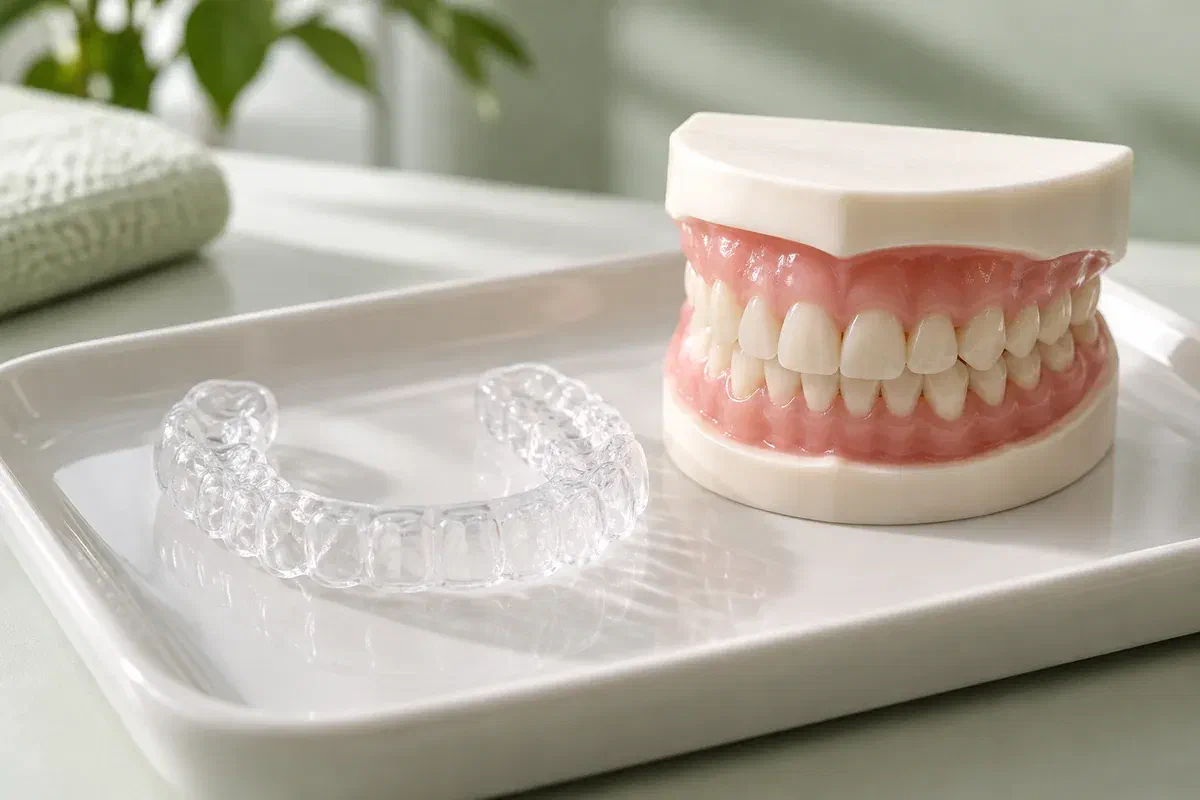
Illustrative clear dental night guard beside a teaching model with worn tooth edges
Everyday signals

Tension you feel, wear you might see

A run of small symptoms says more than a single incident. Note when they happen and bring any appliance you have, even if you are not sure the habit is real.

Edges that seem squared off

Canines and front teeth that look blunter than they did in older photos can be a sign of wear. The dentist checks how they meet the opposite teeth and considers your age, past dentistry, and other contributors before deciding how meaningful the change is.

Fillings that fracture without warning

A restoration that cracks while you are eating something soft hints at more than bad luck. Recall the circumstances each time. Material, remaining tooth, bite forces, and daytime habits can all influence whether a like-for-like replacement is wise.

An aching jaw by late afternoon

Muscle tiredness that builds through a workday may reflect clenching, though posture, stress, and joint problems can create similar feelings. Report locking, restricted opening, or pain that will not settle so a suitable evaluation can be arranged.

Seek a prompt appointment for a tooth that suddenly becomes painful, cracks, or feels loose. Knowing that you clench is not a reason to dismiss new symptoms.

What good management looks like

Less damage, realistic promises

For daytime clenching, the first tools are usually awareness and gentle changes to how the jaw rests. A night appliance may still be considered if sleep grinding is also suspected, because it can separate the teeth and take some of the force. It does not restore enamel or cure the habit, and its purpose should be explained clearly.

Sometimes the history points toward a sleep or medical question, such as heavy snoring or exhaustion despite a full night in bed. In those cases a physician’s input may be recommended. Stress is often mentioned in connection with clenching, yet it is not assumed to be the whole explanation for every person.

Patient information: National Institute of Dental and Craniofacial Research — bruxism

A record to measure against

Charting and photographing teeth now makes later comparisons more objective. Ask which surfaces will be watched, particularly if the wear is minor or you cannot tell whether it is ongoing.

Thinking ahead before repairs

If restoration is needed, ask how the new surfaces will be protected from clenching forces. The conditions around a filling matter alongside the choice of material.

Treatment aimed at what matters to you

Your focus might be appearance, comfortable chewing, or sensitivity. Saying which one guides the discussion toward useful results and avoids assuming that every blunt edge must be lengthened.

Step by step

How we work out what your jaw is doing

No homework is required. If you can, notice a few moments when your teeth are clenched, any recent breakages, and how you sleep. Those observations, plus any existing guard, are a practical place to start.

  1. Map your habits and health

    We ask when you catch yourself clenching, whether anyone hears grinding at night, and when soreness appears. Medicines, sleep, and health history are reviewed. Keep taking any prescribed medicine and discuss possible links with the prescriber rather than stopping it.

  2. Examine wear and the bite

    The dentist looks at worn areas, cracks, existing restorations, and how your teeth come together. The jaw joints and muscles may also be checked. Images or models are added only when they help with a specific question.

  3. Agree what each approach should achieve

    Habit awareness, monitoring, an appliance, or repairs might be discussed. If a guard is suggested, ask about its aim, material, cost, and review schedule. For any restoration, clarify whether it is a single repair or part of a larger plan.

  4. Check in and fine-tune

    Any appliance is fitted and adjusted, and restorations are reviewed on their own timetable. Bring the guard to later visits so it can be examined with your teeth. Persistent symptoms or fresh damage suggest that the plan should be reconsidered.

Between visits

Relax the jaw, care for the guard, report back.

Managing clenching is an ongoing process. Comfortable protection and routines that fit your day are worth far more than a plan that looks good on paper but never gets used.

Treat the appliance gently

Clean and wear your guard as advised for its material, and keep it in a ventilated case away from heat. Bring it to check-ups. Tell us about pressure points, cracks, or bite changes rather than reshaping it at home.

Build small reminders

A note on your monitor or a cue during your commute can prompt you to let your jaw drop and your teeth part. Ask for strategies suited to your symptoms. Repeatedly clenching to test the habit is not helpful.

Keep notes on change

Record new chips, sensitivity that lingers, or a shift in when jaw discomfort appears. Say honestly how often you wear the appliance and what gets in the way. That makes it easier to tell a fit issue from a need for a different plan.

Patient information: NIH News in Health — grinding and clenching

Options in proportion

The right amount of treatment for the wear you have

Clenching does not always require extensive dental work, and worn teeth often have more than one cause. Ask what findings support each suggestion and what monitoring would involve.

Wear without functional problems

Watch and protect

Teeth that are worn but comfortable may not need rebuilding. The plan can centre on habit awareness, an appliance if indicated, and periodic review. Ask why monitoring is reasonable and which changes would lead to a new recommendation.

A chipped edge or broken filling

Targeted repair

After assessment, a defined area may be restored with composite or another material. Discuss the shape and the care it will need if clenching continues. The repair should reflect why the tooth or filling broke in the first place.

Many teeth or complex changes

Full-mouth wear review

Extensive wear may need records, phased treatment, and occasionally a specialist. Ask about conservative paths and what bite changes would mean. Widespread crowns or irreversible work should not be presented as a routine cure for clenching.

Patient information: UK oral health guidance — causes and monitoring of tooth wear

Clenching FAQs

What people ask once they notice the habit

Questions about daytime clenching, night guards, and jaw aches tend to merge. A useful reply keeps the condition of your teeth, the reason for symptoms, and the role of any appliance distinct.

(905) 876-4488
Can I damage my teeth by clenching even if I never grind?
Clenching places steady pressure on teeth without the side-to-side movement of grinding. It can still contribute to tired muscles, cracks, or stress on restorations. The examination looks at the pattern of damage alongside your description of the habit.
Do gum chewing or pen biting make clenching worse?
Frequent chewing on gum or objects keeps the jaw muscles working and may add to discomfort for some people. If you have jaw soreness, the dentist may suggest cutting back. Ask for advice that fits your symptoms rather than assuming every habit must stop.
Is a night guard useful if I only clench during the day?
It depends on whether sleep grinding is also suspected. A night appliance protects only while it is worn. For awake clenching, awareness and relaxation of the jaw are usually discussed first, and the dentist will explain whether any appliance would add value.
Can coffee or alcohol affect grinding and clenching?
Caffeine, alcohol, and tobacco have been associated with bruxism in some research, though the relationship varies between people. Mention your habits honestly at the assessment. The dentist can discuss them as part of the overall picture without assuming they are the cause.
My jaw clicks when I yawn. Is that from clenching?
Clicking has several possible explanations, and on its own, without pain or locking, it is common. Mention it, along with any discomfort or difficulty opening. If the joint seems involved, a separate jaw assessment may be recommended rather than treating it as a tooth problem.
Can I combine this assessment with a checkup when coming from Burlington?
Ask when you book. Where it makes sense, a wear assessment may be arranged alongside routine care to reduce separate trips from Burlington. Some findings may still call for a follow-up visit, for example to fit and review an appliance.

Patient information: NIDCR — jaw disorders and treatment considerations · American Dental Association — obstructive sleep apnea

Burlington to Bronte Street

Let your jaw off duty. Start with an assessment.

Book at our Bronte Street clinic for blunt edges, fillings that crack, or a jaw that aches by the end of the day. Bring any guard you use. We will talk through habits, protection, monitoring, and whether any tooth needs repair.

Call for a painful cracked tooth, swelling, or a jaw that suddenly locks or will not open. Use online requests for routine bookings.

Visit Milton Dental Clinic
Unit 1, 342 Bronte St. S, Milton, ON L9T 5B7
Get directions Clinic hours
Monday–Thursday
11am–7pm
Friday–Sunday
By appointment only

Areas we serve

  • Milton
  • Oakville
  • Mississauga
  • Georgetown
  • Halton Hills
  • Acton
  • Campbellville
  • Brampton
  • Burlington
  • Puslinch
  • Rockwood
  • Erin
  • Caledon
  • Etobicoke
  • Old Milton
  • Bronte Meadows
  • Timberlea
  • Dorset Park
  • Dempsey
  • Clarke
  • Beaty
  • Coates
  • Harrison
  • Scott
  • Willmott
  • Ford
  • Bowes
  • Cobden
  • Walker
  • Mountain View
  • Milton Heights
  • Hawthorne Village
  • Valley View
  • Fallingbrook
  • Nassagaweya
  • Trafalgar
  • Esquesing
  • Nelson
  • Brookville
  • Moffat
  • Glen Williams
  • Norval
  • Limehouse
  • Stewarttown
  • Ashgrove
  • Hornby
  • Silver Creek
  • Speyside
  • Scotch Block
  • North Oakville
  • River Oaks
  • Glen Abbey
  • West Oak Trails
  • Palermo
  • Bronte Creek
  • College Park
  • Joshua Creek
  • Uptown Core
  • Preserve
  • Iroquois Ridge
  • Lisgar
  • Meadowvale
  • Meadowvale Village
  • Churchill Meadows
  • Erin Mills
  • Central Erin Mills
  • Streetsville
  • East Credit
  • Creditview
  • Heartland
  • Sheridan
  • Mount Pleasant
  • Credit Valley
  • Huttonville
  • Churchville
  • Springbrook
  • Northwest Brampton
  • Bram West
  • Fletcher's Meadow
  • Fletcher's Creek South
  • Alton Village
  • Orchard
  • Millcroft
  • Headon Forest
  • Tansley
  • Brant Hills
  • Tyandaga
  • Kilbride
  • Lowville
  • Aberfoyle
  • Morriston
  • Arkell
  • Hillsburgh
  • Freelton
  • Carlisle
  • Waterdown
  • Flamborough
  • Mountsberg

How can we help?

Milton Dental Clinic

Have a question about your smile? Choose the option that works best for you.

For urgent dental concerns, please call.
Messages are reviewed during clinic hours.