

Illustrative consultation about a protective dental appliance and tooth wear
Restorative Dentistry

Tooth Wear from Grinding in Caledon

Grinding wear was mentioned at a check-up years ago, and you are not sure whether it has changed since. From Bolton or elsewhere in Caledon, we can measure where things stand, set up sensible monitoring, and protect or repair teeth when the evidence calls for it.

Tracking change over time

Has the wear moved on since anyone last checked?

Hearing that your teeth show signs of grinding is one thing. Knowing whether that wear is stable or still advancing is another, and it usually shapes what should happen next. Bruxism, the grinding and clenching that can occur during sleep or while awake, may wear enamel and stress fillings gradually. A single look shows the result so far, but it cannot prove whether grinding is active now or how often it happens.

Progress is easier to judge with a good starting point. Acid exposure, older restorations, and the way teeth meet can each add to wear, so the baseline needs to capture the whole picture. Any sensitive tooth or aching jaw is assessed on its own rather than folded into the grinding question.

Caledon spreads across a wide area northeast of our Milton clinic, and many people from Bolton and the surrounding villages prefer a plan built around fewer, well-timed visits. We document your teeth carefully, compare with any older records, and look at any guard you use. Then we agree what to watch, what to protect, and what to repair, without promising that an appliance will stop grinding.

Set up a wear baseline
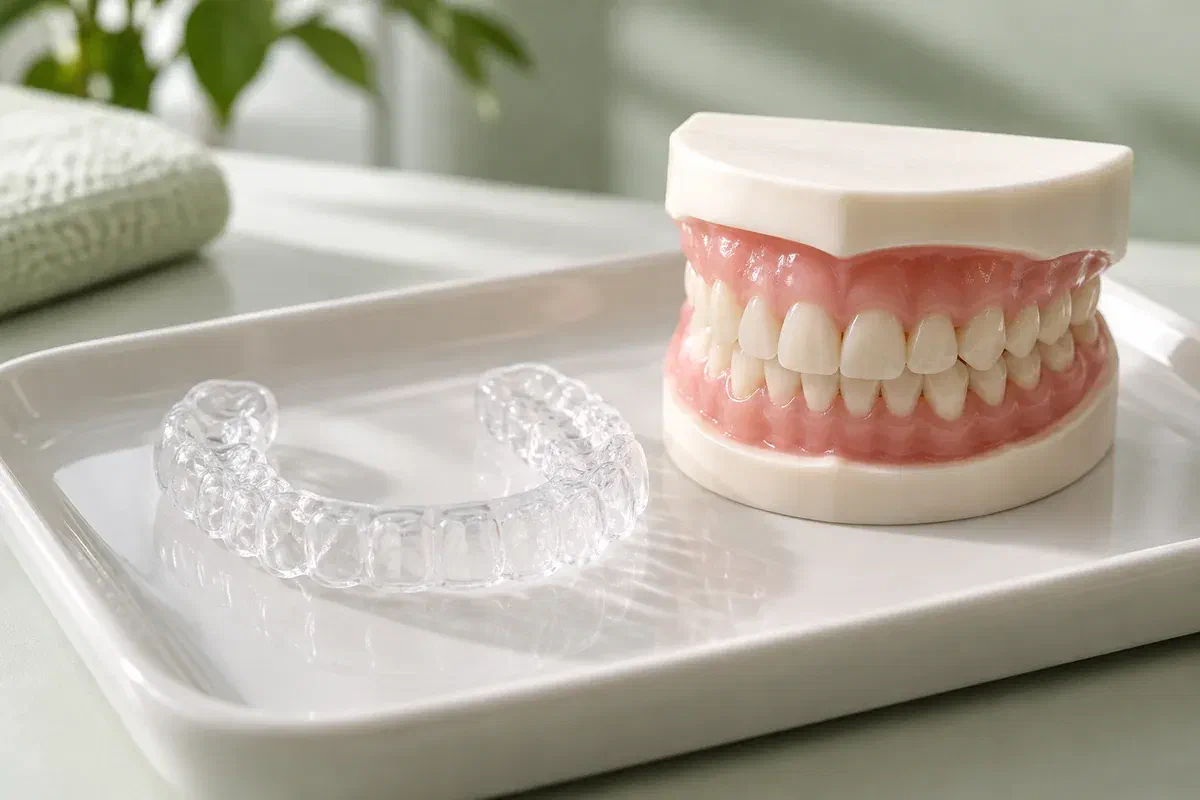
Illustrative clear dental night guard beside a teaching model with worn tooth edges
Signs of progression

Changes that suggest it is time to act

Monitoring works best when you know what to look for. Mention anything that seems different since your last visit, and bring any appliance you have, even if you are not certain you grind.

Edges continuing to shorten

If front teeth or canines look shorter than in photos from a few years back, wear may be progressing. The dentist compares them with earlier records and opposing teeth, weighing age, previous treatment, and acid before drawing conclusions.

New breakage after a quiet spell

A filling or edge that chips after years without trouble can signal a change in forces or habits. Describe the circumstances. Restoration design, remaining tooth, bite, and habits influence whether monitoring should give way to treatment.

Jaw symptoms that are new or different

Tired muscles on waking or noticing clenching for the first time can be relevant, though not specific to grinding. Report locking, limited opening, or facial pain that persists so it receives the appropriate assessment.

Prompt care is needed for a tooth that becomes suddenly painful, splits, or feels loose. A known history of wear does not make new symptoms part of the expected pattern.

Why monitoring is worthwhile

Measure first, then decide.

If grinding appears to be ongoing, a protective appliance may be suggested to keep the teeth from wearing directly on each other. That can slow further damage. It will not rebuild lost enamel and is not a cure for bruxism. Its purpose, fit, and review dates should be explained so you know how its effect will be judged.

Where wear seems stable, careful monitoring may be all that is needed for now. Daytime clenching can be addressed through awareness. Sleep or breathing concerns may lead to a recommendation to see your physician. Plans are based on measured change, not on assuming stress or one device explains everything.

Patient information: National Institute of Dental and Craniofacial Research — bruxism

A baseline worth comparing against

Detailed notes and photographs make future comparisons objective rather than guesswork. Ask which teeth will be tracked and how often they will be reviewed.

Protection timed to the evidence

If change is detected, the plan can move to protection or repair. Thinking about the forces a restoration will face helps any new work last.

Decisions guided by what matters to you

You may want to act early, or prefer to wait until change is clear. Telling us your preference helps set the threshold for treatment and avoids rebuilding teeth that are holding steady.

Setting up monitoring

Baseline, comparison, review, and response

No preparation is required. Older records, recent photos of your smile, notes on breakages, and any guard you own are all useful if you have them.

  1. Gather history and earlier records

    We ask what you were told before, whether grinding or clenching has been noticed, and when discomfort occurs. Medicines, sleep, and health history are reviewed. Should you suspect a prescription, continue it and raise the question with the prescriber.

  2. Document teeth in detail

    The dentist examines wear, cracks, restorations, and the bite, and may assess the jaw. Photographs or other records are taken to form a clear baseline for future comparison.

  3. Agree thresholds for action

    Discuss which changes would lead to a guard, habit work, or restorations. If an appliance is suggested now, ask about its aim, material, fee, and review plan. Clarify whether any repair is limited or part of a larger plan.

  4. Review at planned intervals

    Reviews compare your teeth against the baseline. Bring any guard so it can be examined too. If change appears or symptoms develop, the plan moves to the next step.

Between reviews

Simple habits that make monitoring meaningful

Monitoring only works when reviews have good information. Comfortable protection, a few habits you can keep up, and honest updates help the comparisons tell the truth.

Look after any appliance

Wear and clean your guard as instructed for its material, and store it in its case out of the heat. Bring it to each review. If it presses, cracks, or alters your bite, let us know rather than adjusting it.

Keep your jaw relaxed during the day

If awake clenching is part of your history, reminders to rest the jaw with the teeth apart may help. Ask what suits your symptoms. Avoid repeatedly testing your bite or grinding on purpose.

Note what you notice

Write down new chips, sensitivity that lingers, or changes in jaw comfort, with rough dates. Mention honestly how often any guard is worn. These notes make each review more useful.

Patient information: NIH News in Health — grinding and clenching

Depending on what the reviews show

Stay the course, step in locally, or plan more widely

Grinding wear does not always progress, and it rarely has one cause. Ask how each recommendation connects to measured change and what continuing to monitor would mean.

Stable wear, comfortable teeth

Continued monitoring

If reviews show little change, the plan may simply continue, with habit awareness and a guard where indicated. Ask what would need to change for the advice to shift.

A specific area that has worsened

Targeted restoration

A defined chip or worn surface can sometimes be rebuilt in composite or another material once assessed. Discuss how it will be protected and maintained, and why that area changed.

Progressive wear across many teeth

A wider wear plan

When change is widespread, records, phased treatment, and occasionally a specialist may be involved. Ask about conservative options and what any bite change would mean. Extensive crowns are not a standard cure for grinding.

Patient information: UK oral health guidance — causes and monitoring of tooth wear

Monitoring questions

Keeping an eye on wear over the years

Questions about progression, reviews, and guards often blend together. A useful answer separates what has changed in the teeth, what is causing any symptoms, and when an appliance or repair would help.

(905) 876-4488
How will I know if my tooth wear is getting worse?
Comparing your teeth against a detailed baseline is the most reliable way. Photographs, notes, and sometimes models show whether edges or surfaces have changed. Your own observations, like new chips or sensitivity, add to the picture.
How often should worn teeth be reviewed?
It depends on how much wear there is, whether it seems active, and your symptoms. Often reviews can coincide with routine check-ups. The dentist will suggest an interval and explain the reasoning.
Is it useful to take my own photos of my teeth?
It can be, especially if you use similar lighting and angles each time. Home photos do not replace a clinical examination, but they can help you notice changes and give context at your review.
What would make the dentist move from monitoring to treatment?
Signs such as clear progression, new breakage, sensitivity, or problems chewing can prompt a change. Your own priorities matter too. The thresholds should be discussed at the outset so you know what to expect.
Does grinding tend to come and go over the years?
It can vary. Some people grind more during certain periods and less at others, and habits may change with health, sleep, or circumstances. That is one reason reviews look for change rather than relying on a single assessment.
Can wear reviews be timed with my cleanings when coming from Caledon?
In many cases, yes. Lining up reviews with routine visits can reduce separate trips from Caledon. If something changes in between, call to ask whether an earlier look is needed.

Patient information: NIDCR — jaw disorders and treatment considerations · American Dental Association — obstructive sleep apnea

Caledon visits

Find out where your wear stands today.

Arrange a visit at our Bronte Street clinic to set a baseline for worn teeth, check new chips, or review clenching concerns. Bring any guard and older records. We will plan monitoring, protection, and repair around what the evidence shows.

Call promptly about a painful crack, facial swelling, or a jaw that will not open properly. Online requests are for routine visits.

Visit Milton Dental Clinic
Unit 1, 342 Bronte St. S, Milton, ON L9T 5B7
Get directions Clinic hours
Monday–Thursday
11am–7pm
Friday–Sunday
By appointment only

Areas we serve

  • Milton
  • Oakville
  • Mississauga
  • Georgetown
  • Halton Hills
  • Acton
  • Campbellville
  • Brampton
  • Burlington
  • Puslinch
  • Rockwood
  • Erin
  • Caledon
  • Etobicoke
  • Old Milton
  • Bronte Meadows
  • Timberlea
  • Dorset Park
  • Dempsey
  • Clarke
  • Beaty
  • Coates
  • Harrison
  • Scott
  • Willmott
  • Ford
  • Bowes
  • Cobden
  • Walker
  • Mountain View
  • Milton Heights
  • Hawthorne Village
  • Valley View
  • Fallingbrook
  • Nassagaweya
  • Trafalgar
  • Esquesing
  • Nelson
  • Brookville
  • Moffat
  • Glen Williams
  • Norval
  • Limehouse
  • Stewarttown
  • Ashgrove
  • Hornby
  • Silver Creek
  • Speyside
  • Scotch Block
  • North Oakville
  • River Oaks
  • Glen Abbey
  • West Oak Trails
  • Palermo
  • Bronte Creek
  • College Park
  • Joshua Creek
  • Uptown Core
  • Preserve
  • Iroquois Ridge
  • Lisgar
  • Meadowvale
  • Meadowvale Village
  • Churchill Meadows
  • Erin Mills
  • Central Erin Mills
  • Streetsville
  • East Credit
  • Creditview
  • Heartland
  • Sheridan
  • Mount Pleasant
  • Credit Valley
  • Huttonville
  • Churchville
  • Springbrook
  • Northwest Brampton
  • Bram West
  • Fletcher's Meadow
  • Fletcher's Creek South
  • Alton Village
  • Orchard
  • Millcroft
  • Headon Forest
  • Tansley
  • Brant Hills
  • Tyandaga
  • Kilbride
  • Lowville
  • Aberfoyle
  • Morriston
  • Arkell
  • Hillsburgh
  • Freelton
  • Carlisle
  • Waterdown
  • Flamborough
  • Mountsberg

How can we help?

Milton Dental Clinic

Have a question about your smile? Choose the option that works best for you.

For urgent dental concerns, please call.
Messages are reviewed during clinic hours.