

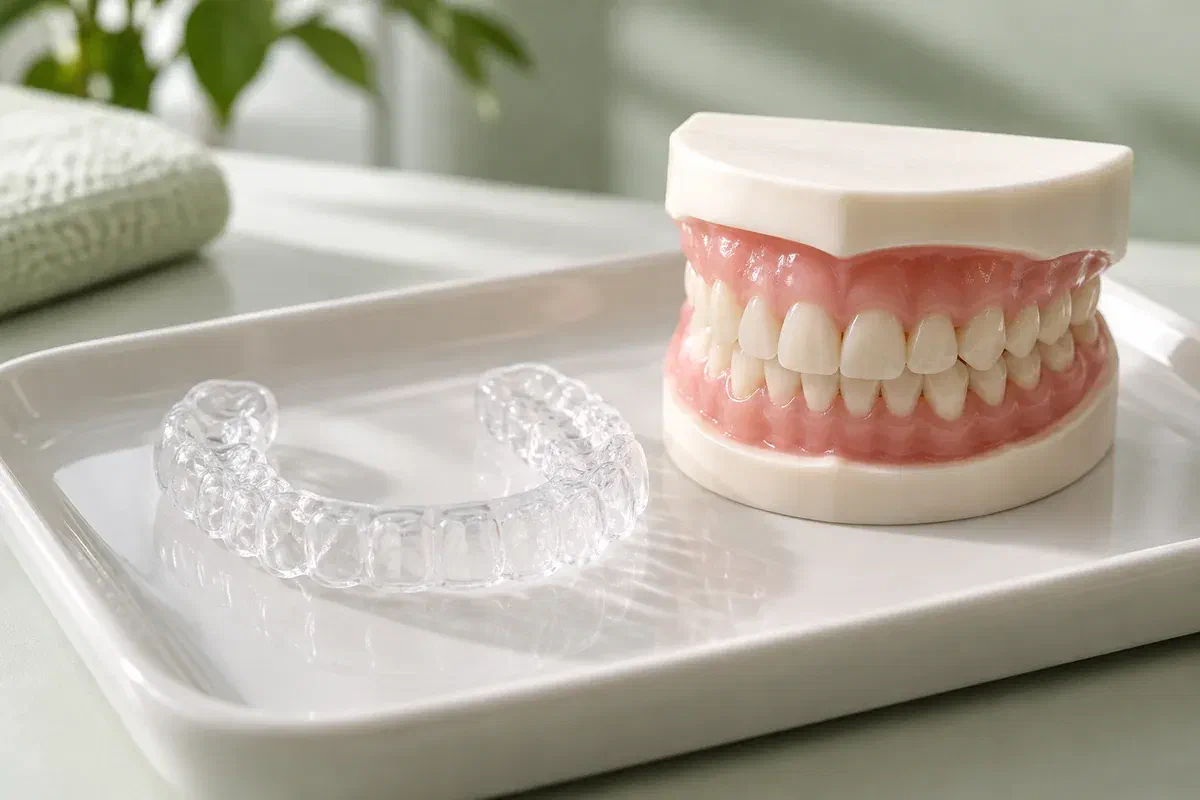
Illustrative consultation about a protective dental appliance and tooth wear
Restorative Dentistry

Tooth Wear from Grinding in Erin

You have been offered a big plan for worn teeth and want to understand it before saying yes. From Erin or Hillsburgh, we can look at the wear with you, explain conservative choices, and be clear about what any treatment can realistically achieve.

Before a big decision

Start with the least you need, not the most you could have.

Extensive treatment for worn teeth is sometimes the right answer, but it should never be the default. Grinding and clenching, known as bruxism, can wear enamel and break restorations, and the damage can look dramatic. Yet the appearance of wear cannot by itself prove when grinding happens, how often, or that it is the only thing at work. Big decisions deserve that uncertainty to be acknowledged.

A careful look considers acid exposure, ageing restorations, and how the teeth meet, as well as grinding. A sensitive tooth or aching jaw is assessed on its own. That broader view is what allows the plan to stay proportionate, rather than treating every worn surface as a reason to rebuild.

Erin lies north of our Milton clinic, and people from the village and from Hillsburgh sometimes come to us for a second opinion before committing to major work. We examine your teeth, review any plan you have been given, and explain the options from monitoring to restoration. We will also be honest that no crown, bite change, or guard can promise to end grinding.

Ask for a conservative opinion
Illustrative clear dental night guard beside a teaching model with worn tooth edges
Reasons to look closer

What brings people in for a second look

Some concerns are about the teeth; others are about the plan. Share both, bring any appliance you use, and mention anything that has changed, even if you are unsure whether you grind.

Worn teeth that still feel fine

Wear can look advanced while chewing stays comfortable. The dentist examines worn and opposing teeth, considering age, past work, and acid exposure, to judge whether the wear is progressing and whether it truly needs treatment now.

Repairs that have not held

Several failed fillings may prompt a suggestion of crowns. Before that, it helps to understand why each one failed. Design, remaining tooth, bite forces, and habits all affect which next step makes sense.

Jaw discomfort that has been linked to the bite

Jaw pain is sometimes attributed to how teeth meet, but it has many possible causes. Report locking, limited opening, or persistent facial pain so the right assessment is considered before any irreversible change to the bite.

Sudden pain, a crack, or a tooth that starts to move needs prompt attention regardless of any longer-term plan. Do not let a pending decision delay urgent care.

The case for starting small

Reversible steps first, when they are enough

A protective appliance is often one of the first measures discussed, partly because it is reversible. It keeps teeth from grinding directly together and may limit further damage. It cannot restore enamel and does not cure grinding, so its purpose, fit, and review arrangements should be explained before you decide.

Habit awareness may help with daytime clenching. Where sleep or breathing concerns appear in the history, a physician’s evaluation may be wise. Each recommendation should rest on findings, not on an assumption that stress or one standard treatment explains every worn mouth.

Patient information: National Institute of Dental and Craniofacial Research — bruxism

A record to judge progress

Documenting teeth now allows any further change to be measured. If wear turns out to be stable, that may affect whether extensive treatment is needed at all.

Protection before permanent work

Where restoration is necessary, ask how it will be protected under continued grinding. How a restoration is loaded matters as much as what it is made of.

Treatment matched to your concerns

If your teeth work well and appearance is not a worry, you may prefer to protect and watch. Saying so keeps the plan proportionate and avoids lengthening edges that do not need it.

How a second opinion works

Review the plan, examine the teeth, discuss alternatives

Bring any treatment plan, X-rays, or notes you have been given, along with any guard. A short account of breakages, jaw symptoms, and sleep is plenty.

  1. Go through what has been proposed

    We look at any plan you have received and ask about clenching, grinding at night, and when symptoms appear. Health history and medicines are reviewed. Keep taking prescribed medicines and discuss concerns with your prescriber.

  2. Examine independently

    The dentist assesses wear, cracks, restorations, and how teeth meet, and may check jaw movement and muscle tenderness. The findings are compared with any earlier records you bring, which can show whether the wear is actually advancing. Additional records are taken if they would change the advice.

  3. Lay out the range of options

    Choices may run from monitoring and a guard to localized repairs or broader treatment. Ask about the aim, reversibility, materials, fees, and review plan for each, and what happens if you wait.

  4. Decide at your own pace

    If you go ahead, appliances are fitted with instructions and restorations reviewed separately. Bring the guard to visits. New damage or symptoms may mean revisiting the plan.

Living with a conservative plan

Make the simple measures work

A conservative plan depends on follow-through. A comfortable guard, a manageable home routine, and honest reports at reviews are what let monitoring succeed.

Treat the guard as a tool

Wear it and clean it as instructed for its material, dry it, and keep it cased and away from heat. Bring it to every review. Tell us about pressure, cracks, or bite changes rather than altering it.

Keep teeth apart at rest

If you clench during the day, gentle reminders to relax the jaw may help. Ask for guidance that suits you. Grinding deliberately or testing your bite repeatedly is not helpful.

Report progress honestly

Note new chips, sensitivity, or changes in jaw comfort. Say how often the guard is really worn. That information decides whether monitoring is working or a step up is warranted.

Patient information: NIH News in Health — grinding and clenching

A ladder of options

From watchful protection to full rebuilding

Grinding does not always justify extensive dentistry, and wear often has several causes. For each step on the ladder, ask what supports it and what you would expect if you stayed on the step below.

Functional teeth, stable wear

Protect and monitor

Many worn teeth can be watched, with habit awareness and a guard if indicated. Ask why monitoring is reasonable and which changes would move you up a step.

A defined chip or surface

Repair what is damaged

A specific area may be rebuilt with composite or another restoration, often with little or no removal of healthy tooth. Discuss shape, upkeep, and why the original material or enamel was lost.

Extensive, progressive wear

Comprehensive rebuilding

Wide-ranging wear may need records, staged treatment, and specialist input. Ask about the least invasive versions and what bite changes involve. Full-mouth crowns are not a routine way to cure grinding.

Patient information: UK oral health guidance — causes and monitoring of tooth wear

Second-opinion questions

Questions to ask before major treatment

Questions about extensive plans, bite changes, and guards often overlap. A clear answer separates the state of your teeth, the source of symptoms, and what each option can actually deliver.

(905) 876-4488
I was told I need crowns on most of my teeth because I grind. Is that necessary?
Sometimes extensive restoration is appropriate, but grinding alone is not a reason. The dentist looks at how much tooth remains, whether wear is progressing, and your goals. Ask what would happen with a more conservative approach.
What is a bite adjustment, and can it be undone?
Adjusting the bite usually means reshaping tooth surfaces, which is permanent. It is not a routine treatment for grinding. Ask for the specific reason it is suggested, the alternatives, and the risks before agreeing.
What does conservative treatment mean for worn teeth?
It usually means starting with reversible or minimal steps, such as monitoring, a guard, or adding material without removing healthy tooth, and moving to more involved treatment only if the teeth show that it is needed. Conservative care is not the same as doing nothing; it still includes records, reviews, and a clear idea of what would change the plan.
Can worn edges be rebuilt without drilling?
In some situations composite can be added to worn surfaces with little or no removal of healthy tooth. Whether that is suitable depends on the tooth, the bite, and the forces involved. Added material still needs protecting if grinding continues, and it may need touching up over the years, so ask what maintenance to expect.
What should I ask before agreeing to extensive dental work?
Ask what the diagnosis is, what the treatment is meant to achieve, which alternatives exist, what is reversible, what maintenance will be needed, and what the fees are. It is reasonable to take time to decide.
Can a staged plan be spaced out to suit trips from Erin?
Often, yes. Where it is clinically sensible, steps can be grouped or spread to fit your schedule. Mention travel from Erin when you plan treatment so appointments can be arranged around it.

Patient information: NIDCR — jaw disorders and treatment considerations · American Dental Association — obstructive sleep apnea

Erin second opinions

Understand every option before you choose.

Visit our Bronte Street clinic with any plan you have been offered for worn teeth, repeated chips, or clenching. Bring your guard and records. We will explain conservative and restorative options and what each can realistically do.

Phone the clinic for a broken tooth that hurts, facial swelling, or a jaw that has locked. The online form is meant for consultations that can wait.

Visit Milton Dental Clinic
Unit 1, 342 Bronte St. S, Milton, ON L9T 5B7
Get directions Clinic hours
Monday–Thursday
11am–7pm
Friday–Sunday
By appointment only

Areas we serve

  • Milton
  • Oakville
  • Mississauga
  • Georgetown
  • Halton Hills
  • Acton
  • Campbellville
  • Brampton
  • Burlington
  • Puslinch
  • Rockwood
  • Erin
  • Caledon
  • Etobicoke
  • Old Milton
  • Bronte Meadows
  • Timberlea
  • Dorset Park
  • Dempsey
  • Clarke
  • Beaty
  • Coates
  • Harrison
  • Scott
  • Willmott
  • Ford
  • Bowes
  • Cobden
  • Walker
  • Mountain View
  • Milton Heights
  • Hawthorne Village
  • Valley View
  • Fallingbrook
  • Nassagaweya
  • Trafalgar
  • Esquesing
  • Nelson
  • Brookville
  • Moffat
  • Glen Williams
  • Norval
  • Limehouse
  • Stewarttown
  • Ashgrove
  • Hornby
  • Silver Creek
  • Speyside
  • Scotch Block
  • North Oakville
  • River Oaks
  • Glen Abbey
  • West Oak Trails
  • Palermo
  • Bronte Creek
  • College Park
  • Joshua Creek
  • Uptown Core
  • Preserve
  • Iroquois Ridge
  • Lisgar
  • Meadowvale
  • Meadowvale Village
  • Churchill Meadows
  • Erin Mills
  • Central Erin Mills
  • Streetsville
  • East Credit
  • Creditview
  • Heartland
  • Sheridan
  • Mount Pleasant
  • Credit Valley
  • Huttonville
  • Churchville
  • Springbrook
  • Northwest Brampton
  • Bram West
  • Fletcher's Meadow
  • Fletcher's Creek South
  • Alton Village
  • Orchard
  • Millcroft
  • Headon Forest
  • Tansley
  • Brant Hills
  • Tyandaga
  • Kilbride
  • Lowville
  • Aberfoyle
  • Morriston
  • Arkell
  • Hillsburgh
  • Freelton
  • Carlisle
  • Waterdown
  • Flamborough
  • Mountsberg

How can we help?

Milton Dental Clinic

Have a question about your smile? Choose the option that works best for you.

For urgent dental concerns, please call.
Messages are reviewed during clinic hours.