

Illustrative consultation about a protective dental appliance and tooth wear
Restorative Dentistry

Tooth Wear from Grinding in Oakville

Your partner says you grind in your sleep, and now you wonder what it is doing to your teeth. From Oakville, you can have the wear examined, the likely contributors explained, and protection or repair discussed without pressure.

The sound in the night

What is that grinding noise doing to your teeth?

Often the first person to know about sleep grinding is the one lying next to you. That scraping sound comes from teeth sliding against each other under muscle force, a pattern dentists call sleep bruxism. Over time it can flatten enamel, chip edges, and strain fillings. Still, hearing it now and then does not tell anyone how much damage has built up or whether it is the only thing wearing your teeth.

That is why the assessment starts with your mouth rather than the noise. Erosion from acidic drinks or reflux can soften enamel so that grinding removes it faster, and older restorations have their own weak points. A sore jaw or a sensitive tooth is checked as a separate question so nothing is blamed on grinding by default.

Our clinic is in Milton, north of Oakville, and many people make the trip because they want a clear explanation before committing to anything. We look at the wear, listen to what you and your partner have noticed, and outline protection, monitoring, or repair as each tooth warrants. No guard can promise silent nights, and we will not pretend otherwise.

Book a look at night-grinding wear
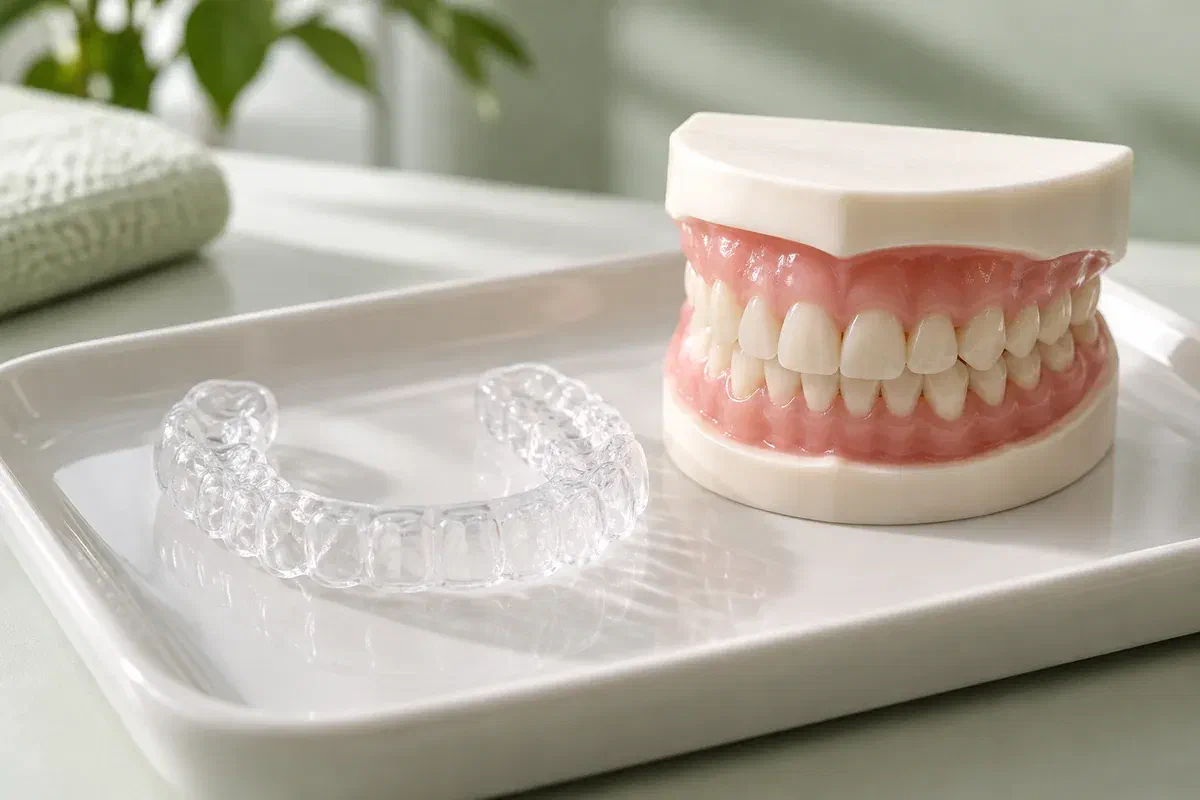
Illustrative clear dental night guard beside a teaching model with worn tooth edges
Clues beyond the noise

Has your bite started to feel different?

A one-off chip may mean little. Several small changes together are more telling. Describe what you have seen or felt and bring any appliance you already own, even if no one has confirmed that you grind.

Smooth, shiny flat spots

Worn areas on biting surfaces sometimes look polished or perfectly level where they once had shape. The dentist compares those spots with the opposing teeth and considers your age, previous dental work, and acid exposure before interpreting how significant the wear is.

Bonding that keeps chipping off

Cosmetic bonding or a filling on a front edge that breaks repeatedly is a signal to step back. Think about when each break occurred. The design of the repair, remaining tooth structure, bite forces, and habits all affect what should be tried next.

Headaches or tight cheeks on waking

Some people who grind at night wake with sore temples or tired chewing muscles. Those symptoms have many possible causes, so they are not proof of bruxism. Tell us about locking, difficulty opening, or ongoing facial pain so the right assessment can follow.

Arrange a prompt visit for a tooth that suddenly hurts, has cracked, or feels loose. A known grinding habit does not mean every new symptom can wait.

Why a plan helps

Protection that is explained, not oversold

When night grinding is likely, a custom appliance may be recommended to keep the teeth apart while you sleep. It can take some of the force that would otherwise wear enamel or break restorations. It will not regrow lost tooth structure or guarantee that grinding stops, and its role, fit, and review schedule should be clear from the start.

Daytime clenching, if you have it too, is approached through awareness and changes to how your jaw rests. Where loud snoring, breathing pauses, or heavy daytime tiredness are part of the story, a medical or sleep evaluation may be suggested. The plan follows the findings rather than assuming stress or one device explains everything.

Patient information: National Institute of Dental and Craniofacial Research — bruxism

A recorded starting point

Documenting how your teeth and fillings look today gives future visits something to compare. Ask what will be checked and how, especially if the wear is subtle or you cannot say when it began.

Protecting before rebuilding

If any tooth needs repair, talk about how that surface will be shielded if night grinding continues. The surroundings of a restoration count as much as the material it is made from.

Goals that match yours

Some people care most about how their teeth look; others want to chew comfortably or ease sensitivity. Telling us your priority focuses the plan and avoids assuming every flattened edge has to be built up.

From first visit to follow-up

We listen, examine, explain, then review.

You do not need to record your sleep before coming in. A few details about what your partner hears, what has chipped, when your jaw aches, and any guard you use are enough to shape the first conversation.

  1. Hear the whole history

    We ask what has been noticed at night, whether you clench during the day, and when discomfort shows up. Health conditions, sleep, and medicines are reviewed. If you suspect a prescription plays a part, continue it and raise the question with whoever prescribed it.

  2. Check teeth, restorations, and jaw

    The dentist examines worn surfaces, cracks, existing work, and how your teeth meet. Jaw muscles and movement may be assessed. Imaging or extra records are added when they answer a particular question rather than replacing a careful history and examination.

  3. Choose what each measure is for

    Monitoring, habit awareness, a guard, or restorative work may be on the table. Ask what a proposed appliance should achieve, what it is made from, its fee, and when it will be reviewed. For repairs, check whether they are local or part of wider planning.

  4. Fit it, then revisit

    A guard is fitted and adjusted, with instructions on wear and cleaning. Restorations have separate follow-up. Bring the appliance to future visits so it can be examined with your teeth. New chips or lasting symptoms may mean the plan needs rethinking.

After the fitting

Make the guard part of bedtime, and tell us how it goes

A guard protects only on the nights it is worn. One that feels comfortable, simple care steps, and honest feedback at reviews go much further than an appliance abandoned after a week.

Wear and clean it as shown

Follow the instructions for your appliance’s material, rinse and clean it gently, and store it in its case. Keep it away from heat and bring it to appointments. If it presses, cracks, or your bite feels altered, let us know instead of adjusting it yourself.

Spot clenching during the day

If you clench while awake, small reminders to relax the jaw and keep the teeth slightly apart can help you notice the habit. Ask for advice tailored to your symptoms. Avoid repeatedly checking your bite or grinding on purpose to test it.

Track what shifts

Note new chips, sensitivity that does not ease, or a change in when your jaw feels sore. Be open about how often the guard actually goes in and what makes that hard. That helps tell a simple fit problem apart from a plan that needs revisiting.

Patient information: NIH News in Health — grinding and clenching

Which route fits

Protect, patch, or plan the whole mouth

Night grinding does not always call for extensive dentistry, and wear rarely has a single source. Ask what evidence supports each recommendation and what monitoring alone would likely mean.

Teeth comfortable and working

Monitoring plus a guard if indicated

Some worn teeth need no rebuilding for now. The approach may combine habit awareness, an appliance where appropriate, and reviews to watch for change. Ask why monitoring suits you and what would make the dentist suggest something else.

One chip or worn edge

Fixing a defined spot

Once assessed, a suitable area may be rebuilt with composite or another material. Talk about the shape and upkeep it will need if grinding continues. The repair plan should consider why the original tooth or filling broke down.

Extensive or complex changes

Assessing wear across the mouth

Wear on many teeth may call for records, staged care, and at times a specialist. Ask about conservative choices and how any bite change would affect you. Rows of crowns or irreversible changes should not be offered as the standard answer to grinding.

Patient information: UK oral health guidance — causes and monitoring of tooth wear

Night grinding questions

Answers for light sleepers and their partners

Questions about noise, guards, and morning aches often run together. Clear answers separate what has happened to the teeth, why symptoms occur, and what an appliance can realistically do.

(905) 876-4488
If my partner hears grinding, is my enamel being damaged?
Possibly, but the sound alone cannot say how much. Grinding episodes vary in force and frequency, and some people grind loudly with modest wear while others wear teeth quietly. An examination shows what has actually changed and whether other causes are contributing.
Are hard or soft night guards better?
It depends on your teeth, your symptoms, and what the appliance is meant to do. Different materials have different feel, durability, and care needs. Ask the dentist why a particular type is recommended for you and how its effect will be reviewed.
Will a new guard feel strange at first?
Many people notice extra saliva or an odd sensation for the first few nights. That often settles as you get used to it. Pain, pressure on specific teeth, or a bite that feels wrong in the morning is different and should be reported so the fit can be checked.
Can grinding be linked to how well I breathe at night?
Grinding and sleep-related breathing problems can occur in the same person. Loud snoring, pauses in breathing, or heavy daytime sleepiness are worth mentioning, since they may need a physician’s evaluation. A standard guard is not a treatment for a breathing disorder.
Can grinding loosen or crack a healthy tooth?
Heavy forces can contribute to cracks or tenderness, particularly in teeth that already have large fillings. Looseness has other causes too, including gum disease. Any tooth that moves, hurts on biting, or feels different should be examined promptly.
How can I keep visits manageable from Oakville?
Mention your schedule when booking so appointments can be planned sensibly, and bring any guard and old records to the first visit. Coming from Oakville, it also helps to call ahead if symptoms change, so we can advise whether to come in or seek care nearer home.

Patient information: NIDCR — jaw disorders and treatment considerations · American Dental Association — obstructive sleep apnea

Coming from Oakville

Turn a worried night into a clear plan.

Come and see us on Bronte Street if your teeth look flatter, bonding keeps chipping, or a partner has noticed grinding. Bring your guard if you have one. We will talk through protection, monitoring, and whether any tooth needs restoring.

Phone us for a cracked tooth that hurts, swelling, or a jaw that suddenly will not open properly. Online requests suit non-urgent visits.

Visit Milton Dental Clinic
Unit 1, 342 Bronte St. S, Milton, ON L9T 5B7
Get directions Clinic hours
Monday–Thursday
11am–7pm
Friday–Sunday
By appointment only

Areas we serve

  • Milton
  • Oakville
  • Mississauga
  • Georgetown
  • Halton Hills
  • Acton
  • Campbellville
  • Brampton
  • Burlington
  • Puslinch
  • Rockwood
  • Erin
  • Caledon
  • Etobicoke
  • Old Milton
  • Bronte Meadows
  • Timberlea
  • Dorset Park
  • Dempsey
  • Clarke
  • Beaty
  • Coates
  • Harrison
  • Scott
  • Willmott
  • Ford
  • Bowes
  • Cobden
  • Walker
  • Mountain View
  • Milton Heights
  • Hawthorne Village
  • Valley View
  • Fallingbrook
  • Nassagaweya
  • Trafalgar
  • Esquesing
  • Nelson
  • Brookville
  • Moffat
  • Glen Williams
  • Norval
  • Limehouse
  • Stewarttown
  • Ashgrove
  • Hornby
  • Silver Creek
  • Speyside
  • Scotch Block
  • North Oakville
  • River Oaks
  • Glen Abbey
  • West Oak Trails
  • Palermo
  • Bronte Creek
  • College Park
  • Joshua Creek
  • Uptown Core
  • Preserve
  • Iroquois Ridge
  • Lisgar
  • Meadowvale
  • Meadowvale Village
  • Churchill Meadows
  • Erin Mills
  • Central Erin Mills
  • Streetsville
  • East Credit
  • Creditview
  • Heartland
  • Sheridan
  • Mount Pleasant
  • Credit Valley
  • Huttonville
  • Churchville
  • Springbrook
  • Northwest Brampton
  • Bram West
  • Fletcher's Meadow
  • Fletcher's Creek South
  • Alton Village
  • Orchard
  • Millcroft
  • Headon Forest
  • Tansley
  • Brant Hills
  • Tyandaga
  • Kilbride
  • Lowville
  • Aberfoyle
  • Morriston
  • Arkell
  • Hillsburgh
  • Freelton
  • Carlisle
  • Waterdown
  • Flamborough
  • Mountsberg

How can we help?

Milton Dental Clinic

Have a question about your smile? Choose the option that works best for you.

For urgent dental concerns, please call.
Messages are reviewed during clinic hours.