

Illustrative consultation about a protective dental appliance and tooth wear
Restorative Dentistry

Tooth Wear from Grinding in Old Milton

Teeth that have served you for decades carry a history, and some of it may come from clenching. Close to Old Milton, we read that history carefully, protect what is still strong, and repair only the areas that genuinely call for it.

Teeth with a long story

Years of wear, read one tooth at a time

Some tooth wear is simply part of a long life of chewing. Grinding and clenching, often grouped under the term bruxism, can speed that process by pressing teeth together far harder and longer than eating does. Many people never notice the habit themselves; a spouse mentions the noise, or a dentist points out flattened cusps. Even then, the look of the wear cannot by itself show when or how often grinding happens.

Older mouths often hold a mix of natural enamel, aged fillings, and perhaps a crown or two. Each responds to force in its own way, and acid, dry mouth from certain medicines, or past treatment can all leave marks that resemble grinding. A sore jaw or a cracked old filling deserves its own explanation instead of an automatic one.

Our Bronte Street practice is close to Milton’s historic downtown, and plenty of people from its older homes and established streets come to us with teeth that have changed gradually. We will examine what is there, compare it with any records you have, and talk plainly about protection, monitoring, and repair. No guard or restoration can promise to switch off grinding for good.

Ask about long-standing tooth wear
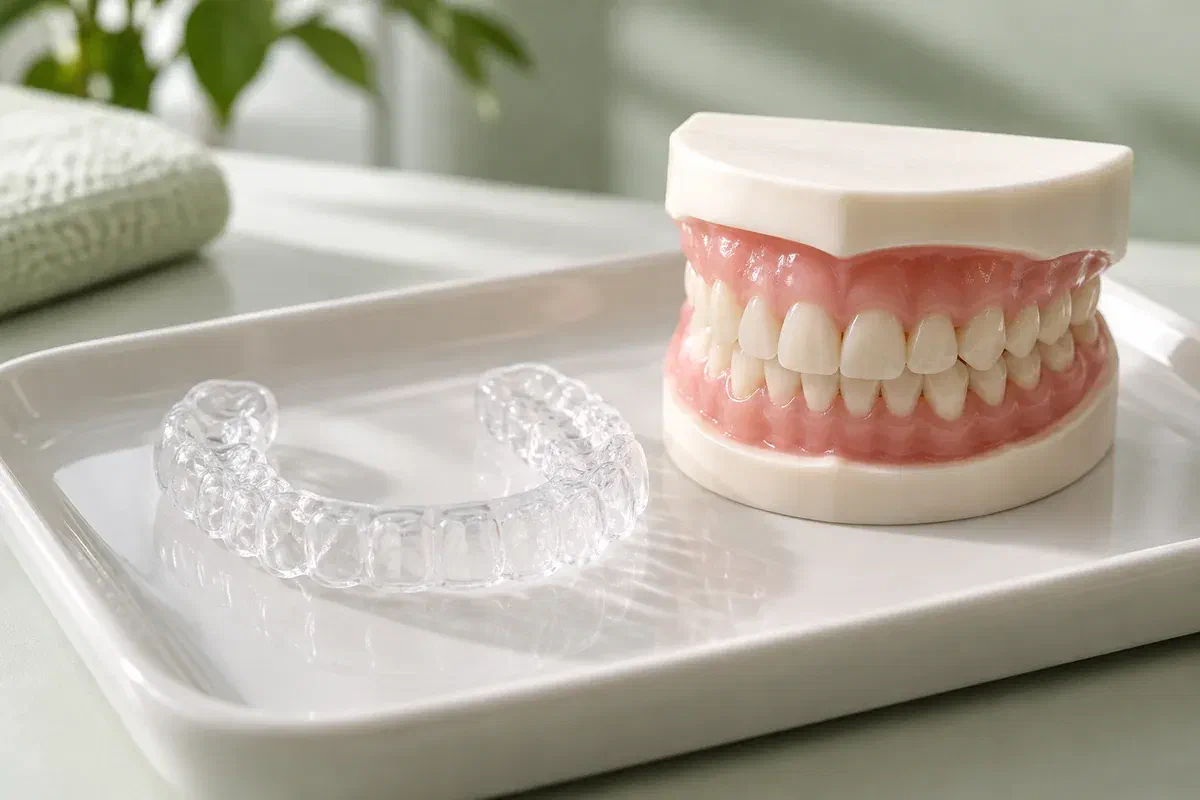
Illustrative clear dental night guard beside a teaching model with worn tooth edges
Changes that creep up

Is your smile shorter than it used to be?

Gradual wear is easy to miss because you see your teeth every day. Mention anything that has shifted over the years, and bring an old night guard if you still have one, even if you are not certain you grind.

Front teeth look even and flat

Family photos from twenty years ago can reveal how much edge length has changed. The dentist compares worn teeth with the ones they bite against and considers age, earlier dental work, and other contributors before drawing conclusions about how much wear is unusual.

Old fillings crack or lift at the edges

A long-serving restoration that finally fractures may simply be worn out, or it may be under extra load. Tell us when each break happened. Tooth structure left, the type of material, your bite, and habits all shape whether repair or replacement makes sense.

Morning stiffness around the jaw

Tired chewing muscles or a sense of clenching through the day can point toward bruxism, but similar feelings arise from other conditions. Let us know about clicking with pain, limited opening, or facial aching that persists so it can be evaluated properly.

Sudden pain, a split tooth, or one that has started to move needs prompt attention. A long history of grinding does not make new symptoms routine.

The value of a measured approach

Slow the damage. Skip the overpromising.

An appliance worn at night may be recommended to keep upper and lower teeth from grinding on one another. It can lessen further damage to the surfaces it covers. It cannot replace enamel that has gone, and it is not a cure. We will explain why it is suggested, how it ought to fit, and when it should be reviewed.

Clenching while awake calls for a different conversation about jaw posture and resting habits. Where there are sleep or breathing concerns, a medical assessment may be advised. Stress is a common suspect, though not every case, and wear is not treated the same way in everyone just because it looks similar.

Patient information: National Institute of Dental and Craniofacial Research — bruxism

A baseline for the years ahead

Recording your teeth and restorations now makes later changes easier to measure. Ask which areas will be tracked, particularly when the wear is slight or its timing is unclear.

Thinking about load before major repairs

If older work needs replacing, talk about how new surfaces will hold up if grinding continues. Shielding a restoration from heavy forces is as important as the material chosen.

Comfort and function come first

For some people the concern is appearance; for others it is chewing, sensitivity, or the odd feel of flattened teeth meeting. Sharing your priority keeps the plan relevant and avoids lengthening edges that are serving you well.

What happens at the assessment

History first, then a careful examination

You do not need to record every symptom in advance. A short account of what has broken, when your jaw feels sore, how you sleep, and any guards you have worn is plenty to begin.

  1. Go over habits, symptoms, and medicines

    We ask about clenching, anything a partner has heard at night, and the timing of discomfort. Your health history and medications are reviewed, as some may be relevant. Please do not stop a prescribed medicine on your own; discuss any concern with the prescriber.

  2. Look closely at teeth, fillings, and jaw

    The dentist examines worn surfaces, cracks, older restorations, and how your bite comes together. Jaw muscles and range of movement may be checked as well. X-rays or other records are added when they help answer a specific question.

  3. Settle on the purpose of each step

    Monitoring, habit awareness, a protective appliance, or restorations may be discussed. Ask what a proposed guard is meant to do, what it is made of, the fee, and how it will be reviewed. For repairs, clarify whether they are limited or part of a staged plan.

  4. Fit, check, and refine

    A guard is fitted, adjusted if needed, and explained. Restorations have their own follow-up. Bring the appliance whenever you visit so we can examine it alongside your teeth. Continuing discomfort or new chips suggest the plan may need to change.

Day to day

Keep the guard in use and keep us informed.

Protection is an ongoing arrangement, not a single appointment. An appliance that feels right, a routine you can manage, and instructions you understand matter more than a device that sits in a drawer.

Look after your appliance

Wear it and clean it as directed for its material. Store it dry in its case, away from heat, and bring it to check-ups. Report tightness, cracks, or a change in your bite, and avoid filing or adjusting it at home.

Notice when your teeth touch

If you clench during the day, gentle reminders to let your jaw rest with the teeth apart may raise awareness. Ask for advice that fits your symptoms. There is no need to keep checking your bite or grinding deliberately to test the habit.

Mention changes, even small ones

Make a note of new chips, sensitivity that lingers, or jaw discomfort that shifts in timing. Tell us honestly how often the guard is worn and what gets in the way. That information shows whether a fit adjustment or a broader rethink is needed.

Patient information: NIH News in Health — grinding and clenching

Three possible directions

From watchful waiting to a fuller rebuild

Grinding does not automatically mean extensive treatment, and wear seldom has just one cause. Ask what supports each suggestion and what would likely happen if an area were monitored rather than treated.

When teeth still function well

Watching, with a guard if needed

Worn teeth that are comfortable and working may not need rebuilding yet. The plan might centre on habits, an appliance where it is indicated, and regular reviews. Ask why monitoring was chosen and what changes would alter that.

A chipped edge or failing filling

Restoring one problem area

After the tooth is assessed, composite or another restoration may repair a defined spot. Discuss its shape and upkeep, especially if grinding continues. The repair should take into account why the original material or enamel gave way.

Widespread or complicated wear

A full wear evaluation

When many teeth are involved, records, phased treatment, and sometimes a specialist referral may help. Ask about the most conservative choices and the effect of any bite changes. Multiple crowns or irreversible work should not be pitched as a standard cure.

Patient information: UK oral health guidance — causes and monitoring of tooth wear

Old Milton questions

What long-time grinders often want to know

Questions about guards, worn fillings, and jaw aches frequently overlap. A good answer keeps the state of your teeth, the cause of any symptoms, and the role of an appliance in separate boxes.

(905) 876-4488
Is some tooth wear just normal with age?
A degree of wear does accumulate over a lifetime of chewing. The question is whether the amount and pattern fit your age and history. The dentist looks at which teeth are affected and how, and considers grinding, acid, and earlier treatment before deciding whether anything needs attention.
My old night guard has holes worn through it. Should I replace it?
Bring it in. Worn-through areas mean those spots are no longer protected, and an old guard may no longer fit teeth that have since been treated. The dentist can examine it and advise whether a replacement or a different approach makes sense.
Can I wear a night guard over crowns and older fillings?
Usually an appliance is designed around the teeth and restorations you have. It should be checked after any new crown or filling, because the fit may change. If it feels tight or rocks after dental work, stop forcing it and arrange an adjustment.
Could my medicines have anything to do with clenching?
Some medications have been associated with grinding or with dry mouth, which can affect wear. Mention everything you take at the assessment. Never stop or change a prescription yourself; the dentist may suggest you discuss the concern with your physician.
Why do my worn back teeth feel sensitive to cold?
As enamel thins, the more sensitive layer underneath can become exposed. Sensitivity also has other causes, such as gum recession or a crack. The tooth needs to be examined so the explanation, and any treatment, is based on what is actually there.
Do old teeth lose their chance of being repaired?
Age alone does not decide it. What matters is how much healthy tooth remains, the bite, gum health, and what you want from treatment. Some worn areas are best monitored, while others can be restored. The options are discussed in light of your teeth, not a birthday.

Patient information: NIDCR — jaw disorders and treatment considerations · American Dental Association — obstructive sleep apnea

Near Milton’s historic downtown

Bring decades of wear. We will sort through it with you.

Book a visit at our Bronte Street practice for teeth that have grown shorter, fillings that keep failing, or a jaw that aches on waking. Bring any guard you have used. We will talk through protection, monitoring, and which teeth, if any, need repair.

Call about a cracked tooth that hurts, swelling, or a jaw that suddenly locks. Online requests are best for non-urgent bookings.

Visit Milton Dental Clinic
Unit 1, 342 Bronte St. S, Milton, ON L9T 5B7
Get directions Clinic hours
Monday–Thursday
11am–7pm
Friday–Sunday
By appointment only

Areas we serve

  • Milton
  • Oakville
  • Mississauga
  • Georgetown
  • Halton Hills
  • Acton
  • Campbellville
  • Brampton
  • Burlington
  • Puslinch
  • Rockwood
  • Erin
  • Caledon
  • Etobicoke
  • Old Milton
  • Bronte Meadows
  • Timberlea
  • Dorset Park
  • Dempsey
  • Clarke
  • Beaty
  • Coates
  • Harrison
  • Scott
  • Willmott
  • Ford
  • Bowes
  • Cobden
  • Walker
  • Mountain View
  • Milton Heights
  • Hawthorne Village
  • Valley View
  • Fallingbrook
  • Nassagaweya
  • Trafalgar
  • Esquesing
  • Nelson
  • Brookville
  • Moffat
  • Glen Williams
  • Norval
  • Limehouse
  • Stewarttown
  • Ashgrove
  • Hornby
  • Silver Creek
  • Speyside
  • Scotch Block
  • North Oakville
  • River Oaks
  • Glen Abbey
  • West Oak Trails
  • Palermo
  • Bronte Creek
  • College Park
  • Joshua Creek
  • Uptown Core
  • Preserve
  • Iroquois Ridge
  • Lisgar
  • Meadowvale
  • Meadowvale Village
  • Churchill Meadows
  • Erin Mills
  • Central Erin Mills
  • Streetsville
  • East Credit
  • Creditview
  • Heartland
  • Sheridan
  • Mount Pleasant
  • Credit Valley
  • Huttonville
  • Churchville
  • Springbrook
  • Northwest Brampton
  • Bram West
  • Fletcher's Meadow
  • Fletcher's Creek South
  • Alton Village
  • Orchard
  • Millcroft
  • Headon Forest
  • Tansley
  • Brant Hills
  • Tyandaga
  • Kilbride
  • Lowville
  • Aberfoyle
  • Morriston
  • Arkell
  • Hillsburgh
  • Freelton
  • Carlisle
  • Waterdown
  • Flamborough
  • Mountsberg

How can we help?

Milton Dental Clinic

Have a question about your smile? Choose the option that works best for you.

For urgent dental concerns, please call.
Messages are reviewed during clinic hours.