

Illustrative consultation about restoring the shape and function of worn teeth
Restorative Dentistry

Worn Tooth Restoration

When wear changes how a tooth looks or works, the repair needs a reason and a plan. Explore worn tooth restoration in Milton, with attention to remaining structure, biting forces, and the care that follows.

A closer look at worn tooth restoration

Rebuild with a purpose. Preserve what you can.

Worn tooth restoration rebuilds selected areas of lost tooth structure when there is a clinical reason to do so. That reason might involve sensitivity, a weakened surface, difficulty using the teeth, or a change in appearance that matters to you. Wear itself is not an automatic instruction to crown every tooth. The extent, pattern, and activity of the problem need to be understood first.

Teeth can wear through a combination of acid exposure, contact with other teeth, and mechanical habits. A restoration replaces an area of missing structure; it does not remove every contributing cause. At Milton Dental Clinic, we discuss the conditions around a proposed repair so prevention and protection are considered alongside the new shape.

You may be concerned about one shortened edge or a broader change across your smile. Tell us what feels different when you eat and what you would like to understand about the appearance. We can assess the remaining teeth, explain the available approaches, and distinguish a limited repair from treatment that needs more extensive records or specialist planning.

Discuss restoring a worn tooth
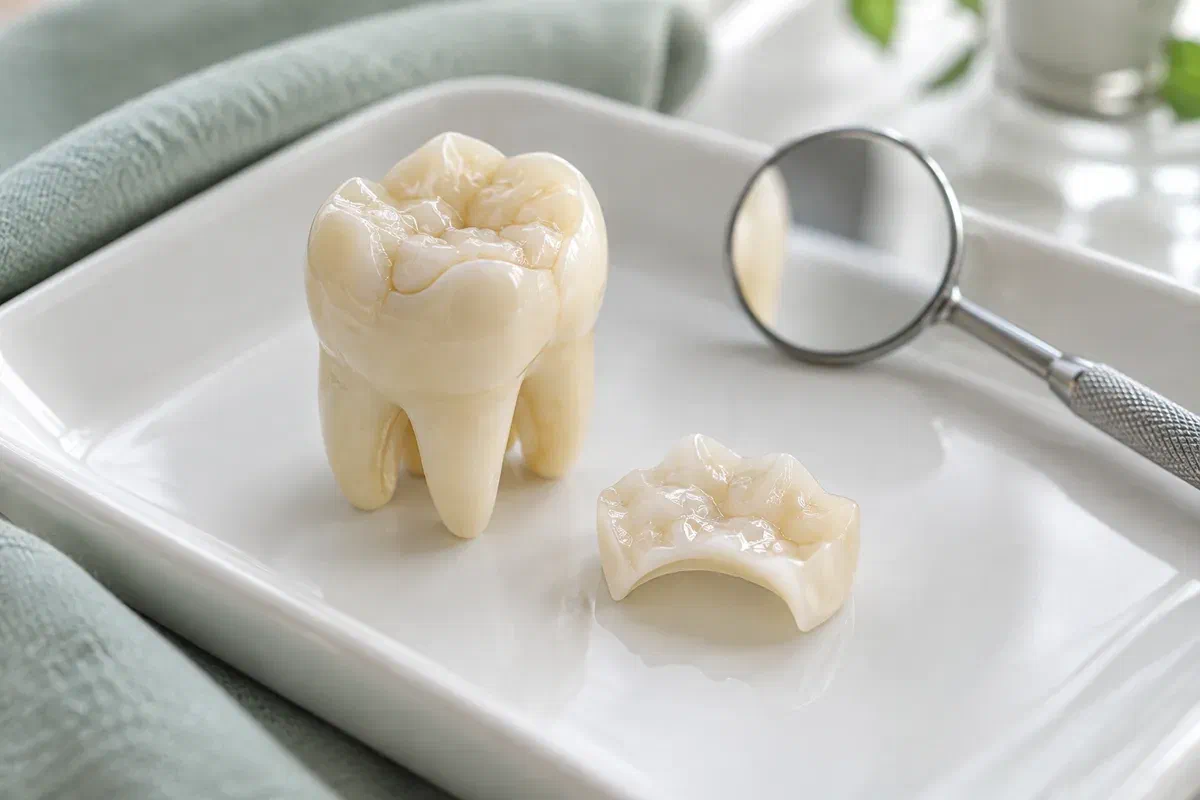
Illustrative molar teaching model and a separate partial-coverage restoration
When rebuilding may be considered

The effect of wear matters as much as its appearance.

An assessment helps identify which areas need attention now and which may be monitored. Bring any previous photographs or treatment information that could help explain how the teeth have changed.

A surface has become uncomfortable

An exposed or damaged area may be sensitive, but sensitivity also has other causes. Describe its triggers and duration. Before recommending a repair, the dentist checks whether the symptom relates to wear or another condition requiring different care.

The tooth shape affects function

A shortened edge or altered chewing surface may change the way a tooth is used. Explain the foods or activities that have become difficult. The opposing teeth and available space influence whether rebuilding a particular area is appropriate.

Several repairs are being discussed

Widespread wear can involve decisions about more than one tooth at a time. Ask how the proposed restorations relate to each other, what will happen to the bite, and whether the plan can be staged. A larger plan deserves a clear explanation.

A worn tooth that suddenly hurts on biting, cracks, or develops swelling needs assessment. New symptoms should not be dismissed as an inevitable part of longstanding wear.

What a considered restoration can offer

Aim for a useful repair, not a uniform set of teeth.

Restoration may improve the shape of a worn surface or protect an area that has a specific need. In suitable situations, additive bonded treatment can be considered before more extensive preparation. The choice depends on the tooth and the wider plan; a conservative approach still requires careful diagnosis and realistic expectations about maintenance.

Ask what success would mean for your own treatment. It might mean a more comfortable biting edge, a repair that restores a particular contour, or progress through a staged rehabilitation. The answer should include the likely limitations and ongoing care, rather than implying that restored teeth will remain unchanged indefinitely.

Patient information: Leeds Teaching Hospitals — restorative dentistry services

Preservation where feasible

The amount of healthy structure remaining matters when comparing treatments. Ask how much preparation each option requires and why. A larger restoration is not automatically more suitable simply because it covers more of the tooth.

An explained shape and contact

A repair needs to work with neighbouring and opposing teeth. Discuss how the proposed contour affects chewing and cleaning, and whether a trial stage or further records are appropriate before a substantial change.

A maintenance plan from the start

Repairs may need polishing, adjustment, repair, or replacement over time. Knowing how reviews will be arranged and what to report helps you evaluate the commitment as well as the initial treatment.

Planning the restoration

Understand the design before changing the tooth.

There is no single appointment sequence for every worn tooth. A small repair and a multi-tooth plan can require different records, visits, and decisions. We explain the sequence relevant to the findings.

  1. Assess the wear and its contributors

    We review symptoms, changes over time, medical history, and relevant habits. Teeth, existing restorations, and the bite are examined. Records or imaging may be recommended where they help clarify the condition of a tooth or the scope of planning.

  2. Compare reasonable approaches

    Discuss monitoring, preventive measures, and suitable restorative options. Ask which areas would be treated and what benefit is expected from each repair. Before proceeding, review the estimated fees, treatment stages, and any circumstances that could change the plan.

  3. Restore to the agreed design

    Depending on the approach, material may be bonded directly or a restoration may be made separately and fitted later. Local anaesthetic and moisture control are used as appropriate. Larger changes may be staged so their function and your experience can be evaluated.

  4. Check function and arrange review

    The restoration and bite are assessed, and you receive instructions for the treated area. Follow-up considers comfort, appearance, and function. If an appliance is part of your care, ask whether the new tooth shape requires the appliance to be checked or remade.

After the worn area is rebuilt

The surrounding habits still deserve attention.

A restoration is one part of managing wear. Continue the advice developed around acid exposure, grinding, cleaning, or other identified factors, and tell the team when a recommendation is difficult to follow.

Allow for treatment-specific instructions

Follow guidance about eating and any temporary stage of the restoration. If local anaesthetic was used, wait for sensation to return before chewing. Ask how the bite should feel and when an unfamiliar sensation should be reported.

Keep repaired surfaces clean

Brush with fluoride toothpaste and clean between teeth using a method suited to the contacts and restorations. A repaired tooth can still develop decay or gum problems. Ask for a demonstration if the new contour makes an area harder to reach.

Report damage before it becomes a pattern

Contact the clinic about a chip, rough edge, or change in comfort. Bring any broken fragment and an existing guard if relevant. Repeated breakage may require a fresh assessment of the design or loading rather than repeating the same repair.

Patient information: UK oral health guidance — monitoring and managing tooth wear

Choosing the extent of the repair

Match the restoration to the remaining tooth.

Several approaches may be reasonable, and some worn areas do not need restoring. Compare the tooth preparation, expected benefit, maintenance, and cost before deciding which option fits the situation.

When rebuilding is not currently indicated

Monitor and protect

Stable wear without a clear restorative need may be reviewed while relevant risks are addressed. Ask how change will be monitored and what would prompt treatment. A plan to observe should include an explanation and follow-up rather than leaving you uncertain.

For suitable areas that can be rebuilt

Bonded additive restoration

Composite may be used to add or restore selected contours when the remaining structure and bite support that approach. Discuss the possibility of future repair and the limits of the material. Its suitability should be judged for the particular surface being restored.

When structural needs require another design

Partial or full coverage

An onlay, crown, or coordinated combination of restorations may be discussed for more extensive damage. These choices involve different preparation and maintenance considerations. Ask why coverage is indicated and whether a less extensive alternative could meet the same clinical need.

Questions before rebuilding worn teeth

Make space for the details of the plan.

Ask about the purpose of treatment, the appearance being proposed, and what future maintenance may involve. Those questions are useful whether the recommendation concerns one small edge or several teeth.

(905) 876-4488
Can worn teeth be rebuilt without putting crowns on all of them?
In suitable cases, additive bonded repairs or other limited restorations may be considered. Some areas may need no restoration at all. The amount and location of remaining structure, the bite, and the overall goals determine the choices. Ask which findings make a crown necessary for any particular tooth.
Will a worn tooth restoration bring back my exact original tooth shape?
That cannot be guaranteed. The proposed shape needs to work with your current teeth and bite, and the original outline may not be fully documented. Discuss the appearance and function you are hoping for. Where a substantial change is planned, ask how it will be evaluated before definitive treatment.
Why address acid exposure before restoring an eroded tooth?
A repair does not remove the source of ongoing acid exposure. Managing relevant causes helps protect the remaining teeth and the environment around the restoration. Preventive and restorative care may overlap, but both need a place in the plan rather than treating the new material as a complete solution.
Can a night guard I already own be used after worn teeth are rebuilt?
Have its fit checked. Changing the shape of a tooth can change how an appliance seats and where it contacts. Do not force the old guard into place or alter it yourself. Bring it to the treatment visit so the dentist can discuss adjustment or replacement if required.
Does a small chip in a wear restoration mean the whole restoration has failed?
Not necessarily. The location and extent of the chip, the condition of the surrounding material, and the cause of damage guide the decision. A limited repair may be possible in some cases. Repeated chipping deserves reassessment rather than assuming every episode can be managed in the same way.
How can I compare estimates for a multi-tooth wear restoration plan?
Ask which teeth and surfaces are included, what materials are proposed, and whether assessment records, temporary stages, appliances, and follow-up are separate costs. Compare the treatment goals and maintenance commitments as well as the totals. Clarify what happens if the plan needs to change after further assessment.
Worn tooth restoration in Milton

Let’s discuss what rebuilding would achieve for you.

Arrange an assessment at our Bronte Street practice for worn surfaces, shortened edges, or repeated damage. Bring your questions about function and appearance, together with any existing appliance. We can explain the findings and discuss which areas need protection, repair, or continued observation.

Call for significant pain, swelling, or a newly broken tooth. Online appointment requests are for non-urgent care.

Visit Milton Dental Clinic
Unit 1, 342 Bronte St. S, Milton, ON L9T 5B7
Get directions Clinic hours
Monday–Thursday
11am–7pm
Friday–Sunday
By appointment only

How can we help?

Milton Dental Clinic

Have a question about your smile? Choose the option that works best for you.

For urgent dental concerns, please call.
Messages are reviewed during clinic hours.