Illustrative consultation about restoring the shape and function of worn teeth
Restorative Dentistry

Worn Tooth Restoration in Acton

Not every worn tooth needs fixing today. For people coming from Acton, we help you weigh waiting and watching against repair, with clear reasons, a follow-up plan, and no pressure either way.

Waiting, watching, or rebuilding

Watch it, or fix it?

Here is a decision many people face: the dentist mentions wear, nothing hurts, and you are not sure whether to act. Sometimes the honest answer is to wait and monitor. Other times a tooth is thin enough to break, sensitive, or making chewing harder, and a timely repair can protect it. Telling those situations apart is the heart of a worn tooth assessment.

Three things guide the decision: how much tooth is left, whether the wear is still progressing, and what is causing it. Acid from food, drink, or reflux, grinding and clenching, and abrasive brushing each leave signs. If a cause is active, restoration alone will not stop it, so prevention is usually the first step whether or not anything is rebuilt.

From Acton, bring any photos, old records, or notes about when you first noticed a change. Tell us what concerns you, whether it is function, appearance, or simply uncertainty. We will examine the teeth and bite, then explain whether monitoring, a limited repair, or a more involved plan with records or specialist input is reasonable.


Get advice on a worn tooth
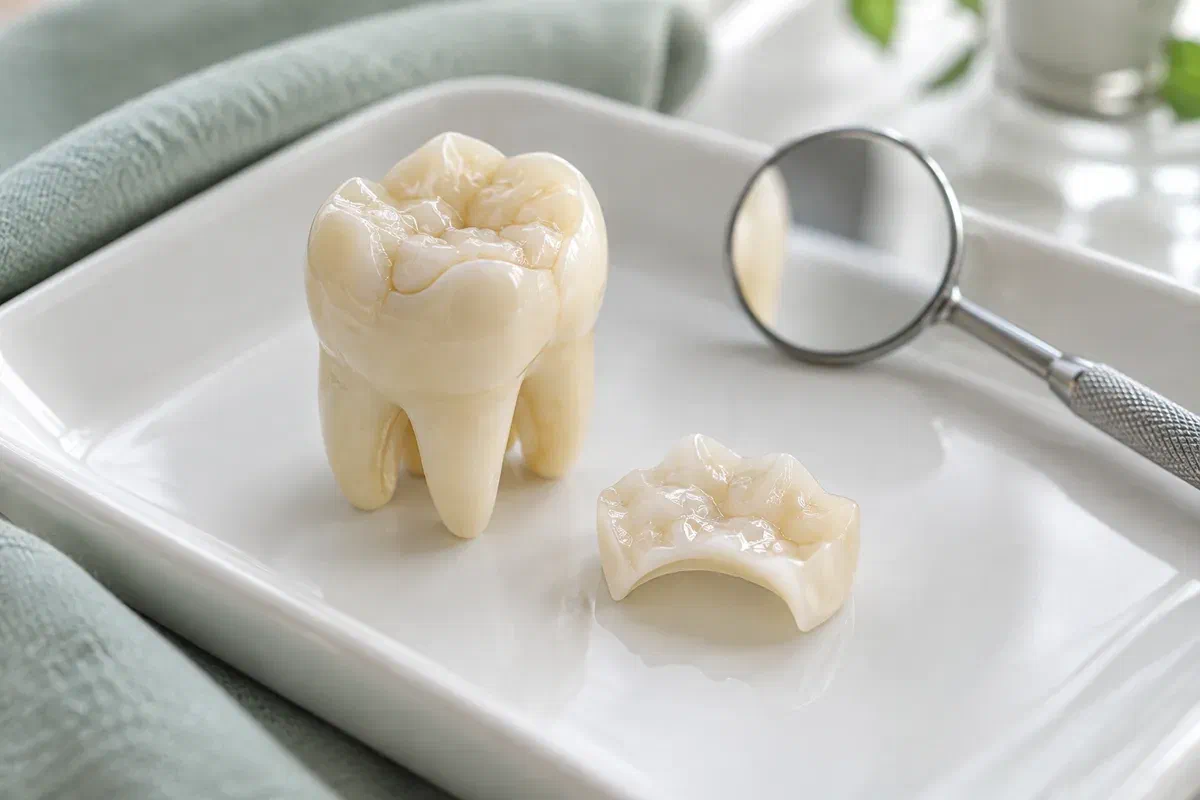
Illustrative molar teaching model and a separate partial-coverage restoration
Deciding factors

When waiting stops being the best choice

Stable wear can often be left alone and checked over time. Change, symptoms, or weakness may shift the balance toward treatment. Earlier photos or records make it much easier to see which way things are heading.

New or growing discomfort

Sensitivity that has started or is getting worse may mean dentine is exposed, but other problems can feel similar. Note the triggers and duration. The dentist checks whether wear is responsible before treatment becomes part of the conversation.

A tooth that is becoming fragile

Thin edges and undermined cusps are more likely to chip or break. Mention any small pieces that have come away or foods you now avoid. The bite and available space influence whether a surface can be rebuilt and how.

Wear that is spreading

If several teeth are changing, delay may make later treatment more involved. Ask how the teeth relate to each other, what a staged plan would look like, and how your bite might be affected. A larger plan should never be rushed or vague.

Waiting is not appropriate if a worn tooth cracks, suddenly hurts when you bite, or the gum swells nearby. Those changes need prompt assessment.

If treatment is the right call

Act early, act conservatively

When restoration is justified, starting with a small, additive repair can protect a thin tooth before it chips further. Bonded composite can often be placed with little or no drilling, which keeps future options open. Choosing that route still depends on careful diagnosis, and on accepting that bonded material needs looking after.

Ask what success means for your situation. It may be stopping a front edge from chipping, comfort with cold drinks, or the first step in a longer plan. Just as importantly, ask what treatment cannot achieve. No restoration halts ageing or wear entirely, and some will need repair down the road.

Patient information: Leeds Teaching Hospitals — restorative dentistry services

Protecting what remains

The amount of healthy structure left matters when comparing approaches. Ask how much each option would remove and why. A larger restoration is not automatically the right one just because it covers more.

A design that suits the bite

Any new contour has to meet its opposing teeth and line up with its neighbours. Talk through its effect on biting and on keeping the area clean; for a significant change, a trial or more records may be wise.

Maintenance from day one

Restorations may need polishing, adjustment, repair, or eventual replacement. Understanding how reviews are scheduled and what to report helps you weigh the ongoing commitment against the benefit.

How the decision is made

Evidence over time

Some cases are clear at the first visit; others become clearer with monitoring. Whether you need one appointment or a sequence depends on what we find, and we explain it plainly.

  1. Record the starting point

    We discuss symptoms, medical history, diet, and habits such as clenching, then examine the teeth, existing restorations, and bite. Photographs and X-rays, and sometimes a scan, may be taken. Even if nothing is treated yet, these records give a reliable baseline for judging future change.

  2. Weigh monitoring against repair

    We explain the case for waiting and for treating, along with prevention that applies either way. Ask which teeth would be involved and what each repair would achieve. Fees, stages, and what could alter the plan are reviewed before any decision.

  3. Restore when it is justified

    If treatment goes ahead, composite may be bonded directly or a restoration may be made and fitted later. Freezing can be used if needed, and the tooth is kept dry while it is bonded. Larger changes may be staged.

  4. Compare at each review

    Follow-up visits look at comfort, function, appearance, and whether wear is progressing, using your earlier records. If you use a guard, ask whether it needs checking after any change to tooth shape.

Whichever path you choose

Prevention carries on regardless

Whether teeth are rebuilt or watched, the causes of wear still need managing. Keep to the advice on acid, grinding, and brushing, and let the team know if a recommendation does not fit your routine.

After a repair

Follow any guidance about eating or a temporary restoration, and wait until numbness has fully gone before chewing. Ask how the bite should feel over the first days and what would be a reason to call.

Daily cleaning

Brush twice a day with fluoride toothpaste using a soft brush, and clean between teeth with floss or small brushes. Restored and worn teeth can both develop decay or gum problems. Ask for guidance if any area is awkward to reach.

Noticing change

Contact the clinic about chips, roughness, new sensitivity, or a shift in how teeth feel. Keep any broken piece and bring your guard. Repeated breakage suggests the design or biting forces need a fresh look rather than the same repair.

Patient information: UK oral health guidance — monitoring and managing tooth wear

The options on the table

From observation to coverage

Several approaches may be reasonable, and leaving a stable area untreated is a legitimate choice. Compare preparation, benefit, upkeep, and cost before you decide.

For stable wear without a current need

Monitored observation

Teeth that are worn but comfortable and sound can be recorded and compared at future visits while the causes are addressed. Ask what will be measured, how often, and what change would lead to treatment. Observation is a plan with dates and criteria, not a postponement.

An early, conservative repair

Additive bonded composite

Composite can rebuild selected edges and surfaces when the bite and remaining structure allow, often without much drilling. It can usually be repaired later. Discuss its limits for the particular surface involved.

When structural loss is extensive

Partial or full coverage

An onlay, a crown, or several planned restorations may be discussed for deeper damage. These involve more preparation and different maintenance. You should hear why coverage is needed and whether something smaller could meet the same goal.

Questions about timing

Is now the right time?

Ask about the purpose, appearance, and long-term care of any proposed treatment, and about the case for waiting. Those questions help with a single edge or several teeth.

(905) 876-4488
What happens if I leave a worn tooth untreated?
That depends on whether the wear is active. Stable wear may stay much the same for years. Active wear can continue to thin a tooth, raising the chance of sensitivity, chipping, or a more involved repair later. Monitoring, with records to compare against, helps show which applies, and prevention can slow active wear in either case.
How often should worn teeth be checked?
It varies with how quickly the teeth seem to be changing and what is causing the wear. Many people have them reviewed at regular checkups. The dentist will suggest an interval and may compare photos or models over time.
Does fixing worn teeth early make treatment simpler?
Sometimes. Rebuilding a thin edge before it breaks can allow a smaller repair. But restoring teeth that are stable and causing no problems has its own costs and maintenance. The decision rests on the specific tooth, how quickly it is changing, and what you want from treatment. Ask the dentist to explain the trade-off for each tooth being discussed.
Do I need a crown for a worn tooth that has started chipping?
Not necessarily. A bonded composite repair may be enough for a suitable tooth, and crowns are usually considered when structural loss is more extensive. Ask what about your particular tooth would make coverage the better option.
Will a guard stop my worn teeth from getting worse?
If grinding is a factor, a guard can help protect teeth from further damage. It does not address acid erosion or brushing wear, and it does not rebuild lost structure. The dentist will explain whether one is likely to help you. If you have one, bring it to reviews so its fit and condition can be checked.
Can monitoring visits from Acton be combined with my regular checkups?
Usually, yes. Reviewing worn teeth often fits into routine hygiene and examination appointments, which keeps extra trips to a minimum. Ask at your visit how monitoring will be scheduled and what would prompt an earlier appointment.
Acton worn tooth advice

Get a clear recommendation

Come to our Bronte Street practice to have worn edges or flattened teeth examined. Bring old photos if you have them, any appliance you wear, and your questions. We will explain whether the teeth need protection, repair, or monitoring, and why.

Call the clinic for significant pain, swelling, or a broken tooth. Online booking requests are for non-urgent visits.

Visit Milton Dental Clinic
Unit 1, 342 Bronte St. S, Milton, ON L9T 5B7
Get directions Clinic hours
Monday–Thursday
11am–7pm
Friday–Sunday
By appointment only

Areas we serve

  • Milton
  • Oakville
  • Mississauga
  • Georgetown
  • Halton Hills
  • Acton
  • Campbellville
  • Brampton
  • Burlington
  • Puslinch
  • Rockwood
  • Erin
  • Caledon
  • Etobicoke
  • Old Milton
  • Bronte Meadows
  • Timberlea
  • Dorset Park
  • Dempsey
  • Clarke
  • Beaty
  • Coates
  • Harrison
  • Scott
  • Willmott
  • Ford
  • Bowes
  • Cobden
  • Walker
  • Mountain View
  • Milton Heights
  • Hawthorne Village
  • Valley View
  • Fallingbrook
  • Nassagaweya
  • Trafalgar
  • Esquesing
  • Nelson
  • Brookville
  • Moffat
  • Glen Williams
  • Norval
  • Limehouse
  • Stewarttown
  • Ashgrove
  • Hornby
  • Silver Creek
  • Speyside
  • Scotch Block
  • North Oakville
  • River Oaks
  • Glen Abbey
  • West Oak Trails
  • Palermo
  • Bronte Creek
  • College Park
  • Joshua Creek
  • Uptown Core
  • Preserve
  • Iroquois Ridge
  • Lisgar
  • Meadowvale
  • Meadowvale Village
  • Churchill Meadows
  • Erin Mills
  • Central Erin Mills
  • Streetsville
  • East Credit
  • Creditview
  • Heartland
  • Sheridan
  • Mount Pleasant
  • Credit Valley
  • Huttonville
  • Churchville
  • Springbrook
  • Northwest Brampton
  • Bram West
  • Fletcher's Meadow
  • Fletcher's Creek South
  • Alton Village
  • Orchard
  • Millcroft
  • Headon Forest
  • Tansley
  • Brant Hills
  • Tyandaga
  • Kilbride
  • Lowville
  • Aberfoyle
  • Morriston
  • Arkell
  • Hillsburgh
  • Freelton
  • Carlisle
  • Waterdown
  • Flamborough
  • Mountsberg

How can we help?

Milton Dental Clinic

Have a question about your smile? Choose the option that works best for you.

For urgent dental concerns, please call.
Messages are reviewed during clinic hours.