

Illustrative consultation about restoring the shape and function of worn teeth
Restorative Dentistry

Worn Tooth Restoration in Brampton

Wear on several teeth can sound like one large, all-at-once project. For Brampton households weighing a bigger plan, we explain what needs doing now, what can wait, and how the work could be staged.

Planning repairs across several teeth

Does it all need doing at once?

Usually it does not. When wear shows up on many teeth, the first job is sorting them: which ones are weak, sensitive, or hard to use now, which are changing slowly, and which are stable enough to watch. Some surfaces may never need rebuilding. Treatment for the others can often be arranged in a sensible order, once the reasons for each repair are clear.

Understanding why the teeth wore also shapes the order. Acidic foods and drinks, reflux, grinding, clenching, and heavy-handed brushing can all contribute, often in combination. If an active cause is left unaddressed, new restorations face the same pressures as the original teeth. Prevention and protection therefore come into the plan early, sometimes before any repair.

Bring your questions from Brampton about timing, sequence, and the look you are hoping for. Tell us what feels different when you eat. After an examination, we can separate a contained repair from a larger restoration that needs more records, and say plainly when specialist planning would add value.

Talk through a plan for worn teeth
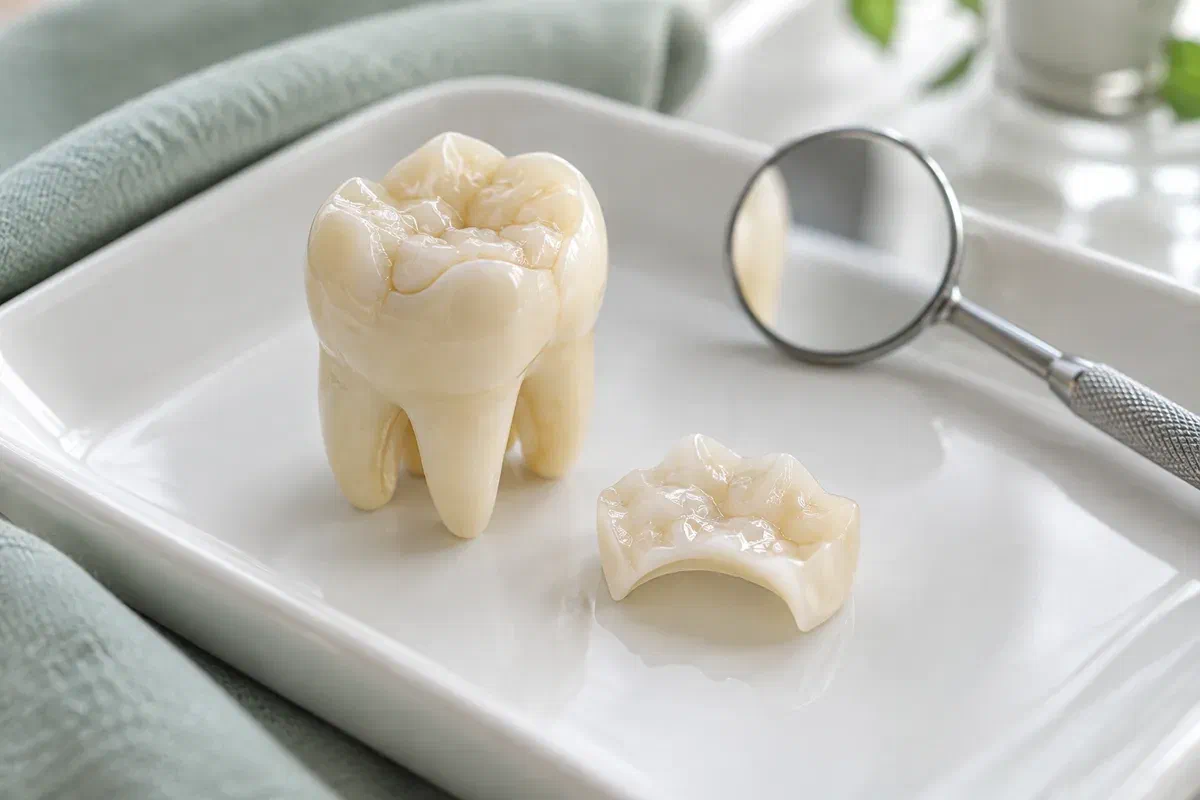
Illustrative molar teaching model and a separate partial-coverage restoration
Sorting what matters now

Not every worn tooth is urgent

Careful examination separates the teeth that need help from those that can be monitored. Old photos, X-rays, or notes from earlier dental visits can reveal how much has changed and how quickly.

Teeth that are uncomfortable

Worn areas may be sensitive, but so can teeth with receding gums, decay, or cracks. Note the triggers and how long discomfort lasts. The dentist confirms whether the symptom comes from wear before recommending a restoration for that tooth.

Chewing has become harder

Short front teeth or flat molars can make biting and chewing less efficient. Say which foods have become difficult. The opposing teeth and the space between them shape whether rebuilding a particular tooth is practical or needs a broader approach.

Teeth that affect one another

Restoring one tooth can change how others meet, which is why a multi-tooth plan needs thought. Ask how the proposed repairs connect, how your bite would change, and whether the work can be phased. A bigger plan should come with a clear rationale.

A worn tooth that suddenly cracks, hurts when you bite, or has swelling nearby should be assessed without delay. Don’t let a sudden symptom wait for a later stage of the plan.

The value of a staged approach

Steady progress beats a rushed overhaul

Phasing a larger plan lets you see how each change feels before committing to the next. In suitable cases, bonded composite can rebuild surfaces with little preparation, leaving more extensive options available if they are needed later. Staging is not a way around diagnosis, though. Each step still needs a reason and a clear idea of upkeep.

Agree on what success means at each stage. The first phase might protect the weakest teeth, a later one might restore appearance, and another might complete the bite. Ask about the limits as you go. Restored teeth are not permanent, and the plan should include how they will be maintained.

Patient information: Leeds Teaching Hospitals — restorative dentistry services

Conservation of natural tooth

Different options remove different amounts of healthy structure. Ask what each would require and why. Covering more tooth does not, on its own, make a restoration more suitable.

Teeth that work together

Each new contour must suit the opposing teeth and its neighbours. Discuss how the shapes affect chewing and cleaning, and whether a trial phase or further records would help before a substantial change to the bite.

Maintenance built into the plan

Over time, restorations may need polishing, adjusting, repairing, or replacing. Understanding the review schedule and what to report helps you compare options by their long-term demands as well as by the first treatment.

How we sequence the work

One phase at a time

The steps for a single edge and for a multi-tooth plan look quite different. We explain the records, visits, and decisions that apply to your findings before anything is scheduled.

  1. Map the wear and its causes

    We review symptoms, changes over time, medical history, diet, and habits. Teeth, existing restorations, and the bite are examined. X-rays, photos, or digital scans may be recommended when they help define the condition of a tooth or the scope of planning.

  2. Agree priorities and estimates

    We discuss monitoring, prevention, and restorative options, and which teeth come first. Ask what each phase includes and what it is meant to achieve. Estimated fees for each stage, and anything that might change the plan, are reviewed before you proceed.

  3. Treat the first phase

    Composite may be bonded directly, or restorations may be made separately and fitted later. Local anaesthetic and moisture control are used when appropriate. Before moving on, we review how the new shapes feel and function in daily use.

  4. Review and plan what follows

    The bite and restorations are checked, and you receive instructions for the treated teeth. Follow-up considers comfort, appearance, and function, and confirms the next step. If you use a night guard, ask whether it needs checking after each phase.

Between and after phases

Habits that help each stage last

Restorations replace lost structure but cannot stop the causes of wear. Keep following the advice on acid, grinding, cleaning, or any other factor we identified, and tell us if something is hard to fit into family routines.

Follow phase-specific instructions

Each stage may come with guidance about eating or caring for a temporary restoration. If you had freezing, wait for full sensation before chewing. Ask how the bite should feel and which sensations should prompt a call.

Keep every surface clean

Brush with fluoride toothpaste twice a day and clean between teeth using floss or small brushes that suit your contacts. Restored teeth can still develop decay or gum problems. If a new shape makes cleaning harder, ask us to show you a better technique.

Tell us about damage early

Call about a chip, rough edge, or change in comfort, and keep any broken piece. Bring your guard if you wear one. A restoration that keeps breaking may need a new design or a look at biting forces rather than another identical repair.

Patient information: UK oral health guidance — monitoring and managing tooth wear

Options for each tooth

Different teeth, different answers

In one mouth, a single plan may include monitoring for some teeth, bonding for others, and coverage where it is needed. Compare preparation, benefit, maintenance, and cost for each choice.

For teeth that do not need rebuilding yet

Monitoring with prevention

Stable, comfortable wear can be reviewed over time while causes are managed. Ask how change will be recorded and what would lead to treatment. A monitoring plan should be specific about when it will be reviewed.

Adding material where it is suitable

Bonded composite

Composite can rebuild selected edges and surfaces when the remaining structure and bite allow. It can often be repaired later rather than replaced. Ask about its limits for the specific surface and for your biting habits.

Where structural loss is greater

Onlays, crowns, or combinations

More extensive damage may call for an onlay, a crown, or a coordinated group of restorations. Each has different preparation and maintenance needs. Ask why coverage is advised and whether a smaller restoration could meet the same need.

Planning questions

What to ask about a larger plan

Questions about purpose, appearance, staging, and long-term care help you understand any proposal, from one tooth to several.

(905) 876-4488
Which worn teeth should be treated first?
Generally, teeth that are painful, weakened, or at risk of breaking come before purely cosmetic concerns. The bite also influences order, since some repairs affect how others need to be shaped. The dentist will explain the priorities and why they were chosen.
Can a large wear plan be spread over months?
Often, yes, as long as it is clinically sensible. Some steps need to happen close together, while others can wait. Ask how a longer timeline might affect the teeth in between and what protection would be in place.
What should an estimate for several worn teeth include?
It should list the teeth and surfaces, the proposed materials, and whether records, temporary stages, appliances, and follow-up are included. Compare the goals and maintenance as well as the totals, and ask what would happen if the plan needs to change after further assessment.
Is there anything I can do at home to slow the wear?
Depending on the cause, advice may include limiting acidic drinks between meals, waiting a while to brush after acid exposure, using a soft brush and fluoride toothpaste, and wearing a guard if grinding is suspected. The dentist will tailor suggestions to what is found.
Will treated teeth look different from the ones still waiting?
For a while they might, especially if front teeth are done in stages. Discuss how the phases will look in between and whether temporary measures can help. Shade matching is considered, but an exact match between natural and restored teeth cannot be guaranteed.
How can busy Brampton households fit staged visits in?
Ask for the likely number of appointments at the start, and book several ahead if you can. Some family members may be able to schedule on the same day. Weekday hours run until 7 p.m. from Monday to Thursday, and Friday to Sunday visits are by appointment.
Planning worn tooth care from Brampton

Start with a clear plan

Arrange a visit to our Bronte Street practice to review worn teeth, earlier repairs, or a plan you would like to understand better. Bring questions about order, appearance, and any appliance you wear. We will explain the priorities and which teeth need protection, repair, or watching.

Phone the clinic about severe pain, swelling, or a tooth that has just broken. Online requests are for non-urgent visits.

Visit Milton Dental Clinic
Unit 1, 342 Bronte St. S, Milton, ON L9T 5B7
Get directions Clinic hours
Monday–Thursday
11am–7pm
Friday–Sunday
By appointment only

Areas we serve

  • Milton
  • Oakville
  • Mississauga
  • Georgetown
  • Halton Hills
  • Acton
  • Campbellville
  • Brampton
  • Burlington
  • Puslinch
  • Rockwood
  • Erin
  • Caledon
  • Etobicoke
  • Old Milton
  • Bronte Meadows
  • Timberlea
  • Dorset Park
  • Dempsey
  • Clarke
  • Beaty
  • Coates
  • Harrison
  • Scott
  • Willmott
  • Ford
  • Bowes
  • Cobden
  • Walker
  • Mountain View
  • Milton Heights
  • Hawthorne Village
  • Valley View
  • Fallingbrook
  • Nassagaweya
  • Trafalgar
  • Esquesing
  • Nelson
  • Brookville
  • Moffat
  • Glen Williams
  • Norval
  • Limehouse
  • Stewarttown
  • Ashgrove
  • Hornby
  • Silver Creek
  • Speyside
  • Scotch Block
  • North Oakville
  • River Oaks
  • Glen Abbey
  • West Oak Trails
  • Palermo
  • Bronte Creek
  • College Park
  • Joshua Creek
  • Uptown Core
  • Preserve
  • Iroquois Ridge
  • Lisgar
  • Meadowvale
  • Meadowvale Village
  • Churchill Meadows
  • Erin Mills
  • Central Erin Mills
  • Streetsville
  • East Credit
  • Creditview
  • Heartland
  • Sheridan
  • Mount Pleasant
  • Credit Valley
  • Huttonville
  • Churchville
  • Springbrook
  • Northwest Brampton
  • Bram West
  • Fletcher's Meadow
  • Fletcher's Creek South
  • Alton Village
  • Orchard
  • Millcroft
  • Headon Forest
  • Tansley
  • Brant Hills
  • Tyandaga
  • Kilbride
  • Lowville
  • Aberfoyle
  • Morriston
  • Arkell
  • Hillsburgh
  • Freelton
  • Carlisle
  • Waterdown
  • Flamborough
  • Mountsberg

How can we help?

Milton Dental Clinic

Have a question about your smile? Choose the option that works best for you.

For urgent dental concerns, please call.
Messages are reviewed during clinic hours.