

Illustrative consultation about restoring the shape and function of worn teeth
Restorative Dentistry

Worn Tooth Restoration in Erin

A rebuilt tooth lasts longer when the routine around it changes too. For people in Erin and Hillsburgh, we plan worn tooth repairs with the daily care, protection, and reviews that help them hold up at home.

Repair at the clinic, care at home

Most of the work happens after you leave

The appointment that rebuilds a worn tooth is a small part of its story. The months and years that follow have a large say in how well it holds up. That is why we think about your daily life from the start: what you drink through the day, how you brush, whether you clench at night, and what habits might keep placing stress on the tooth after it is restored.

Restoration itself is chosen for a reason, such as sensitivity, a weak or chipping edge, difficulty chewing, or an appearance change you want addressed. It puts structure back but cannot remove the causes, whether acid, grinding, or abrasion. Those continue at home, so the plan includes practical steps you can keep up without turning your routine upside down.

Tell us what you have noticed and what would make care easier to fit in, particularly if you are travelling from Erin and prefer fewer trips. After examining the teeth and bite, we can explain whether a limited repair is reasonable, whether prevention alone is enough for now, or whether a broader plan with more records or a specialist opinion is worth discussing.

Plan care for a worn tooth
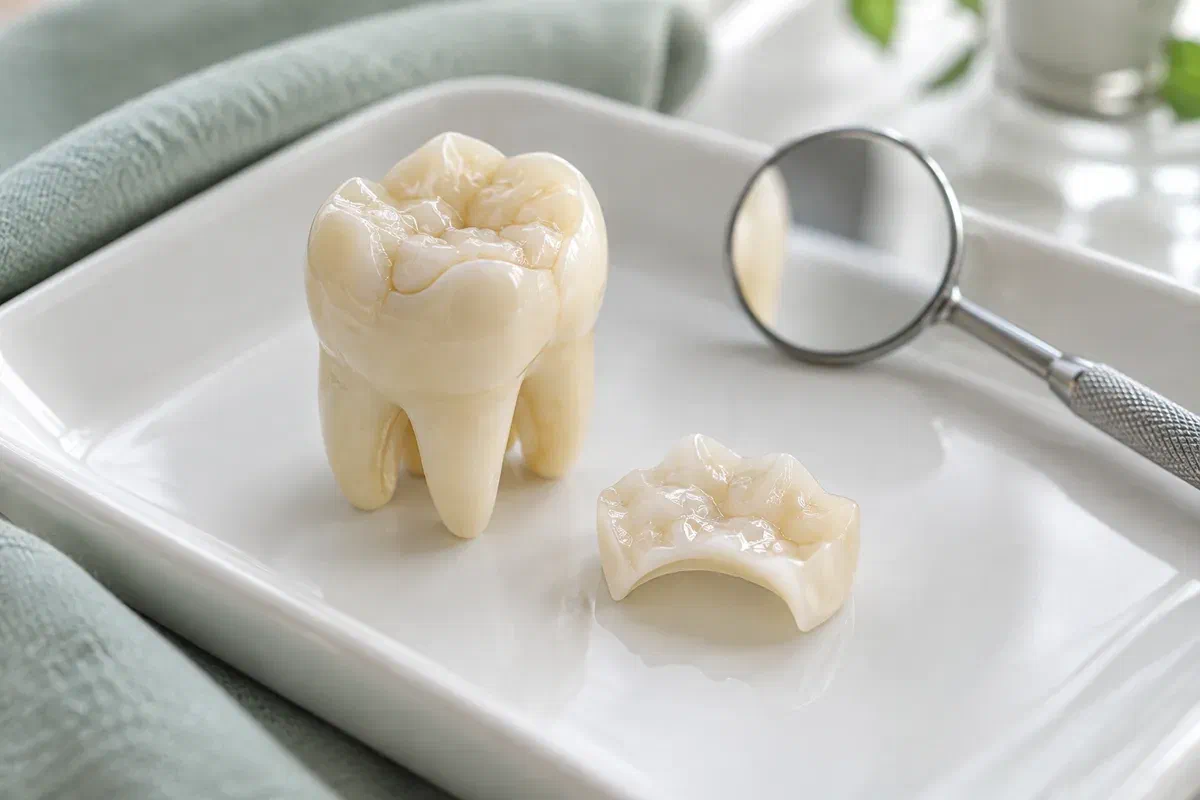
Illustrative molar teaching model and a separate partial-coverage restoration
Reasons to come in

When home care alone isn’t enough

Some worn teeth can be managed with prevention and monitoring; others need repair. An examination makes the distinction. Older photos or dental records can help show how much the teeth have changed.

Discomfort that keeps returning

Worn surfaces may react to cold or brushing, though recession, cracks, and decay can feel similar. Keep track of what sets it off and for how long. The dentist confirms the source before suggesting that a tooth be rebuilt.

A surface that no longer works well

Flat or short teeth can make chewing tougher foods more of an effort. Mention any changes at mealtimes. The way the teeth meet, and the space between them, affects whether a particular area can be restored.

Wear on more than one tooth

Widespread wear may need decisions about the bite as a whole. Ask how the restorations would fit together, how the teeth would meet, and whether the work could be grouped into fewer, well-planned visits.

If a worn tooth cracks, hurts sharply on biting, or the gum swells, call before setting out so we can advise how soon you should be seen.

What a well-supported repair offers

Built to be maintained

A conservative restoration, such as composite bonded onto a worn edge, can improve comfort and shape with little removal of healthy tooth. One of its practical advantages is that small chips can usually be repaired rather than redone. That flexibility is valuable, but it does not replace a careful diagnosis or the daily habits that protect the repair.

Agree on what success looks like. It might be eating comfortably, an edge that stops chipping, or completing a staged plan. Ask what will be needed to maintain it, from a guard to periodic polishing. Restored teeth change over time, and a good plan prepares you for that rather than promising otherwise.

Patient information: Leeds Teaching Hospitals — restorative dentistry services

Keeping your own tooth

Each option removes a different amount of structure. Ask how much would be taken and why. A larger restoration is not the better choice simply because it covers more.

A shape that is easy to look after

The restored contour should meet the opposing teeth comfortably and be reachable with your brush and floss. Ask whether a trial shape or more records would help before a substantial change.

A maintenance plan you can follow

Polishing, adjustment, repair, or replacement may be needed eventually. Knowing what reviews involve, and pairing them with regular checkups where possible, helps you judge the long-term commitment.

The sequence of care

Four steps, planned around your routine

Repairing one worn edge may need a single visit; restoring several teeth takes more records and decisions. We explain the sequence that suits your findings and try to keep trips efficient.

  1. Learn how you live with your teeth

    We ask about diet, drinks, brushing, grinding, health history, and symptoms. Then the teeth, existing restorations, and bite are examined. If photographs, X-rays, or scans would clarify the picture, we try to take them during the same appointment.

  2. Choose a plan you can keep up

    Monitoring, prevention, and restorative options are compared, along with what each asks of you at home. Ask which teeth would be treated and what each repair should improve. Fees, stages, and what might change the plan are reviewed first.

  3. Restore the agreed areas

    Composite may be shaped onto the tooth at one visit, or a lab-made restoration may be fitted at a later appointment. Freezing can be used when needed, and the tooth is kept dry while bonding. Larger plans may be staged.

  4. Show you how to care for it

    We check how the teeth meet, then go through cleaning and any guard use. Follow-up reviews comfort, function, and appearance. Bring any existing appliance so its fit can be checked against the new tooth shape.

Your routine at home

Small habits, steady protection

The restoration takes care of lost structure; everyday routines take care of the causes. Keep following the advice about drinks, brushing, and grinding, and let us know if any of it is not working.

The first few days

Follow any guidance about eating or a temporary stage, and wait until numbness has gone before you chew. A new shape can feel unfamiliar for a short time. If the bite still feels high after a few days, phone us.

A routine that protects

Brush twice daily with fluoride toothpaste and a soft brush, and clean between teeth every day. Keep acidic drinks to mealtimes where possible. Restored teeth can still decay, so ask us to show you how to reach any awkward area.

Using a guard

If a night guard has been recommended, wear it as advised and keep it clean. Bring it to reviews. Contact us about a chip, rough patch, or change in comfort, and keep any broken piece.

Patient information: UK oral health guidance — monitoring and managing tooth wear

Options and what they ask of you

Each choice comes with its own upkeep

There is usually more than one reasonable path, and some worn areas need no repair at all. Compare preparation, benefit, maintenance, and cost, and think about what each would mean for your routine.

When restoration is not needed yet

Prevention and monitoring

Stable wear can often be managed with changes at home and reviews at regular checkups. Ask how change will be recorded and what would prompt treatment. A clear schedule keeps it from feeling open-ended.

For suitable worn surfaces

Bonded composite

Composite can restore chosen edges and surfaces when the tooth and bite allow. Small chips can usually be repaired at a routine visit. Discuss how the material may age and how to look after it.

For greater structural loss

Onlays, crowns, or combined restorations

Extensive damage may lead to discussion of lab-made coverage. These involve more preparation, usually more than one visit, and different care. Ask why coverage is recommended and what a smaller option would and would not achieve.

Living with restored teeth

Practical questions, plain answers

Ask about the purpose, appearance, and daily care of any proposed restoration. These questions help whether you are considering one tooth or several.

(905) 876-4488
Do I need a special toothpaste after worn teeth are restored?
A regular fluoride toothpaste is usually suitable. If you have sensitivity or ongoing erosion, a higher-fluoride or desensitizing product may be suggested. Very abrasive whitening pastes may not be ideal for polished restorations. Ask what would suit your teeth.
How long should a bonded repair on a worn tooth last?
There is no fixed lifespan. Grinding, diet, the location of the repair, and how well it is cared for all affect it. Composite can often be repaired when small chips occur. The dentist can explain what to expect for your situation.
Is an electric toothbrush better for restored teeth?
Either type can work well with good technique. Some electric brushes have pressure sensors that help people who brush too hard. Whatever you use, a soft head and gentle pressure help protect restorations and worn enamel.
Will my new restorations need special cleaning at hygiene visits?
The hygienist will take care around restored surfaces and may polish them gently. Let them know which teeth have been rebuilt. Regular cleanings also give a chance to spot chips or wear early.
Can I have a night guard made at the same time as the restoration?
Often a guard is made after restorations are complete, so it fits the final tooth shapes. In some plans the timing differs. Ask how the guard fits into your sequence so you are protected at the right stage.
If I live in Erin, can reviews be combined with my regular checkups?
In most cases, yes. Monitoring restored teeth usually fits within routine examination and hygiene visits, which reduces extra trips. Ask at your appointment how follow-up will be arranged and when an extra visit would be needed.
Erin worn tooth care

Plan a repair that fits your life

Visit our Bronte Street practice to discuss flattened, chipped, or sensitive worn teeth. Bring any guard you use and questions about daily care. We will explain the findings and which areas need protection, repair, or monitoring, and how to keep visits efficient.

For severe pain, swelling, or a broken tooth, please call. Online booking requests are for routine care.

Visit Milton Dental Clinic
Unit 1, 342 Bronte St. S, Milton, ON L9T 5B7
Get directions Clinic hours
Monday–Thursday
11am–7pm
Friday–Sunday
By appointment only

Areas we serve

  • Milton
  • Oakville
  • Mississauga
  • Georgetown
  • Halton Hills
  • Acton
  • Campbellville
  • Brampton
  • Burlington
  • Puslinch
  • Rockwood
  • Erin
  • Caledon
  • Etobicoke
  • Old Milton
  • Bronte Meadows
  • Timberlea
  • Dorset Park
  • Dempsey
  • Clarke
  • Beaty
  • Coates
  • Harrison
  • Scott
  • Willmott
  • Ford
  • Bowes
  • Cobden
  • Walker
  • Mountain View
  • Milton Heights
  • Hawthorne Village
  • Valley View
  • Fallingbrook
  • Nassagaweya
  • Trafalgar
  • Esquesing
  • Nelson
  • Brookville
  • Moffat
  • Glen Williams
  • Norval
  • Limehouse
  • Stewarttown
  • Ashgrove
  • Hornby
  • Silver Creek
  • Speyside
  • Scotch Block
  • North Oakville
  • River Oaks
  • Glen Abbey
  • West Oak Trails
  • Palermo
  • Bronte Creek
  • College Park
  • Joshua Creek
  • Uptown Core
  • Preserve
  • Iroquois Ridge
  • Lisgar
  • Meadowvale
  • Meadowvale Village
  • Churchill Meadows
  • Erin Mills
  • Central Erin Mills
  • Streetsville
  • East Credit
  • Creditview
  • Heartland
  • Sheridan
  • Mount Pleasant
  • Credit Valley
  • Huttonville
  • Churchville
  • Springbrook
  • Northwest Brampton
  • Bram West
  • Fletcher's Meadow
  • Fletcher's Creek South
  • Alton Village
  • Orchard
  • Millcroft
  • Headon Forest
  • Tansley
  • Brant Hills
  • Tyandaga
  • Kilbride
  • Lowville
  • Aberfoyle
  • Morriston
  • Arkell
  • Hillsburgh
  • Freelton
  • Carlisle
  • Waterdown
  • Flamborough
  • Mountsberg

How can we help?

Milton Dental Clinic

Have a question about your smile? Choose the option that works best for you.

For urgent dental concerns, please call.
Messages are reviewed during clinic hours.