

Illustrative consultation about restoring the shape and function of worn teeth
Restorative Dentistry

Worn Tooth Restoration in Etobicoke

Restoring worn teeth can take more than one appointment, so the trip deserves planning. Coming from Etobicoke, you can expect a clear sequence, well-organised visits, and advice on what to do between them.

Worth the trip, when it is well planned

Make each appointment count

From the west end of Toronto, a visit to Milton is a planned outing rather than a quick stop. That makes the shape of the treatment plan especially important. Before rebuilding anything, we want to understand what the wear is doing to you: sensitivity, a weak or chipping edge, difficulty chewing, or a change in appearance you would like addressed. Visible wear alone is not a reason to restore.

We also look for the causes, because restoration does not remove them. Acid from diet or reflux, grinding and clenching, and abrasive habits such as hard brushing each leave typical patterns. Knowing which are involved shapes the advice you take home and the design of any repair, so the new surface is not simply exposed to the same problem.

For your first visit from Etobicoke, gather anything that could save a second trip: earlier X-rays, photos, a list of medications, and any guard you wear. After the examination, we can tell you whether a limited repair is likely to be enough, or whether wider records, staged work, or specialist planning should be part of the conversation.

Plan a worn tooth assessment
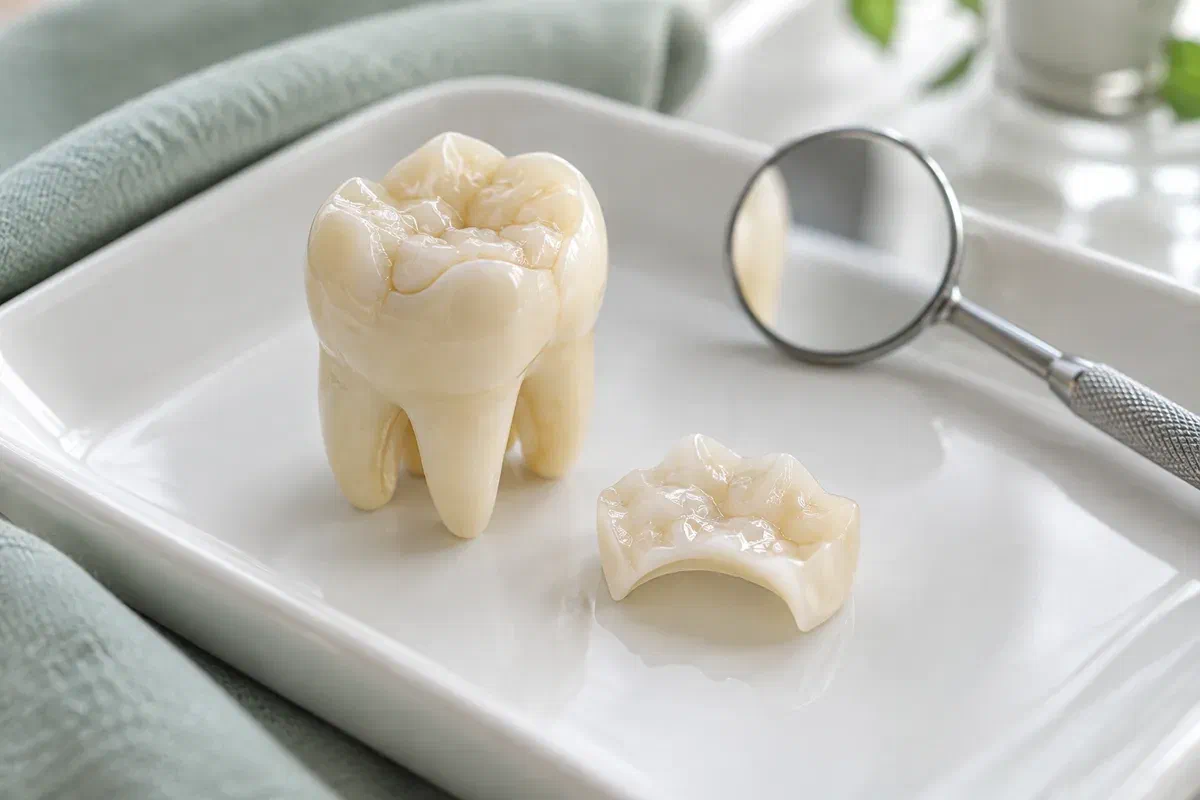
Illustrative molar teaching model and a separate partial-coverage restoration
Signs to mention when you book

Wear that is changing your day-to-day

Not all wear needs treatment now, and an examination helps separate what to repair from what to monitor. If older photos or records show how the teeth looked before, they make that judgment more reliable.

Sensitivity with a pattern

Exposed inner tooth can react to cold, sweetness, or brushing, though cracks, decay, and gum recession can cause similar discomfort. Note when it happens and how long it lasts. The dentist checks the real cause before proposing to rebuild.

Difficulty biting or chewing

Short or flat teeth can make certain foods awkward. Tell us what has changed at meals. How the upper and lower teeth meet, and how much room remains, influences whether a worn surface can be built up and what form that would take.

Questions about a multi-tooth plan

When wear is widespread, decisions may affect the whole bite. Ask how the proposed restorations fit together, how the teeth would meet, and how the work could be grouped into fewer, longer appointments. A larger plan should be explained thoroughly.

Sudden pain on biting, a crack, or swelling near a worn tooth needs prompt care. If it happens at home and you cannot reach us quickly, seek urgent dental care closer to you.

What a good repair can offer

Useful, durable, and well explained

A considered restoration can make a fragile edge sturdier, settle a sensitive spot, or bring back a shape that matters to you. When the case allows, bonded composite can be added with little removal of healthy tooth, and it can often be repaired later at a routine visit. The approach still relies on careful diagnosis and realistic talk about maintenance.

Be clear about what you want from treatment. It might be chewing without discomfort, front teeth that look their proper length, or getting through the first phase of a larger plan. Ask what the restoration will not do, too. Restored teeth continue to age, and a plan should say how they will be looked after.

Patient information: Leeds Teaching Hospitals — restorative dentistry services

Preserving sound structure

How much of your own tooth each option removes is an important comparison. Ask the reason for any preparation. Choosing a restoration that covers more surface is not automatically the more suitable decision.

A shape that works in your mouth

The rebuilt contour must fit with opposing and neighbouring teeth. Discuss how it will affect chewing and flossing. For a substantial change, ask whether a trial shape or additional records would be sensible first.

Maintenance you can plan around

Restorations may need polishing, adjusting, repairing, or replacing over time. If reviews can be paired with your regular checkups, the long-term commitment becomes easier to manage from a distance.

A sequence designed for travel

Fewer visits, clearer steps

A small edge repair may fit into one appointment, while broader wear needs more records and decisions. We explain the likely number of visits early so you can plan the trips.

  1. Examine and gather records

    We discuss symptoms, history, diet, and habits, then examine the teeth, existing restorations, and bite. Where helpful, photos, scans, or X-rays are taken at the same visit, which can reduce the need to return just for records.

  2. Set out options and timing

    Monitoring, preventive steps, and restorative choices are compared, along with how many appointments each would need. Ask which teeth are involved and what each repair should improve. Fees, stages, and anything that could alter the plan are covered before you commit.

  3. Carry out the restoration

    Composite may be built up directly, or a restoration may be made separately and fitted at a later appointment. Numbing is offered when needed and the tooth is kept dry during bonding. Larger plans can be staged so each change is tried in daily life.

  4. Check the bite and arrange review

    We test how the teeth meet and explain care for the area. Follow-up assesses comfort, function, and appearance, and can often be combined with a routine checkup. If you use a guard, ask whether the new shape means it should be refitted.

Looking after it at home

What to do between visits

The restoration replaces structure; your routine protects it. Keep to the advice on acidic drinks, grinding, cleaning, or other identified factors, and let us know if any part is hard to sustain.

Know your instructions before you leave

You may receive specific guidance about eating or a temporary restoration. If freezing was used, hold off on chewing until normal feeling is back. Ask how the bite will settle and which changes mean you should phone rather than wait.

Clean carefully around the repair

Brush twice daily with fluoride toothpaste and clean between the teeth with floss or interdental brushes. A restored tooth can still decay or develop gum problems. Ask to be shown how to reach any contour that feels awkward.

Report problems by phone first

Call about a chip, sharp area, or change in comfort before making the trip. Keep any fragment and bring your guard. If a repair keeps breaking, the design or the forces on it may need reassessing rather than repeated patching.

Patient information: UK oral health guidance — monitoring and managing tooth wear

Repair options

How extensive should it be?

Several approaches may be reasonable, and some worn surfaces need nothing for now. Compare preparation, expected benefit, upkeep, and cost, and ask how many visits each would involve.

When restoration is not yet needed

Observe and protect

Stable wear without a clear need can be reviewed at regular checkups while causes are addressed. Ask how change will be recorded and what would prompt treatment. Observation should come with a defined plan, not uncertainty.

Often completed in fewer visits

Bonded composite build-up

Composite can restore selected edges and surfaces when the remaining tooth and bite allow, and small repairs can frequently be done in a single appointment. Ask about later repair and the material’s limits for the surface concerned.

When more structural support is needed

Onlays, crowns, or a combination

Extensive damage may lead to discussion of an onlay, a crown, or several coordinated restorations, which usually involve more than one visit. Ask why coverage is advised and whether a less extensive option could meet the same need.

Questions about worn teeth and travel

Things to settle before you book

Ask why treatment is suggested, how it will look, and what it will need later. These questions help with any plan, from one chipped edge to several worn teeth.

(905) 876-4488
How many appointments does worn tooth restoration usually take?
It varies. A small bonded repair may take one visit after assessment, while multi-tooth plans may require records, a planning discussion, and several treatment sessions. The dentist will give you a realistic outline once the teeth have been examined.
What should I do if a repair chips once I am back in Etobicoke?
Call us first. A small, painless chip can often wait for a planned visit, especially if you avoid chewing on that side. If there is significant pain, swelling, or a large break, seek urgent dental care nearer to you if you cannot reach the clinic promptly.
Why does it matter what wore my teeth down?
Because restoration does not stop the cause. Acid, grinding, and abrasion each wear teeth differently, and a repair is more likely to hold up when the active cause is reduced. Identifying it also protects the teeth that do not need treatment.
Can worn teeth be rebuilt without crowns?
In many suitable cases, bonded composite or other limited restorations are considered first, and some teeth may need nothing at all. The remaining structure, the bite, and your goals decide the approach. Ask why a crown would be needed for any particular tooth.
Is it possible to have records taken at my first visit?
Often, yes. If X-rays, photos, or scans would help, they may be done during the assessment. Mention when booking that you would like to keep visits to a minimum, and the team can try to plan the appointment so it covers as much as is clinically appropriate.
Will a new restoration feel strange at first?
It can. Your tongue may notice a change in shape, and the bite may feel slightly different for a few days. Most people adjust, but a tooth that feels high, sore on biting, or uncomfortable after that should be checked rather than tolerated.
Worn tooth care for Etobicoke

A plan that respects your time

Book a visit to our Bronte Street practice for shortened, flattened, or repeatedly chipping teeth. Bring previous X-rays, any appliance you use, and your questions. We will explain what we find, which areas need protection, repair, or monitoring, and how visits could be grouped.

For severe pain, swelling, or a freshly broken tooth, call us, or seek urgent care closer to home if needed. Online requests are for routine care.

Visit Milton Dental Clinic
Unit 1, 342 Bronte St. S, Milton, ON L9T 5B7
Get directions Clinic hours
Monday–Thursday
11am–7pm
Friday–Sunday
By appointment only

Areas we serve

  • Milton
  • Oakville
  • Mississauga
  • Georgetown
  • Halton Hills
  • Acton
  • Campbellville
  • Brampton
  • Burlington
  • Puslinch
  • Rockwood
  • Erin
  • Caledon
  • Etobicoke
  • Old Milton
  • Bronte Meadows
  • Timberlea
  • Dorset Park
  • Dempsey
  • Clarke
  • Beaty
  • Coates
  • Harrison
  • Scott
  • Willmott
  • Ford
  • Bowes
  • Cobden
  • Walker
  • Mountain View
  • Milton Heights
  • Hawthorne Village
  • Valley View
  • Fallingbrook
  • Nassagaweya
  • Trafalgar
  • Esquesing
  • Nelson
  • Brookville
  • Moffat
  • Glen Williams
  • Norval
  • Limehouse
  • Stewarttown
  • Ashgrove
  • Hornby
  • Silver Creek
  • Speyside
  • Scotch Block
  • North Oakville
  • River Oaks
  • Glen Abbey
  • West Oak Trails
  • Palermo
  • Bronte Creek
  • College Park
  • Joshua Creek
  • Uptown Core
  • Preserve
  • Iroquois Ridge
  • Lisgar
  • Meadowvale
  • Meadowvale Village
  • Churchill Meadows
  • Erin Mills
  • Central Erin Mills
  • Streetsville
  • East Credit
  • Creditview
  • Heartland
  • Sheridan
  • Mount Pleasant
  • Credit Valley
  • Huttonville
  • Churchville
  • Springbrook
  • Northwest Brampton
  • Bram West
  • Fletcher's Meadow
  • Fletcher's Creek South
  • Alton Village
  • Orchard
  • Millcroft
  • Headon Forest
  • Tansley
  • Brant Hills
  • Tyandaga
  • Kilbride
  • Lowville
  • Aberfoyle
  • Morriston
  • Arkell
  • Hillsburgh
  • Freelton
  • Carlisle
  • Waterdown
  • Flamborough
  • Mountsberg

How can we help?

Milton Dental Clinic

Have a question about your smile? Choose the option that works best for you.

For urgent dental concerns, please call.
Messages are reviewed during clinic hours.