Illustrative consultation about restoring the shape and function of worn teeth
Restorative Dentistry

Worn Tooth Restoration in Georgetown

A tooth that zings with cold water might be worn, cracked, or affected by gum recession. If you are coming from Georgetown, we find the cause first, then talk about whether rebuilding the surface would actually help.

Sensitivity and worn surfaces

Is it the wear, or something else?

The first sip of ice water, a spoonful of ice cream, a cold morning breath: a sharp, brief twinge at moments like these is one of the most common reasons people ask about worn teeth. Lost enamel can expose the more sensitive dentine underneath. But receding gums, a cracked tooth, decay, or a leaking filling can cause the very same feeling, and each calls for a different response.

That is why diagnosis comes before any rebuilding. When wear is the culprit, it usually has company: acidic foods or drinks, reflux, clenching or grinding, and a heavy toothbrush hand often play a part. A new layer of material can cover a worn spot, yet it leaves those influences untouched, so reducing them is part of the plan.

Coming from Georgetown, tell us which teeth react, to what, and for how long. Mention any change in how food feels or how your smile looks. Once we have examined the teeth and bite, we can say whether desensitizing care, a small bonded repair, or a broader plan with more records or specialist input fits what we find.


Have a sensitive worn tooth checked
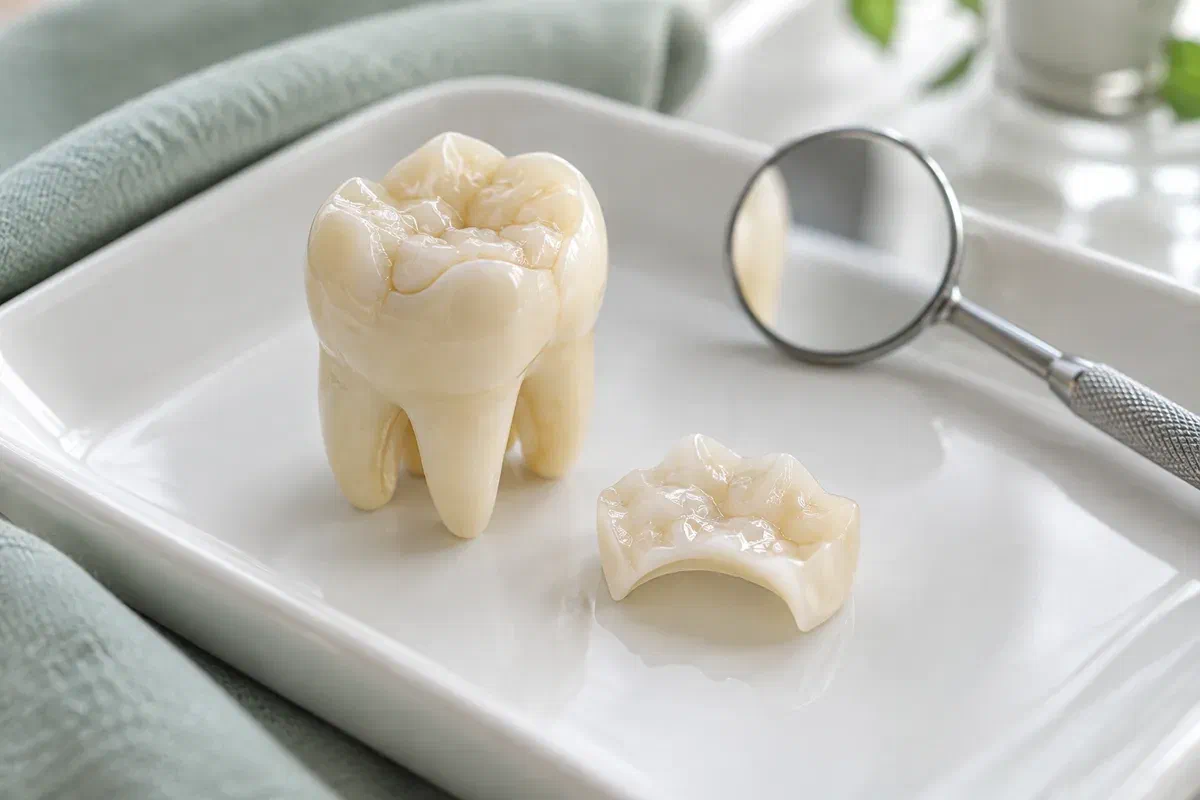
Illustrative molar teaching model and a separate partial-coverage restoration
What to watch for

Sensitivity is only one clue

Many worn teeth can be monitored safely; some need repair. An examination helps decide which is which. Older photos and records are useful, because they show whether the change is recent or has been slow and stable.

Short, sharp twinges

A quick zing with cold or sweet foods may come from exposed dentine on a worn surface. Lingering pain, throbbing, or pain on release after biting suggests something different. Describe the pattern carefully so the dentist can investigate the right cause.

A surface that feels different

Flattened, cupped, or thinning teeth may change how you bite and chew. Tell us about any food that has become awkward. The way your teeth meet, and the room left between them, affects whether a worn area can be built back up.

Several teeth reacting

Sensitivity across many teeth may point to widespread wear or another shared cause. Ask how any proposed repairs would relate to each other, how your bite would be affected, and whether care could be staged. A broad plan deserves a clear explanation.

Pain that lingers, wakes you at night, or comes with swelling or a crack needs prompt assessment. These are not usual signs of simple wear.

When rebuilding makes sense

Cover the exposed area, keep the tooth

Once wear is confirmed as the source, restoring the surface can cover exposed dentine and may reduce sensitivity, as well as strengthening a thin area or improving its shape. For suitable teeth, composite can be bonded on with minimal preparation before more extensive options are weighed. A careful diagnosis and realistic expectations about maintenance still come first.

Set a goal together. It may be eating cold food comfortably, an edge that no longer chips, or the first phase of a larger plan. Some sensitivity can persist after treatment, and restorations need care over time, so it helps to discuss the limits as openly as the hoped-for benefits.

Patient information: Leeds Teaching Hospitals — restorative dentistry services

Healthy tooth left in place

Treatments differ in how much sound structure they remove. Ask why any preparation is needed and how much is involved. Covering more of a tooth does not make a restoration more suitable by default.

A comfortable fit with the bite

The new surface needs to meet opposing teeth and its neighbours without creating pressure points. Ask how it will change biting and flossing, and if a trial shape or extra records should come first.

Care that continues

Restorations may need polishing, adjustment, repair, or replacement eventually. Knowing how reviews work and what to report helps you understand the commitment beyond the first appointment.

How we approach it

Diagnosis before design

The steps for one sensitive worn spot differ from those for wear across many teeth. We outline the visits and records that suit your findings before any treatment begins.

  1. Pin down the source of sensitivity

    We ask what triggers the feeling, how long it lasts, and about diet, reflux, grinding, and medical history. The teeth, gums, fillings, and bite are examined, and X-rays or other tests may be used to rule out cracks, decay, or nerve problems.

  2. Discuss what could help

    Options may range from desensitizing toothpaste and preventive changes to bonded repairs or other restorations. Ask which surfaces would be treated and what each step should achieve. Fees, stages, and anything likely to change the plan are explained beforehand.

  3. Restore the agreed areas

    Composite may be bonded straight onto the tooth, or a restoration may be made separately and fitted later. If the area is tender, freezing can be used, and the surface is kept dry while bonding. Wider changes can be staged.

  4. Review comfort and function

    We check how the teeth meet and explain care for the treated area. At follow-up, sensitivity, appearance, and function are reassessed. If you wear a night guard, ask whether the new shape has changed how it fits.

Settling in after treatment

Comfort depends on what happens next

The restoration covers lost structure, but the causes of wear remain your daily concern. Continue the advice on acid, grinding, and brushing, and tell us if something is hard to manage.

Give the tooth a few days

Mild sensitivity can occur after treatment and often settles. Follow any instructions about eating, and wait for freezing to wear off before you chew. Call if sensitivity gets worse, lingers, or the bite feels uneven.

Use a gentle routine

A soft toothbrush, fluoride toothpaste twice daily, and careful cleaning between teeth protect the restored tooth and its neighbours. A desensitizing toothpaste may be recommended. Decay can still develop at the edges of a repair, so keep those areas clean.

Tell us when something changes

Report a chip, roughness, or a return of sensitivity. Keep any broken piece and bring your guard if you have one. Repeated problems with the same tooth may need a fresh look at its design or the forces acting on it.

Patient information: UK oral health guidance — monitoring and managing tooth wear

Treatment choices

Three levels of care for a worn tooth

Several approaches can be reasonable, and some sensitive worn areas improve without any restoration. Compare preparation, benefit, upkeep, and cost before choosing.

When rebuilding is not needed now

Prevent, desensitize, and monitor

Stable wear may be managed with preventive advice and desensitizing products while it is reviewed over time. Ask how progress will be checked and what would make restoration the better choice.

Sealing and rebuilding a suitable surface

Bonded composite cover

Composite can cover exposed dentine and rebuild a worn contour where the bite and structure allow. It can often be repaired later. Ask about its limits and how long it is likely to stay comfortable on that surface.

For more extensive damage

Onlay or crown coverage

Where structural loss is greater, an onlay, a crown, or combined restorations may be considered. These involve more preparation and different maintenance. The dentist should explain what makes coverage necessary and whether anything smaller would work.

Sensitivity and wear

Answers about sensitive, worn teeth

Ask about the purpose of treatment, how it will look, and what care it will need. The same questions apply to a single sensitive tooth or to wider wear.

(905) 876-4488
Will bonding a worn tooth stop it from being sensitive?
It may help when sensitivity comes from exposed dentine on a worn surface, but it cannot be guaranteed. Some teeth stay mildly sensitive, and if the cause was something else, bonding would not address it. The dentist will explain what is likely in your case.
Can desensitizing toothpaste help worn teeth?
For many people it reduces sensitivity when used consistently, sometimes enough that no restoration is needed. It does not replace lost structure. If sensitivity persists or the tooth is weak or hard to use, other options may be discussed.
How can I tell sensitivity from a more serious problem?
Brief twinges that fade quickly are typical of exposed dentine. Pain that lingers, throbs, wakes you, or comes with swelling suggests a different problem and should be checked promptly. If you are unsure, call the clinic for advice.
Could my toothbrush be wearing my teeth?
Brushing very hard, especially with a stiff brush or abrasive product, can contribute to wear near the gumline. Switching to a soft brush and gentler technique is commonly advised. Ask the hygienist or dentist to check your technique at your visit.
Is it normal for a newly restored tooth to feel sensitive?
Some mild sensitivity after treatment is common and often settles within days or weeks. If it worsens, lasts, or the tooth hurts when you bite, contact us so the restoration and bite can be checked.
Should I call before driving in from Georgetown with a sensitive tooth?
Yes, it helps. A short call lets the team understand your symptoms and advise whether a routine appointment is suitable or whether you should be seen sooner. Sudden severe pain or swelling should never wait for a routine booking.
Georgetown worn tooth assessment

Find the reason behind the twinge

Book a visit to our Bronte Street practice for sensitivity, thinning edges, or worn surfaces. Bring a note of what triggers the discomfort and any appliance you wear. We will explain what we find and whether prevention, repair, or monitoring suits each area.

Please call for severe or lingering pain, swelling, or a newly broken tooth. Online requests are for routine appointments.

Visit Milton Dental Clinic
Unit 1, 342 Bronte St. S, Milton, ON L9T 5B7
Get directions Clinic hours
Monday–Thursday
11am–7pm
Friday–Sunday
By appointment only

Areas we serve

  • Milton
  • Oakville
  • Mississauga
  • Georgetown
  • Halton Hills
  • Acton
  • Campbellville
  • Brampton
  • Burlington
  • Puslinch
  • Rockwood
  • Erin
  • Caledon
  • Etobicoke
  • Old Milton
  • Bronte Meadows
  • Timberlea
  • Dorset Park
  • Dempsey
  • Clarke
  • Beaty
  • Coates
  • Harrison
  • Scott
  • Willmott
  • Ford
  • Bowes
  • Cobden
  • Walker
  • Mountain View
  • Milton Heights
  • Hawthorne Village
  • Valley View
  • Fallingbrook
  • Nassagaweya
  • Trafalgar
  • Esquesing
  • Nelson
  • Brookville
  • Moffat
  • Glen Williams
  • Norval
  • Limehouse
  • Stewarttown
  • Ashgrove
  • Hornby
  • Silver Creek
  • Speyside
  • Scotch Block
  • North Oakville
  • River Oaks
  • Glen Abbey
  • West Oak Trails
  • Palermo
  • Bronte Creek
  • College Park
  • Joshua Creek
  • Uptown Core
  • Preserve
  • Iroquois Ridge
  • Lisgar
  • Meadowvale
  • Meadowvale Village
  • Churchill Meadows
  • Erin Mills
  • Central Erin Mills
  • Streetsville
  • East Credit
  • Creditview
  • Heartland
  • Sheridan
  • Mount Pleasant
  • Credit Valley
  • Huttonville
  • Churchville
  • Springbrook
  • Northwest Brampton
  • Bram West
  • Fletcher's Meadow
  • Fletcher's Creek South
  • Alton Village
  • Orchard
  • Millcroft
  • Headon Forest
  • Tansley
  • Brant Hills
  • Tyandaga
  • Kilbride
  • Lowville
  • Aberfoyle
  • Morriston
  • Arkell
  • Hillsburgh
  • Freelton
  • Carlisle
  • Waterdown
  • Flamborough
  • Mountsberg

How can we help?

Milton Dental Clinic

Have a question about your smile? Choose the option that works best for you.

For urgent dental concerns, please call.
Messages are reviewed during clinic hours.