
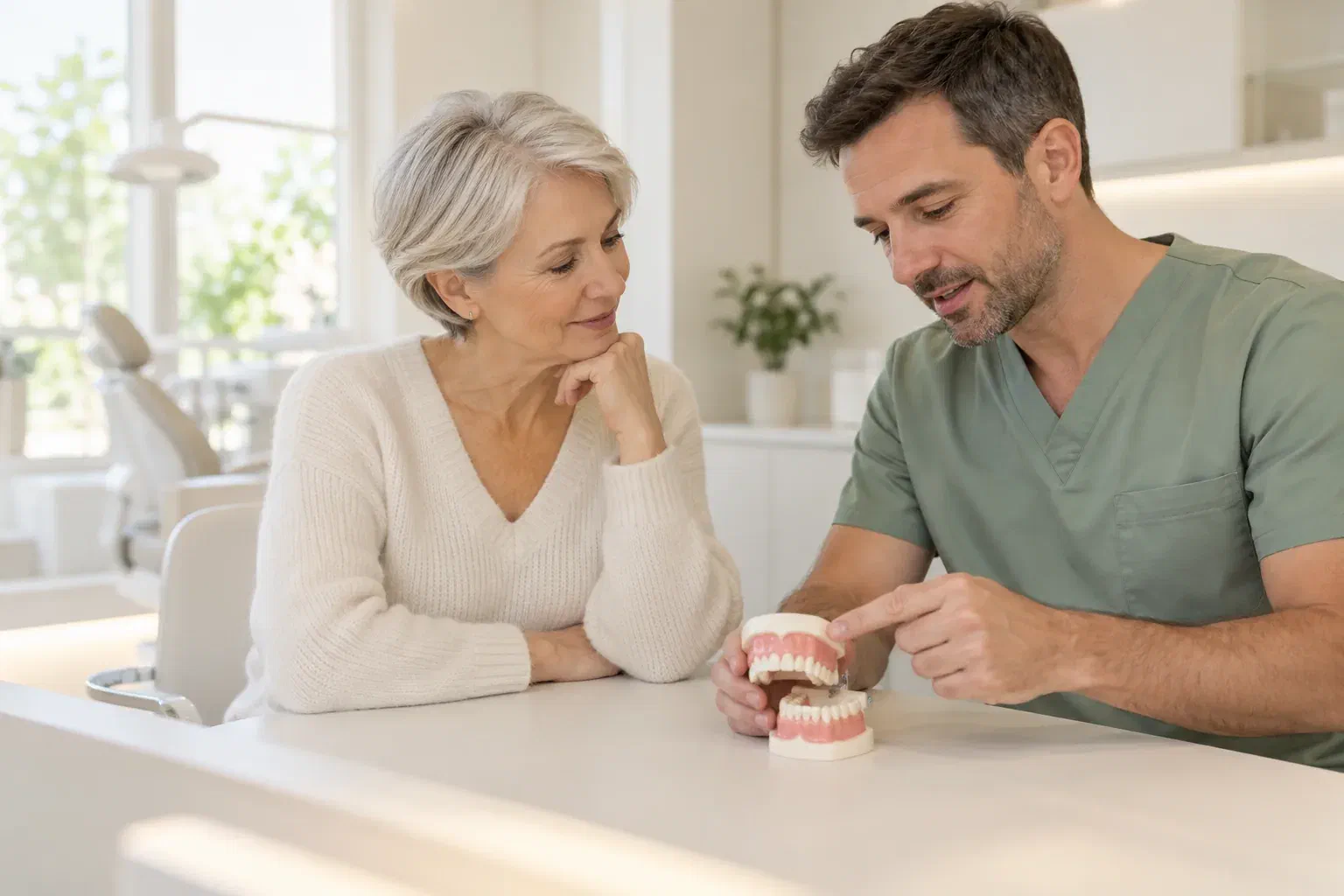
Illustrative patient and clinician discussing upper and lower tooth contacts using a dental model
Specialized Care

Bite and Occlusion Assessment in Burlington

You wake with a tight jaw and wonder whether your bite is the culprit. Coming from Burlington, you can have the way your teeth meet examined alongside your jaw symptoms and dental history, so the explanation is grounded in findings rather than guesswork, and any next step stays proportionate.

Jaw, teeth, or both?

A stiff jaw at breakfast.

Mornings tell you a lot. Some people notice tired jaw muscles, a dull ache near the ear or teeth that feel bruised after a night of clenching, and the natural question is whether the bite is to blame. Occlusion refers to how the upper and lower teeth come together; an assessment looks at that, but also at the teeth, existing dental work and the jaw itself.

Those are not the same thing, and the distinction matters. A bite that feels uneven, a tooth that hurts when you chew and a sore jaw joint may each have their own cause. Linking them too quickly can lead to treatment aimed at the wrong target, so the first job is to sort out which is which.

When you come in, tell us how long the symptoms have been around, what time of day they are worst and whether anything changed beforehand, such as new dental work, an injury or a different guard. Our team will describe what we observe, be clear about what is still uncertain and discuss what makes sense next, without presuming that your teeth need reshaping.

Ask about jaw and bite discomfort
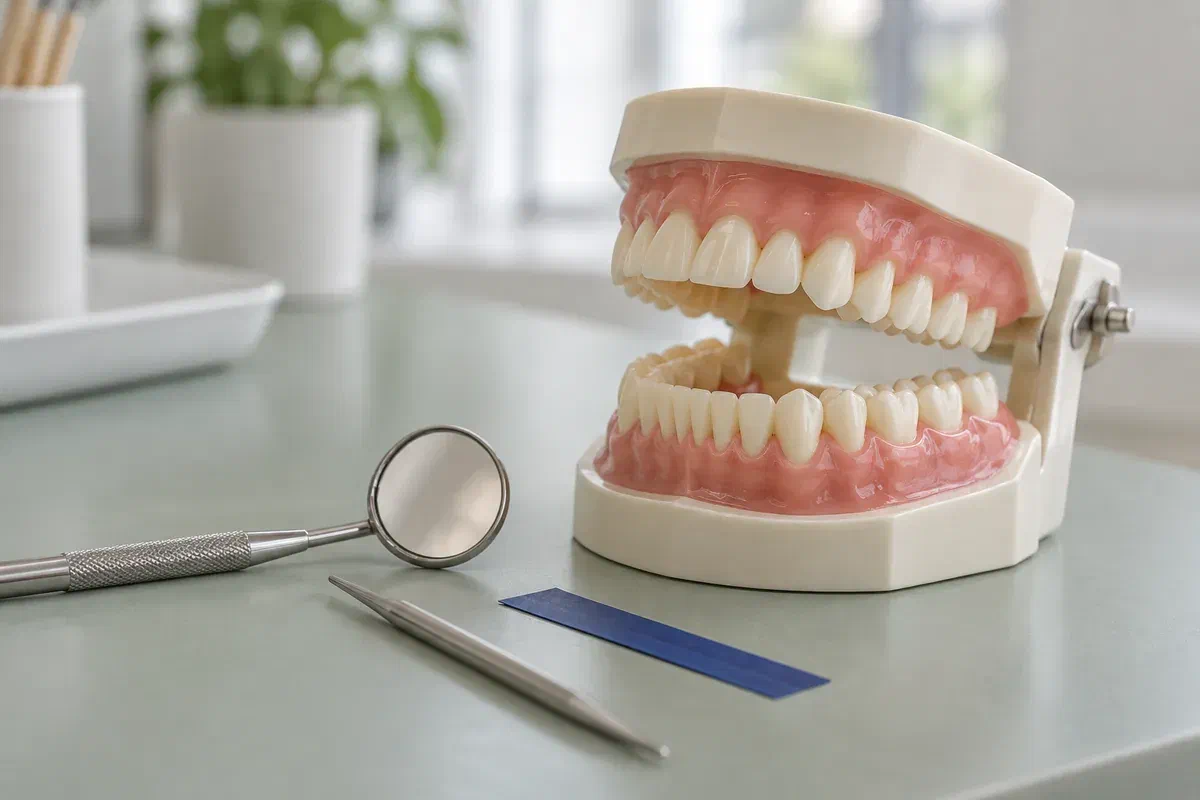
Illustrative hinged dental model beside a mirror and blue bite-marking paper on a pale surface
Clues to bring from Burlington

The pattern of your symptoms is useful evidence.

Notice when the discomfort appears, what you were doing and whether it has changed over weeks or months. Avoid testing a painful tooth or jaw repeatedly before your appointment.

Teeth that feel bruised or meet unevenly

Tenderness on waking, or one tooth that seems to land first, is worth describing in detail. Mention any recent filling, crown or bridge in that area. If newer work is involved, the practice that placed it should be asked to review it rather than leaving it to settle.

Signs of clenching or grinding

Flattened edges, small chips or a partner who hears grinding at night are all worth mentioning. Bring any guard you use, worn or not. We can consider whether the teeth and contacts fit these signs and what else might be contributing. Wear shows that teeth have met, not exactly why.

Jaw pain, locking or restricted opening

Describe where the jaw hurts, whether it catches or locks and whether eating has become harder. The muscles and joints often need their own assessment. A sore jaw does not, by itself, mean teeth should be altered.

The research does not support assuming that a faulty bite is what causes temporomandibular disorders. If jaw pain is your main concern, ask how the diagnosis is being made and why any suggested treatment suits it.

What you gain from looking carefully

An explanation you can follow, step by step.

Knowing what is going on is often a relief in itself. The examination links your symptoms to what can be seen and demonstrated: the specific tooth or filling at issue, how well the contacts line up with the discomfort, and what is still unknown. Even when no treatment is advised, a clear account of the findings helps you decide what to do next.

It also lets you judge proposals by their size. Protecting teeth from night-time grinding is a different matter from changing the way many teeth meet. Ask what each suggestion is for, what the alternatives are and where its limits lie, then consider whether it fits the problem that made you book.

Telling a tooth problem from a jaw problem

The findings may point to one tooth or restoration, to the jaw muscles, or to something that needs further testing. Separating these keeps care focused. If more than one issue is present, ask which should be addressed first and why.

A starting point for comparison

Talk about which observations should be recorded now and how changes will be judged later. Decide what progress would mean for you, such as waking without a tight jaw. Reviews are more useful when the goal is agreed at the outset.

Caution before permanent changes

When reshaping comes up, find out how much would be taken away and from what: your own enamel or a filling. Set the hoped-for gain against the unknowns and the other choices. Asking for more detail, or a second opinion, is always a reasonable request.

The assessment, in sequence

What will actually happen in the chair?

The visit is shaped around your concern. Not every assessment needs the same records, and being examined does not commit you to any adjustment of teeth or restorations.

  1. Describe your days and nights

    Explain when symptoms began, where they are felt and whether they come with closing, chewing, waking or resting. List recent dental care and anything you have tried. Jaw symptoms are discussed in their own right so they are not lost in a conversation about contacts.

  2. Examination of teeth, work and contacts

    The clinician looks at the teeth and restorations involved and may use thin coloured paper to show where they touch. Say what you feel as you close. Those marks are weighed with everything else, not treated as the full explanation for pain.

  3. Deciding on any further tests

    In some cases, tooth tests, x-rays, study casts or input from another clinician add something useful. Whether they do depends on what has been found so far and what still needs answering. A particular digital system or a thick file of records is not a requirement for everyone.

  4. Choosing a sensible way forward

    That could mean monitoring, protective care, conservative management of symptoms or a referral. Any adjustment is agreed separately and reviewed afterward. If nothing found explains the complaint, the plan should be to investigate further, not to experiment.

Looking after things afterward

Simple observations make follow-up easier.

Most people go straight back to their day after an assessment. Any instructions will reflect whether treatment was carried out, a guard was looked at or further investigation is being organized.

No home repairs

Please do not file teeth, trim a filling or cut down a guard yourself. If discomfort continues, contact us and describe what has changed. Bring the appliance to follow-up so it can be checked directly.

Track mornings and mealtimes

Are you waking more comfortably? Is chewing easier, unchanged or harder? Has something new started? A short weekly note answers these well, and clenching to test the bite does not help. Ask when a symptom that hangs on should be looked at again.

Bring your records next time

Gather any treatment summary, referral information and guard instructions in one folder. Mention dental or medical care received elsewhere in the meantime. That way the next visit can start from what has shifted rather than from the beginning.

What might come next

Care sized to the problem.

Ask which concern an option is meant to address and what supports it. Night-time clenching, an early contact and a painful joint seldom share a single fix.

When one specific finding explains the concern

Monitoring or a targeted restoration check

Sometimes the only thing worth attention is one filling or crown, and the rest can be left under observation. Find out what the proposed change is for, whether it affects tooth or restoration, and when it will be rechecked. What the clinician sees should drive the choice more than the sensation does.

When grinding, clenching or comfort is the focus

Protective or conservative care

Where grinding or a guard you already own is part of the story, the appliance and your habits can be evaluated and the aim of any new care explained. A guard can shield teeth from wear but does not cure every jaw ache. Clarify fit, wearing routine, limits and the review plan.

When symptoms persist or the picture is complex

Further dental or specialist assessment

Ongoing jaw symptoms or complicated restorative questions may justify a referral. Ask what it should clarify and how to manage in the meantime. Permanent changes to the bite should not be offered as a routine treatment for jaw joint pain.

Patient information: NIDCR — bruxism assessment, symptoms, and protection of teeth

Burlington bite questions

Plain answers about jaws, teeth and contacts.

Symptoms, dental history and examination findings are considered together. Your options may become clearer even if nothing needs to be changed right away.

(905) 876-4488
Can clenching at night make my teeth feel like they meet differently?
Tired muscles and tender teeth after clenching can make your bite feel unfamiliar for a while. That is one reason the teeth and the jaw muscles are both examined. Describe when the feeling is strongest, as morning symptoms point in a different direction from discomfort only when chewing.
Is a nightguard the answer to my jaw pain?
A guard can help protect teeth from grinding, but it is not a universal treatment for jaw pain. Whether one is suitable depends on the findings. Ask what it is meant to achieve, how to wear it and how you will know whether it is helping.
Will my teeth be adjusted at the first appointment?
There is no automatic link between being examined and being treated. Once the findings are explained, you can ask whether any reshaping is advised, which surfaces it would involve and what else could be tried. Nothing should be taken off a tooth or filling until the purpose and the trade-offs make sense to you.
Should I stop using my current guard before the visit?
No, keep following the routine you were given unless you are advised otherwise, and bring the guard with you. Mention whether symptoms differ when you wear it. Do not trim or reshape it yourself.
My jaw clicks but does not hurt. Should I be worried?
Painless clicking is common and does not need treatment on its own. Mention it, particularly if it changes, but keep it separate from pain, locking or restricted movement. A sound alone is not a reason to alter your teeth permanently.
When should jaw symptoms be seen urgently rather than booked routinely?
Call promptly if you cannot open or close your mouth properly, if your bite changes after an injury, or if there is significant pain or swelling. Explain the symptoms on the phone so the appropriate urgency can be discussed.

Patient information: NIDCR — painless joint sounds and caution about permanent bite changes for TMD

Booking from Burlington

Tell us about the mornings and the meals.

Reach our Bronte Street practice about jaw tightness, teeth that land unevenly or a restoration that no longer feels right. If you are coming from Burlington, we will examine what is happening and explain whether watching, treating or investigating further is the better route.

The examination, records, any treatment, referral needs and fees depend on what is found. Bite adjustment is not automatic, and no assessment can guarantee a particular explanation or symptom relief.

Visit Milton Dental Clinic
Unit 1, 342 Bronte St. S, Milton, ON L9T 5B7
Get directions Clinic hours
Monday–Thursday
11am–7pm
Friday–Sunday
By appointment only

Areas we serve

  • Milton
  • Oakville
  • Mississauga
  • Georgetown
  • Halton Hills
  • Acton
  • Campbellville
  • Brampton
  • Burlington
  • Puslinch
  • Rockwood
  • Erin
  • Caledon
  • Etobicoke
  • Old Milton
  • Bronte Meadows
  • Timberlea
  • Dorset Park
  • Dempsey
  • Clarke
  • Beaty
  • Coates
  • Harrison
  • Scott
  • Willmott
  • Ford
  • Bowes
  • Cobden
  • Walker
  • Mountain View
  • Milton Heights
  • Hawthorne Village
  • Valley View
  • Fallingbrook
  • Nassagaweya
  • Trafalgar
  • Esquesing
  • Nelson
  • Brookville
  • Moffat
  • Glen Williams
  • Norval
  • Limehouse
  • Stewarttown
  • Ashgrove
  • Hornby
  • Silver Creek
  • Speyside
  • Scotch Block
  • North Oakville
  • River Oaks
  • Glen Abbey
  • West Oak Trails
  • Palermo
  • Bronte Creek
  • College Park
  • Joshua Creek
  • Uptown Core
  • Preserve
  • Iroquois Ridge
  • Lisgar
  • Meadowvale
  • Meadowvale Village
  • Churchill Meadows
  • Erin Mills
  • Central Erin Mills
  • Streetsville
  • East Credit
  • Creditview
  • Heartland
  • Sheridan
  • Mount Pleasant
  • Credit Valley
  • Huttonville
  • Churchville
  • Springbrook
  • Northwest Brampton
  • Bram West
  • Fletcher's Meadow
  • Fletcher's Creek South
  • Alton Village
  • Orchard
  • Millcroft
  • Headon Forest
  • Tansley
  • Brant Hills
  • Tyandaga
  • Kilbride
  • Lowville
  • Aberfoyle
  • Morriston
  • Arkell
  • Hillsburgh
  • Freelton
  • Carlisle
  • Waterdown
  • Flamborough
  • Mountsberg

How can we help?

Milton Dental Clinic

Have a question about your smile? Choose the option that works best for you.

For urgent dental concerns, please call.
Messages are reviewed during clinic hours.