
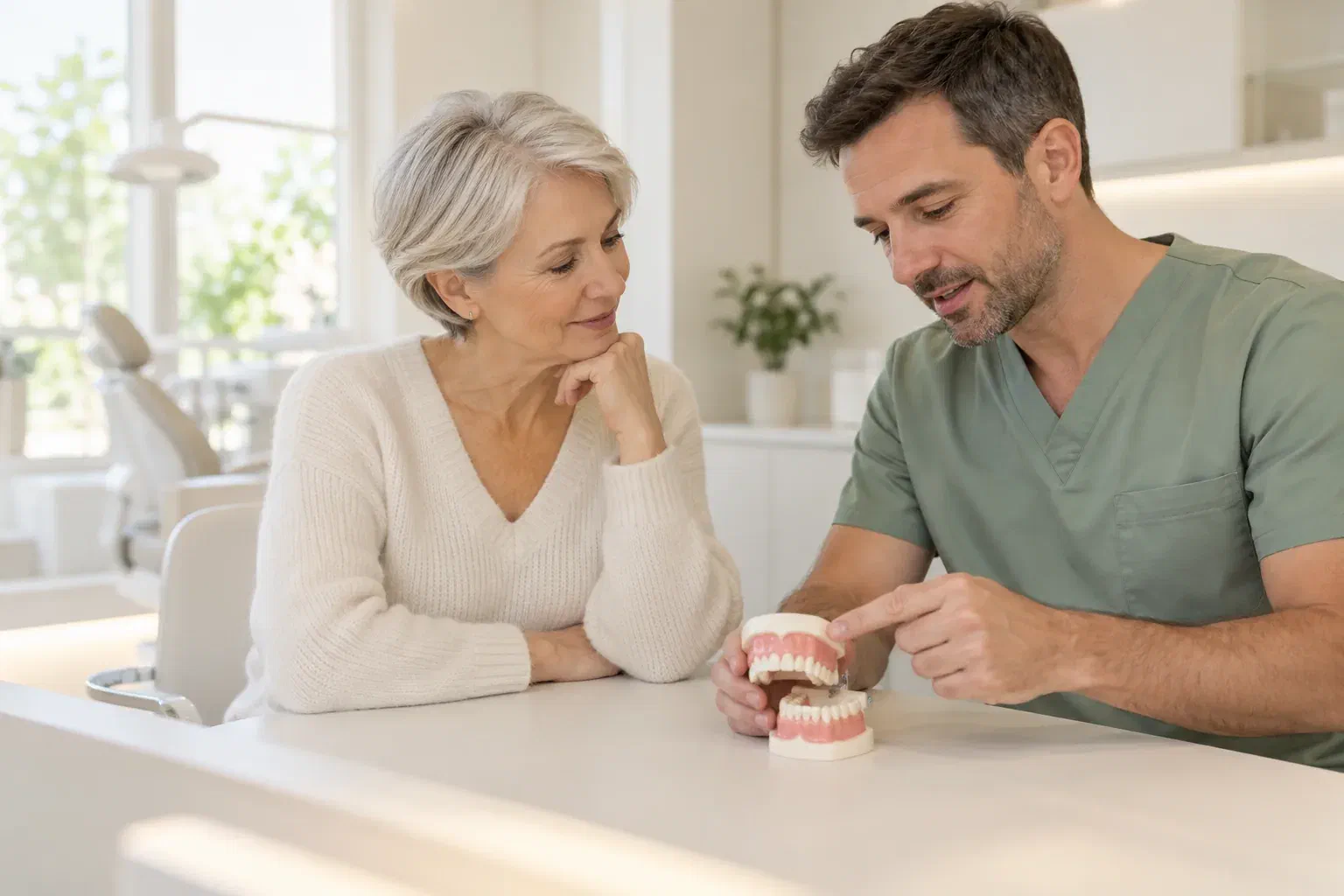
Illustrative patient and clinician discussing upper and lower tooth contacts using a dental model
Specialized Care

Bite and Occlusion Assessment in Caledon

Since a back tooth came out, chewing has felt lopsided and the neighbours seem to be leaning. From Bolton or elsewhere in Caledon, you can have the gap, the surrounding teeth and the way everything now meets examined, so any decision about replacing or protecting teeth is based on clear findings.

After a tooth has been removed

One space, and a bite that no longer feels balanced.

Losing a molar changes more than the gap itself. Food goes to the other side, the tooth opposite has nothing to meet, and over months the teeth beside the space may tip or drift. Occlusion is how upper and lower teeth touch, and assessing it after an extraction means looking at the space, the neighbouring and opposing teeth, any restorations and how chewing now feels.

Several things can be going on at once, and they are not equally important. A neighbour leaning into the gap, an opposing tooth that has started to over-erupt, a tender tooth now carrying extra load and a jaw that tires from one-sided chewing each lead to different conversations. Some are worth acting on, while others only need recording and watching.

Bring what you know about the extraction: roughly when it happened, why the tooth was removed and whether replacement was discussed. Mention any guard, partial denture or new dental work since. We will explain the findings, be candid about what is uncertain and help you think through the next step without assuming any teeth need to be reshaped.

Ask about your bite after an extraction
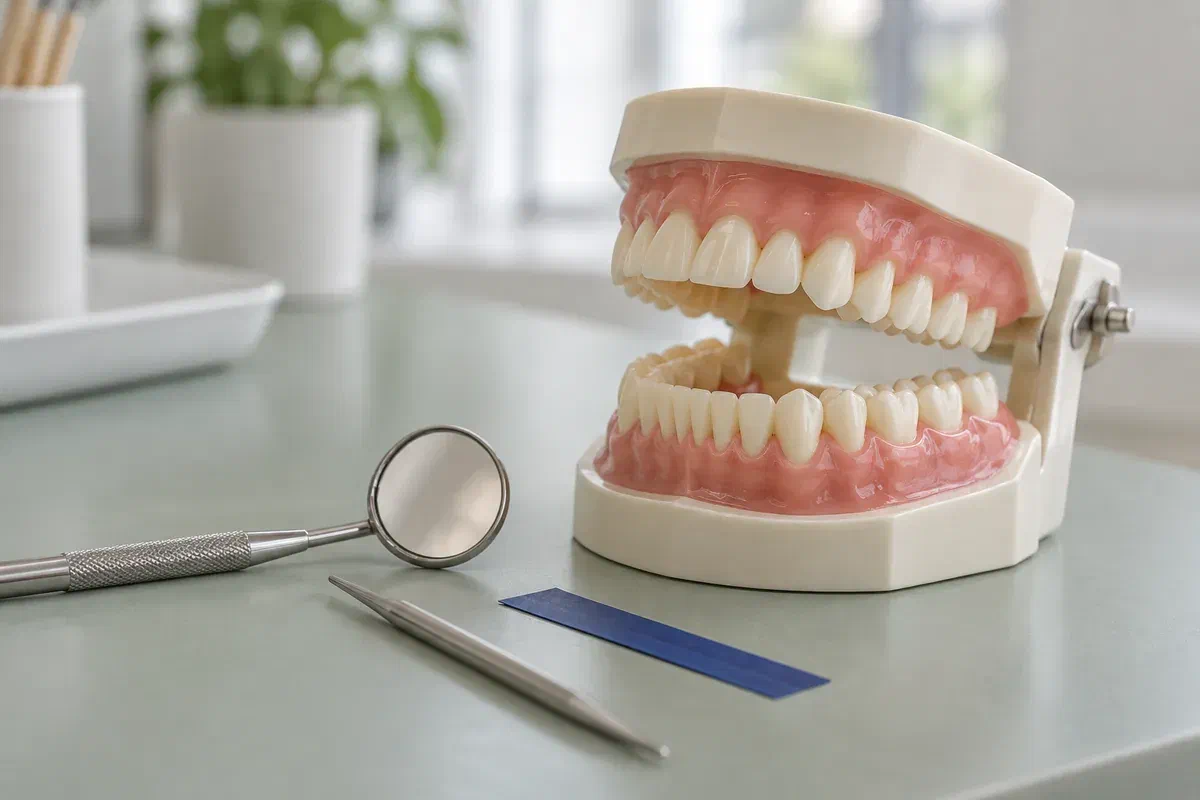
Illustrative hinged dental model beside a mirror and blue bite-marking paper on a pale surface
Changes noticed after an extraction

The gap affects the teeth around it.

Notice which side you chew on, whether food now traps between teeth and whether any tooth near the space has become sensitive. There is no need to press on tender teeth to test them before your visit.

A tooth near the space that meets differently

A neighbouring or opposing tooth may now land first, feel tender or catch food. Tell us which one and whether it has had recent work. If a filling or crown was placed nearby by another office, that office should usually be asked to review it first.

Wear or chips on the side you now favour

Chewing mostly on one side can coincide with more wear or chipping there. Bring any guard or partial denture you have. Part of the examination is judging whether that wear lines up with how your teeth now meet, or whether something else is at work. A worn surface shows where teeth met, not the whole explanation.

Jaw fatigue from one-sided chewing

If your jaw aches, feels stiff, catches or opens less than before, describe it. Overworked chewing muscles on one side can need attention of their own. Discomfort there is not, on its own, a reason to start reshaping tooth surfaces.

Research has not shown an uneven bite to be a dependable cause of temporomandibular disorders. If jaw pain is part of your concern, ask how it is being diagnosed and why the proposed treatment fits.

Why assess before deciding on replacement

Know how the gap is affecting things today.

An assessment gives the replacement question some context. It shows whether neighbouring teeth have moved, whether an opposing tooth has shifted, whether anything near the space is causing discomfort and what remains uncertain. That information is useful whether you decide to replace the tooth, protect what is there or simply monitor.

It also lets you compare options honestly. Replacing a single tooth, adjusting a contact and changing several teeth are very different undertakings. For each idea, find out what it is meant to achieve, what the alternatives are and where its limits lie, and how it relates to the change you actually noticed.

A view of how far the effects reach

Findings may be limited to one neighbouring tooth, point to a tooth needing further testing or show a broader shift. Knowing which keeps the plan proportionate and avoids an extensive proposal without clear reasons. If there are several issues, ask how they are ordered.

A record of the current position

Notes, photos or models taken now make it easier to see later whether teeth are still moving. Agree on what is being watched and how often. A follow-up then has a defined job.

Time to consider every option

Replacement choices and any adjustment involve trade-offs. Ask what each would involve, whether anything irreversible is planned and what happens if you choose to wait. Seeking another opinion before a large decision is reasonable.

What the assessment covers

The space, the neighbours and the opposite jaw.

The visit is tailored to your situation. Records vary, and attending an examination does not commit you to any tooth or restoration being changed.

  1. Talk through the extraction and since

    Explain when the tooth was removed, how chewing has changed and whether discomfort comes with closing, eating or rest. Note any later dental work. Jaw symptoms are discussed separately from the teeth.

  2. Examine the gap and the surrounding teeth

    The clinician checks the space, the neighbouring and opposing teeth and any restorations, and may use bite-marking paper to show how teeth now meet. Describe what you feel. The marks are interpreted with everything else, not in isolation.

  3. Consider images or models

    An x-ray, study models or another clinician’s view can help when replacement is being considered or teeth appear to have moved. Whether they are needed depends on the findings. Not every assessment requires a full set of records.

  4. Agree on a reasonable next step

    Options may include monitoring, discussing replacement, protective care, a focused repair or a referral. Any adjustment is a separate decision, reviewed afterward. If the findings do not explain the complaint, further investigation should come before trial changes.

Once the assessment is done

Watch the space, and the teeth beside it.

Most people need no recovery time after an assessment alone. Guidance will depend on whether care was given, an appliance was checked or replacement options are being explored.

No home adjustments

Please do not file teeth, smooth a filling or alter a partial denture or guard yourself. If something still feels off, contact the team and describe it. Keep any appliance available to be checked in person.

Notice changes around the gap

Food trapping, new sensitivity or a change in how teeth meet near the space are worth noting. Brief dated notes are more helpful than biting hard to test. Ask at the visit how soon a noticeable change should be reported.

Keep information together

Store any treatment summary, replacement estimates, referral details and appliance instructions in one place. Mention care received elsewhere. That helps any future decision start from accurate information.

Choices after the findings

Replace, protect, adjust or simply watch?

Ask which problem each option addresses and what supports it. A drifting neighbour, a tender tooth and a tired jaw may each need a different response.

When changes are small and clear

Monitoring or reviewing one restoration

A tooth beside the gap may need a restoration checked while other findings are simply recorded. Find out what any change would achieve, what it affects and how it will be followed up. The examination should guide the decision more than the sensation.

When protection or comfort is the priority

Conservative care or an appliance check

If grinding, clenching or an existing guard or partial denture is involved, it can be assessed and the aim of any new care explained. No appliance solves every jaw complaint. Ask about fit, wear, limits and how a review will work.

When the gap or jaw needs broader planning

Replacement planning or specialist input

Replacement options, complex restorative questions or persistent jaw symptoms may need another opinion. Ask what the referral should clarify and what to do meanwhile. Permanent bite changes are not a standard remedy for jaw joint pain.

Patient information: NIDCR — bruxism assessment, symptoms, and protection of teeth

Caledon questions about gaps and bites

What happens to a bite after a tooth is lost?

We weigh your symptoms, your dental past and the examination together. The visit can clarify choices even when nothing needs to change right now.

(905) 876-4488
Do teeth really move after an extraction?
They can. Neighbouring teeth may tip toward the space, and the opposing tooth may drift because it no longer has a partner. How much this happens varies. The assessment shows what, if anything, has changed in your case.
Does every missing tooth need to be replaced?
Not always. The decision depends on which tooth it was, how the surrounding teeth are behaving and your own priorities. Ask the clinician to explain the options, including monitoring, and what each would involve.
Can a bite assessment help me choose between replacement options?
It can provide useful information about the space and the surrounding teeth, which feeds into that decision. Choosing a specific replacement is a separate conversation that may need further records or a referral.
Will nearby teeth be filed down to even out my bite?
That is not automatic. Assessing the bite and adjusting it are separate decisions. If an adjustment is suggested, ask what would be removed, why and what the alternatives are, including replacing the missing tooth.
Should I bring my partial denture even if I rarely wear it?
Yes, bring it. Its fit and how often you wear it may matter. Say whether the concern feels different with it in or out, and do not alter it yourself.
Can someone in a rural part of Caledon arrange related visits together?
Ask when booking whether the assessment and any likely records can be scheduled close together. Whether that is possible depends on the findings, but the team can help you plan sensibly.

Patient information: NIDCR — painless joint sounds and caution about permanent bite changes for TMD

Booking from Caledon

Tell us about the tooth that is gone, and the ones that remain.

Reach our Bronte Street practice about a bite that changed after an extraction, teeth drifting into a space or discomfort when chewing. We can examine the area and explain whether monitoring, replacement planning, care or further investigation makes most sense.

Examination scope, records, treatment, referral and fees depend on what we find. Adjusting teeth is never a given, and a specific explanation or outcome cannot be promised before the visit.

Visit Milton Dental Clinic
Unit 1, 342 Bronte St. S, Milton, ON L9T 5B7
Get directions Clinic hours
Monday–Thursday
11am–7pm
Friday–Sunday
By appointment only

Areas we serve

  • Milton
  • Oakville
  • Mississauga
  • Georgetown
  • Halton Hills
  • Acton
  • Campbellville
  • Brampton
  • Burlington
  • Puslinch
  • Rockwood
  • Erin
  • Caledon
  • Etobicoke
  • Old Milton
  • Bronte Meadows
  • Timberlea
  • Dorset Park
  • Dempsey
  • Clarke
  • Beaty
  • Coates
  • Harrison
  • Scott
  • Willmott
  • Ford
  • Bowes
  • Cobden
  • Walker
  • Mountain View
  • Milton Heights
  • Hawthorne Village
  • Valley View
  • Fallingbrook
  • Nassagaweya
  • Trafalgar
  • Esquesing
  • Nelson
  • Brookville
  • Moffat
  • Glen Williams
  • Norval
  • Limehouse
  • Stewarttown
  • Ashgrove
  • Hornby
  • Silver Creek
  • Speyside
  • Scotch Block
  • North Oakville
  • River Oaks
  • Glen Abbey
  • West Oak Trails
  • Palermo
  • Bronte Creek
  • College Park
  • Joshua Creek
  • Uptown Core
  • Preserve
  • Iroquois Ridge
  • Lisgar
  • Meadowvale
  • Meadowvale Village
  • Churchill Meadows
  • Erin Mills
  • Central Erin Mills
  • Streetsville
  • East Credit
  • Creditview
  • Heartland
  • Sheridan
  • Mount Pleasant
  • Credit Valley
  • Huttonville
  • Churchville
  • Springbrook
  • Northwest Brampton
  • Bram West
  • Fletcher's Meadow
  • Fletcher's Creek South
  • Alton Village
  • Orchard
  • Millcroft
  • Headon Forest
  • Tansley
  • Brant Hills
  • Tyandaga
  • Kilbride
  • Lowville
  • Aberfoyle
  • Morriston
  • Arkell
  • Hillsburgh
  • Freelton
  • Carlisle
  • Waterdown
  • Flamborough
  • Mountsberg

How can we help?

Milton Dental Clinic

Have a question about your smile? Choose the option that works best for you.

For urgent dental concerns, please call.
Messages are reviewed during clinic hours.