
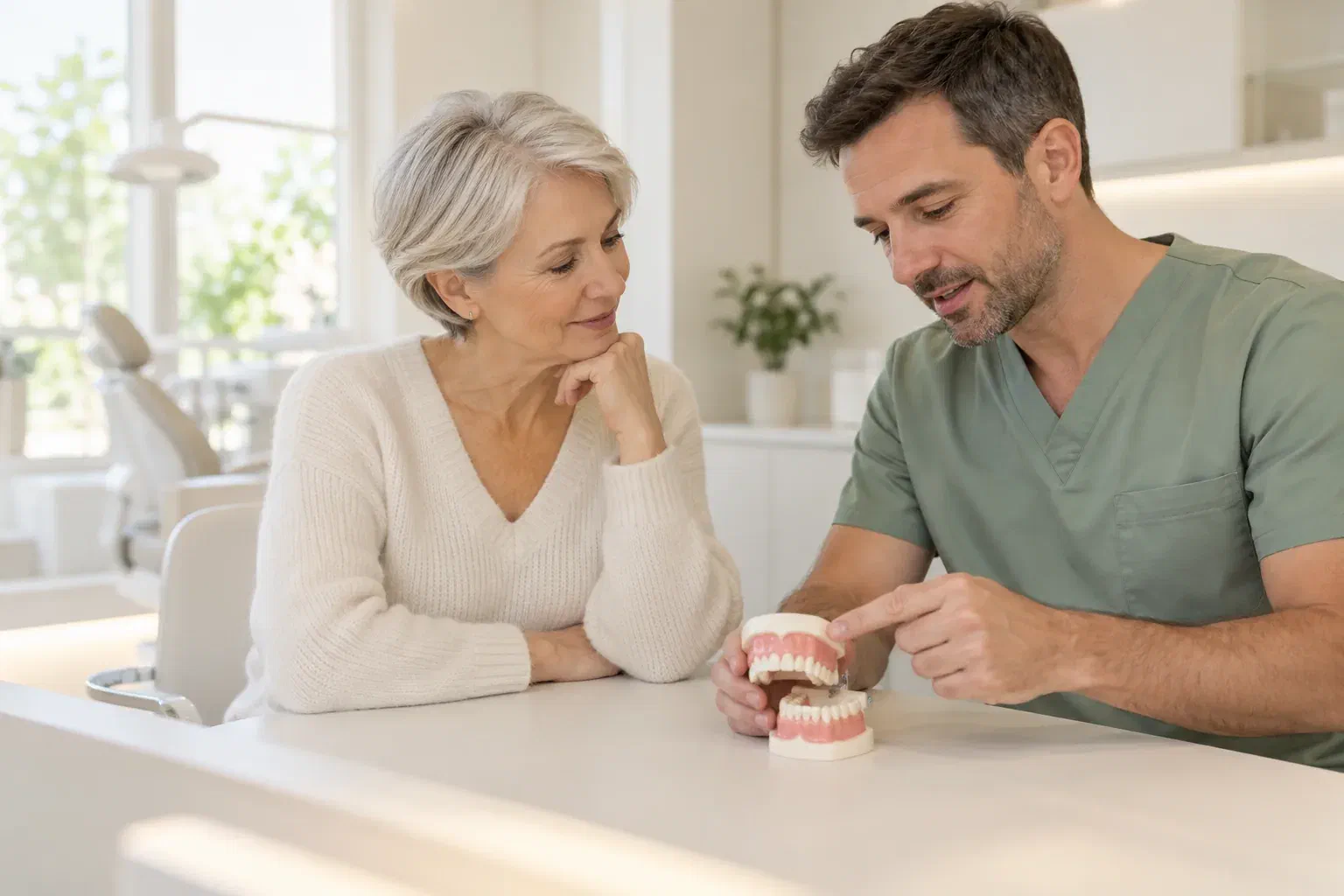
Illustrative patient and clinician discussing upper and lower tooth contacts using a dental model
Specialized Care

Bite and Occlusion Assessment in Etobicoke

Making the trip from Etobicoke is easier when one visit does as much as possible. Come prepared with your dental history, appliances and a clear account of what changed, and we will review how your teeth meet, explain the findings and plan any next step so you are not making unnecessary journeys.

Making a longer trip worthwhile

Pack the right things, and one visit can go a long way.

A bite concern can feel vague until someone examines it. Occlusion describes how the upper and lower teeth meet, and an assessment combines those contacts with the condition of the teeth, the dental work you have had and the discomfort or oddness you are noticing. Good preparation lets much of that be covered in a single appointment.

It helps to arrive knowing that different problems can feel alike. A high spot on a new restoration, a tooth that aches for its own reasons and a tired or painful jaw may all show up as a bite that feels wrong. Separating them early saves time, because each may call for its own kind of investigation.

Before you set out, gather what you can: the name of the practice that did recent work, any notes or x-rays you were given, and the guard or retainer you wear. Write down when the change started and what came just before it. We will explain the findings, be candid about uncertainty and help you decide what follows, without assuming your teeth need reshaping.

Start organizing your visit
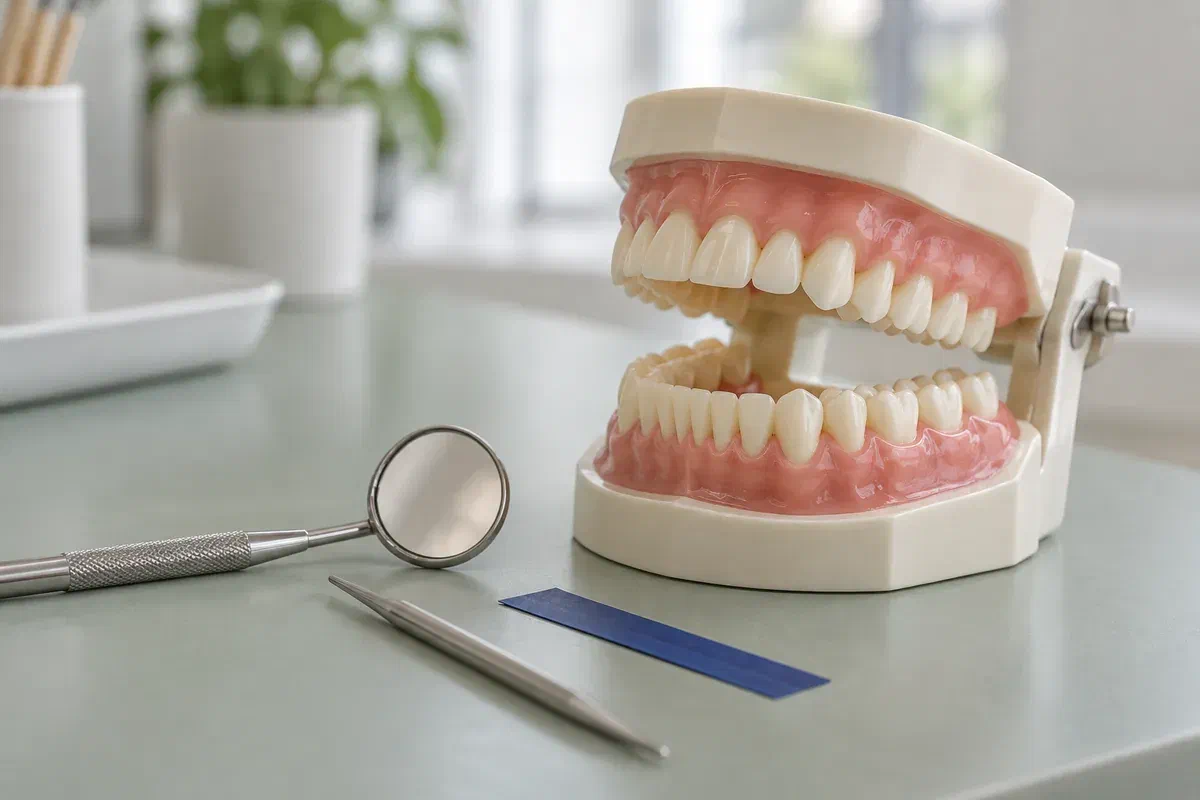
Illustrative hinged dental model beside a mirror and blue bite-marking paper on a pale surface
What to note before you travel

A short written summary saves time in the chair.

Jot down what you feel when closing and chewing, which side is involved and roughly when it began. There is no need to keep testing a painful tooth before the trip; just record what you notice.

Recent dental work that feels different

If a new filling, crown or bridge lands first or hurts when you chew, note the tooth, the date it was placed and who placed it. That practice is often the best first stop for a review, and it may be closer to home. Waiting for it to wear in is not a plan.

Wear, chips or repeat repairs

List repairs you remember and bring any appliance, even if it is old or cracked. We can look at whether the contacts and tooth condition help explain the damage and what else might be involved. Worn surfaces show where teeth have met, not exactly why problems are happening now.

Jaw symptoms that affect eating

Describe pain, stiffness, locking or limited opening, and foods you have started to avoid. The jaw muscles and joints may need their own assessment. Jaw discomfort should not automatically become a plan to grind teeth.

Research does not show that a poor bite reliably causes temporomandibular disorders. If your jaw hurts, ask how the diagnosis is being established and why any suggested treatment is appropriate.

Getting value from one appointment

Clear findings mean fewer return trips.

The point of the visit is understanding. The examination ties your description to things that can be shown and explained, such as a specific contact, a restoration that needs a look or a tooth that should be tested. You should leave knowing what was found, what was not, and whether anything actually needs to happen next.

That clarity helps you plan. A small adjustment to one new filling might be handled by the practice that placed it; a broader question might need further records or a referral. Ask about the purpose, alternatives and limits of anything proposed, and how many visits it would realistically involve.

Knowing the size of the problem

Findings may centre on one restoration, a tooth needing more tests, or a wider question. Understanding which helps you plan travel and time off, and avoids a large plan without clear reasons. If several areas need care, ask how they are prioritized.

A recorded starting point

Agree on which observations or records are worth keeping, so any later review can be compared fairly. Decide together what improvement would mean, perhaps chewing without favouring one side. That way, a follow-up visit has a clear purpose.

Time to decide on permanent steps

You do not have to agree to an irreversible adjustment on the day. Ask what would be removed and from which surface, and consider the alternatives and uncertainty. Going home to think, or seeking another opinion, is perfectly reasonable.

A focused appointment

Listen, examine, explain, then plan.

The assessment is built around your concern. Some people need very few records, others more, and attending an examination does not commit you to any tooth or restoration being changed.

  1. Share your written notes

    Your summary of when it began, where it is felt and whether it happens on closing, chewing or at rest gives the visit a head start. Include recent treatment and anything you have tried. Jaw symptoms are discussed separately from contacts.

  2. A careful look at teeth and contacts

    The clinician examines the relevant teeth and restorations and may use marking paper to show where they touch. Tell us what you feel as you close. Those marks are read with the history and examination, never on their own.

  3. Decide on extra records, if any

    Tooth tests, x-rays, study models or another clinician’s opinion may be useful in some situations. If they are needed, ask whether they can be done on the same day or combined with a later visit. Not everyone needs a particular device or an extensive record set.

  4. Leave with a plan you understand

    That could be monitoring, focused care, conservative symptom management or a referral, ideally closer to home where that makes sense. Any adjustment is agreed separately and reviewed afterward. If nothing explains the complaint, the next step should be investigation, not trial and error.

Back home

Know what to watch, and who to call.

An assessment by itself usually needs no recovery. Instructions depend on whether treatment was provided, a guard was checked or more investigation is being arranged.

No do-it-yourself adjustments

Do not file a tooth, scrape a filling or reshape an appliance. If something still feels wrong, phone first and describe the change; it may save you a wasted trip. Keep the appliance handy for when it can be examined.

Keep a simple log

Note whether chewing is better, unchanged or worse, and whether anything new has started. A few dated lines are plenty, and there is no need to clench to test things. Ask at the visit how long to wait before calling about a lingering issue.

Keep everything in one folder

Hold treatment summaries, referral details and appliance instructions together, and note any care received elsewhere. Bringing that folder next time means the visit can focus on what has changed.

Planning what comes next

The findings set the scope, and the scope sets the schedule.

Ask what problem each option targets and what supports it. A high contact, a damaged tooth and jaw pain may need quite different responses and different numbers of visits.

When the issue is contained and understood

Monitoring or one restoration review

A single filling or crown may need attention while other findings are simply watched. Find out what any change is meant to achieve, which material it would affect and when it should be rechecked. The examination, not the sensation alone, should guide the choice.

When protection or comfort is the focus

Conservative care or a guard review

If grinding, clenching or an existing appliance is involved, it can be assessed and the purpose of any new care explained. A guard is not a fix for every jaw complaint. Clarify fit, wear routine, limitations and how a review would fit your travel plans.

When the explanation needs broader input

Further dental or specialist evaluation

Ongoing symptoms, complex restorative questions or a jaw condition may justify a referral, possibly nearer to you. Ask what it should clarify and how to manage meanwhile. Permanent bite changes are not a routine answer to jaw joint pain.

Patient information: NIDCR — bruxism assessment, symptoms, and protection of teeth

Planning questions from Etobicoke

Practical answers for a longer trip.

Your symptoms, dental history and examination findings are looked at together. The visit can make your options clear even if no change is needed right now.

(905) 876-4488
What should I bring so the assessment is as complete as possible?
Bring any guard, retainer or partial denture, a list of recent dental work with dates, and the names of practices involved. Notes or x-rays you were given can help. A short written description of your symptoms is often the most useful item of all.
Can x-rays from my previous dentist be used?
Recent images from another practice can sometimes be helpful. Ask that office whether they can be shared before your visit. The clinician will decide whether they answer the current question or whether something new is needed.
Should a high spot on a new filling be checked here or where it was placed?
Usually the practice that placed it is the first place to contact, and it may be more convenient. If you would like an independent assessment, we can examine it and explain what we see, but the treating practice should be aware.
Is it possible to have the bite adjusted on the same day?
Assessment and treatment are separate decisions. If a small, clearly justified adjustment is recommended, ask exactly what would change and why before agreeing. You are free to take time to consider it rather than deciding on the spot.
Does painless clicking in my jaw need to be checked?
A jaw that clicks without hurting is something many people live with, and on its own it usually needs no treatment. Bring it up if the clicking has changed, and tell us separately about any pain, catching or trouble opening wide. Noise by itself does not justify permanent work on the teeth.
What if my symptoms worsen after I get home to Etobicoke?
Call and describe what has changed so the team can advise whether to come back, wait or seek care elsewhere. If there is significant swelling, an injury or severe pain, getting urgent care closer to home may be the sensible choice.

Patient information: NIDCR — painless joint sounds and caution about permanent bite changes for TMD

Booking from Etobicoke

One well-prepared visit is a good start.

Contact our Bronte Street practice about teeth that meet unevenly, a restoration that feels different or discomfort when chewing. Mention when booking that you are coming from Etobicoke, and we can help you plan the assessment and any follow-up sensibly.

How much is examined, which records are taken and whether treatment, referral or fees follow will all be shaped by what we find. We do not adjust bites as a matter of course, and we cannot know in advance what the explanation or outcome will be.

Visit Milton Dental Clinic
Unit 1, 342 Bronte St. S, Milton, ON L9T 5B7
Get directions Clinic hours
Monday–Thursday
11am–7pm
Friday–Sunday
By appointment only

Areas we serve

  • Milton
  • Oakville
  • Mississauga
  • Georgetown
  • Halton Hills
  • Acton
  • Campbellville
  • Brampton
  • Burlington
  • Puslinch
  • Rockwood
  • Erin
  • Caledon
  • Etobicoke
  • Old Milton
  • Bronte Meadows
  • Timberlea
  • Dorset Park
  • Dempsey
  • Clarke
  • Beaty
  • Coates
  • Harrison
  • Scott
  • Willmott
  • Ford
  • Bowes
  • Cobden
  • Walker
  • Mountain View
  • Milton Heights
  • Hawthorne Village
  • Valley View
  • Fallingbrook
  • Nassagaweya
  • Trafalgar
  • Esquesing
  • Nelson
  • Brookville
  • Moffat
  • Glen Williams
  • Norval
  • Limehouse
  • Stewarttown
  • Ashgrove
  • Hornby
  • Silver Creek
  • Speyside
  • Scotch Block
  • North Oakville
  • River Oaks
  • Glen Abbey
  • West Oak Trails
  • Palermo
  • Bronte Creek
  • College Park
  • Joshua Creek
  • Uptown Core
  • Preserve
  • Iroquois Ridge
  • Lisgar
  • Meadowvale
  • Meadowvale Village
  • Churchill Meadows
  • Erin Mills
  • Central Erin Mills
  • Streetsville
  • East Credit
  • Creditview
  • Heartland
  • Sheridan
  • Mount Pleasant
  • Credit Valley
  • Huttonville
  • Churchville
  • Springbrook
  • Northwest Brampton
  • Bram West
  • Fletcher's Meadow
  • Fletcher's Creek South
  • Alton Village
  • Orchard
  • Millcroft
  • Headon Forest
  • Tansley
  • Brant Hills
  • Tyandaga
  • Kilbride
  • Lowville
  • Aberfoyle
  • Morriston
  • Arkell
  • Hillsburgh
  • Freelton
  • Carlisle
  • Waterdown
  • Flamborough
  • Mountsberg

How can we help?

Milton Dental Clinic

Have a question about your smile? Choose the option that works best for you.

For urgent dental concerns, please call.
Messages are reviewed during clinic hours.