
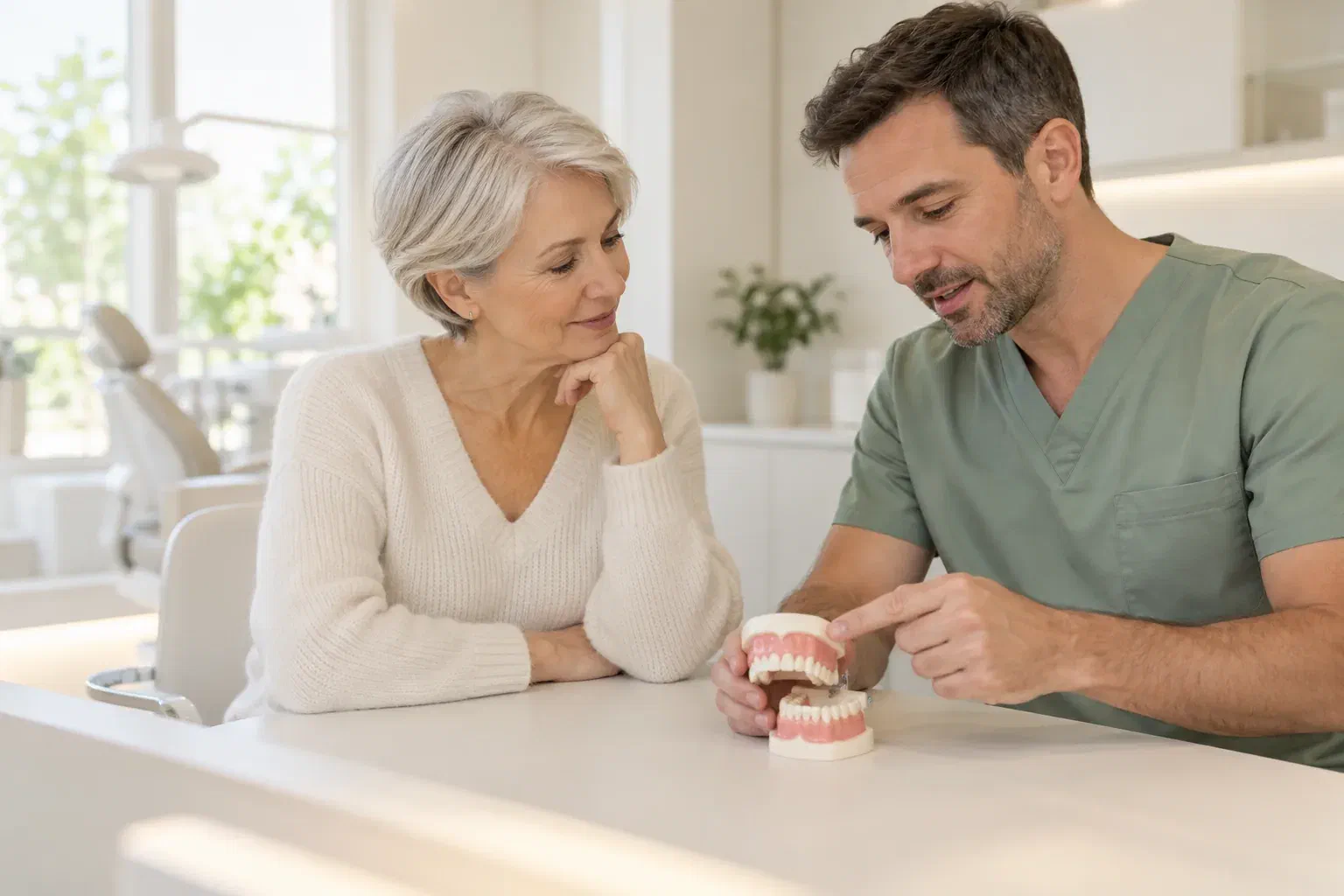
Illustrative patient and clinician discussing upper and lower tooth contacts using a dental model
Specialized Care

Bite and Occlusion Assessment in Milton

A new filling that lands first, a crown that feels tall at supper, or chewing that suddenly takes more thought: these are good reasons to have your bite looked at. In Milton, we review how your teeth meet, what has changed recently, and what the findings suggest before anything is altered.

When closing your teeth feels unfamiliar

The first bite of dinner told you something had changed.

Often the moment is ordinary. You sit down to eat a day or two after a new filling, close on a forkful of food, and one tooth meets before the rest. Occlusion is simply the word for how your upper and lower teeth come together, and an assessment looks at those contacts alongside the teeth, the dental work and the sensation you describe.

Not every odd feeling has the same source. A restoration that sits slightly proud, a tooth that is sore for another reason, and an aching jaw can all show up as a bite that seems wrong. They are worth separating, because each may need a different kind of look and a different response, and some need none at all.

Tell us when you first noticed the change and what came before it: dental treatment, a knock to the mouth, or a new or altered appliance. Records from earlier care help if you have them. We will go over what the examination shows, say plainly what is still unclear, and talk through a sensible next step without presuming your bite needs to be reshaped.

Ask about a bite that feels different
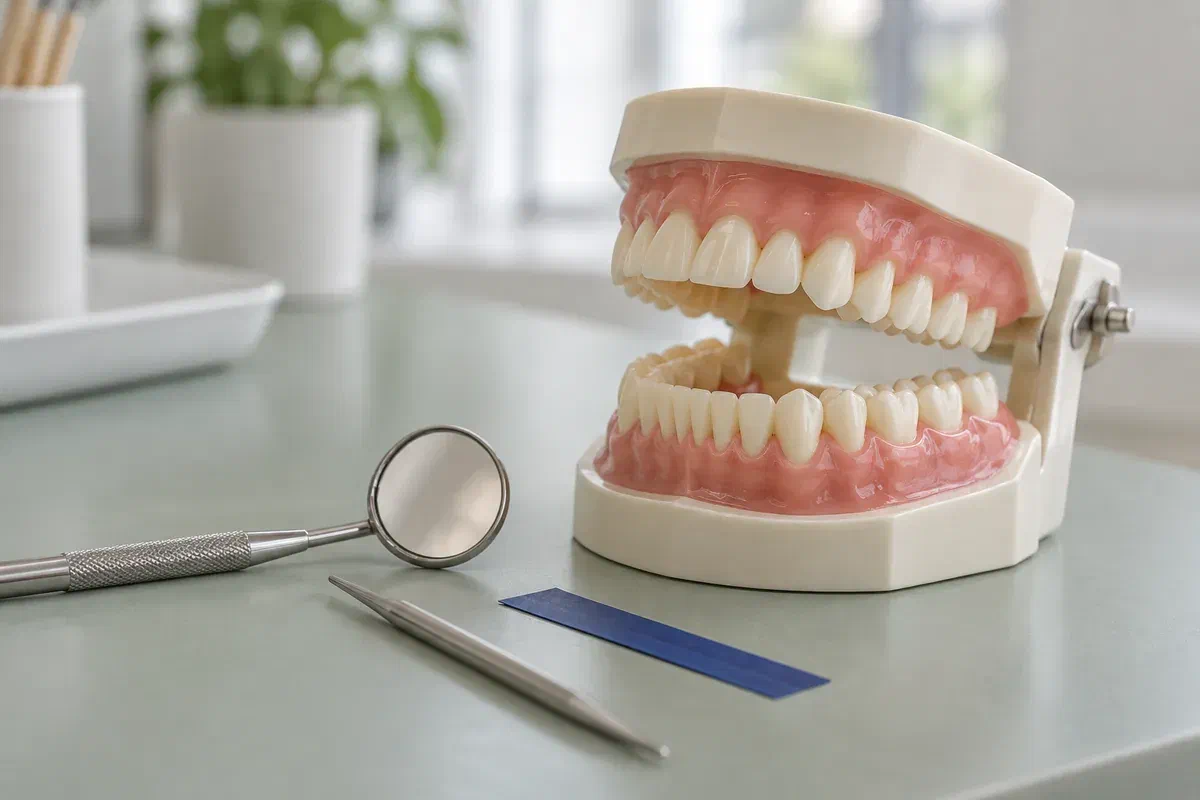
Illustrative hinged dental model beside a mirror and blue bite-marking paper on a pale surface
What brings people in

Small details about the change make the visit more productive.

Think about what you notice when you close, chew or rest your jaw, and whether this is recent or has been there for years. You do not need to keep pressing on a sore tooth to confirm it before coming in.

A tooth that touches first after treatment

Let us know about any recent filling, crown, bridge or other restoration and point to the side that feels off. Say whether it meets early, aches when you chew or only feels strange. If the work was done elsewhere, contacting that practice for a review is sensible, rather than waiting for it to settle in by itself.

Worn edges, chips or repairs that keep failing

A list of past repairs is useful, and so is any guard or retainer you wear. We can consider whether the condition of the teeth and the way they meet relate to the problem, and what else might be involved. A worn surface tells part of the story, not all of it.

An uncomfortable jaw or trouble eating normally

Describe soreness, limited opening, catching or locking, and any foods you now avoid. The muscles and joints of the jaw may need to be considered along with the teeth. Jaw discomfort is not, on its own, a reason to start reshaping tooth surfaces.

Current research does not show that an uneven bite is a dependable explanation for temporomandibular disorders. When jaw pain is part of the picture, it is reasonable to ask how a diagnosis was reached and why a particular treatment fits.

Why an assessment is worth the time

Leave with a clearer picture of what you are feeling.

A good assessment links your description to things the clinician can actually see, show and explain. You can ask which tooth or restoration is involved, whether the contact found matches the discomfort, and whether anything else needs to be checked. Understanding the situation has value even when the honest advice is that no treatment is needed yet.

It is also an opportunity to weigh the size of any proposal. Smoothing one new filling is a very different undertaking from altering contacts across many teeth. Before you agree to anything, you should know why it is suggested, what the alternatives are, and where its limits lie, so you can judge whether it answers the concern you came in with.

Knowing whether the issue is isolated

The findings may point to a single restoration, to a tooth that needs further testing, or to something that calls for a broader look. Sorting this out early stops a narrow concern from growing into a large plan nobody has explained. If more than one area needs care, ask which comes first and why.

A baseline to measure change against

Talk about which observations or records are worth keeping before anything is done, and how you will judge the result. Agree on what better would look like for you, such as chewing on that side without wincing. Follow-up makes more sense when everyone knows what it is checking.

Time to think before anything permanent

If an adjustment is proposed, ask precisely what would be removed and whether it is natural enamel or restorative material. Consider the uncertainties and the options alongside the hoped-for benefit. You are free to ask for more explanation, or a second opinion, before committing.

How the appointment usually runs

Talk, examine, then make sense of it together.

Each assessment is shaped by the concern. Some people need very few records and others need more, and attending an examination does not mean you have agreed to have teeth or restorations adjusted.

  1. Start with the story

    Explain when the change appeared, where you feel it, and whether it happens when you close, while chewing or at rest. Mention recent treatment and anything you have already tried. Raise jaw symptoms on their own so the conversation is not only about which teeth touch.

  2. Look closely at teeth and contacts

    The clinician examines the relevant teeth and restorations and may use marking paper to see where contacts fall. Say what you notice as you close. The marks are read together with your history and the examination, not taken as the full explanation for discomfort.

  3. Decide whether more information would help

    You can ask whether further tests on a tooth, images, study models or another clinician’s view would add anything useful. That choice should follow from what was found and the question being asked. Not everyone needs a particular device or a large collection of records.

  4. Choose a step that fits the findings

    Options include monitoring, focused care, conservative symptom management or a referral. Any adjustment should be agreed on its own, with a plan for checking it afterward. If the findings do not account for the complaint, talk about how that will be explored rather than trying changes one after another.

In the days that follow

What to watch for, and when to get in touch.

An assessment on its own may need no recovery time at all. What you are asked to do depends on whether care was given, an appliance was checked, or further tests are being arranged.

Leave the adjusting to the clinic

Please do not file a tooth, scrape at a filling or trim a guard at home. If something still feels off, contact us and describe what has changed. Keep any appliance handy so it can be examined directly rather than described from memory.

Notice how everyday eating feels

Pay attention to whether chewing is easier, the same or worse, and whether anything new has started. A few short notes about where and when you feel it are helpful, without clenching to test it. Ask how long to wait before a lingering concern should be looked at again.

Keep your paperwork together

If you were given a treatment summary, referral details or appliance instructions, keep them in one place. Let the clinician know about any care received elsewhere since your visit. Good notes let the next appointment focus on what is different and what still needs answering.

Possible next steps

What was found decides how much is done.

Ask which problem each option is meant to solve and what supports it. An early contact, a damaged tooth and a sore jaw do not necessarily call for the same answer.

When the concern is narrow and the cause is clear

Monitoring or a review of one restoration

Sometimes a single filling or crown needs attention, while other findings can simply be watched. Ask why a change is advised, which material it would affect, and how it will be followed up. The decision should rest on the examination, not on the sensation alone.

When protecting teeth or easing symptoms matters

Conservative care or an appliance check

If clenching, grinding or a guard you already wear is involved, talk about how it will be assessed and what any suggested care aims to do. An appliance does not fix every jaw problem. Ask about fit, wear instructions, limitations and how you will both know if it helps.

When the cause or the treatment needs more input

A broader dental or specialist opinion

Ongoing symptoms, a complicated restorative question or a jaw condition may justify another opinion. Ask what the referral should clarify and what to do in the meantime. Permanently changing the bite should not be presented as a standard remedy for jaw pain.

Patient information: NIDCR — bruxism assessment, symptoms, and protection of teeth

Common questions

Answers before any adjustment is made.

Your symptoms, the work you have had and what the examination shows are considered as a whole. The visit can make your choices clearer even when the right decision is to change nothing for now.

(905) 876-4488
Is it normal for a brand-new crown to feel slightly tall?
A new crown or filling can feel unfamiliar at first, but a tooth that clearly meets before the others, or aches when you chew, should be checked rather than ignored. Contact the practice that placed it and describe which side feels high and whether it is getting better or worse.
Will the clinician reshape my teeth at the assessment?
Not automatically. Examining your bite and treating it are separate decisions. Ask what was found, whether an adjustment is being recommended, and exactly what would change. You should understand the reason, the alternatives and the consequences before any enamel or filling material is removed.
My bite feels off but nothing hurts. Is it still worth booking?
It can be. A change in how your teeth meet, even without pain, is useful information, particularly after recent dental work. The assessment may simply confirm that monitoring is reasonable, which is still a helpful answer, and it records a starting point if things change later.
Could a sore tooth make my whole bite feel different?
Yes, discomfort in one tooth can change how you close, sometimes without you noticing. That is why the tooth itself is examined as well as the contacts. Mention exactly where the soreness is and what sets it off so the possible causes can be sorted out.
How should I describe the problem when I call?
Say when it started, which side it affects, and whether it followed treatment, an injury or a change to an appliance. Mention pain, swelling or difficulty opening, as those may change how soon you should be seen. You do not need medical terms; a plain description works well.
What happens if no clear reason is found?
Ask what has been ruled out, what is still uncertain, and whether a review or further assessment makes sense. Sometimes a diagnosis needs more information over time. Repeated permanent adjustments without a clear purpose are not a substitute for careful investigation of the complaint.

Patient information: NIDCR — painless joint sounds and caution about permanent bite changes for TMD

Booking a bite assessment in Milton

Tell us what changed and when it started.

Get in touch with our Bronte Street practice about teeth that meet unevenly, dental work that feels different, or discomfort when you chew. We can assess the concern and talk about appropriate review, care or further investigation for Milton households.

What the examination involves, which records are needed, any treatment or referral, and the fees all depend on the findings. Adjusting the bite is never automatic, and no assessment can guarantee a specific explanation or relief in advance.

Visit Milton Dental Clinic
Unit 1, 342 Bronte St. S, Milton, ON L9T 5B7
Get directions Clinic hours
Monday–Thursday
11am–7pm
Friday–Sunday
By appointment only

Areas we serve

  • Milton
  • Oakville
  • Mississauga
  • Georgetown
  • Halton Hills
  • Acton
  • Campbellville
  • Brampton
  • Burlington
  • Puslinch
  • Rockwood
  • Erin
  • Caledon
  • Etobicoke
  • Old Milton
  • Bronte Meadows
  • Timberlea
  • Dorset Park
  • Dempsey
  • Clarke
  • Beaty
  • Coates
  • Harrison
  • Scott
  • Willmott
  • Ford
  • Bowes
  • Cobden
  • Walker
  • Mountain View
  • Milton Heights
  • Hawthorne Village
  • Valley View
  • Fallingbrook
  • Nassagaweya
  • Trafalgar
  • Esquesing
  • Nelson
  • Brookville
  • Moffat
  • Glen Williams
  • Norval
  • Limehouse
  • Stewarttown
  • Ashgrove
  • Hornby
  • Silver Creek
  • Speyside
  • Scotch Block
  • North Oakville
  • River Oaks
  • Glen Abbey
  • West Oak Trails
  • Palermo
  • Bronte Creek
  • College Park
  • Joshua Creek
  • Uptown Core
  • Preserve
  • Iroquois Ridge
  • Lisgar
  • Meadowvale
  • Meadowvale Village
  • Churchill Meadows
  • Erin Mills
  • Central Erin Mills
  • Streetsville
  • East Credit
  • Creditview
  • Heartland
  • Sheridan
  • Mount Pleasant
  • Credit Valley
  • Huttonville
  • Churchville
  • Springbrook
  • Northwest Brampton
  • Bram West
  • Fletcher's Meadow
  • Fletcher's Creek South
  • Alton Village
  • Orchard
  • Millcroft
  • Headon Forest
  • Tansley
  • Brant Hills
  • Tyandaga
  • Kilbride
  • Lowville
  • Aberfoyle
  • Morriston
  • Arkell
  • Hillsburgh
  • Freelton
  • Carlisle
  • Waterdown
  • Flamborough
  • Mountsberg

How can we help?

Milton Dental Clinic

Have a question about your smile? Choose the option that works best for you.

For urgent dental concerns, please call.
Messages are reviewed during clinic hours.