

Illustrative patient and clinician discussing gentle brushing with a dental teaching model
Specialized Care

Bleeding Gums Treatment in Erin

Most of the work of healing gums happens at your own sink, in the weeks between appointments. We examine the bleeding, explain its cause and build a home routine with you that is simple enough to keep up from Erin or Hillsburgh.

Erin: gum care that lives at home

Two minutes at the sink, twice a day, done well.

A visit to the clinic is a few hours out of your month. Your toothbrush is with you every single day. That is why a bleeding-gum appointment should leave you with more than a clean feeling: it should leave you with a routine that suits your teeth, your hands and the realities of a rural household.

First, though, the cause. Plaque inflaming the gum edge is the frequent culprit, yet the examination also looks at how you currently clean, any restoration or crowded tooth that keeps food against the gum, your medical history and your medicines. Starting a new home habit without that information risks working hard at the wrong thing.

Tell us what your routine honestly looks like on an ordinary weekday, where the gums bleed and how long it has been happening. Mention any tenderness or swelling. We will show you what we find and work with you on care, at the clinic and at home, plus a sensible review.

Start with a gum exam
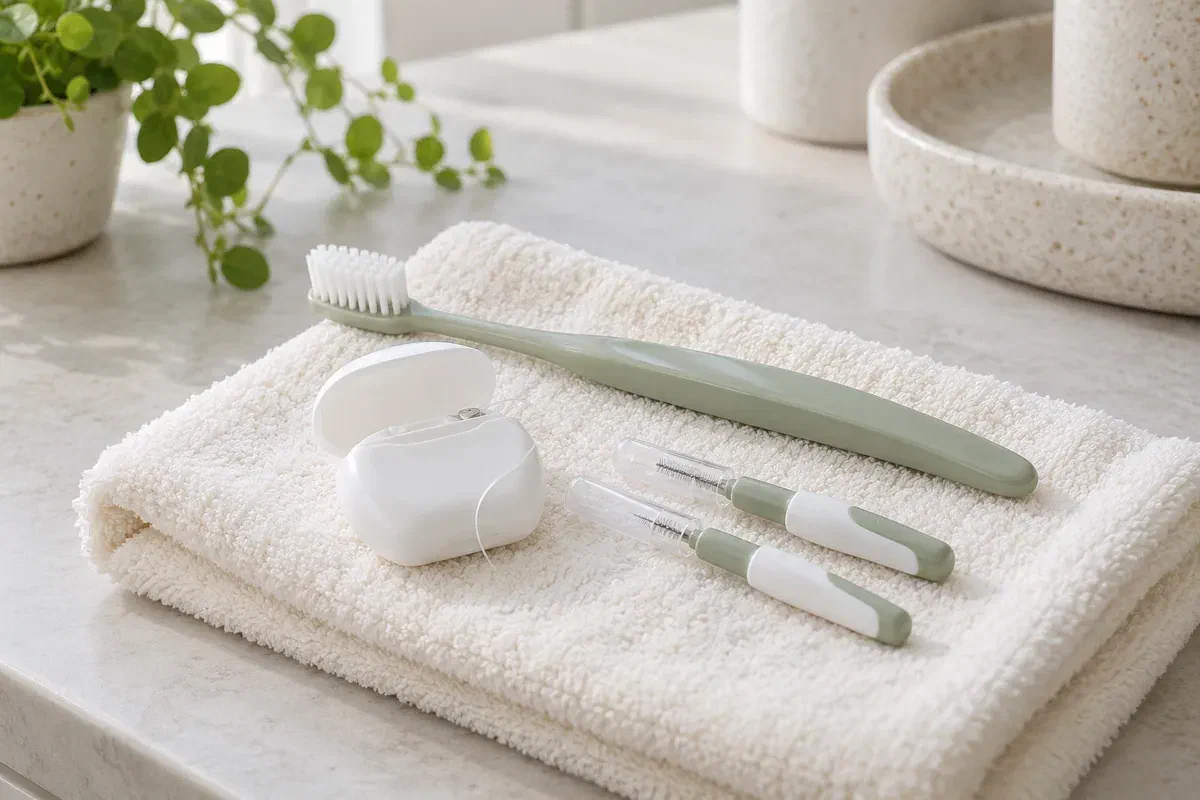
Illustrative soft toothbrush, interdental brushes, and floss container on a clean ivory towel
Describe your real routine

What happens at your sink tells us a great deal.

Mention bleeding even when there is no pain. Explain whether it seems to come from one spot or many, and whether your habits or the bleeding have changed lately.

When in the routine the bleeding shows up

Is it brushing in the morning, flossing at night or a quick clean after meals? Say which places are hard to reach and bring the tools you use. The team can examine those areas and adjust your technique so it fits the spaces and the time you have.

Tenderness, swelling or a taste that stays

Note these together with the bleeding, along with any tooth that has started to move or ache when you chew. They can change how soon you should be seen and how wide the examination goes. On its own a symptom may seem minor; in context it may not be.

Recent health or medicine changes

Bring a current medicine list and mention any health condition or unusual bleeding elsewhere. Carry on with prescribed medicines; bleeding gums are not a reason to stop. The dental team can consider whether to involve your physician and explain what to do next.

Bleeding with brushing calls for a dental assessment. Get advice without waiting if the bleeding is heavy, continues, starts without cleaning, follows a blow to the mouth or comes with symptoms that trouble you.

Why the exam shapes the routine

Effort aimed at the right target.

Examining the gums tells your clinician whether the inflammation is limited to the margin of the gum or whether the supporting tissue around the teeth shows signs that call for a closer periodontal review. Ask what they saw and what it means for you. A home routine makes far more sense once you know what it is meant to fix.

The second benefit is fit. A routine copied from a pamphlet often stalls after a week. If floss is fiddly for your fingers, a brush seems too large or one sore corner gets skipped, tell us. Advice built on what you can really manage is advice you will still be following at the review.

Purpose behind every product

Find out which findings explain the bleeding and whether anything local contributes. Where a rinse or paste is recommended, it should have a named purpose and an end point. Otherwise you may keep buying things that do little for the actual cause.

A routine rehearsed before you leave

Have the team walk you through brushing and cleaning between the teeth in the hardest places, such as crowns or overlapping teeth. Confirm the tool, the size and how light the pressure should be. Then do it yourself while someone watches and helps.

Checkpoints you can track at home

Ask when the gums will be re-examined and what the clinician will compare. Keeping a quick note of bleeding days can help, although it does not replace the examination. Agree on the changes that would mean calling us before the review.

Clinic visits that support home care

Understand, examine, treat, then check in again

The findings decide how many appointments you need and what they involve. If tender gums or a past cleaning make you uneasy, tell us when booking so the visit can be planned around that.

  1. Talk through the bleeding and your routine

    Describe when the bleeding began, where it happens and whether it ever comes with pain, swelling or no cleaning at all. We go over your daily habits, health conditions, medicines and any previous gum care. That conversation shapes the examination and the advice.

  2. Look closely at gums and their support

    Your clinician examines the tissue and may record small measurements around each tooth to understand how it is held. Images are only added when there is a reason. Ask what the results mean rather than reading severity from the amount of blood.

  3. Begin care, in the chair and at home

    Treatment could include a professional cleaning, more detailed gum therapy, dealing with a local irritant or further assessment, together with a tailored home routine. Ask what each part involves and how comfort is managed. Any rinse or medicine should come with your own instructions.

  4. Check in and adjust the routine

    At the follow-up, today’s findings sit beside the first visit’s. Be honest if parts of the routine did not stick. When a problem lingers, a fuller investigation or a referral may be the next step, rather than restating what has not worked.

The weeks between visits

Small habits, repeated, make the difference.

Follow the guidance that goes with your diagnosis and any treatment. If one area stays sore or keeps bleeding, phone for a review instead of quietly skipping it or scrubbing it harder.

Keep the routine simple and steady

Brush and clean between your teeth the way you practised, at the same times each day if possible. If a tool keeps slipping or hurting, call and we can suggest another. Gentle, regular cleaning removes plaque; forcing floss or an oversized brush only bruises the gum.

Products with a start and a finish

A recommended rinse or gel should come with a reason, a duration and any cautions. Treat it as an extra, never a stand-in for brushing or professional care. Keep taking prescribed medicines unless the prescriber changes them, and pass on any new prescriptions.

Bring your observations to the review

Note whether bleeding days are becoming fewer, staying steady or appearing in new places. Puffiness, soreness or a tooth that suddenly feels different are worth reporting even when things look better. The review compares findings and adjusts the plan.

The care that may follow

A home routine sits inside every plan.

Ask how the proposed care deals with the cause and how you will both judge progress. A diagnosis should guide the decision, not the brand of toothpaste or the strength of a rinse.

When plaque along the gums is the main finding

Cleaning and a personal routine

A professional cleaning and a home routine designed with you are often the first stage. Ask which areas to prioritize and how to keep them healthy. A review belongs in the plan; no single visit can promise bleeding will not return.

When the supporting tissue needs more

Periodontal care plus maintenance

Measurements and other findings may point to further gum treatment. Go over how many stages, how comfort is handled, the fees and the maintenance that follows. A referral may be suggested, and its reason should be explained.

When something local or medical seems involved

Attention to a contributing factor

A tooth that traps food, an irritating filling or a medical factor may need separate review. Ask which parts are dental and whether your physician should be involved. Technique is not behind every case, and bleeding on medicine still deserves a careful look.

Home-routine questions

Practical answers for everyday gum care.

Arrive with observations, not a diagnosis. Ask about routines, tools, medicines, treatment and when to come back.

(905) 876-4488
What is a realistic daily routine for bleeding gums?
Mainstream advice is to brush twice a day and clean between your teeth daily, using tools suited to your mouth. The team can show you a version you can manage and adjust it if something does not work.
Is it better to floss in the morning or at night?
What matters most is doing it thoroughly and regularly. Many people find evenings easier. Choose a time you can keep and ask the team to check your technique at your visit.
Should I keep a record of when my gums bleed?
A simple note of bleeding days and locations can be useful to share at your review. It helps the conversation, but the clinician still needs to examine the tissue to judge the response.
How long before a new routine shows any change?
It varies with the cause and the care provided. Ask your clinician what to expect in your case and when the gums will be rechecked, rather than judging progress by a few days.
Can I stop my routine once the bleeding settles?
Keep going. Bleeding can return if plaque builds up again. Your clinician will advise on ongoing maintenance and how often your gums should be reviewed.
What should I do if I cannot get in from Erin for my planned review?
Call to rebook as soon as you can and describe how things have been. If the bleeding is heavy, will not stop or comes with swelling or feeling unwell, seek urgent care nearby.
Gum care for Erin and Hillsburgh

Build the habit with someone who has looked.

Call our Bronte Street practice if brushing or flossing has started to leave pink behind. We will examine the gums, explain the cause and help you shape a home routine that holds up week after week.

Cause, urgency, number of stages, review timing and fees are all set after assessment. Bleeding by itself is not a diagnosis, and we cannot promise that a single cleaning will resolve the concern.

Visit Milton Dental Clinic
Unit 1, 342 Bronte St. S, Milton, ON L9T 5B7
Get directions Clinic hours
Monday–Thursday
11am–7pm
Friday–Sunday
By appointment only

Areas we serve

  • Milton
  • Oakville
  • Mississauga
  • Georgetown
  • Halton Hills
  • Acton
  • Campbellville
  • Brampton
  • Burlington
  • Puslinch
  • Rockwood
  • Erin
  • Caledon
  • Etobicoke
  • Old Milton
  • Bronte Meadows
  • Timberlea
  • Dorset Park
  • Dempsey
  • Clarke
  • Beaty
  • Coates
  • Harrison
  • Scott
  • Willmott
  • Ford
  • Bowes
  • Cobden
  • Walker
  • Mountain View
  • Milton Heights
  • Hawthorne Village
  • Valley View
  • Fallingbrook
  • Nassagaweya
  • Trafalgar
  • Esquesing
  • Nelson
  • Brookville
  • Moffat
  • Glen Williams
  • Norval
  • Limehouse
  • Stewarttown
  • Ashgrove
  • Hornby
  • Silver Creek
  • Speyside
  • Scotch Block
  • North Oakville
  • River Oaks
  • Glen Abbey
  • West Oak Trails
  • Palermo
  • Bronte Creek
  • College Park
  • Joshua Creek
  • Uptown Core
  • Preserve
  • Iroquois Ridge
  • Lisgar
  • Meadowvale
  • Meadowvale Village
  • Churchill Meadows
  • Erin Mills
  • Central Erin Mills
  • Streetsville
  • East Credit
  • Creditview
  • Heartland
  • Sheridan
  • Mount Pleasant
  • Credit Valley
  • Huttonville
  • Churchville
  • Springbrook
  • Northwest Brampton
  • Bram West
  • Fletcher's Meadow
  • Fletcher's Creek South
  • Alton Village
  • Orchard
  • Millcroft
  • Headon Forest
  • Tansley
  • Brant Hills
  • Tyandaga
  • Kilbride
  • Lowville
  • Aberfoyle
  • Morriston
  • Arkell
  • Hillsburgh
  • Freelton
  • Carlisle
  • Waterdown
  • Flamborough
  • Mountsberg

How can we help?

Milton Dental Clinic

Have a question about your smile? Choose the option that works best for you.

For urgent dental concerns, please call.
Messages are reviewed during clinic hours.